Robert Whalen - Böcker
Visar alla böcker från författaren Robert Whalen. Handla med fri frakt och snabb leverans.
3 produkter
3 produkter
3 143 kr
Skickas inom 5-8 vardagar
Famed for his heart-searching devotional lyric poetry, George Herbert (1593-1633) also authored some of the finest and most influential English prose of his era: The Countrey Parson, his oft-cited pastoral manual, still valued for its spiritual insight, shrewd advice, and a style at once lively and refined, engaging and serious; A Treatise of Temperance and Sobrietie, his translation of Luigi Cornaro's jovial Italian tract on dietary health; Notes on Valdesso, his judicious and appreciative commentary (and sole theological work) on the Considerations of controversial Spanish humanist Juan de Valdés; his collections of Outlandish Proverbs and Jacula Prudentum, pervasively popular for centuries and shot through with familiar wisdom and wit; his Letters, providing the most intimate records of and reflections on his brief life; and his Will, dictated and witnessed as he lay dying of tuberculosis in his Bemerton rectory at the age of 39. Each of these works, frequently cited as contexts for his renowned English poetry, appears here for close study in its own right. Volume I: English Prose offers textual and critical introductions and annotations, a concise title essay and overview of prominent criticism for each chapter or section in subdivided works, and, above all, rigorous scholarly texts based on the earliest and best manuscript and print sources--some newly discovered or confirmed. Serious literary art by any measure, Herbert's English prose has emerged in recent years from the shadow of his rightly famous poetry. Such attention stands here fully justified: an edition whose accessible texts, combined with extensive and meticulous critical apparatus, will equip scholars for new discoveries and accelerate the already global interest in Herbert's work.
2 181 kr
Skickas inom 10-15 vardagar
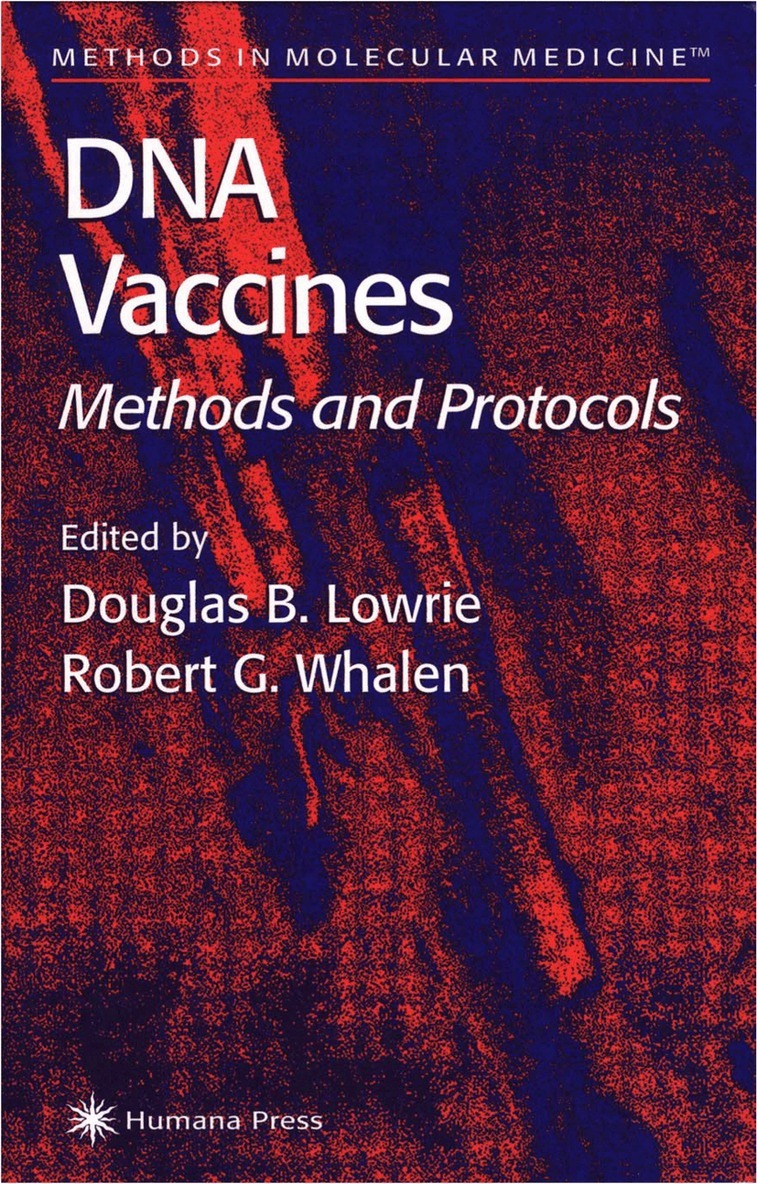
State-of-the-art review articles by leading experts summarize how to develop and employ the highly promising new DNA vaccines, what clinical results can be expected from their use, and what is known about how they work. Key topics range from vaccine design and construction to preparation and delivery methods, including the use of classical adjuvants, "genetic adjuvants," and the immunostimulatory properties of DNA and selected oligonucleotide sequences. Several contributors provide strategic ideas on antigen engineering and describe the novel applications of DNA vaccine methodology that have recently emerged. Cutting-edge and comprehensive, DNA Vaccines: Methods and Protocols provides a snapshot of the methods and thinking from which the vaccines of tomorrow will evolve.
2 181 kr
Skickas inom 10-15 vardagar
The field of DNA vaccines has undergone explosive growth in the last few years. As usual, some historical precursors of this approach can be d- cerned in the scientific literature of the last decades. However, the present state of affairs appears to date from observations made discreetly in 1988 by Wolff, Malone, Felgner, and colleagues, which were described in a 1989 patent and published in 1990. Quite surprisingly, they showed that genes carried by pure plasmid DNA and injected in a saline solution, hence the epithet “naked DNA,” could be taken up and expressed by skeletal muscle cells with a low but reproducible frequency. Such a simple methodology was sure to spawn many applications. In a separate and important line of experimentation, Tang, De Vit, and Johnston announced in 1992 that it was indeed possible to obtain humoral immune responses against proteins encoded by DNA delivered to the skin by a biolistic device, which has colloquially become known as the “gene gun. ” The year 1993 saw the publication of further improvements in the me- ods of naked DNA delivery and, above all, the first demonstrations by several groups of the induction of humoral and cytotoxic immune responses to viral antigens expressed from injected plasmid DNA. In some cases, protection against challenge with the pathogen was obtained. The latter result was - questionably the touchstone of a method of vaccination worthy of the name.