Robert Wisnovsky – författare
Visar alla böcker från författaren Robert Wisnovsky. Handla med fri frakt och snabb leverans.
7 produkter
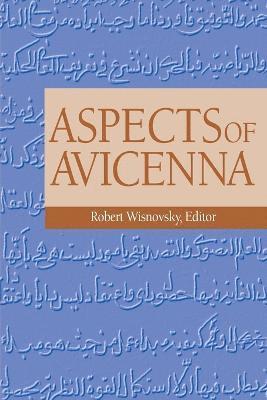
Avicenna's Metaphysics in Context
Inbunden, 2003
1827 kr
Lägg i varukorg
The eleventh-century philosopher and physician Abu Ali ibn Sina (d. A.D. 1037) was known in the West by his Latinized name Avicenna. An analysis of the sources and evolution of Avicenna's metaphysics, this book focuses on the answers he and his predecessors gave to two fundamental pairs of …
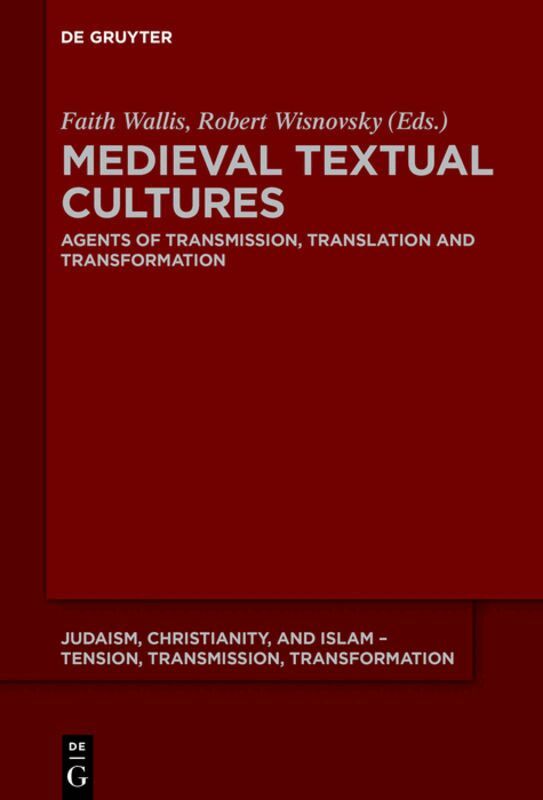
Medieval Textual Cultures
Agents of Transmission, Translation and Transformation
Av Faith Wallis, Robert Wisnovsky
Inbunden, 2016
1561 kr
Lägg i varukorg
No detailed description available for "Medieval Textual Cultures".
Medieval Textual Cultures
Agents of Transmission, Translation and Transformation
Av Robert Wisnovsky, Faith Wallis
E-bok, 2016
1626 kr
Lägg i varukorg
Understanding how medieval textual cultures engaged with the heritage of antiquity (transmission and translation) depends on recognizing that reception is a creative cultural act (transformation). These essays focus on the people, societies and institutions who were doing the transmitting, …
Medieval Textual Cultures
Agents of Transmission, Translation and Transformation
Av Robert Wisnovsky, Faith Wallis
E-bok, 2016
1591 kr
Lägg i varukorg
Understanding how medieval textual cultures engaged with the heritage of antiquity (transmission and translation) depends on recognizing that reception is a creative cultural act (transformation). These essays focus on the people, societies and institutions who were doing the transmitting, …
Medieval Textual Cultures
Agents of Transmission, Translation and Transformation
Av Faith Wallis, Robert Wisnovsky
Häftad, 2018
329 kr
Lägg i varukorg
Understanding how medieval textual cultures engaged with the heritage of antiquity (transmission and translation) depends on recognizing that reception is a creative cultural act (transformation). These essays focus on the people, societies and institutions who were doing the transmitting, …
Jalāl Al-Dīn Al-Dawānī's Commentary on ʿaḍud Al-Dīn Al-Ījī's Creed: A Parallel English-Arabic Text
Inbunden, 2026
2440 kr
Kommande