Roberto Beneduce – författare
Visar alla böcker från författaren Roberto Beneduce. Handla med fri frakt och snabb leverans.
4 produkter
4 produkter
Inbunden, Engelska, 2017
1 673 kr
Skickas inom 10-15 vardagar
The revolutionary and psychiatrist Frantz Fanon was a foundational figure in postcolonial and decolonial thought and practice, yet his psychiatric work still has only been studied peripherally. That is in part because most of his psychiatric writings have remained untranslated. With a focus on Fanon’s key psychiatry texts, Frantz Fanon: Psychiatry and Politics considers Fanon’s psychiatic writings as materials anticipating as well as accompanying Fanon’s better known work, written between 1952 and 1961 (Black Skin, White Masks, A Dying Colonialism, Toward the African Revolution, The Wretched of the Earth). Both clinical and political, they draw on another notion of psychiatry that intersects history, ethnology, philosophy, and psychoanalysis. The authors argue that Fanon’s work inaugurates a critical ethnopsychiatry based on a new concept of culture (anchored to historical events, particular situations, and lived experience) and on the relationship between the psychological and the cultural. Thus, Gibson and Beneduce contend that Fanon’s psychiatric writings also express Fanon’s wish, as he puts it in The Wretched of the Earth, to “develop a new way of thinking, not only for us but for humanity.”
Häftad, Engelska, 2019
562 kr
Skickas inom 10-15 vardagar
The revolutionary and psychiatrist Frantz Fanon was a foundational figure in postcolonial and decolonial thought and practice, yet his psychiatric work still has only been studied peripherally. That is in part because most of his psychiatric writings have remained untranslated. With a focus on Fanon’s key psychiatry texts, Frantz Fanon: Psychiatry and Politics considers Fanon’s psychiatic writings as materials anticipating as well as accompanying Fanon’s better known work, written between 1952 and 1961 (Black Skin, White Masks, A Dying Colonialism, Toward the African Revolution, The Wretched of the Earth). Both clinical and political, they draw on another notion of psychiatry that intersects history, ethnology, philosophy, and psychoanalysis. The authors argue that Fanon’s work inaugurates a critical ethnopsychiatry based on a new concept of culture (anchored to historical events, particular situations, and lived experience) and on the relationship between the psychological and the cultural. Thus, Gibson and Beneduce contend that Fanon’s psychiatric writings also express Fanon’s wish, as he puts it in The Wretched of the Earth, to “develop a new way of thinking, not only for us but for humanity.”
E-bok
Engelska, 2017605 kr
Läs direkt efter köp
The revolutionary and psychiatrist Frantz Fanon was a foundational figure in postcolonial and decolonial thought and practice, yet his psychiatric work still has only been studied peripherally. That is in part because most of his psychiatric writings have remained untranslated. With a focus on Fanon’s key psychiatry texts, Frantz Fanon: Psychiatry and Politics considers Fanon’s psychiatic writings as materials anticipating as well as accompanying Fanon’s better known work, written between 1952 and 1961 (Black Skin, White Masks, A Dying Colonialism, Toward the African Revolution, The Wretched of the Earth). Both clinical and political, they draw on another notion of psychiatry that intersects history, ethnology, philosophy, and psychoanalysis. The authors argue that Fanon’s work inaugurates a critical ethnopsychiatry based on a new concept of culture (anchored to historical events, particular situations, and lived experience) and on the relationship between the psychological and the cultural. Thus, Gibson and Beneduce contend that Fanon’s psychiatric writings also express Fanon’s wish, as he puts it in The Wretched of the Earth, to “develop a new way of thinking, not only for us but for humanity.”
51 kr
Läs direkt efter köp
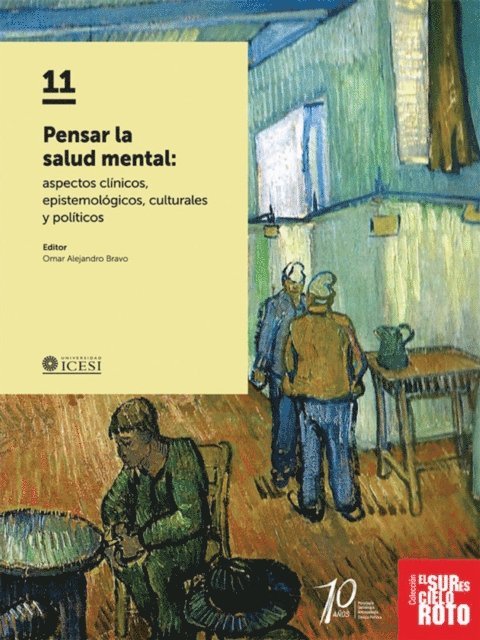
En cuanto este libro asume un número de desafíos escasamente abordados conjuntamente, la lectura de sus capítulos, muy bien elegidos y articulados en una trama densa y con visión didáctica, enriquece los fundamentos de las acciones de salud mental en la comunidad, así como su aplicación. Para América Latina, esta publicación es particularmente bienvenida. Desde que la región adoptara la Declaración de Caracas (1990) y seguidamente las convenciones mundiales y americanas, las necesidades de capacitación se han multiplicado. Los lectores quedamos endeudados con los autores.