Roberto Cortés-Conde - Böcker
Visar alla böcker från författaren Roberto Cortés-Conde. Handla med fri frakt och snabb leverans.
4 produkter
4 produkter
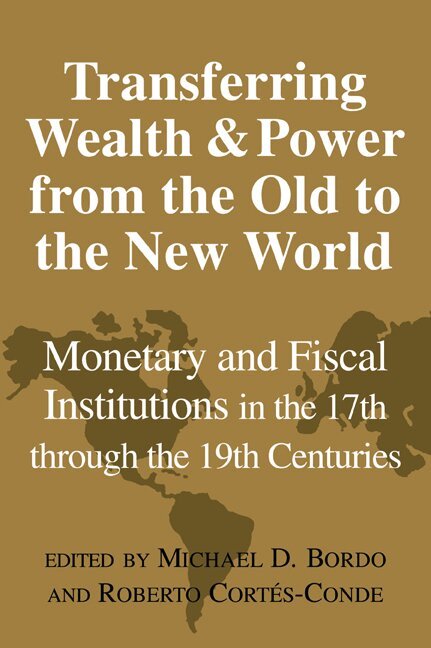
Transferring Wealth and Power from the Old to the New World
Monetary and Fiscal Institutions in the 17th through the 19th Centuries
Häftad, Engelska, 2006
631 kr
Skickas inom 7-10 vardagar
This book contains a collection of essays comparing the evolution of the fiscal and monetary regimes of the Old World colonial powers - England, France, Spain, Portugal and the Netherlands - from the seventeenth to the nineteenth centuries with the experiences of several of their former colonies in the New World of the Americas: the United States, Canada, Mexico, Colombia, Brazil and Argentina. The objective is to see how such fiscal and monetary institutions were modified or replaced by new ones. The case studies in the collection consider the experience of the colonies after they became independent countries; they examine the factors that allowed efficient fiscal institutions to develop in some countries, while in others such development turned out to be unsuccessful; and they consider why some governments were able to live within their means and provide public goods, while for others expenditures frequently exceeded revenue, often leading to fiscal crises.
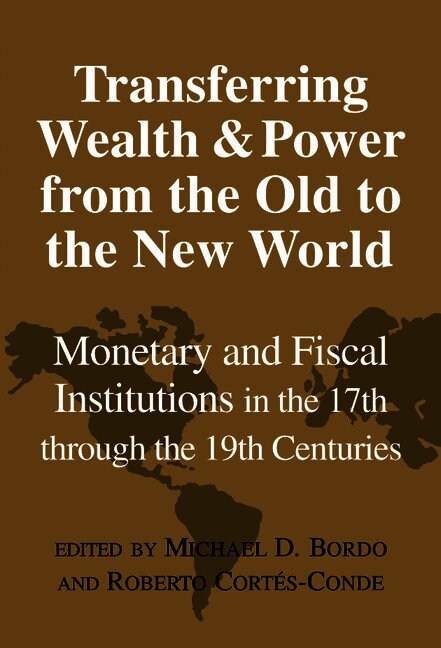
Transferring Wealth and Power from the Old to the New World
Monetary and Fiscal Institutions in the 17th through the 19th Centuries
Inbunden, Engelska, 2001
1 783 kr
Skickas inom 7-10 vardagar
This book contains a collection of essays comparing the evolution of the fiscal and monetary regimes of the Old World colonial powers - England, France, Spain, Portugal and the Netherlands - from the seventeenth to the nineteenth centuries with the experiences of several of their former colonies in the New World of the Americas: the United States, Canada, Mexico, Colombia, Brazil and Argentina. The objective is to see how such fiscal and monetary institutions were modified or replaced by new ones. The case studies in the collection consider the experience of the colonies after they became independent countries; they examine the factors that allowed efficient fiscal institutions to develop in some countries, while in others such development turned out to be unsuccessful; and they consider why some governments were able to live within their means and provide public goods, while for others expenditures frequently exceeded revenue, often leading to fiscal crises.
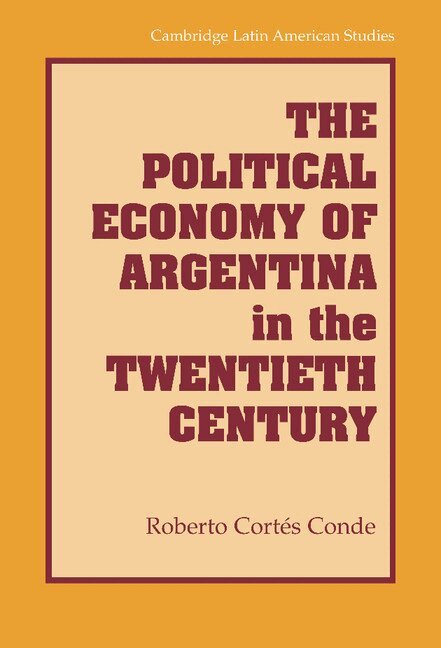
Del 92 - Cambridge Latin American Studies
The Political Economy of Argentina in the Twentieth Century
Inbunden, Engelska, 2008
984 kr
Skickas inom 7-10 vardagar
In this book, Roberto Cortés Conde describes and explains the decline of the Argentine economy in the twentieth century, its evolution, and its consequences. At the beginning of the century, the economy grew at a sustained rate, a modern transport system united the country, a massive influx of immigrants populated the land, and education expanded, leading to a dramatic fall in illiteracy. However, by the second half of the century, growth not only stalled, but a dramatic reversal occurred, and the perspectives in the median and long term turned negative, and growth eventually collapsed. This work of historical analysis defines the most important problems faced by the Argentine economy. Some of these problems were fundamental, while others occurred without being properly considered, but in their entirety, Cortés Conde demonstrates how they had a deleterious effect on the country.
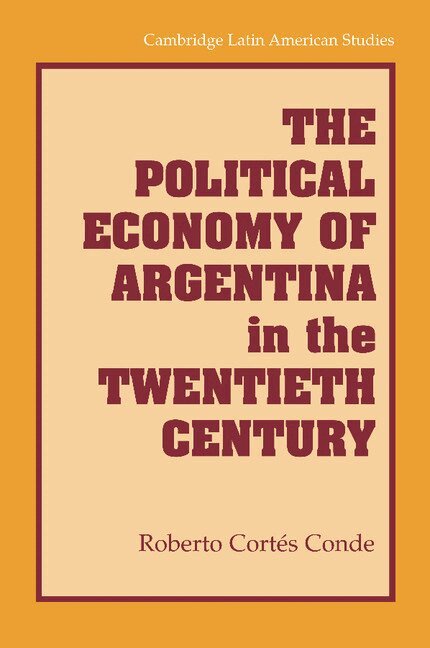
Del 92 - Cambridge Latin American Studies
The Political Economy of Argentina in the Twentieth Century
Häftad, Engelska, 2013
523 kr
Skickas inom 7-10 vardagar
In this book, Roberto Cortés Conde describes and explains the decline of the Argentine economy in the twentieth century, its evolution, and its consequences. At the beginning of the century, the economy grew at a sustained rate, a modern transport system united the country, a massive influx of immigrants populated the land, and education expanded, leading to a dramatic fall in illiteracy. However, by the second half of the century, growth not only stalled, but a dramatic reversal occurred, and the perspectives in the median and long term turned negative, and growth eventually collapsed. This work of historical analysis defines the most important problems faced by the Argentine economy. Some of these problems were fundamental, while others occurred without being properly considered, but in their entirety, Cortés Conde demonstrates how they had a deleterious effect on the country.