Robin D. Rogers – författare
Visar alla böcker från författaren Robin D. Rogers. Handla med fri frakt och snabb leverans.
9 produkter
9 produkter
Inbunden, Engelska, 1995
975 kr
Skickas inom 10-15 vardagar
Inbunden, Engelska, 1997
1 622 kr
Skickas inom 10-15 vardagar
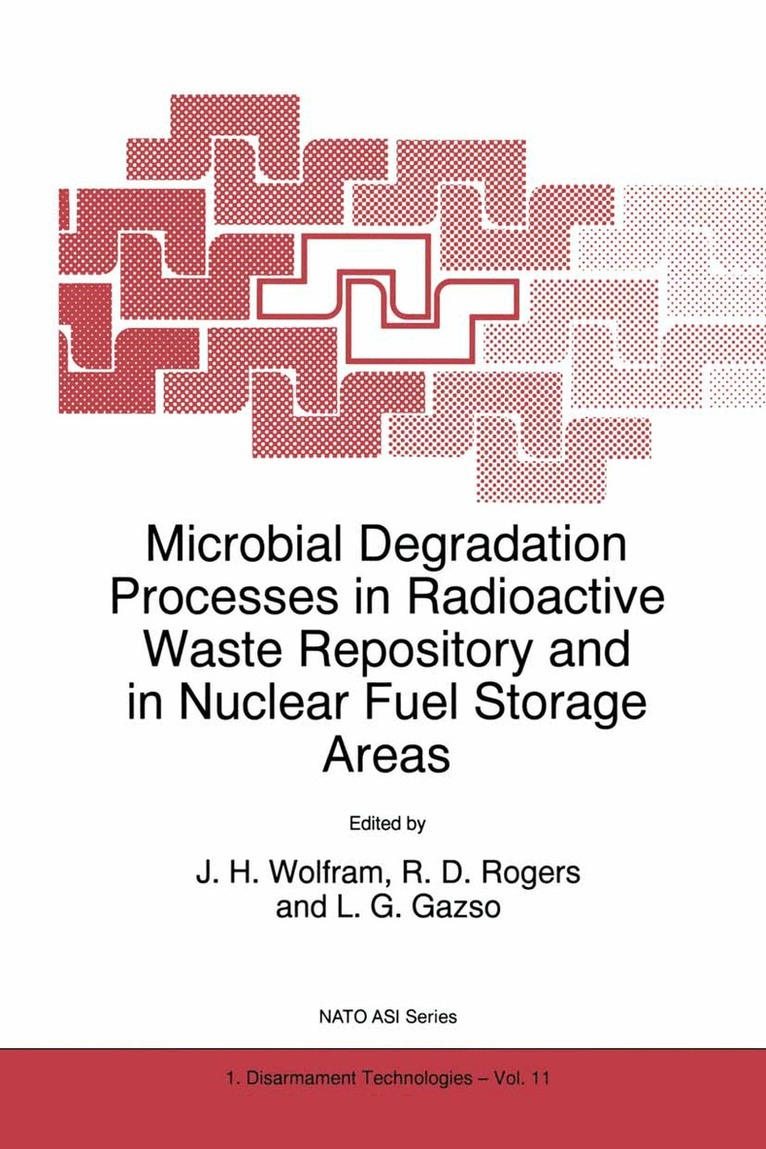
Purpose ofthe Workshop In the spirit of enhancing developments in science and technology by facilitating international scientific cooperation, the Science Committee of NATO is sponsoring AR W's in several selected priority areas. The objective of this workshop was to discuss what microbial mediated problems have been experienced in the area of nuclear waste management and spent fuel storage. Long term storage of high-level wastes in repositories is just starting in some countries. However, low and medium level wastes have been stored for several decades. In the area of spent fuel interim, storage has been extended at many locations far beyond the intended time. It was a priority of the workshop to examine and discuss what deleterious effects have been observed under these storage conditions or under conditions used in simulated trial tests for predicting material performance under the storage conditions. For example, one chronic problem that was discussed was possibility that microbial influenced corrosion (MIC) could be taking place in the wet storage of spent fuel thereby initiating or accelerating the process of corrosion. Another discussion in the area of waste forms, focused on the presence ofbiofilms which may be breaking down the structure of the waste form and thereby jeopardizing its integrity. The meeting focused on discussing the observations and data collected relating to problems encountered in the storage of these types of wastes, and sharing this information with others that have not monitored their facilities for similar problems.
Inbunden, Engelska, 2003
1 107 kr
Skickas inom 5-8 vardagar
This book follows Ionic Liquids: Industrial Applications to Green Chemistry, SS #818, which is also edited by Robin D. Rogers and Kenneth R. Seddon. Ionic Liquids as Green Solvents: Progress and Prospects focuses on exciting new developments in ionic liquids.
Del 92 - NATO Science Series II: Mathematics, Physics and Chemistry
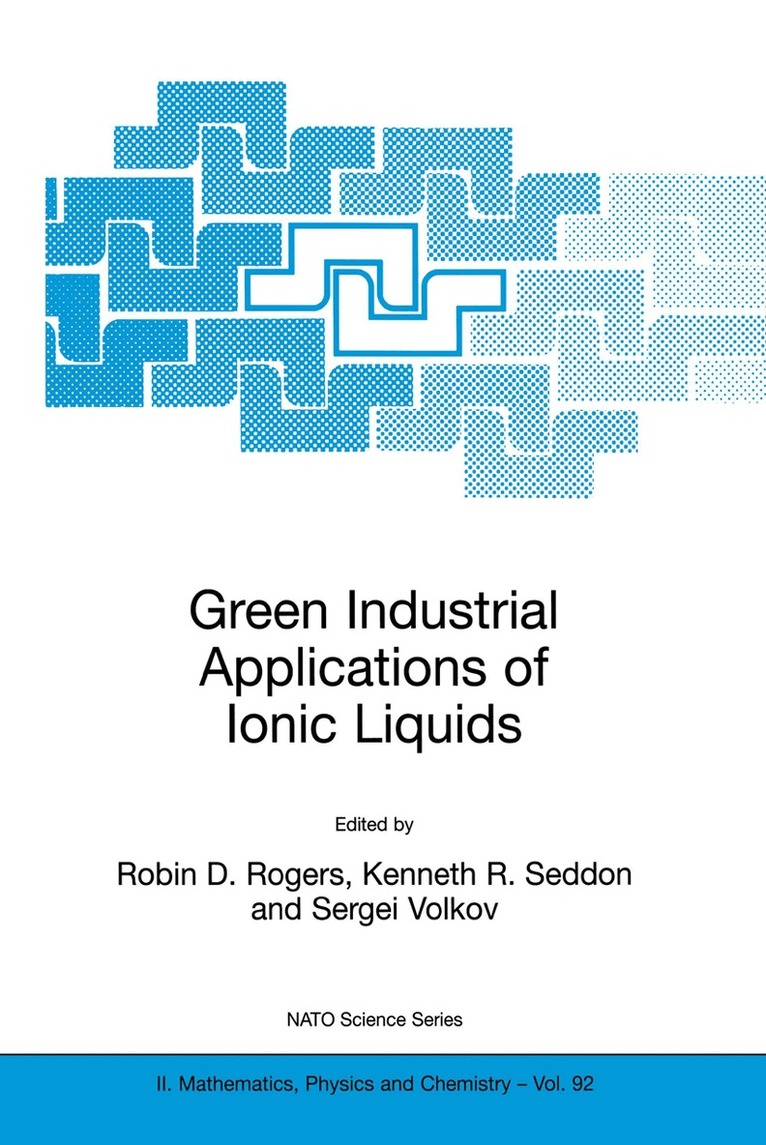
Green Industrial Applications of Ionic Liquids
Inbunden, Engelska, 2003
2 160 kr
Skickas inom 10-15 vardagar
Devoted to research in the area of ionic liquids - salts with melting points below 100 degrees centigrade - this text explores the promise of ionic liquids and sets the research agenda for the field. With a distinct bias towards actual industrial research and development applications, the book is virtually a manifesto for the new age of "Green Chemistry". The major industrial challenges to sustainability - the book's leitmotiv - are: reducing water use; increasing energy efficiency; reducing reliance of fossil fuel feedstocks; increasing use of renewables; including sustainability as a major economic criterion. Thereafter, the book goes on to consider precisely where ionic liquids can help in achieving this new vision, via new techniques, new processes, new reactions. The safety/health/environment properties of the ionic liquids are also considered. Finally, it is clear that there needs to be a major increase in the number of workers studying ionic liquids if this promise of a new Green Chemistry is to be achieved.
Häftad, Engelska, 2003
2 160 kr
Skickas inom 10-15 vardagar
This book contains the lecture notes for the NATO Advanced Research Workshop on th Green Industrial Applications of Ionic Liquids held April 12th_16 , 2000 in Heraklion, Crete, Greece. This was the fIrst international meeting devoted to research in the area of ionic liquids (salts with melting points below 100 0c), and was intended to explore the promise of ionic liquids as well as to set a research agenda for the fIeld. It was the fIrst international meeting dedicated to the study and application of ionic liquids as solvents, and forty-one scientists and engineers from academia, industry, and government research laboratories (as well as six industry observers and four student assistants) met to discuss the current and future status of the application of ionic liquids to new green industrial technologies. It was immediately clear that the number of organic chemists and engineers working in the fIeld needed to be increased. It was also clear that the declining interest in high temperature molten salts and subsequent increase in low melting ionic liquid solvents had not yet taken hold in Eastern Europe. Participants from NATO Partner Countries contributed signifIcant expertise in high temperature molten salts and were able to take back a new awareness and interest in ionic liquid solvents.
Häftad, Engelska, 2012
545 kr
Skickas inom 10-15 vardagar
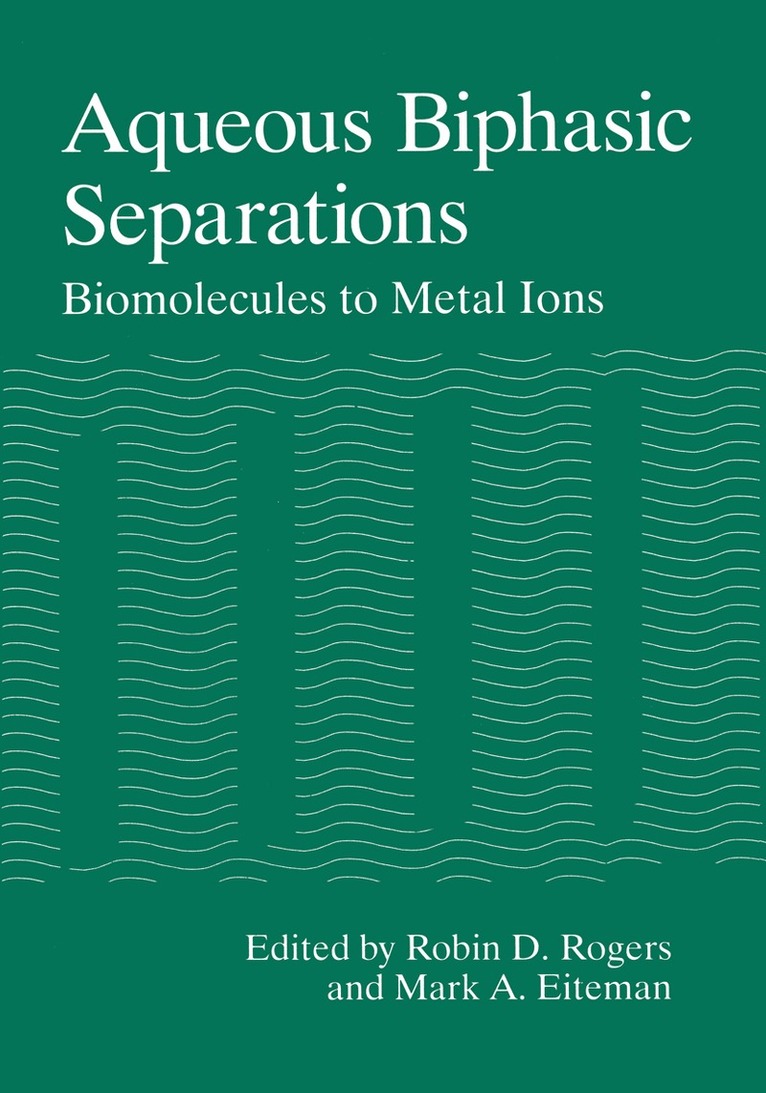
"A grand compilation...Well-bound, well-printed...It is sure that this pioneering book will help growing interest of the separation scientists in aqueous biphasic systems and broaden the scope of the field." --- Indian Chemical Society, 1998
E-bok
PDF, Engelska, 2012712 kr
Läs direkt efter köp
Proceedings of an American Chemical Society Symposium held in San Diego, California, March 13-14, 1994
E-bok
PDF, Engelska, 20122 741 kr
Läs direkt efter köp
This book contains the lecture notes for the NATO Advanced Research Workshop on th Green Industrial Applications of Ionic Liquids held April 12th_16 , 2000 in Heraklion, Crete, Greece. This was the fIrst international meeting devoted to research in the area of ionic liquids (salts with melting points below 100 0c), and was intended to explore the promise of ionic liquids as well as to set a research agenda for the fIeld. It was the fIrst international meeting dedicated to the study and application of ionic liquids as solvents, and forty-one scientists and engineers from academia, industry, and government research laboratories (as well as six industry observers and four student assistants) met to discuss the current and future status of the application of ionic liquids to new green industrial technologies. It was immediately clear that the number of organic chemists and engineers working in the fIeld needed to be increased. It was also clear that the declining interest in high temperature molten salts and subsequent increase in low melting ionic liquid solvents had not yet taken hold in Eastern Europe. Participants from NATO Partner Countries contributed signifIcant expertise in high temperature molten salts and were able to take back a new awareness and interest in ionic liquid solvents.
Häftad, Engelska, 2012
1 622 kr
Skickas inom 10-15 vardagar
Purpose ofthe Workshop In the spirit of enhancing developments in science and technology by facilitating international scientific cooperation, the Science Committee of NATO is sponsoring AR W's in several selected priority areas. The objective of this workshop was to discuss what microbial mediated problems have been experienced in the area of nuclear waste management and spent fuel storage. Long term storage of high-level wastes in repositories is just starting in some countries. However, low and medium level wastes have been stored for several decades. In the area of spent fuel interim, storage has been extended at many locations far beyond the intended time. It was a priority of the workshop to examine and discuss what deleterious effects have been observed under these storage conditions or under conditions used in simulated trial tests for predicting material performance under the storage conditions. For example, one chronic problem that was discussed was possibility that microbial influenced corrosion (MIC) could be taking place in the wet storage of spent fuel thereby initiating or accelerating the process of corrosion. Another discussion in the area of waste forms, focused on the presence ofbiofilms which may be breaking down the structure of the waste form and thereby jeopardizing its integrity. The meeting focused on discussing the observations and data collected relating to problems encountered in the storage of these types of wastes, and sharing this information with others that have not monitored their facilities for similar problems.