Roderick S. Graham – författare
3 571 kr
Skickas inom 10-15 vardagar
769 kr
Skickas inom 10-15 vardagar
571 kr
Skickas inom 10-15 vardagar
2 193 kr
Skickas inom 10-15 vardagar
673 kr
Läs direkt efter köp
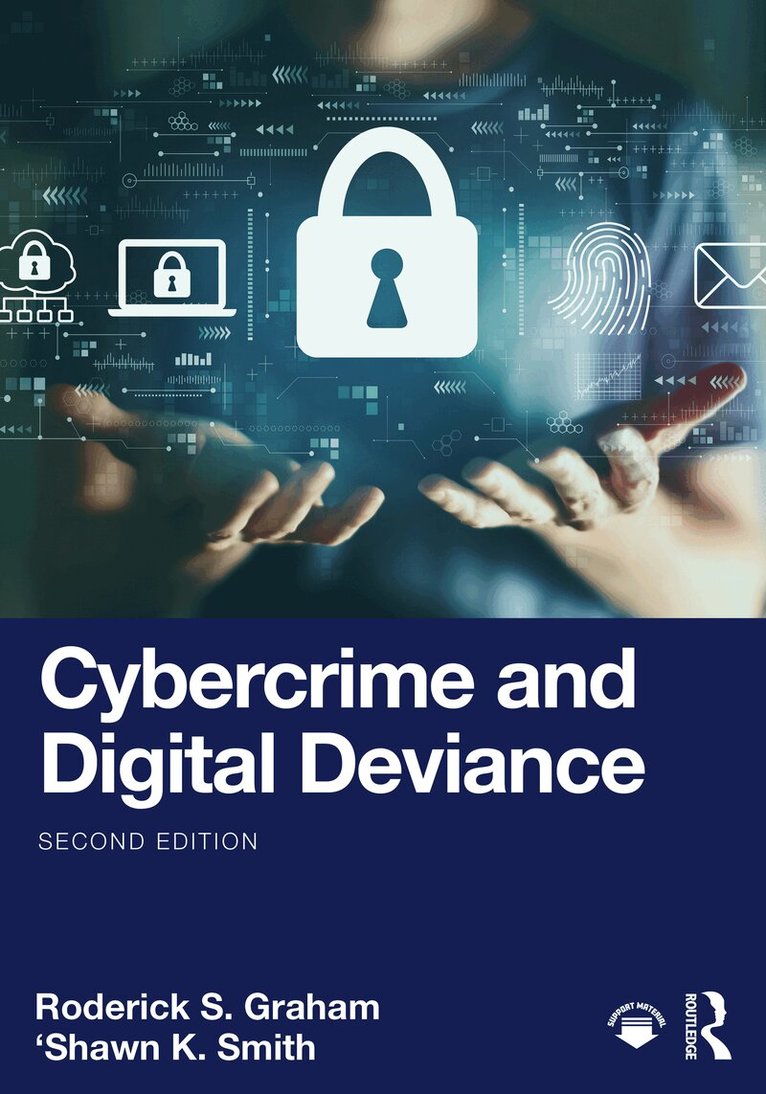
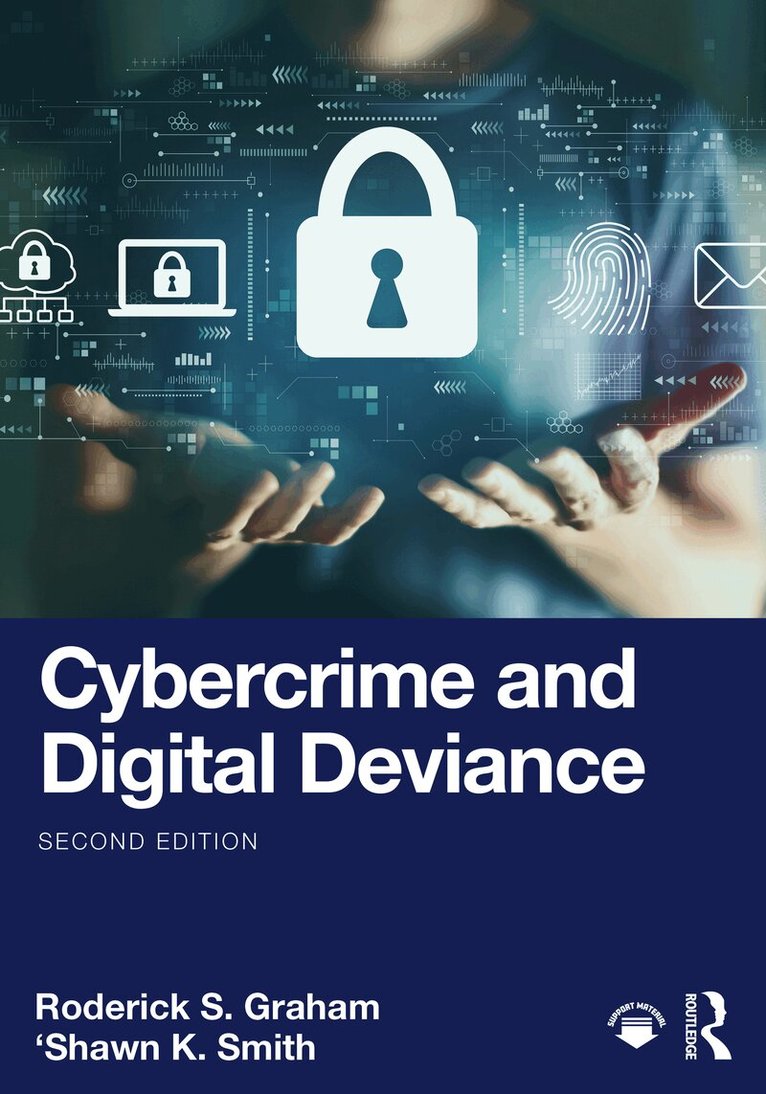
Cybercrime and Digital Deviance, Second Edition, combines insights from sociology, criminology, psychology, and cybersecurity to explore cybercrimes such as hacking, identity theft, and romance scams, along with forms of digital deviance such as pornography addiction, trolling, and “canceling” people for perceived violations of norms.
Other issues are explored including cybercrime investigations, nation-state cybercrime, the use of algorithms in policing, cybervictimization, and expanded discussion of the theories used to explain cybercrime. Graham and Smith conceptualize the online space as a distinct environment for social interaction, framing their work with assumptions informed by their respective work in urban sociology and spatial criminology, and offering an engaging entry point for understanding what may appear to be a technologically complex course of study. The authors apply a modified version of a typology developed by David Wall: cybertrespass, cyberfraud, cyberviolence, and cyberpornography. This typology is simple enough for students just beginning their inquiry into cybercrime, while its use of legal categories of trespassing, fraud, violent crimes against persons, and moral transgressions provides a solid foundation for deeper study. In this edition each chapter includes a new “Current Events and Critical Thinking” section, using concepts from the chapter to explore a specific event or topic like the effect of disinformation on social cohesion and politics.
Taken together, Graham and Smith’s application of a digital environment and Wall’s cybercrime typology makes this an ideal upper-level text for students in sociology and criminal justice. It is also an ideal introductory text for students within the emerging disciplines of cybercrime and cybersecurity.
673 kr
Läs direkt efter köp
Cybercrime and Digital Deviance, Second Edition, combines insights from sociology, criminology, psychology, and cybersecurity to explore cybercrimes such as hacking, identity theft, and romance scams, along with forms of digital deviance such as pornography addiction, trolling, and “canceling” people for perceived violations of norms.
Other issues are explored including cybercrime investigations, nation-state cybercrime, the use of algorithms in policing, cybervictimization, and expanded discussion of the theories used to explain cybercrime. Graham and Smith conceptualize the online space as a distinct environment for social interaction, framing their work with assumptions informed by their respective work in urban sociology and spatial criminology, and offering an engaging entry point for understanding what may appear to be a technologically complex course of study. The authors apply a modified version of a typology developed by David Wall: cybertrespass, cyberfraud, cyberviolence, and cyberpornography. This typology is simple enough for students just beginning their inquiry into cybercrime, while its use of legal categories of trespassing, fraud, violent crimes against persons, and moral transgressions provides a solid foundation for deeper study. In this edition each chapter includes a new “Current Events and Critical Thinking” section, using concepts from the chapter to explore a specific event or topic like the effect of disinformation on social cohesion and politics.
Taken together, Graham and Smith’s application of a digital environment and Wall’s cybercrime typology makes this an ideal upper-level text for students in sociology and criminal justice. It is also an ideal introductory text for students within the emerging disciplines of cybercrime and cybersecurity.
874 kr
Läs direkt efter köp
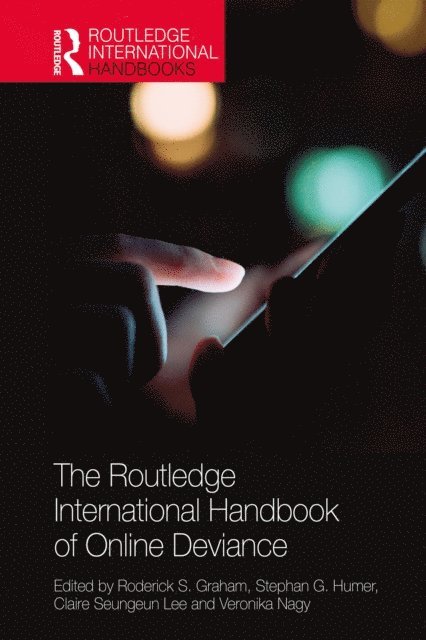
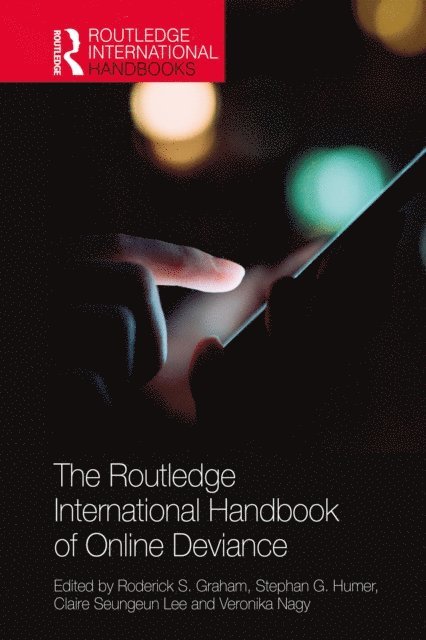
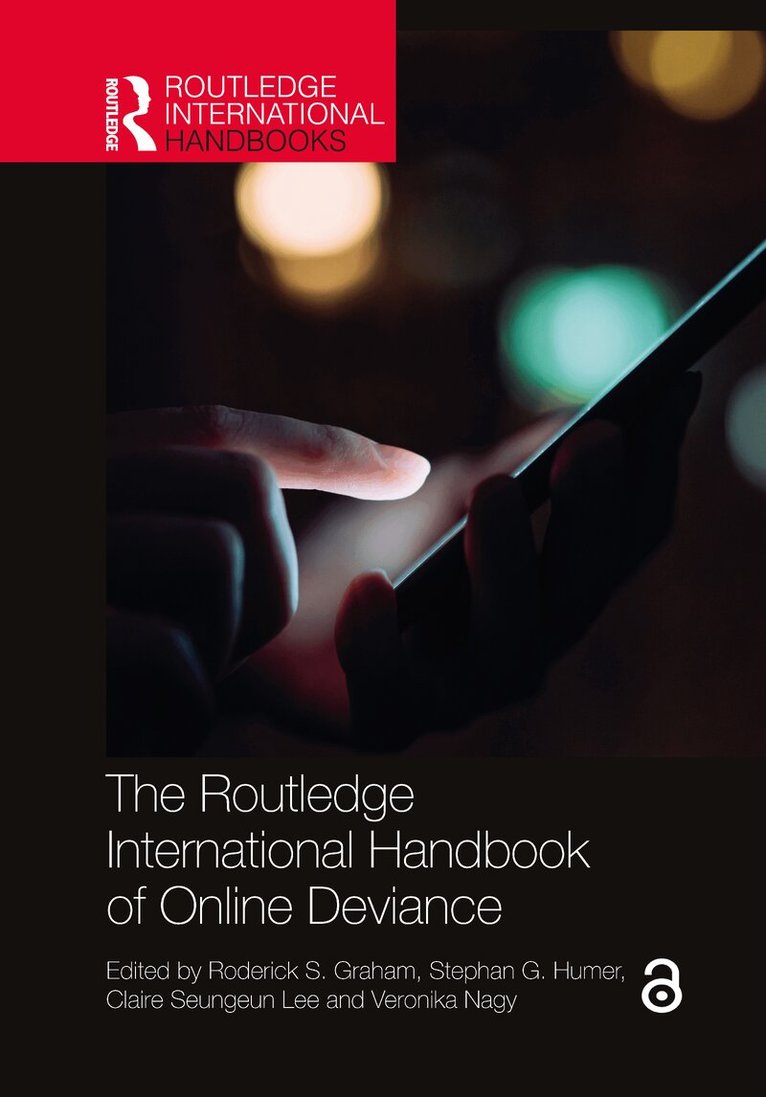
Covering a wide range of different online platforms, including social media sites and chatrooms, this volume is a comprehensive exploration of the current state of sociological and criminological scholarship focused on online deviance.
Understanding deviance broadly, the handbook acknowledges both an objective normative approach and a subjective, reactivist approach to the topic, putting into sharp relief the distinctions between cybercrime and online deviance on the one hand, and wider concerns of online communities related to online deviance on the other. Divided into five sections, the first section is devoted primarily to scholarship about the theories and methods foundational to exploring online deviance. The second section, “Gender, Sex, and Sexuality”, presents empirical research on expressions of gender, sex, and sexuality in online spaces considered deviant. The third section, “Violence and Aggression,” highlights scholarship on types of violent communications such as hate speech and cyberstalking. The fourth section, “Communities and Culture,” describes empirical research on online communities and networks that can be described as deviant by wider society. Lastly, the fifth section, “Regional Perspectives,” highlights research in which a terrestrial location is impactful to the online phenomena studied.
Providing a window into future scholarship over the next several years and acknowledging the ephemeral nature of research on digital technology, The Routledge International Handbook on Online Deviance is essential reading for students and scholars of Criminology and Sociology focused on deviant online behaviour. It will also appeal to those working in related areas within Internet/Digital Studies, Media/Communication Studies, Psychology, and Cybersecurity.
Chapter 2 of this book is freely available as a downloadable Open Access PDF at http://www.taylorfrancis.com under a Creative Commons Attribution-Non Commercial-No Derivatives (CC-BY-NC-ND) 4.0 license.
874 kr
Läs direkt efter köp
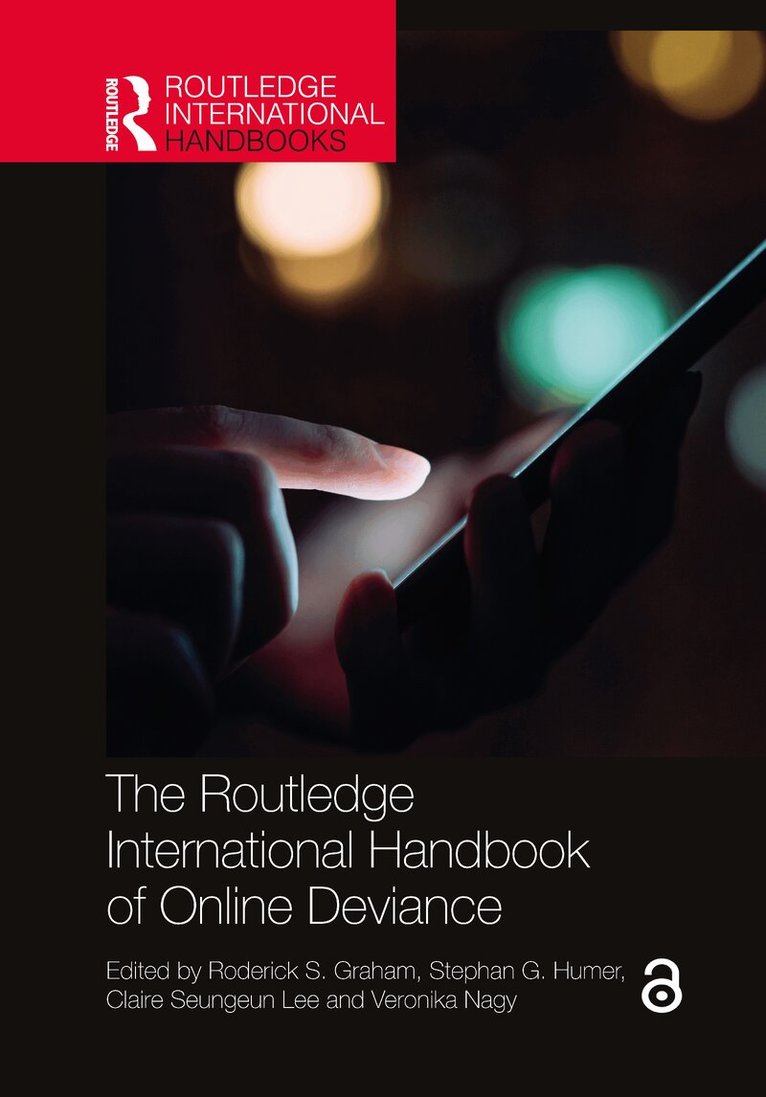
Covering a wide range of different online platforms, including social media sites and chatrooms, this volume is a comprehensive exploration of the current state of sociological and criminological scholarship focused on online deviance.
Understanding deviance broadly, the handbook acknowledges both an objective normative approach and a subjective, reactivist approach to the topic, putting into sharp relief the distinctions between cybercrime and online deviance on the one hand, and wider concerns of online communities related to online deviance on the other. Divided into five sections, the first section is devoted primarily to scholarship about the theories and methods foundational to exploring online deviance. The second section, “Gender, Sex, and Sexuality”, presents empirical research on expressions of gender, sex, and sexuality in online spaces considered deviant. The third section, “Violence and Aggression,” highlights scholarship on types of violent communications such as hate speech and cyberstalking. The fourth section, “Communities and Culture,” describes empirical research on online communities and networks that can be described as deviant by wider society. Lastly, the fifth section, “Regional Perspectives,” highlights research in which a terrestrial location is impactful to the online phenomena studied.
Providing a window into future scholarship over the next several years and acknowledging the ephemeral nature of research on digital technology, The Routledge International Handbook on Online Deviance is essential reading for students and scholars of Criminology and Sociology focused on deviant online behaviour. It will also appeal to those working in related areas within Internet/Digital Studies, Media/Communication Studies, Psychology, and Cybersecurity.
Chapter 2 of this book is freely available as a downloadable Open Access PDF at http://www.taylorfrancis.com under a Creative Commons Attribution-Non Commercial-No Derivatives (CC-BY-NC-ND) 4.0 license.
1 459 kr
Tillfälligt slut
495 kr
Tillfälligt slut