Roger Frantz – författare
Visar alla böcker från författaren Roger Frantz. Handla med fri frakt och snabb leverans.
17 produkter
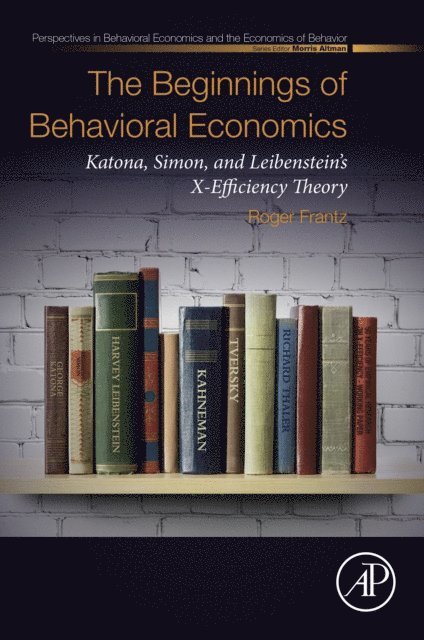
The Beginnings of Behavioral Economics
Katona, Simon, and Leibenstein's X-Efficiency Theory
Av Roger Frantz
Häftad, 2019
1567 kr
Lägg i varukorg
The Beginnings of Behavioral Economics: Katona, Simon, and Leibenstein's X-Efficiency Theory explores the mid-20th century roots of behavioral economics, placing the origin of this now-dominant approach to economic theory many years before the groundbreaking 1979 work on prospect theory by Daniel …
Beginnings of Behavioral Economics
Katona, Simon, and Leibenstein''s X-Efficiency Theory
Av Roger Frantz
E-bok, 2019
2172 kr
Lägg i varukorg
The Beginnings of Behavioral Economics: Katona, Simon, and Leibenstein''s X-Efficiency Theory explores the mid-20th century roots of behavioral economics, placing the origin of this now-dominant approach to economic theory many years before the groundbreaking 1979 work on prospect theory by Daniel …
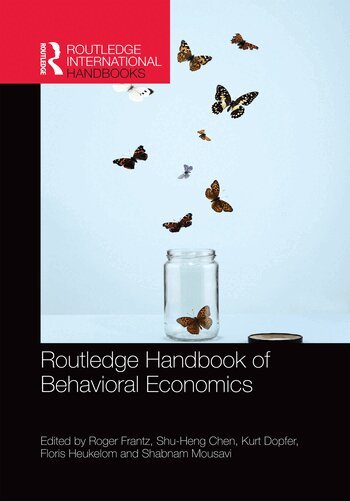
Routledge Handbook of Behavioral Economics
Av Roger Frantz, Shu-Heng Chen m. fl.
Häftad, 2019
816 kr
Lägg i varukorg
There is no doubt that behavioral economics is becoming a dominant lens through which we think about economics. Behavioral economics is not a single school of thought but representative of a range of approaches, and uniquely, this volume presents an overview of them. The wide spectrum of …
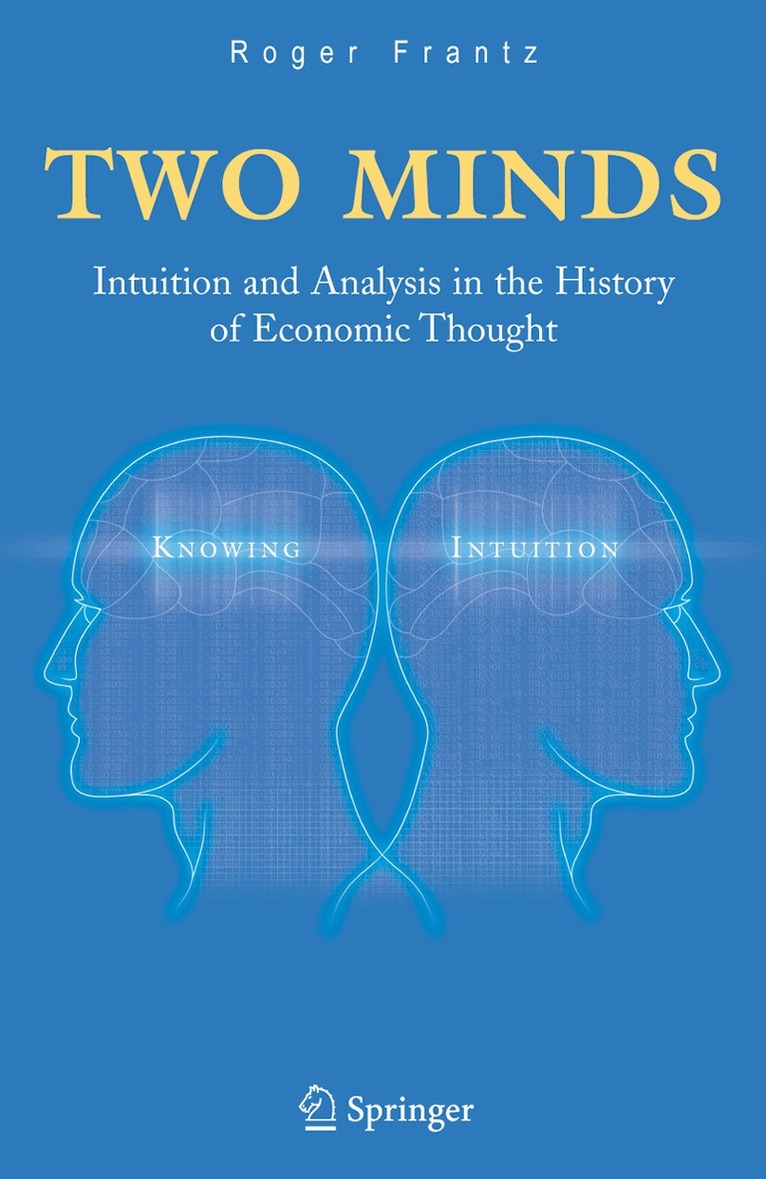
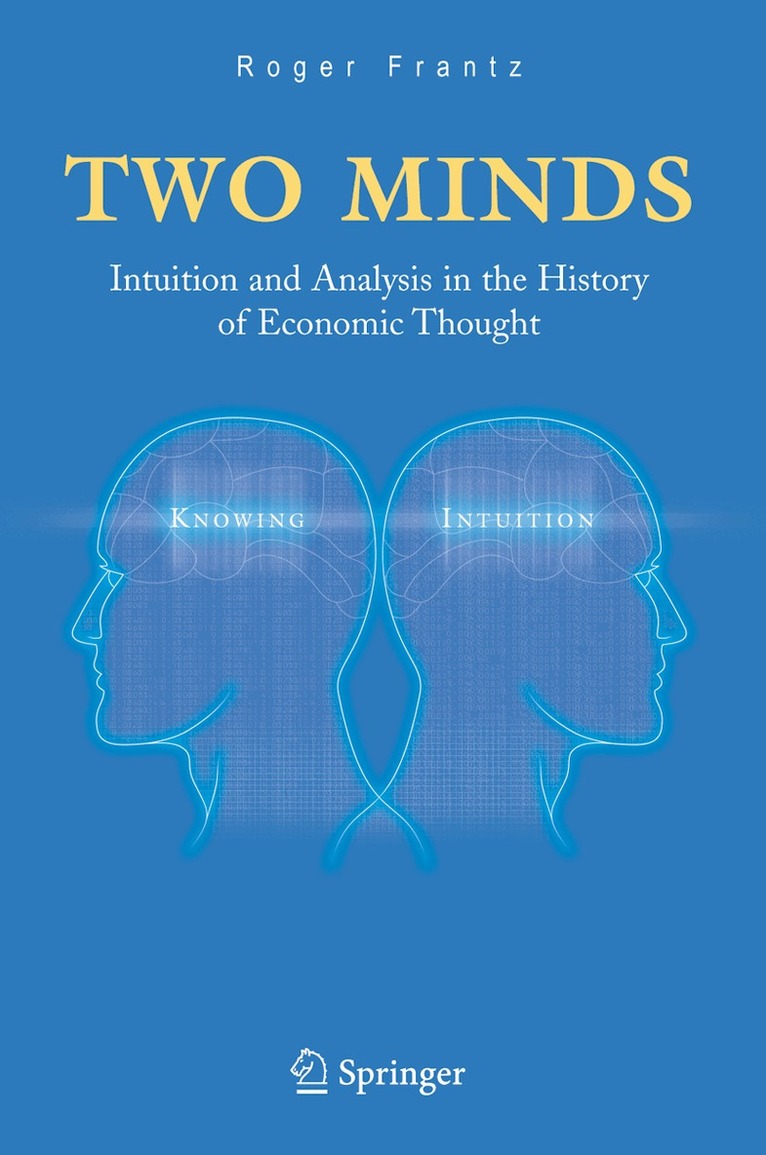
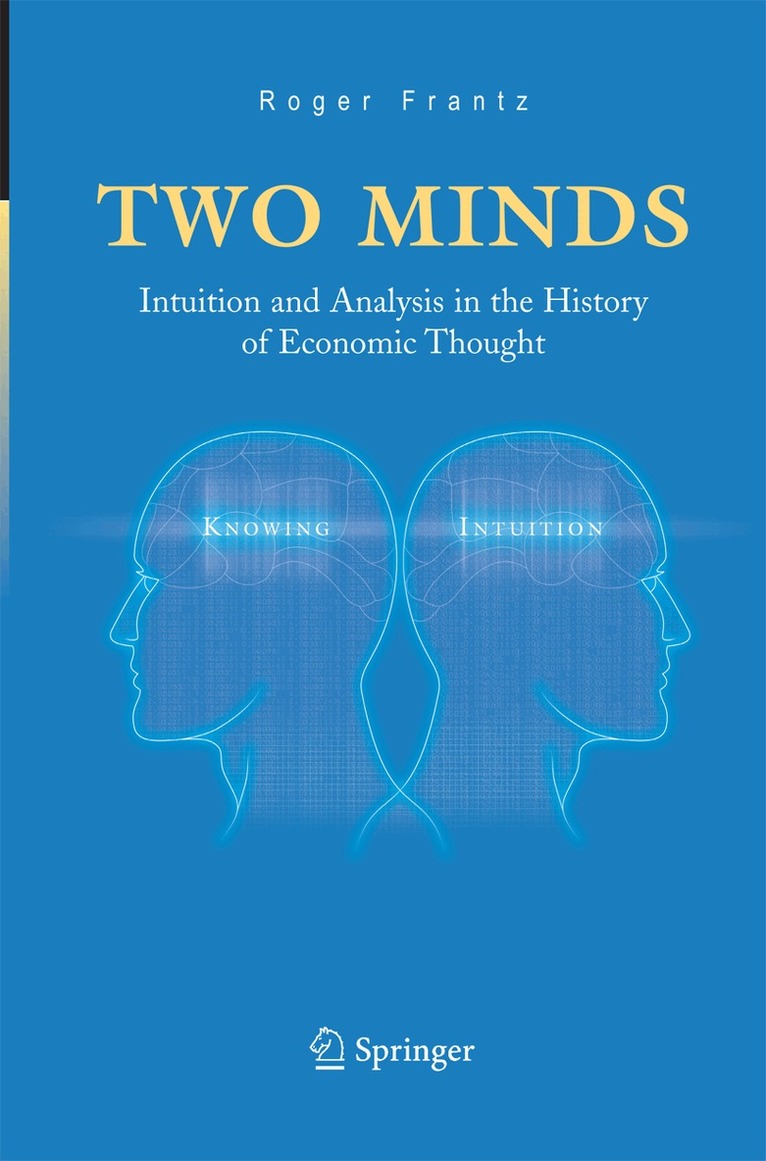
Two Minds
Intuition and Analysis in the History of Economic Thought
Av Roger Frantz
Häftad, 2005
1096 kr
Lägg i varukorg
As everyone knows, intuition is warm and fuzzy, qualitative, not measurable. Economics, on the other hand, is quantitative, and if it is not a hard science, at least it is the "queen of the social sciences." It is, therefore, intuitively obvious, that intuition and economics are as if oil and …
Two Minds
Intuition and Analysis in the History of Economic Thought
Av Roger Frantz
E-bok, 2006
1387 kr
Lägg i varukorg
As everyone knows, intuition is warm and fuzzy, qualitative, not measurable. Economics, on the other hand, is quantitative, and if it is not a hard science, at least it is the "queen of the social sciences." It is, therefore, intuitively obvious, that intuition and economics are as if oil and …
Two Minds
Intuition and Analysis in the History of Economic Thought
Av Roger Frantz
Inbunden, 2004
1096 kr
Lägg i varukorg
As everyone knows, intuition is warm and fuzzy, qualitative, not measurable. Economics, on the other hand, is quantitative, and if it is not a hard science, at least it is the "queen of the social sciences." It is, therefore, intuitively obvious, that intuition and economics are as if oil and …
Renaissance in Behavioral Economics
Essays in Honour of Harvey Leibenstein
Av Roger Frantz
Häftad, 2009
772 kr
Lägg i varukorg
Economists working on behavioral economics have been awarded the Nobel Prize four times in recent years. This book explores this innovative area and in particular focuses on the work of Harvey Leibenstein, one of the pioneers of the discipline. The topics covered in the book include agency theory; …
Renaissance in Behavioral Economics
Essays in Honour of Harvey Leibenstein
Av Roger Frantz
Inbunden, 2007
3564 kr
Lägg i varukorg
Economists working on behavioral economics have been awarded the Nobel Prize four times in recent years. This book explores this innovative area and in particular focuses on the work of Harvey Leibenstein, one of the pioneers of the discipline. The topics covered in the book include agency theory; …
Renaissance in Behavioral Economics
Essays in Honour of Harvey Leibenstein
Av Roger Frantz
E-bok, 2007
910 kr
Lägg i varukorg
Economists working on behavioral economics have been awarded the Nobel Prize four times in recent years. This book explores this innovative area and in particular focuses on the work of Harvey Leibenstein, one of the pioneers of the discipline. The topics covered in the book include agency theory; …
Renaissance in Behavioral Economics
Essays in Honour of Harvey Leibenstein
Av Roger Frantz
E-bok, 2007
890 kr
Lägg i varukorg
Economists working on behavioral economics have been awarded the Nobel Prize four times in recent years. This book explores this innovative area and in particular focuses on the work of Harvey Leibenstein, one of the pioneers of the discipline. The topics covered in the book include agency theory; …
Minds, Models and Milieux
Commemorating the Centennial of the Birth of Herbert Simon
Inbunden, 2016
1129 kr
Lägg i varukorg
This book is a collection of specially-commissioned chapters from philosophers, economists, political and behavioral economists, cognitive and organizational psychologists, computer scientists, sociologists and permutations thereof as befits the polymathic subject of this book: Herbert Simon. The …
Minds, Models and Milieux
Commemorating the Centennial of the Birth of Herbert Simon
E-bok, 2016
1562 kr
Lägg i varukorg
This book is a collection of specially-commissioned chapters from philosophers, economists, political and behavioral economists, cognitive and organizational psychologists, computer scientists, sociologists and permutations thereof as befits the polymathic subject of this book: Herbert Simon. The …
Routledge Handbook of Behavioral Economics
Av Roger Frantz, Shu-Heng Chen m. fl.
Inbunden, 2016
4354 kr
Lägg i varukorg
There is no doubt that behavioral economics is becoming a dominant lens through which we think about economics. Behavioral economics is not a single school of thought but representative of a range of approaches, and uniquely, this volume presents an overview of them. The wide spectrum of …
Routledge Handbook of Behavioral Economics
Av Shabnam Mousavi, Floris Heukelom m. fl.
E-bok, 2016
915 kr
Lägg i varukorg
There is no doubt that behavioral economics is becoming a dominant lens through which we think about economics. Behavioral economics is not a single school of thought but representative of a range of approaches, and uniquely, this volume presents an overview of them. The wide spectrum of …
Routledge Handbook of Behavioral Economics
Av Shabnam Mousavi, Floris Heukelom m. fl.
E-bok, 2016
915 kr
Lägg i varukorg
There is no doubt that behavioral economics is becoming a dominant lens through which we think about economics. Behavioral economics is not a single school of thought but representative of a range of approaches, and uniquely, this volume presents an overview of them. The wide spectrum of …
Minds, Models and Milieux
Commemorating the Centennial of the Birth of Herbert Simon
Häftad, 2017
1129 kr
Lägg i varukorg
This book is a collection of specially-commissioned chapters from philosophers, economists, political and behavioral economists, cognitive and organizational psychologists, computer scientists, sociologists and permutations thereof as befits the polymathic subject of this book: Herbert Simon. The …
Two Minds
Intuition and Analysis in the History of Economic Thought
Av Roger Frantz
Häftad, 2014
1065 kr
Lägg i varukorg
As everyone knows, intuition is warm and fuzzy, qualitative, not measurable. Economics, on the other hand, is quantitative, and if it is not a hard science, at least it is the "queen of the social sciences." It is, therefore, intuitively obvious, that intuition and economics are as if oil and …