Roger Norum - Böcker
Visar alla böcker från författaren Roger Norum. Handla med fri frakt och snabb leverans.
11 produkter
11 produkter
2 088 kr
Skickas inom 10-15 vardagar
Anthropocene Ecologies brings political ecology and tourism studies to bear on the Anthropocene. Through a collective examination of political ecologies of the Anthropocene by leading scholars in anthropology, geography and tourism studies, the book addresses critical themes of gender, health, conservation, agriculture, climate change, disaster, coastal marine management and sustainability. Each chapter theoretically and empirically unravels entanglements of tourism, nature and imagination to expose the political-ecological drivers of the Anthropocene as a material and symbolic force and its deepening integration with tourism. Grounded in ethnographic and qualitative research, the volume is interdisciplinary in scope, yet linked in its shared focus on the political threat as well as the social potential of the Anthropocene and its imaginaries. This collection contributes to emerging scholarship on tourism, sustainability and global environmental change in the current geological epoch.Anthropocene Ecologies will be of great interest to political ecology focused scholars of tourism, socio-environmental change and the Anthropocene. The chapters were originally published as a special issue in the Journal of Sustainable Tourism.
717 kr
Skickas inom 7-10 vardagar
By the start of the century, nearly one billion international travelers were circulating the globe annually, placing tourism among the worlds' most ubiquitous geopolitical encounters. While the COVID-19 pandemic brought the industry to a sudden halt, its geopolitical significance remained. With striking clarity, tourism desires and reinvented mobilities revealed the impermanence of Old World orders as new global alliances were forged. While scholars have critically examined tourism in the contexts of development, cultural change, and environmental crisis, much less attention has been paid to the geopolitical drivers and consequences of the world's largest industry. This collection homes in on tourism and its geopolitical entanglements by examining its contemporary affects, imaginaries, and infrastructures. It develops the concept of tourism geopolitics to reveal the growing centrality of tourism in geopolitical life, as well as the geopolitical nature of the tourism encounter.In Tourism Geopolitics, contributors show enacted processes such as labor migration, conservation, securitization, nation building, territorial disputes, ethnic cleansing, heritage revitalization, and global health crisis management, among others. These contended societal processes are deployed through tourism development initiatives that mobilize deeply uneven symbolic and material landscapes. The chapters reveal how a range of experiences are implicated in this process: museum visits, walking tours, architectonical evocations of the past, road construction, militarized island imaginations, gendered cultural texts, and official silences. Collectively, the chapters offer ethnographically rich illustrations from around the world that demonstrate the critical nature of tourism in formal geopolitical practices, as well as the geopolitical nature of everyday tourism encounters. This volume is a vital read for critical geographers, anthropologists, and political scientists, as well as scholars of tourism and cultural studies.Contributors: Sarah Becklake, M. Bianet Castellanos, Matilde Córdoba Azcárate, Jason Dittmer, Klaus Dodds, Jamie Gillen, Simon Halik, Jordan Hallbauer, James Igoe, Debbie Lisle, Mary Mostafanezhad, Dieter K. Müller, Roger Norum, Alessandro Rippa, Ian Rowen, Juan Francisco Salazar, Tani Sebro, Mimi Sheller, Robert Sounders, Henry Szadziewski, Vernadette Vicuña González, Emma Waterton
467 kr
Skickas inom 7-10 vardagar
By the start of the century, nearly one billion international travelers were circulating the globe annually, placing tourism among the worlds’ most ubiquitous geopolitical encounters. While the COVID-19 pandemic brought the industry to a sudden halt, its geopolitical significance remained. With striking clarity, tourism desires and reinvented mobilities revealed the impermanence of Old World orders as new global alliances were forged. While scholars have critically examined tourism in the contexts of development, cultural change, and environmental crisis, much less attention has been paid to the geopolitical drivers and consequences of the world’s largest industry. This collection homes in on tourism and its geopolitical entanglements by examining its contemporary affects, imaginaries, and infrastructures. It develops the concept of tourism geopolitics to reveal the growing centrality of tourism in geopolitical life, as well as the geopolitical nature of the tourism encounter.In Tourism Geopolitics, contributors show enacted processes such as labor migration, conservation, securitization, nation building, territorial disputes, ethnic cleansing, heritage revitalization, and global health crisis management, among others. These contended societal processes are deployed through tourism development initiatives that mobilize deeply uneven symbolic and material landscapes. The chapters reveal how a range of experiences are implicated in this process: museum visits, walking tours, architectonical evocations of the past, road construction, militarized island imaginations, gendered cultural texts, and official silences. Collectively, the chapters offer ethnographically rich illustrations from around the world that demonstrate the critical nature of tourism in formal geopolitical practices, as well as the geopolitical nature of everyday tourism encounters. This volume is a vital read for critical geographers, anthropologists, and political scientists, as well as scholars of tourism and cultural studies.Contributors: Sarah Becklake, M. Bianet Castellanos, Matilde CÓrdoba AzcÁrate, Jason Dittmer, Klaus Dodds, Jamie Gillen, Simon Halink, Jordan Hallbauer, James Igoe, Debbie Lisle, Mary Mostafanezhad, Dieter K. MÜller, Roger Norum, Alessandro Rippa, Ian Rowen, Robert Saunders, Juan Francisco Salazar, Tani Sebro, Mimi Sheller, Henrk Szadziewski, Vernadette VicuÑa GonzÁlez, Emma Waterton
617 kr
Skickas inom 10-15 vardagar
Anthropocene Ecologies brings political ecology and tourism studies to bear on the Anthropocene. Through a collective examination of political ecologies of the Anthropocene by leading scholars in anthropology, geography and tourism studies, the book addresses critical themes of gender, health, conservation, agriculture, climate change, disaster, coastal marine management and sustainability. Each chapter theoretically and empirically unravels entanglements of tourism, nature and imagination to expose the political-ecological drivers of the Anthropocene as a material and symbolic force and its deepening integration with tourism. Grounded in ethnographic and qualitative research, the volume is interdisciplinary in scope, yet linked in its shared focus on the political threat as well as the social potential of the Anthropocene and its imaginaries. This collection contributes to emerging scholarship on tourism, sustainability and global environmental change in the current geological epoch.Anthropocene Ecologies will be of great interest to political ecology focused scholars of tourism, socio-environmental change and the Anthropocene. The chapters were originally published as a special issue in the Journal of Sustainable Tourism.
698 kr
Skickas inom 10-15 vardagar
Why has political ecology been assigned so little attention in tourism studies, despite its broad and critical interrogation of environment and politics? As the first full-length treatment of a political ecology of tourism, the collection addresses this lacuna and calls for the further establishment of this emerging interdisciplinary subfield. Drawing on recent trends in geography, anthropology, and environmental and tourism studies, Political Ecology of Tourism: Communities, Power and the Environment employs a political ecology approach to the analysis of tourism through three interrelated themes: Communities and Power, Conservation and Control, and Development and Conflict. While geographically broad in scope—with chapters that span Central and South America to Africa, and South, Southeast, and East Asia to Europe and Greenland—the collection illustrates how tourism-related environmental challenges are shared across prodigious geographical distances, while also attending to the nuanced ways they materialize in local contexts and therefore demand the historically situated, place-based and multi-scalar approach of political ecology. This collection advances our understanding of the role of political, economic and environmental concerns in tourism practice. It offers readers a political ecology framework from which to address tourism-related issues and themes such as development, identity politics, environmental subjectivities, environmental degradation, land and resources conflict, and indigenous ecologies. Finally, the collection is bookended by a pair of essays from two of the most distinguished scholars working in the subfield: Rosaleen Duffy (foreword) and James Igoe (afterword).This collection will be valuable reading for scholars and practitioners alike who share a critical interest in the intersection of tourism, politics and the environment
2 155 kr
Skickas inom 10-15 vardagar
Why has political ecology been assigned so little attention in tourism studies, despite its broad and critical interrogation of environment and politics? As the first full-length treatment of a political ecology of tourism, the collection addresses this lacuna and calls for the further establishment of this emerging interdisciplinary subfield. Drawing on recent trends in geography, anthropology, and environmental and tourism studies, Political Ecology of Tourism: Communities, Power and the Environment employs a political ecology approach to the analysis of tourism through three interrelated themes: Communities and Power, Conservation and Control, and Development and Conflict. While geographically broad in scope—with chapters that span Central and South America to Africa, and South, Southeast, and East Asia to Europe and Greenland—the collection illustrates how tourism-related environmental challenges are shared across prodigious geographical distances, while also attending to the nuanced ways they materialize in local contexts and therefore demand the historically situated, place-based and multi-scalar approach of political ecology. This collection advances our understanding of the role of political, economic and environmental concerns in tourism practice. It offers readers a political ecology framework from which to address tourism-related issues and themes such as development, identity politics, environmental subjectivities, environmental degradation, land and resources conflict, and indigenous ecologies. Finally, the collection is bookended by a pair of essays from two of the most distinguished scholars working in the subfield: Rosaleen Duffy (foreword) and James Igoe (afterword).This collection will be valuable reading for scholars and practitioners alike who share a critical interest in the intersection of tourism, politics and the environment
241 kr
Skickas
The Bradt guide to Svalbard, including Spitsbergen, Franz Josef Land and Jan Mayen, is a unique, standalone guidebook to this evocative Arctic archipelago, a place that is plunged into darkness for four months each year and where there are 4,000 snow scooters for a population of just 2,500. This new sixth edition has been thoroughly updated throughout and offers new material on everything from adventure tours to accommodation, environmental change to restaurants. Also covered are the restoration of Barentsburg and the opening of Svalbard's historic mine to visitors Newly updated and amended, this edition reflects important recent changes in the archipelago, making it the perfect guide to a quintessential bucket-list destination.Possibly the most remote destination in the developed world, Svalbard is as off the beaten track as you can get in Europe today. It is the planet's most northerly settled land and the top (if not the end) of the world, and it was on and around Svalbard that most of David Attenborough's Frozen Planet was filmed. A trip to Svalbard easily lends itself to notching up geographic superlatives (most northerly kebab, most northerly souvenir shop, etc) and adventurous travellers seek out experiences such as husky driving and hikes across the permafrost. The main tourist period falls in Svalbard's brief summer, from June to August, when it's light around the clock and not very cold. However, increasingly popular for winter sports - especially because the next few years will enjoy unusually high Northern Lights activity - are the so-called 'light winter' months (March-May), when there is both sunlight and snow. The winter season (November/December-March) offers many possibilities for outdoor adventure - and the polar night is an experience in itself. Despite winter temperatures that can drop to over 40 below zero, Svalbard's glorious mountains, majestic fjords and sprawling valleys are the perfect setting for adventurous journeys out to the back of beyond. This brand-new edition of Svalbard provides all of the practical and background information you'll need to explore this wild place, turning the hostile into the hospitable.
1 956 kr
Skickas inom 3-6 vardagar
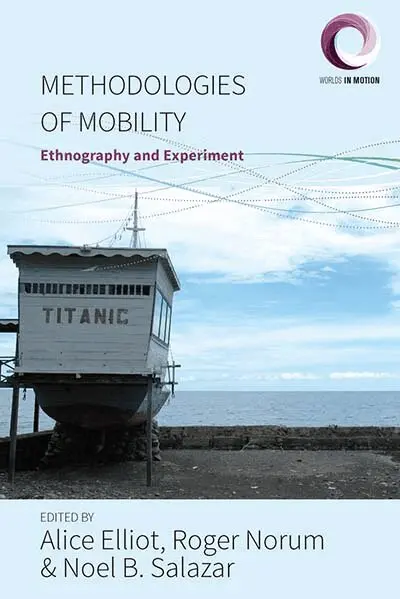
Research into mobility is an exciting challenge for the social sciences that raises novel social, cultural, spatial and ethical questions. At the heart of these empirical and theoretical complexities lies the question of methodology: how can we best capture and understand a planet in flux? Methodologies of Mobility speaks beyond disciplinary boundaries to the methodological challenges and possibilities of engaging with a world on the move. With scholars continuing to face different forms and scales of mobility, this volume strategically traces innovative ways of designing, applying and reflecting on both established and cutting-edge methodologies of mobility.
566 kr
Skickas inom 3-6 vardagar
Research into mobility is an exciting challenge for the social sciences that raises novel social, cultural, spatial and ethical questions. At the heart of these empirical and theoretical complexities lies the question of methodology: how can we best capture and understand a planet in flux? Methodologies of Mobility speaks beyond disciplinary boundaries to the methodological challenges and possibilities of engaging with a world on the move. With scholars continuing to face different forms and scales of mobility, this volume strategically traces innovative ways of designing, applying and reflecting on both established and cutting-edge methodologies of mobility.
Weirding Landscapes
Arctic Glacier Extinction and Monsters of the Anthropocene
Inbunden, Engelska, 2025
535 kr
Skickas inom 10-15 vardagar
Through an archaeological and anthropological study of landscape, it wields “weirding” – a creative mode of engagement with the world – as a means of coming to terms with the stranger, experiential dimensions of a planet populated by diverse non-human entities often bearing monstrous characteristics.
1 279 kr
Skickas
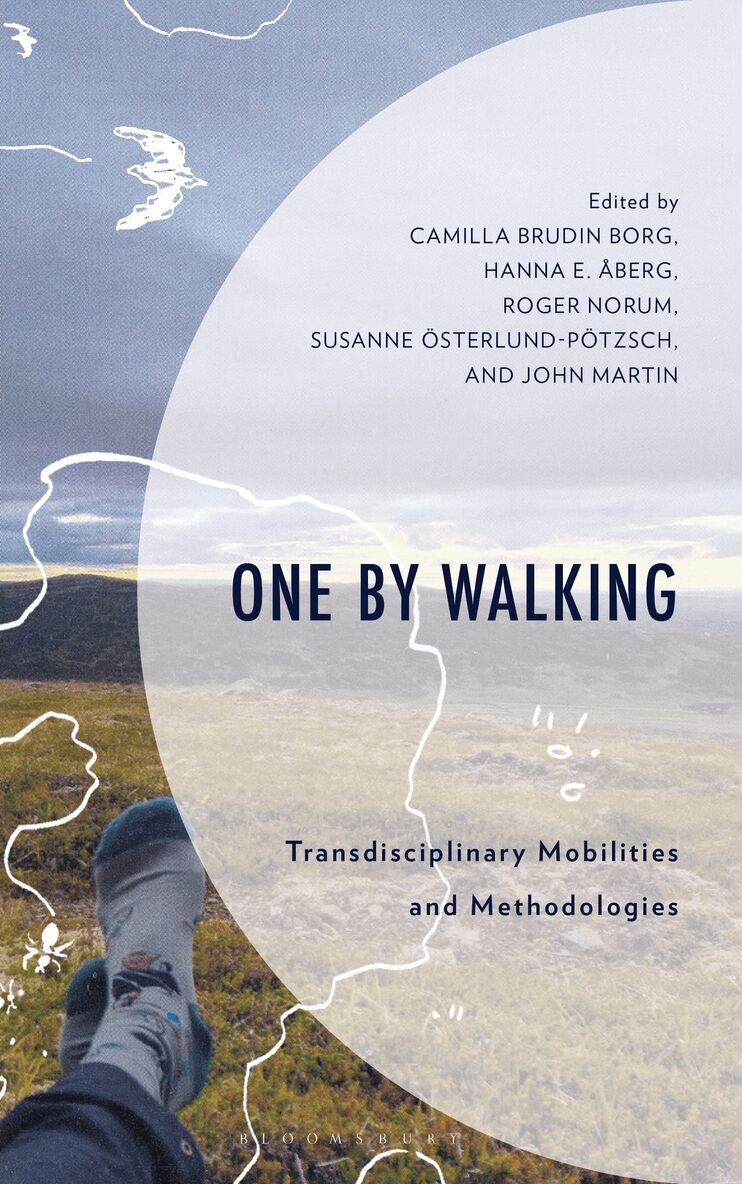
More than just a way to get from place to place, walking is a powerful method of sensing, reflecting, and engaging–with ourselves, with others, and with the environments we move through. Whether as a meditative act, a research tool, or a response to global crises, walking opens new routes to understanding and more mindful ways of living. This groundbreaking, interdisciplinary collection brings together voices from the social sciences, humanities, and the arts to explore walking as both method and metaphor. From mobility and sustainability to embodied experience and ecological connection, these essays uncover the rich, often overlooked dimensions of walking–how it links us to landscapes, histories, and communities, and how it helps shape our place in the world. Born out of the international research network One by Walking: Transdisciplinary Mobilities and Methodologies offers fresh, thought-provoking insights into walking as a creative, intellectual, and political practice. For scholars, educators, artists, and walkers of all kinds, this book is an invitation to step into deeper ways of thinking–one footfall at a time.