Roger Strathausen – författare
Visar alla böcker från författaren Roger Strathausen. Handla med fri frakt och snabb leverans.
16 produkter
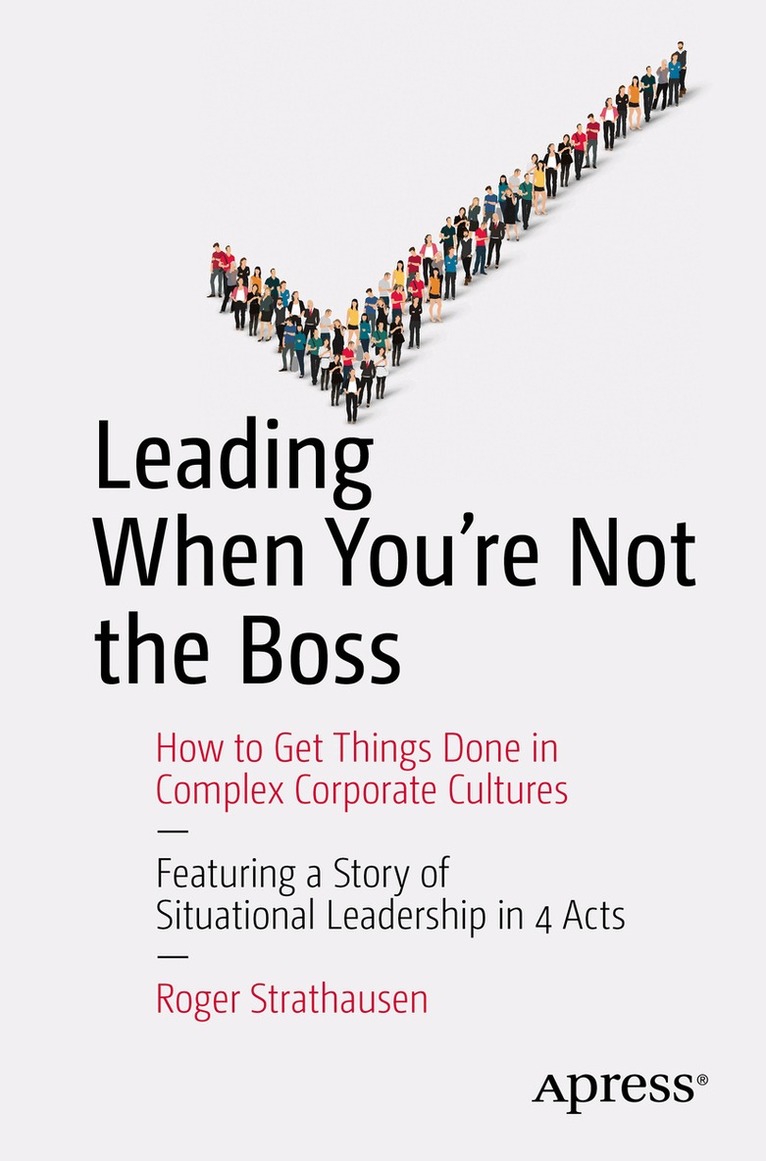
Leading When You're Not the Boss
How to Get Things Done in Complex Corporate Cultures
Häftad, 2015
367 kr
Lägg i varukorg
Answer the questions that arise when managers and workersneed to adjust to unfamiliar leadership roles and rules in flattenedorganizational forms. Leading When You’reNot the Boss provides a conceptual framework that you can apply whenassessing your own organizations and work. The book discusses the …
Leading When You're Not the Boss
How to Get Things Done in Complex Corporate Cultures
E-bok, 2015
504 kr
Lägg i varukorg
Answer the questions that arise when managers and workersneed to adjust to unfamiliar leadership roles and rules in flattenedorganizational forms. Leading When You’reNot the Boss provides a conceptual framework that you can apply whenassessing your own organizations and work. The book discusses the …
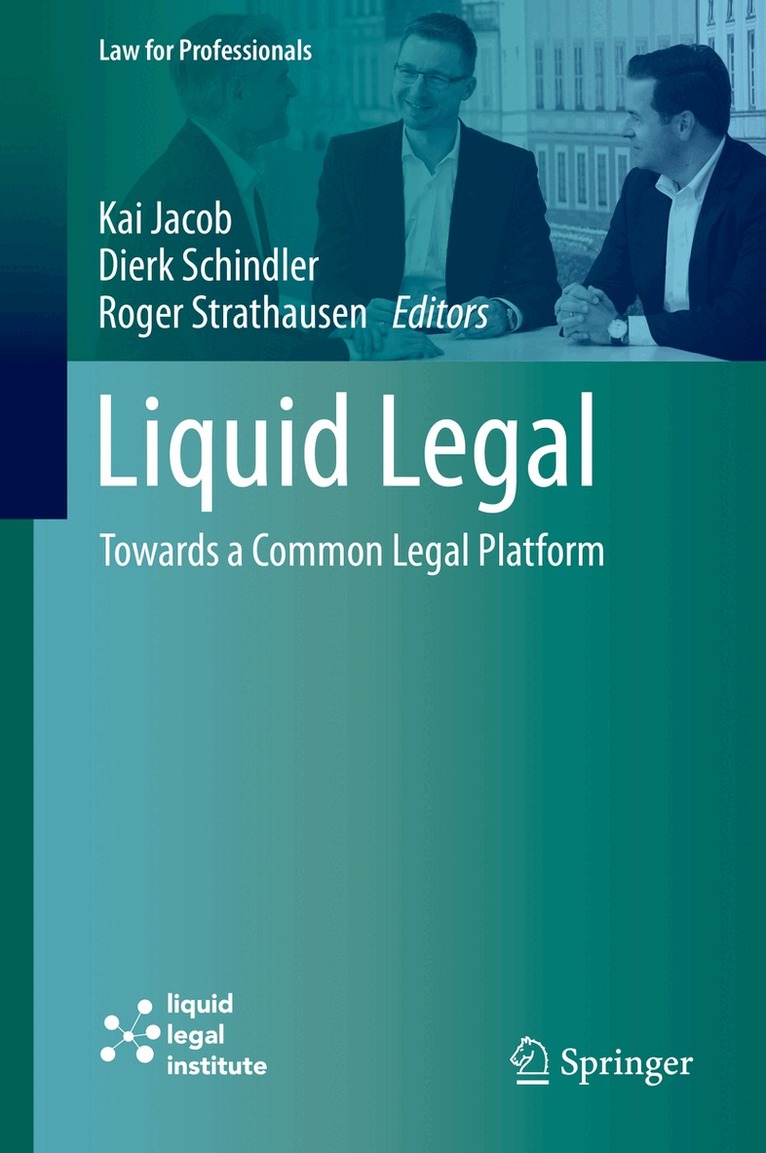
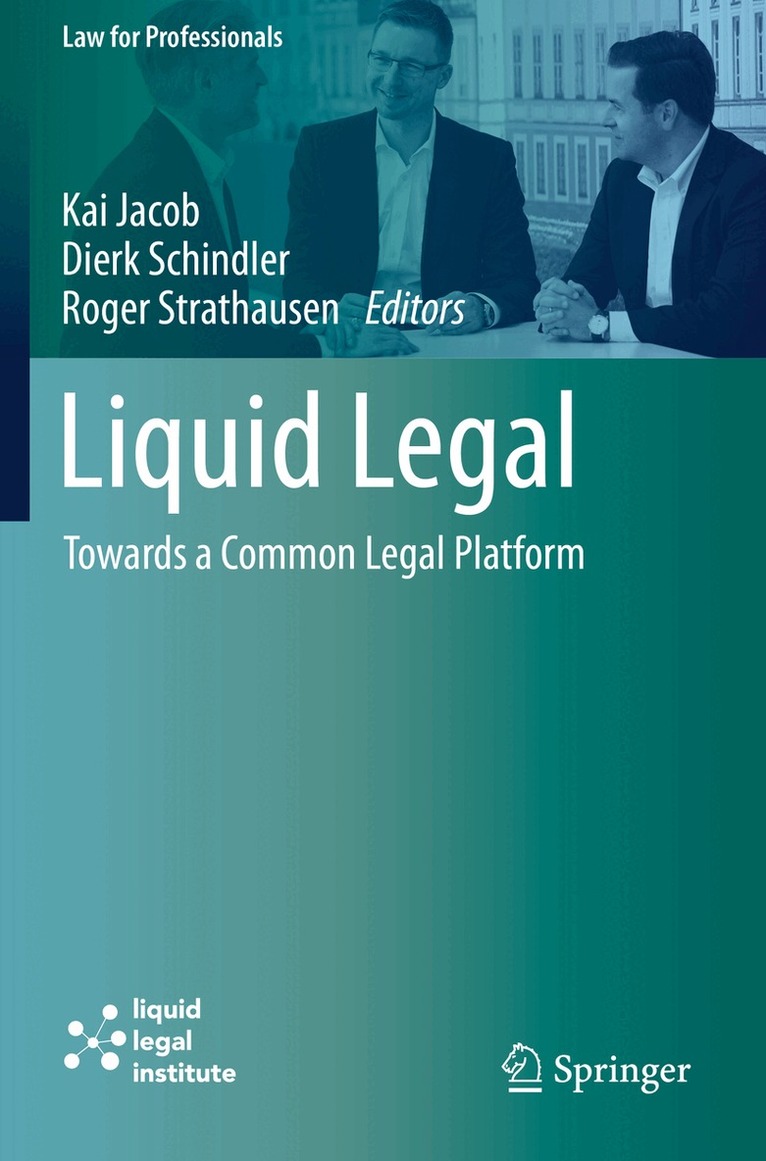
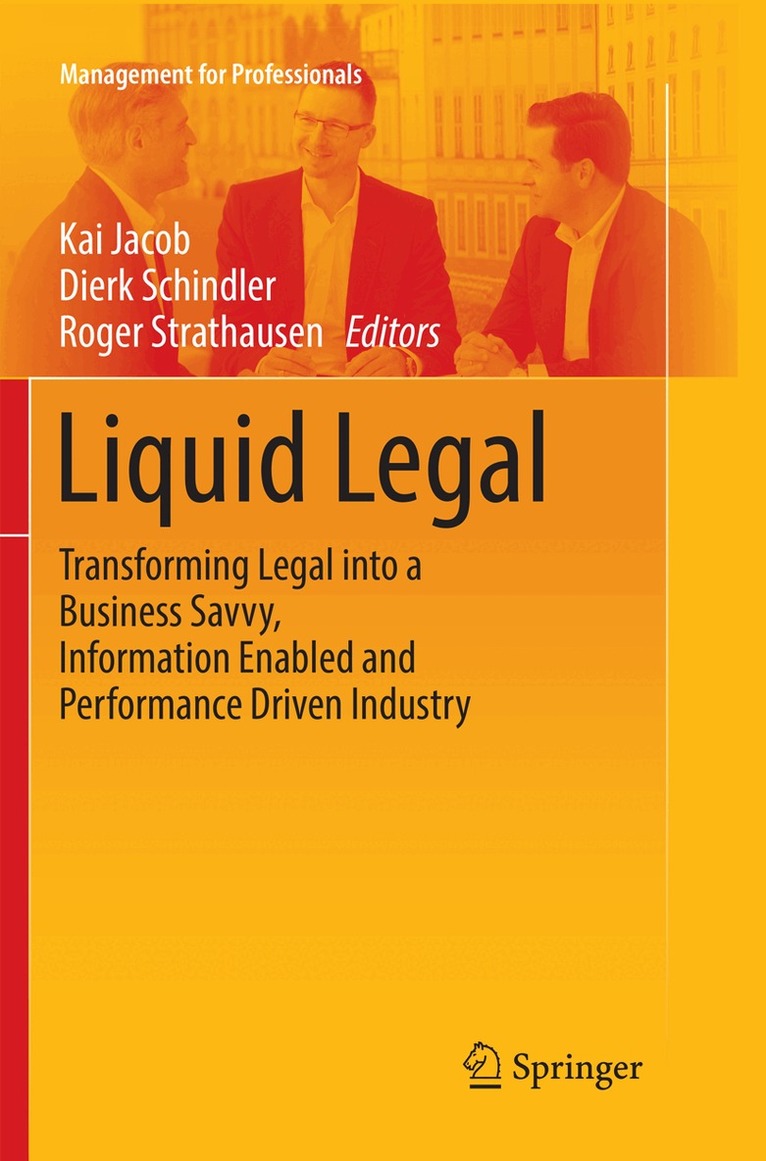
Liquid Legal
Towards a Common Legal Platform
Av Kai Jacob, Dierk Schindler m. fl.
Inbunden, 2020
659 kr
Lägg i varukorg
Three years ago, the first Liquid Legal book compelled the legal profession to reassess its identity and to aspire to become a strategic partner for corporate executives as well as for clients. It also led to the foundation of the Liquid Legal Institute (LLI) – an association that sparks innovation …
Liquid Legal
Towards a Common Legal Platform
Av Roger Strathausen, Dierk Schindler m. fl.
E-bok, 2020
825 kr
Lägg i varukorg
Three years ago, the first Liquid Legal book compelled the legal profession to reassess its identity and to aspire to become a strategic partner for corporate executives as well as for clients. It also led to the foundation of the Liquid Legal Institute (LLI) – an association that sparks innovation …
Liquid Legal
Towards a Common Legal Platform
Av Kai Jacob, Dierk Schindler m. fl.
Häftad, 2021
448 kr
Lägg i varukorg
Three years ago, the first Liquid Legal book compelled the legal profession to reassess its identity and to aspire to become a strategic partner for corporate executives as well as for clients. It also led to the foundation of the Liquid Legal Institute (LLI) – an association that sparks innovation …
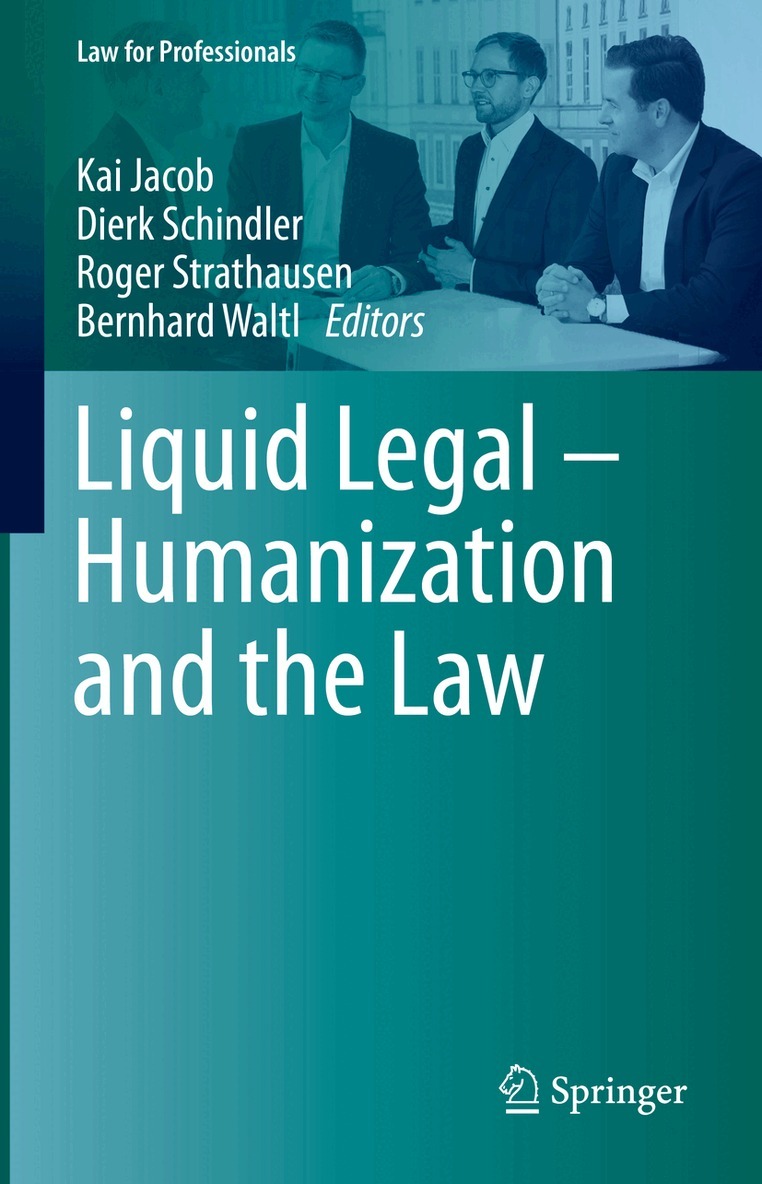
Liquid Legal – Humanization and the Law
Av Kai Jacob, Dierk Schindler m. fl.
Inbunden, 2022
765 kr
Lägg i varukorg
“Humanization and the Law” combines two current and complementary trends in the business-to-business (B2B) market of the legal industry: digitalization and humanization.On the one hand, digital transformation in corporate legal departments and law firms continues to advance. Contract management, …
Liquid Legal - Humanization and the Law
Av Bernhard Waltl, Roger Strathausen m. fl.
E-bok, 2022
825 kr
Lägg i varukorg
“Humanization and the Law” combines two current and complementary trends in the business-to-business (B2B) market of the legal industry: digitalization and humanization. On the one hand, digital transformation in corporate legal departments and law firms continues to advance. Contract management, …
Liquid Legal – Humanization and the Law
Av Kai Jacob, Dierk Schindler m. fl.
Häftad, 2023
656 kr
Lägg i varukorg
“Humanization and the Law” combines two current and complementary trends in the business-to-business (B2B) market of the legal industry: digitalization and humanization.On the one hand, digital transformation in corporate legal departments and law firms continues to advance. Contract management, …
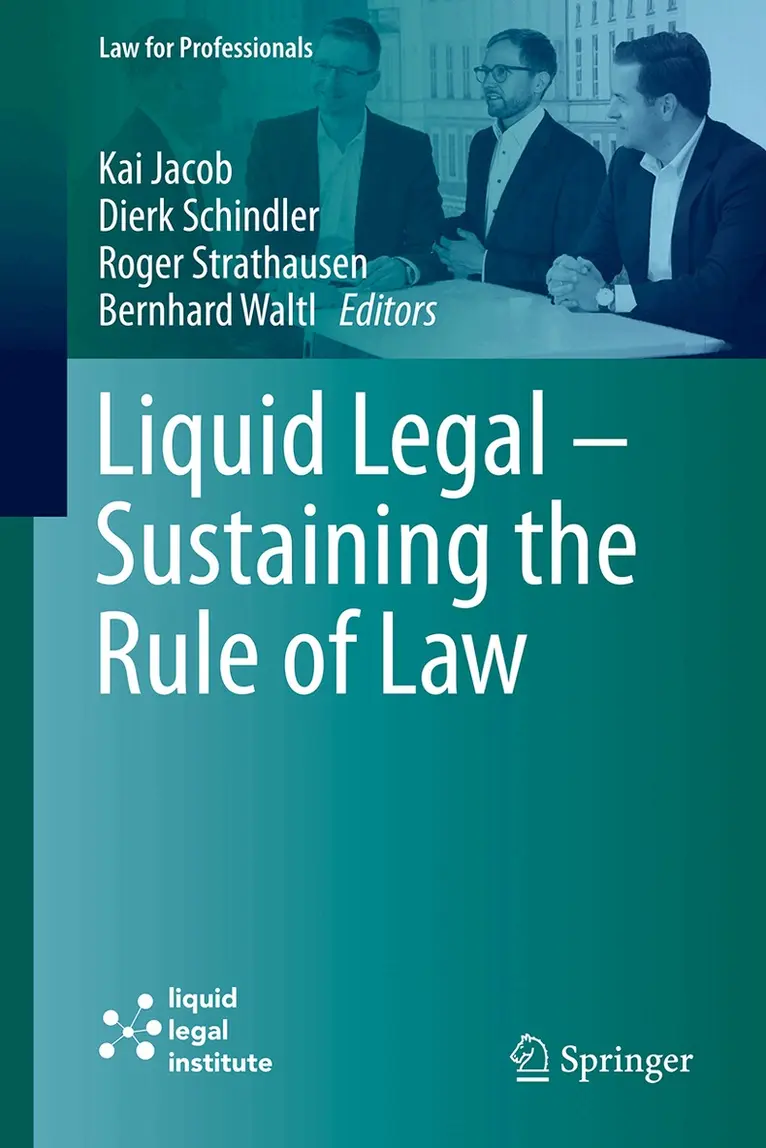
Liquid Legal – Sustaining the Rule of Law
Artificial Intelligence, E-Justice, and the Cloud
Av Kai Jacob, Dierk Schindler m. fl.
Inbunden, 2025
1205 kr
Lägg i varukorg
This book is a comprehensive guide for legal, business, and technology professionals seeking to understand the intersection of sustainability and emerging technologies in the legal ecosystem. The book takes a critical look at the role of AI and cloud technologies in promoting sustainable legal …
Liquid Legal - Sustaining the Rule of Law
Artificial Intelligence, E-Justice, and the Cloud
Av Bernhard Waltl, Roger Strathausen m. fl.
E-bok, 2025
1642 kr
Lägg i varukorg
This book is a comprehensive guide for legal, business, and technology professionals seeking to understand the intersection of sustainability and emerging technologies in the legal ecosystem. The book takes a critical look at the role of AI and cloud technologies in promoting sustainable legal …
Liquid Legal – Sustaining the Rule of Law
Artificial Intelligence, E-Justice, and the Cloud
Av Kai Jacob, Dierk Schindler m. fl.
Häftad, 2026
856 kr
Lägg i varukorg
This book is a comprehensive guide for legal, business, and technology professionals seeking to understand the intersection of sustainability and emerging technologies in the legal ecosystem. The book takes a critical look at the role of AI and cloud technologies in promoting sustainable legal …
Liquid Legal
Transforming Legal into a Business Savvy, Information Enabled and Performance Driven Industry
Av Kai Jacob, Dierk Schindler m. fl.
Inbunden, 2016
1006 kr
Lägg i varukorg
This book compels the legal profession to question its current identity and to aspire to become a strategic partner for corporate executives, clients and stakeholders, transforming legal into a function that creates incremental value. It provides a uniquely broad range of forward-looking …
Liquid Legal
Transforming Legal into a Business Savvy, Information Enabled and Performance Driven Industry
Av Roger Strathausen, Dierk Schindler m. fl.
E-bok, 2016
825 kr
Lägg i varukorg
This book compels the legal profession to question its current identity and to aspire to become a strategic partner for corporate executives, clients and stakeholders, transforming legal into a function that creates incremental value. It provides a uniquely broad range of forward-looking …
Liquid Legal
Transforming Legal into a Business Savvy, Information Enabled and Performance Driven Industry
Av Kai Jacob, Dierk Schindler m. fl.
Häftad, 2018
448 kr
Lägg i varukorg
This book compels the legal profession to question its current identity and to aspire to become a strategic partner for corporate executives, clients and stakeholders, transforming legal into a function that creates incremental value. It provides a uniquely broad range of forward-looking …
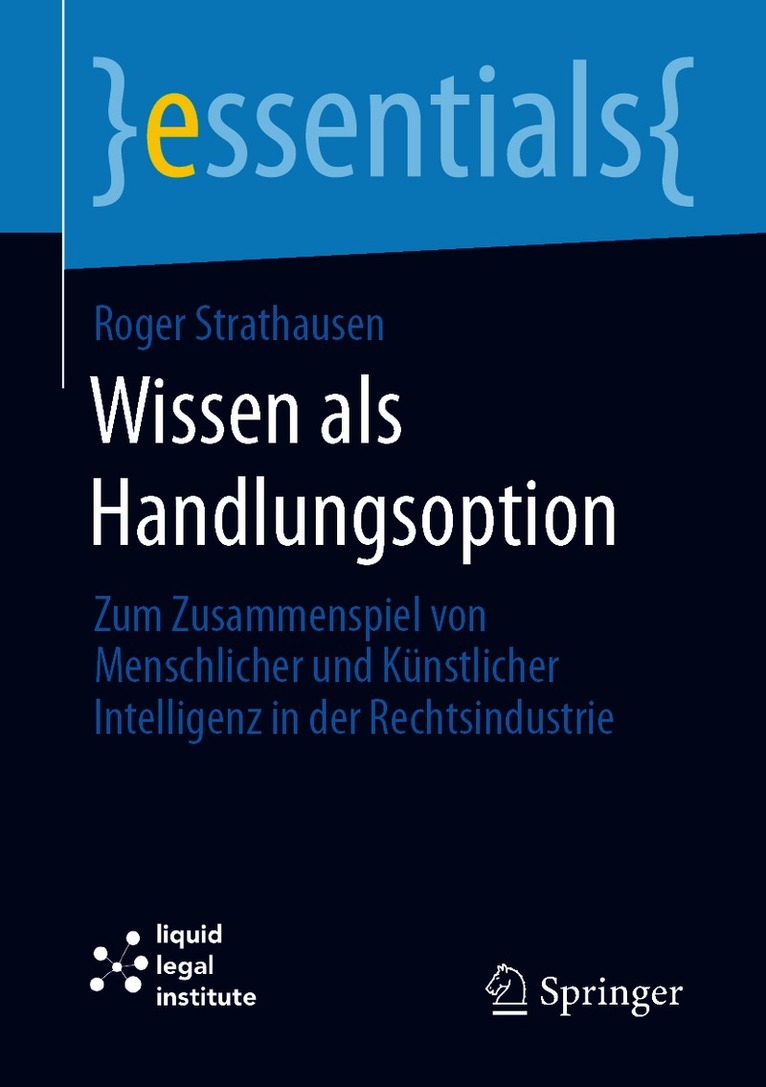
Wissen als Handlungsoption
Zum Zusammenspiel von menschlicher und künstlicher Intelligenz in der Rechtsindustrie
Häftad, 2023
147 kr
Lägg i varukorg
Wissen ist ein zentrales Element unternehmerischen Handelns. Nur, wer den Markt kennt und weiß, welche Probleme Kunden haben und wie diese sich mit neuen Produkten und Services lösen lassen, kann erfolgreich agieren.Dieses Buch untersucht die Auswirkungen der Digitalisierung auf die Rolle des …
Wissen als Handlungsoption
Zum Zusammenspiel von menschlicher und künstlicher Intelligenz in der Rechtsindustrie
E-bok, 2023
135 kr
Lägg i varukorg
Wissen ist ein zentrales Element unternehmerischen Handelns. Nur, wer den Markt kennt und weiß , welche Probleme Kunden haben und wie diese sich mit neuen Produkten und Services lösen lassen, kann erfolgreich agieren. Dieses Buch untersucht die Auswirkungen der Digitalisierung auf die Rolle des …