Roger T. Johnson – författare
Visar alla böcker från författaren Roger T. Johnson. Handla med fri frakt och snabb leverans.
6 produkter
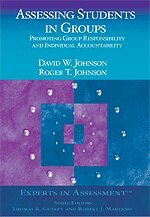
Assessing Students in Groups
Promoting Group Responsibility and Individual Accountability
Av Dianne Johnson, Roger T. Johnson
Inbunden, 2004
1298 kr
Lägg i varukorg
Cooperative groups work to make each member a more successful student.Compelling research conclusively proves that group learning increases students′ academic and social skills. Many teachers use cooperative groups in their classrooms, but they can be extremely difficult to implement and even …
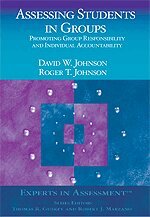
Assessing Students in Groups
Promoting Group Responsibility and Individual Accountability
Av Dianne Johnson, Roger T. Johnson
Häftad, 2004
627 kr
Lägg i varukorg
Cooperative groups work to make each member a more successful student.Compelling research conclusively proves that group learning increases students′ academic and social skills. Many teachers use cooperative groups in their classrooms, but they can be extremely difficult to implement and even …
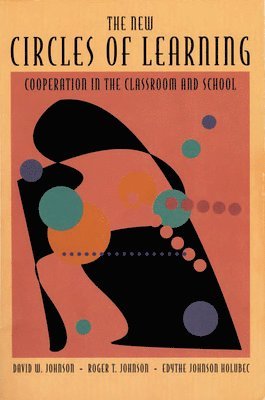
New Circles of Learning
Cooperation in the Classroom and School
Av David W. Johnson, Roger T. Johnson m. fl.
Häftad, 1994
231 kr
Lägg i varukorg
Affective Assessment
Av Dianne Johnson, Roger T. Johnson
Inbunden, 2031
650 kr
Kommande
In this book, David and Roger Johnson provide teachers with the practical tools they need to assess the non-academic outcomes of schooling. While the emphasis in schools right now is very much focused on all things academic, teachers and administrators will always be concerned with non-academic …
Head Injury Rehabilitation
A Community Team Perspective
Av Rosemary Gravell, Roger T. Johnson
Häftad, 2002
1070 kr
Lägg i varukorg
The impact of head injury on individuals and their families and friends cannot be overestimated. Developments in the acute care of head injured people have meant higher survival rates and increasing numbers being discharged back into the community. These people face a very different future from …
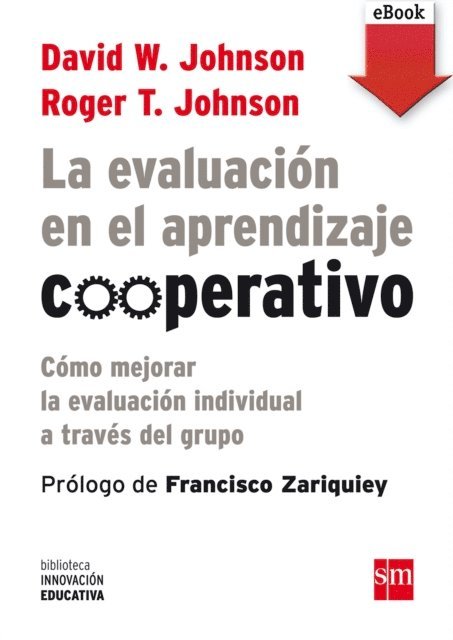
La evaluación en el aprendizaje cooperativo
Av Roger T. Johnson, David W. Johnson
E-bok, 2015
91 kr
Lägg i varukorg
El propósito de este libro es proporcionar una guía práctica sobre el uso de grupos de aprendizaje cooperativo como contexto para la evaluación de grupos, la coevaluación, la evaluación individual y la autoevaluación. Ofrece un amplio abanico de procedimientos de evaluación que en su mayoría …