Roger Z. George - Böcker
Visar alla böcker från författaren Roger Z. George. Handla med fri frakt och snabb leverans.
10 produkter
10 produkter
Intelligence and the National Security Strategist
Enduring Issues and Challenges
Häftad, Engelska, 2005
1 099 kr
Skickas inom 5-8 vardagar
Intelligence and the National Security Strategist: Enduring Issues and Challenges presents students with a useful anthology of published articles from diverse sources as well as original contributions to the study of intelligence. The collection includes classic perspectives from the history of warfare, views on the evolution of U.S. intelligence, and studies on the delicate balance between the need for information-gathering and the values of democratic societies. It also includes succinct discussions of complex issues facing the Intelligence Community, such as the challenges of technical and clandestine collection, the proliferation of open sources, the problems of deception and denial operations, and the interaction between the Intelligence Community and the military. Several timely chapters examine the role of the intelligence analyst in support of the national security policymaker. Rounding out the volume are appendices on the legislative underpinnings of our national intelligence apparatus.
526 kr
Skickas inom 5-8 vardagar
410 kr
Skickas inom 7-10 vardagar
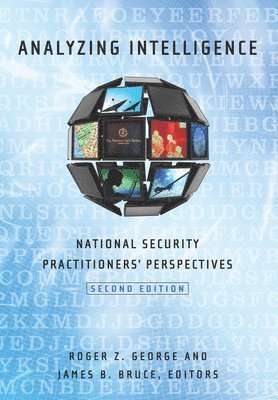
Analyzing Intelligence, now in a revised and extensively updated second edition, assesses the state of the profession of intelligence analysis from the practitioners point of view. The contributors-most of whom have held senior positions in the US intelligence community-review the evolution of the field, the rise of new challenges, pitfalls in analysis, and the lessons from new training and techniques designed to deal with 21st century national security problems. This second edition updates this indispensable book with new chapters that highlight advances in applying more analytic rigor to analysis, along with expertise-building, training, and professional development. New chapters by practitioners broaden the original volume's discussion of the analyst-policymaker relationship by addressing analytic support to the military customer as well as by demonstrating how structured analysis can benefit military commanders on the battlefield.Analyzing Intelligence is written for national security practitioners such as producers and users of intelligence, as well as for scholars and students seeking to understand the nature and role of intelligence analysis, its strengths and weaknesses, and steps that can improve it and lead it to a more recognizable profession. The most comprehensive and up-to-date volume on professional intelligence analysis as practiced in the US Government, Analyzing Intelligence is essential reading for practitioners and users of intelligence analysis, as well as for students and scholars in security studies and related fields.
1 502 kr
Skickas inom 5-8 vardagar
Analyzing Intelligence, now in a revised and extensively updated second edition, assesses the state of the profession of intelligence analysis from the practitioners point of view. The contributors-most of whom have held senior positions in the US intelligence community-review the evolution of the field, the rise of new challenges, pitfalls in analysis, and the lessons from new training and techniques designed to deal with 21st century national security problems. This second edition updates this indispensable book with new chapters that highlight advances in applying more analytic rigor to analysis, along with expertise-building, training, and professional development. New chapters by practitioners broaden the original volume's discussion of the analyst-policymaker relationship by addressing analytic support to the military customer as well as by demonstrating how structured analysis can benefit military commanders on the battlefield.Analyzing Intelligence is written for national security practitioners such as producers and users of intelligence, as well as for scholars and students seeking to understand the nature and role of intelligence analysis, its strengths and weaknesses, and steps that can improve it and lead it to a more recognizable profession. The most comprehensive and up-to-date volume on professional intelligence analysis as practiced in the US Government, Analyzing Intelligence is essential reading for practitioners and users of intelligence analysis, as well as for students and scholars in security studies and related fields.
1 502 kr
Skickas inom 5-8 vardagar
This second edition of The National Security Enterprise provides practitioners' insights into the operation, missions, and organizational cultures of the principal national security agencies and other institutions that shape the US national security decision-making process. Unlike some textbooks on American foreign policy, it offers analysis from insiders who have worked at the National Security Council, the State and Defense Departments, the intelligence community, and the other critical government entities. The book explains how organizational missions and cultures create the labyrinth in which a coherent national security policy must be fashioned. Understanding and appreciating these organizations and their cultures is essential for formulating and implementing it. Taking into account the changes introduced by the Obama administration, the second edition includes four new or entirely revised chapters (Congress, Department of Homeland Security, Treasury, and USAID) and updates to the text throughout.It covers changes instituted since the first edition was published in 2011, implications of the government campaign to prosecute leaks, and lessons learned from more than a decade of war in Afghanistan and Iraq. This up-to-date book will appeal to students of US national security and foreign policy as well as career policymakers.
410 kr
Skickas inom 7-10 vardagar
This second edition of The National Security Enterprise provides practitioners' insights into the operation, missions, and organizational cultures of the principal national security agencies and other institutions that shape the US national security decision-making process. Unlike some textbooks on American foreign policy, it offers analysis from insiders who have worked at the National Security Council, the State and Defense Departments, the intelligence community, and the other critical government entities. The book explains how organizational missions and cultures create the labyrinth in which a coherent national security policy must be fashioned. Understanding and appreciating these organizations and their cultures is essential for formulating and implementing it. Taking into account the changes introduced by the Obama administration, the second edition includes four new or entirely revised chapters (Congress, Department of Homeland Security, Treasury, and USAID) and updates to the text throughout.It covers changes instituted since the first edition was published in 2011, implications of the government campaign to prosecute leaks, and lessons learned from more than a decade of war in Afghanistan and Iraq. This up-to-date book will appeal to students of US national security and foreign policy as well as career policymakers.
1 873 kr
Skickas inom 5-8 vardagar
This textbook introduces students to the critical role of the US intelligence community within the wider national security decision-making and political process. Intelligence in the National Security Enterprise defines what intelligence is and what intelligence agencies do, but the emphasis is on showing how intelligence serves the policymaker. Roger Z. George draws on his thirty-year CIA career and more than a decade of teaching at both the undergraduate and graduate level to reveal the real world of intelligence. Intelligence support is examined from a variety of perspectives to include providing strategic intelligence, warning, daily tactical support to policy actions as well as covert action. The book includes useful features for students and instructors such as excerpts and links to primary-source documents, suggestions for further reading, and a glossary.
634 kr
Skickas inom 5-8 vardagar
This textbook introduces students to the critical role of the US intelligence community within the wider national security decision-making and political process. Intelligence in the National Security Enterprise defines what intelligence is and what intelligence agencies do, but the emphasis is on showing how intelligence serves the policymaker. Roger Z. George draws on his thirty-year CIA career and more than a decade of teaching at both the undergraduate and graduate level to reveal the real world of intelligence. Intelligence support is examined from a variety of perspectives to include providing strategic intelligence, warning, daily tactical support to policy actions as well as covert action. The book includes useful features for students and instructors such as excerpts and links to primary-source documents, suggestions for further reading, and a glossary.
1 355 kr
Skickas inom 5-8 vardagar
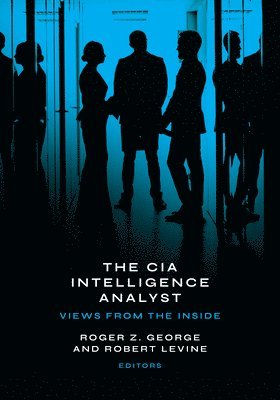
A unique insiders' account of what CIA intelligence analysts do and why it mattersThe common perception of a CIA officer is someone who collects secret intelligence abroad—a spy. However, the critical link between secrets and policy is the intelligence analyst. The CIA Intelligence Analyst brings to light the vital, but often-unseen, work of these officers.Roger Z. George, Robert Levine, and the contributors to this book demystify the profession of intelligence analyst at the CIA and describe how the wide array of analytic specialties—or "disciplines" in the language of the CIA—function. The disciplines range from political, economic, leadership, and military matters to science and technology, cyber, counterterrorism, and counterintelligence. Each of the chapters—written by former or current CIA analysts—discusses how analysts interact with those who collect raw intelligence. Just as important, the chapters describe the relationships analysts develop with the diverse set of policymakers who use CIA analyses. The contributors reveal the key intelligence questions that analysts address, their methods, their products, and their challenges.This book will be an invaluable resource for scholars of national security and intelligence who want to develop a fuller picture of the internal workings of the CIA and for those who are considering a career as an analyst.
398 kr
Skickas
A unique insiders' account of what CIA intelligence analysts do and why it mattersThe common perception of a CIA officer is someone who collects secret intelligence abroad—a spy. However, the critical link between secrets and policy is the intelligence analyst. The CIA Intelligence Analyst brings to light the vital, but often-unseen, work of these officers.Roger Z. George, Robert Levine, and the contributors to this book demystify the profession of intelligence analyst at the CIA and describe how the wide array of analytic specialties—or "disciplines" in the language of the CIA—function. The disciplines range from political, economic, leadership, and military matters to science and technology, cyber, counterterrorism, and counterintelligence. Each of the chapters—written by former or current CIA analysts—discusses how analysts interact with those who collect raw intelligence. Just as important, the chapters describe the relationships analysts develop with the diverse set of policymakers who use CIA analyses. The contributors reveal the key intelligence questions that analysts address, their methods, their products, and their challenges.This book will be an invaluable resource for scholars of national security and intelligence who want to develop a fuller picture of the internal workings of the CIA and for those who are considering a career as an analyst.