Rohitashw Kumar – författare
Visar alla böcker från författaren Rohitashw Kumar. Handla med fri frakt och snabb leverans.
20 produkter
20 produkter
5 710 kr
Skickas inom 10-15 vardagar
Conservation agriculture is a sustainable production model that not only optimizes crop yields, but also reaps economic and environmental benefits as well. The adoption of successful conservation agriculture methods has resulted in energy savings, higher organic matter content and biotic activity in soil, increased crop-water availability and thus resilience to drought, improved recharge of aquifers, less erosion, and reduced impacts from the weather associated with climate change in general. This two-volume set, Agricultural Impacts of Climate Change and Applied Agricultural Practices for Mitigating Climate Change, examines several important aspects of crop production, such as climate change, soil management, farm machinery, and different methods for sustainable conservation agriculture. It presents the latest techniques in crop modeling, best practices for irrigation under water deficit conditions, and other approaches for sustainable conservation agriculture that consider the environmental effects of climate change. It also discusses solar energy-based greenhouse modeling, precision farming using remote sensing and GIS, and various types of machinery used for conservation agriculture. Features: Examines the effects of climate change on agriculture and the related strategies for mitigation through practical, real-world examples Explores innovative on-farm technology options to increase system efficiency resulting in improved water usage Presents examples of precision farming using climate-resilient technologies
Inbunden, Engelska, 2019
2 011 kr
Skickas
Conservation agriculture is a sustainable production model that not only optimizes crop yields, but also reaps economic and environmental benefits as well. The adoption of successful conservation agriculture methods has resulted in energy savings, higher organic matter content and biotic activity in soil, increased crop-water availability and thus resilience to drought, improved recharge of aquifers, less erosion, and reduced impacts from the weather associated with climate change in general. Agricultural Impacts of Climate Change examines several important aspects of crop production, such as climate change, soil management, farm machinery, and different methods for sustainable conservation agriculture. It presents spatial distribution of a daily, monthly and annual precipitation concentration indices, Diffuse Reflectance Fourier Transform Infrared Spectroscopy for analyzing the organic matter in soil, and adaptation strategies for climate-related plant disease scenarios. It also discusses solar energy-based greenhouse modeling, precision farming using remote sensing and GIS, and various types of machinery used for conservation agriculture. Features: Examines the effects of climate change on agriculture and the related strategies for mitigation through practical, real-world examples Explores innovative on-farm technology options to increase system efficiency resulting in improved water usage Presents examples of precision farming using climate-resilient technologies
Inbunden, Engelska, 2022
1 734 kr
Skickas inom 10-15 vardagar
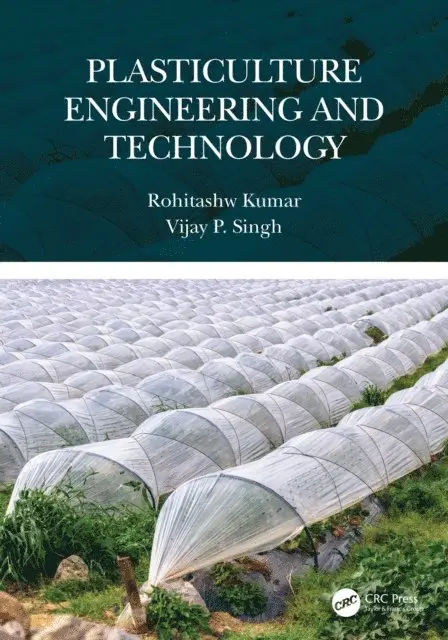
The utilization of successful plasticulture engineering technology can ideally optimize crop yields and provide both economic and environmental benefits, such as reducing the need for water and fertilizer. This book discusses the myriad important aspects of crop production that utilize plastic, such as micro-irrigation, water management, plastic mulch films, protected cultivation and low tunnels, crop covers, canal linings, silage bags, and more. It also examines the latest methods for vertical farming and technological aspects, such as smart agriculture using the internet of things (IoT).The current state of the art, as well as potential future uses,ofplastics isdiscussed in addition to the benefits and limitations of plastics applications in agriculture generally.Features Illustrates application of plastic in protected cultivation, water management, aquaculture, and hi-tech horticulture using innovative technologies to enhance water use efficiency and crop productivity Presents precision farming for climate-resilient technologies Includes real-world examples to present practical insights of plastic engineering for climate change mitigation strategies.Plasticulture Engineering and Technology will serve as a useful resource for students, professionals, and researchers in agriculture and agricultural engineering, hydrology, hydraulics, water resources engineering, irrigation engineering, and environmental science.
Häftad, Engelska, 2024
684 kr
Skickas inom 10-15 vardagar
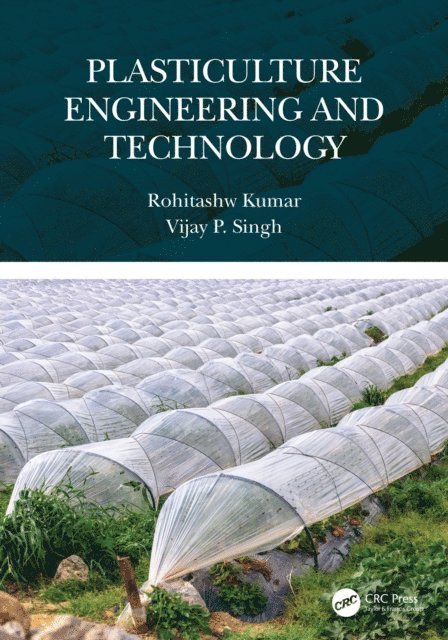
The utilization of successful plasticulture engineering technology can ideally optimize crop yields and provide both economic and environmental benefits, such as reducing the need for water and fertilizer. This book discusses the myriad important aspects of crop production that utilize plastic, such as micro-irrigation, water management, plastic mulch films, protected cultivation and low tunnels, crop covers, canal linings, silage bags, and more. It also examines the latest methods for vertical farming and technological aspects, such as smart agriculture using the internet of things (IoT).The current state of the art, as well as potential future uses,ofplastics isdiscussed in addition to the benefits and limitations of plastics applications in agriculture generally.Features Illustrates application of plastic in protected cultivation, water management, aquaculture, and hi-tech horticulture using innovative technologies to enhance water use efficiency and crop productivity Presents precision farming for climate-resilient technologies Includes real-world examples to present practical insights of plastic engineering for climate change mitigation strategies.Plasticulture Engineering and Technology will serve as a useful resource for students, professionals, and researchers in agriculture and agricultural engineering, hydrology, hydraulics, water resources engineering, irrigation engineering, and environmental science.
6 850 kr
Skickas inom 10-15 vardagar
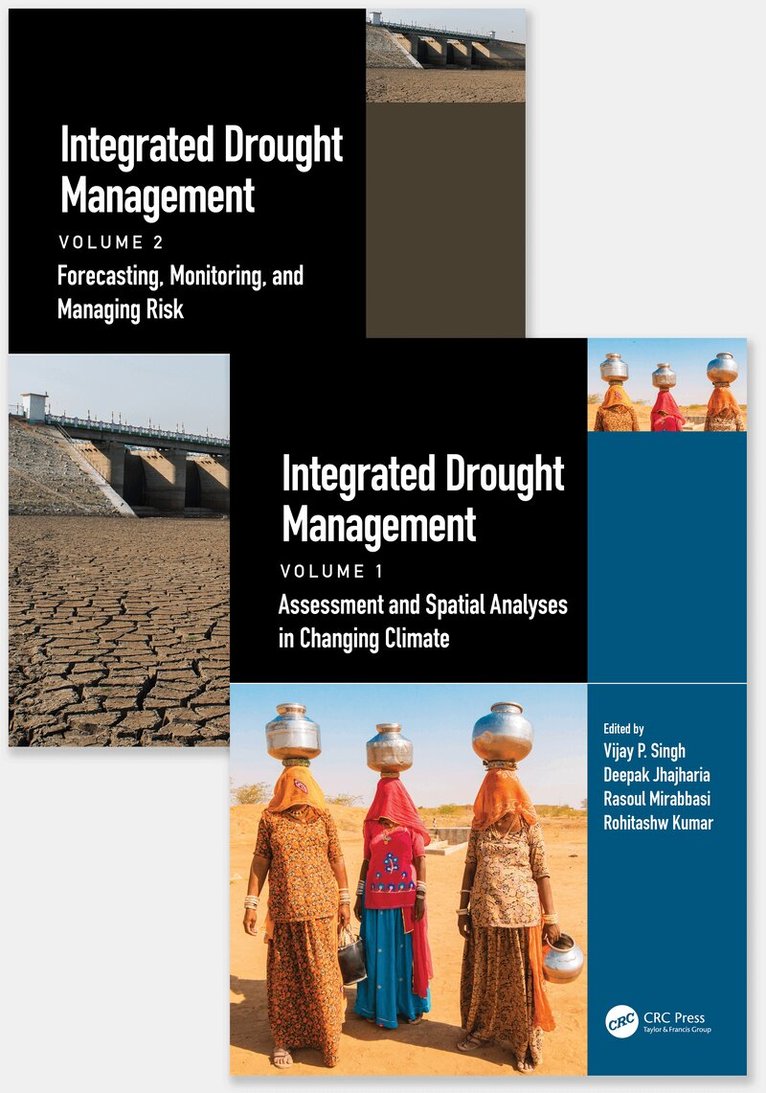
Monitoring drought’s slow evolution and identifying the end of a drought is still a big challenge for scientists, natural resource managers, and decision makers. This comprehensive two-volume set with contributions from over 200 experts, and featuring case studies representing numerous countries throughout the world, discusses different aspects of drought from types, indices, and forecasting to monitoring, modeling, and mitigation measures. It also addresses how climate change is impacting drought and decision-making concluding with lessons learned about science, policy, and managing uncertainty. Features:Provides a global perspective on drought prediction and management and a synthesis of the recent state of knowledge.Covers a wide range of topics from essential concepts and advanced techniques for forecasting and modeling drought to societal impacts, consequences, and planning Presents numerous case studies with different management approaches from different regions and countries.Addresses how climate change impacts drought, the increasing challenges associated with managing drought, decision making, and policy implications.Includes contributions from hundreds of experts around the world.Professionals, researchers, academics, and postgraduate students with knowledge in Environmental Sciences, Ecology, Agriculture, Forestry, Hydrology, Water Resources Engineering, and Earth Sciences, as well as those interested in how climate change impacts drought management, will gain new insights from the experts featured in this two-volume handbook.
Inbunden, Engelska, 2023
3 046 kr
Skickas inom 10-15 vardagar
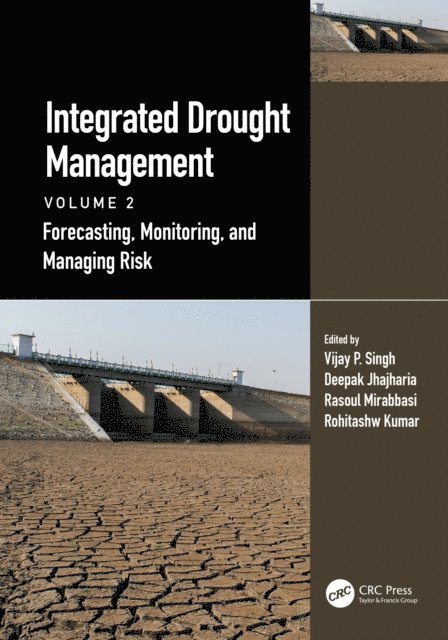
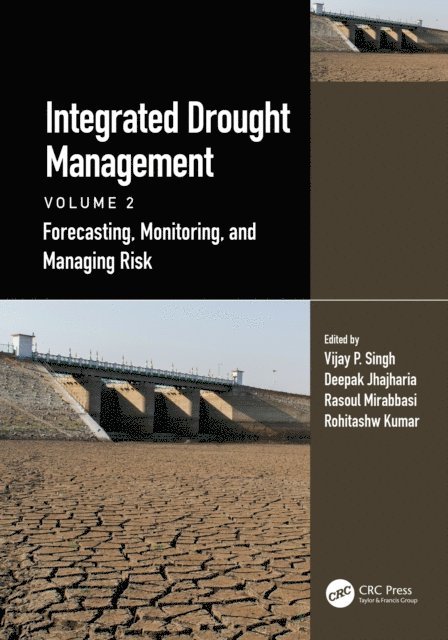
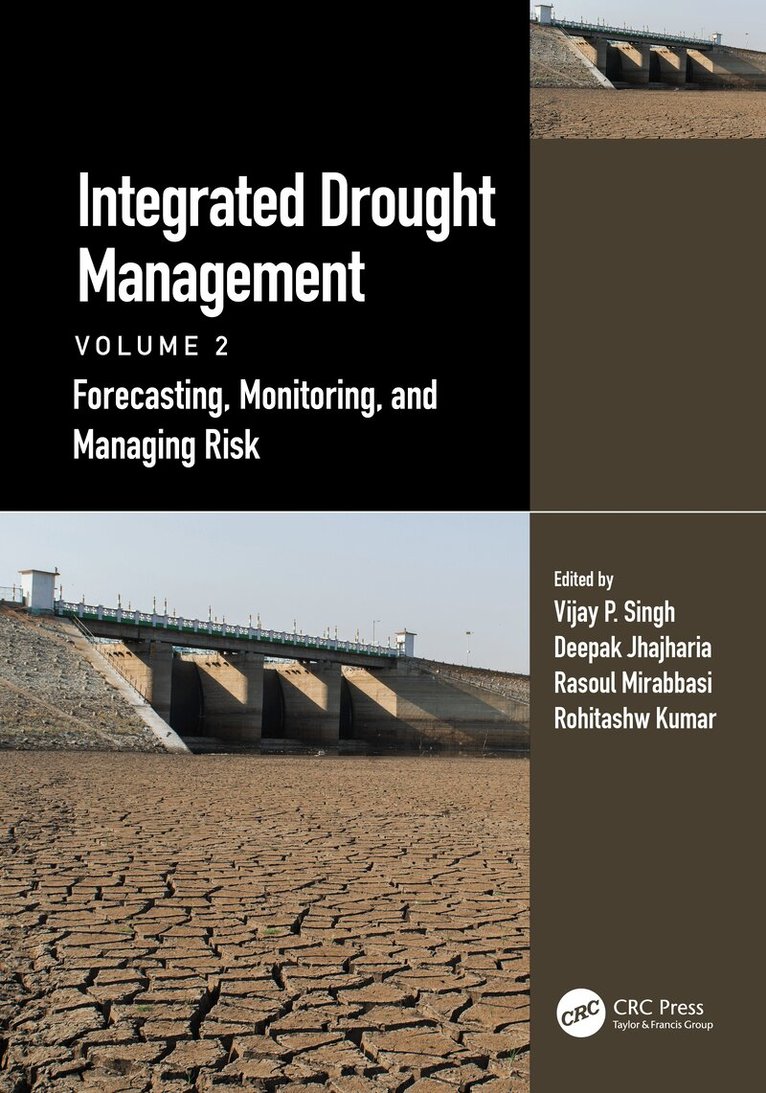
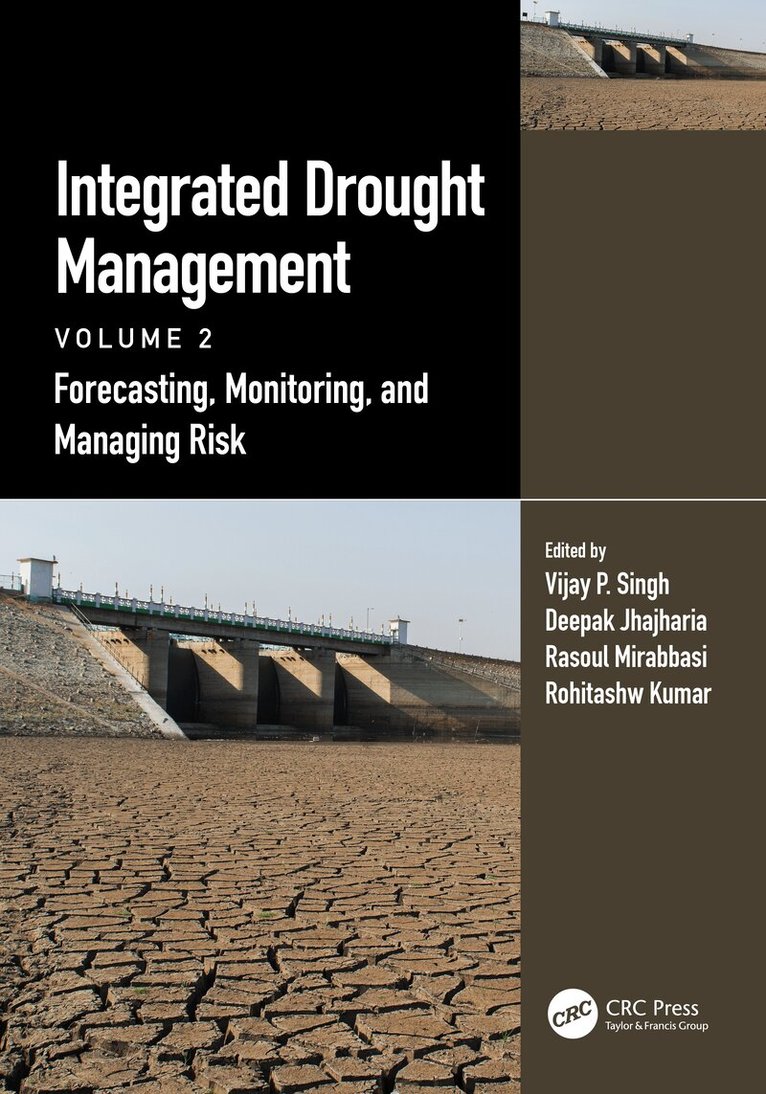
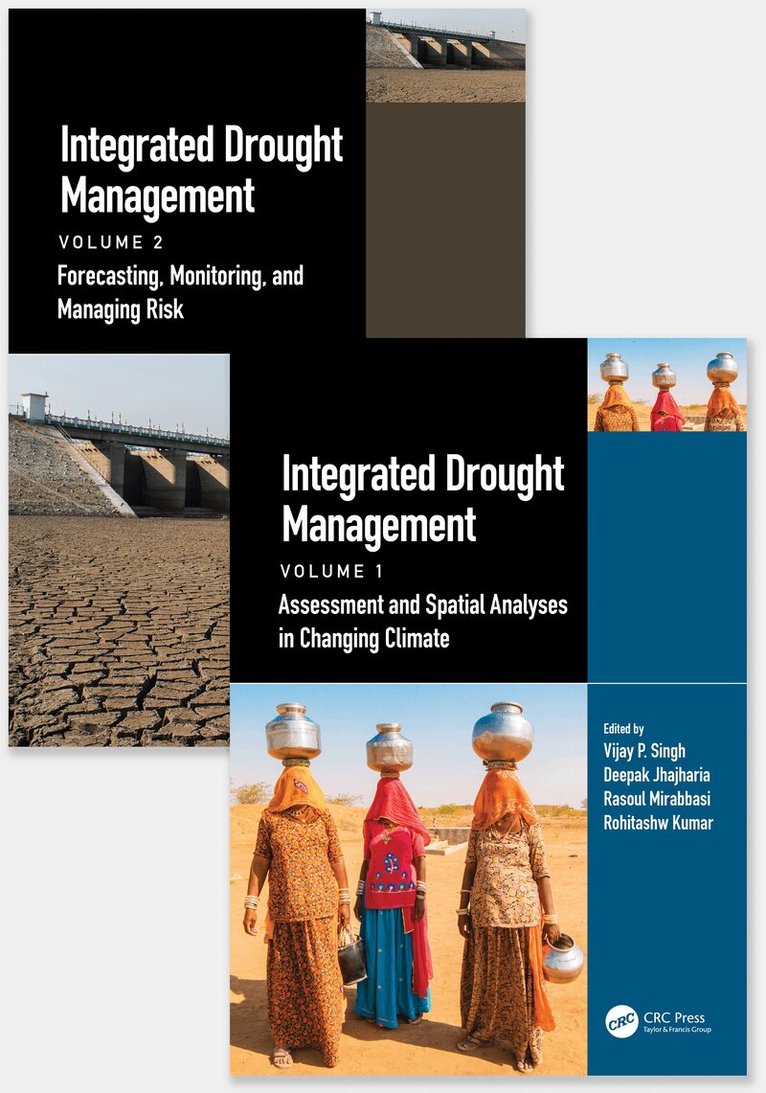
The second volume of this comprehensive global perspective on Integrated Drought Management is focused on drought modeling, meteorological prediction, and the use of remote sensing in assessing, analyzing, and monitoring drought. It discusses risk management, planning, policy, and societal impacts of drought such as water pricing, water transfer, water quality, and crop insurance. Through numerous case studies from India, Iran, Brazil, the US, Nepal, and other countries that cover a broad range of topics and geographical regions, this volume serves as a valuable resource for all professionals, researchers, and academics who want to advance their knowledge about droughts. FeaturesProvides a global perspective on drought prediction and management and a synthesis of the recent state of knowledge. Covers a wide range of topics from essential concepts and advanced techniques for forecasting and modeling drought to societal impacts, consequences, and planning Presents numerous case studies with different management approaches from different regions and countries. Addresses how climate change impacts drought, the increasing challenges associated with managing drought, decision-making, and policy implications. Includes contributions from hundreds of experts from around the world.Professionals, researchers, academics, and postgraduate students with knowledge in environmental sciences, ecology, agriculture, forestry, hydrology, water resources engineering, and earth sciences, as well as those interested in how climate change impacts drought management, will gain new insights from the experts featured in this two-volume handbook.
Inbunden, Engelska, 2023
2 770 kr
Skickas inom 10-15 vardagar
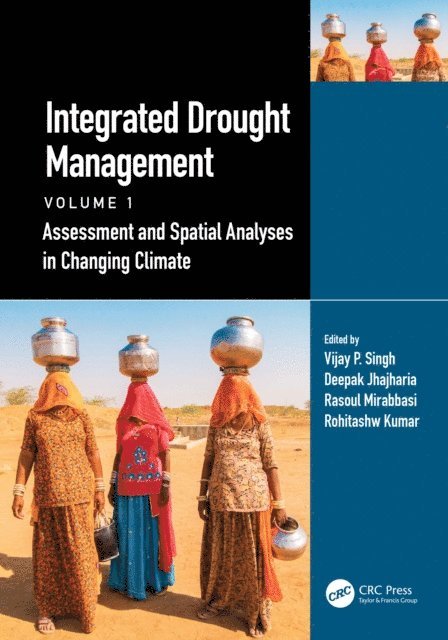
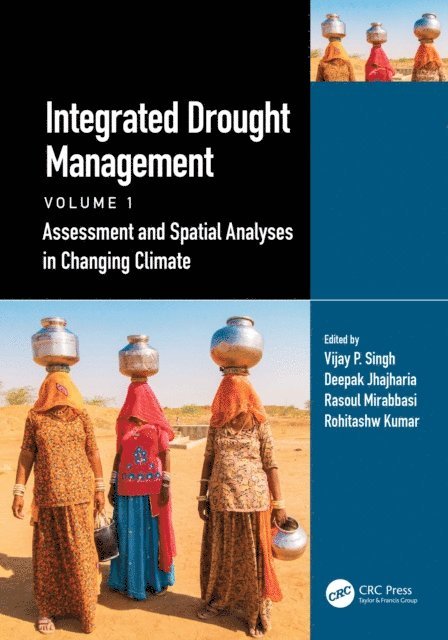
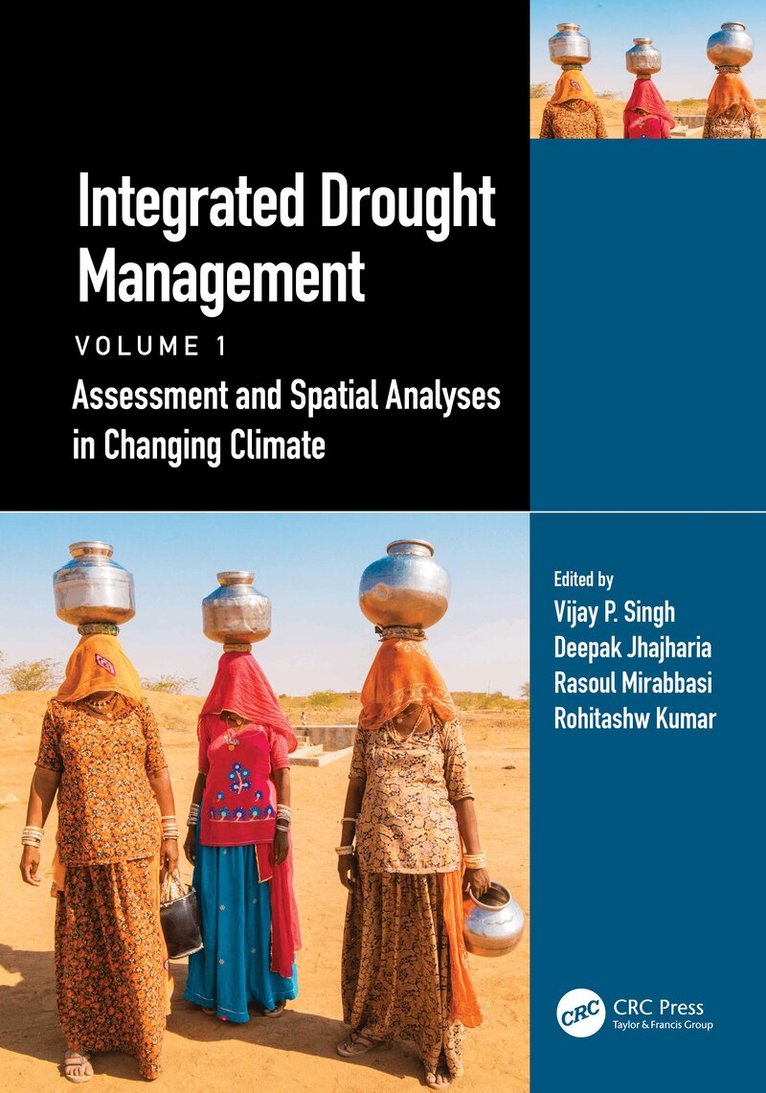
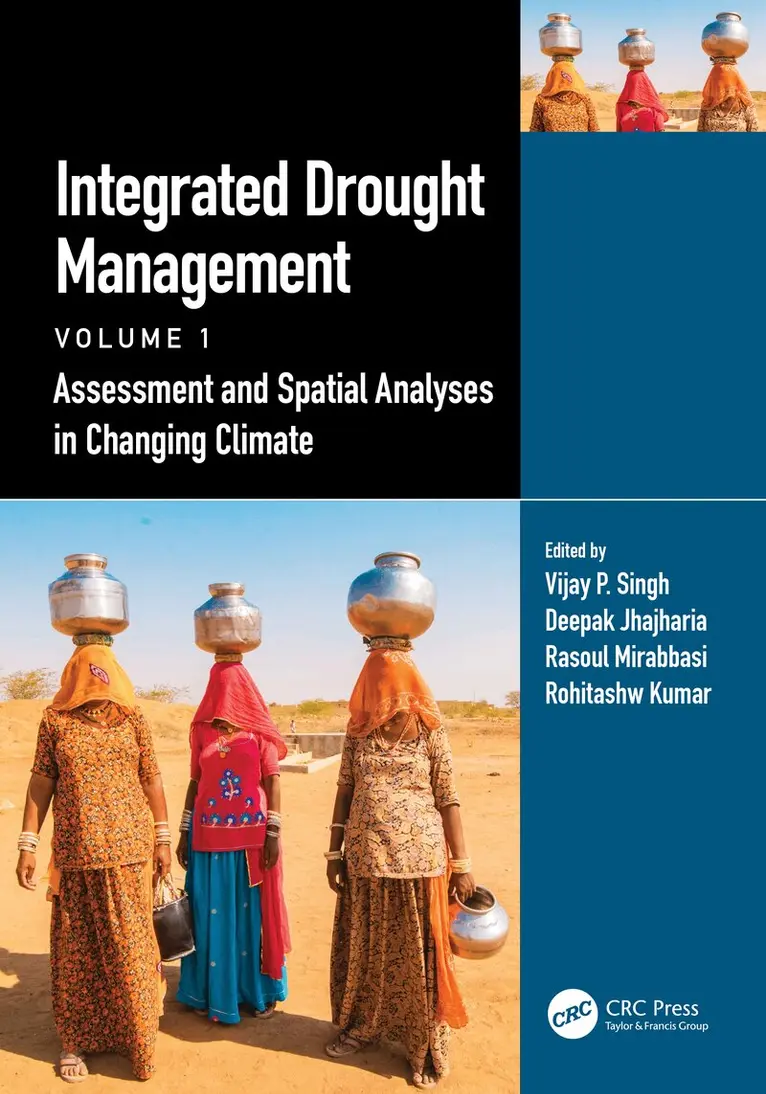
The first volume of this comprehensive global perspective on Integrated Drought Management is focused on understanding drought, causes, and the assessment of drought impacts. It explains different types of drought: agricultural, meteorological, hydrological, and socioeconomic droughts, their indices and the impact of climate change on drought. The volume also examines spatiotemporal analysis of drought, variability and patterns, assessment, and drought evaluation. With numerous case studies from India, Mexico, Turkey, Brazil, US, and other countries, this volume serves as a valuable resource for all readers who want to advance their knowledge on drought and risk management. Features:Provides a global perspective on drought prediction and management and a synthesis of the recent state of knowledge.Covers a wide range of topics from essential concepts and advanced techniques for forecasting and modeling drought to societal impacts, consequences, and planning.Presents numerous case studies with different management approaches from different regions and countries. Addresses how climate change impacts drought, the increasing challenges associated with managing drought, decision making, and policy implications. Includes contributions from hundreds of experts around the world.Professionals, researchers, academics, and postgraduate students with knowledge in environmental sciences, ecology, agriculture, forestry, hydrology, water resources engineering, and earth sciences, as well as those interested in how climate change impacts drought management, will gain new insights from the experts featured in this two-volume handbook.
Häftad, Engelska, 2024
1 029 kr
Skickas inom 10-15 vardagar
The second volume of this comprehensive global perspective on Integrated Drought Management is focused on drought modeling, meteorological prediction, and the use of remote sensing in assessing, analyzing, and monitoring drought. It discusses risk management, planning, policy, and societal impacts of drought such as water pricing, water transfer, water quality, and crop insurance. Through numerous case studies from India, Iran, Brazil, the US, Nepal, and other countries that cover a broad range of topics and geographical regions, this volume serves as a valuable resource for all professionals, researchers, and academics who want to advance their knowledge about droughts. FeaturesProvides a global perspective on drought prediction and management and a synthesis of the recent state of knowledge. Covers a wide range of topics from essential concepts and advanced techniques for forecasting and modeling drought to societal impacts, consequences, and planning Presents numerous case studies with different management approaches from different regions and countries. Addresses how climate change impacts drought, the increasing challenges associated with managing drought, decision-making, and policy implications. Includes contributions from hundreds of experts from around the world.Professionals, researchers, academics, and postgraduate students with knowledge in environmental sciences, ecology, agriculture, forestry, hydrology, water resources engineering, and earth sciences, as well as those interested in how climate change impacts drought management, will gain new insights from the experts featured in this two-volume handbook.
Häftad, Engelska, 2024
1 015 kr
Skickas inom 10-15 vardagar
The first volume of this comprehensive global perspective on Integrated Drought Management is focused on understanding drought, causes, and the assessment of drought impacts. It explains different types of drought: agricultural, meteorological, hydrological, and socioeconomic droughts, their indices and the impact of climate change on drought. The volume also examines spatiotemporal analysis of drought, variability and patterns, assessment, and drought evaluation. With numerous case studies from India, Mexico, Turkey, Brazil, US, and other countries, this volume serves as a valuable resource for all readers who want to advance their knowledge on drought and risk management. Features:Provides a global perspective on drought prediction and management and a synthesis of the recent state of knowledge.Covers a wide range of topics from essential concepts and advanced techniques for forecasting and modeling drought to societal impacts, consequences, and planning.Presents numerous case studies with different management approaches from different regions and countries. Addresses how climate change impacts drought, the increasing challenges associated with managing drought, decision making, and policy implications. Includes contributions from hundreds of experts around the world.Professionals, researchers, academics, and postgraduate students with knowledge in environmental sciences, ecology, agriculture, forestry, hydrology, water resources engineering, and earth sciences, as well as those interested in how climate change impacts drought management, will gain new insights from the experts featured in this two-volume handbook.
2 403 kr
Skickas inom 10-15 vardagar
Monitoring drought’s slow evolution and identifying the end of a drought is still a big challenge for scientists, natural resource managers, and decision makers. This comprehensive two-volume set with contributions from over 200 experts, and featuring case studies representing numerous countries throughout the world, discusses different aspects of drought from types, indices, and forecasting to monitoring, modeling, and mitigation measures. It also addresses how climate change is impacting drought and decision-making concluding with lessons learned about science, policy, and managing uncertainty. Features:Provides a global perspective on drought prediction and management and a synthesis of the recent state of knowledge.Covers a wide range of topics from essential concepts and advanced techniques for forecasting and modeling drought to societal impacts, consequences, and planning Presents numerous case studies with different management approaches from different regions and countries.Addresses how climate change impacts drought, the increasing challenges associated with managing drought, decision making, and policy implications.Includes contributions from hundreds of experts around the world.Professionals, researchers, academics, and postgraduate students with knowledge in Environmental Sciences, Ecology, Agriculture, Forestry, Hydrology, Water Resources Engineering, and Earth Sciences, as well as those interested in how climate change impacts drought management, will gain new insights from the experts featured in this two-volume handbook.
Inbunden, Engelska, 2024
1 458 kr
Skickas inom 10-15 vardagar
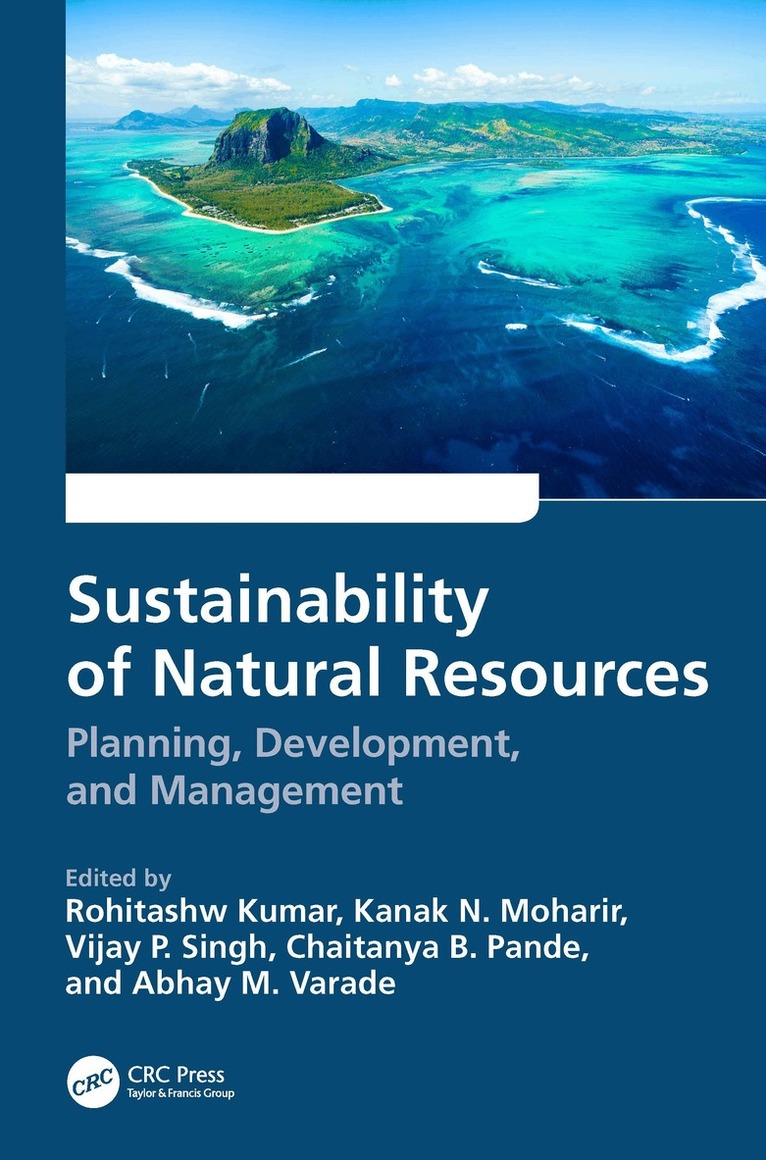
Agriculture is the backbone of the economy in most countries and its output can be impacted by climate change effects. India, as well as other countries which are predominantly agricultural are facing various challenges due to increasing population which can be met by technological innovations for sustainable agriculture. Advanced and innovative technologies in agriculture will not only solve the problems of fulfilling the food requirement of the growing population but also sustain agriculture in the future. Sustainability of Natural Resources Planning and Management addresses the advancement of innovative techniques to address the issues of water scarcity and agricultural yield. It discusses various aspects of natural resource management, agriculture micro irrigation, AI applications for water management and impacts of climate change on water resources. This book also deals water resource exploration, planning, recent geographic information system-based studies, groundwater modelling, and related applications. It highlights the optimal strategies for sustainable water resource management and development. It also examines precision farming using remote sensing and GIS techniques.
Häftad, Engelska, 2026
766 kr
Kommande
Agriculture is the backbone of the economy in most countries and its output can be impacted by climate change effects. India, as well as other countries which are predominantly agricultural are facing various challenges due to increasing population which can be met by technological innovations for sustainable agriculture. Advanced and innovative technologies in agriculture will not only solve the problems of fulfilling the food requirement of the growing population but also sustain agriculture in the future. Sustainability of Natural Resources Planning and Management addresses the advancement of innovative techniques to address the issues of water scarcity and agricultural yield. It discusses various aspects of natural resource management, agriculture micro irrigation, AI applications for water management and impacts of climate change on water resources. This book also deals water resource exploration, planning, recent geographic information system-based studies, groundwater modelling, and related applications. It highlights the optimal strategies for sustainable water resource management and development. It also examines precision farming using remote sensing and GIS techniques.
Inbunden, Engelska, 2023
1 250 kr
Skickas inom 10-15 vardagar
The over-exploitation of groundwater and marked changes in climate over recent decades has led to unacceptable declines in groundwater resources. Under the likely scarcity of available water resources in the near future, it is critical to quantify and manage the available water resources. With increasing demand for potable water for human consumption, agriculture, and industrial uses, the need to evaluate the groundwater development, management, and productivity of aquifers also increases. Laboratory Manual for Groundwater, Wells, and Pumps serves as a valuable resource and provides a multi-disciplinary overview for academics, administrators, scientists, policymakers, and professionals involved in managing sustainable groundwater development programs. It includes practical guidance on the measurement of groundwater flow, soil properties, aquifer properties, wells and their design, as well as the latest state-of-the-art information on pumps and their testing, and groundwater modeling.Features: Covers basics of groundwater engineering, advanced methodologies, and their applications and groundwater modeling Examines groundwater exploration, planning and designing, and methods for formulating strategies for sustainable management and development Serves as a reference for practitioners on practical applications and frequently occurring issues of groundwater investigations, development, and management.
Häftad, Engelska, 2025
739 kr
Skickas inom 10-15 vardagar
The over-exploitation of groundwater and marked changes in climate over recent decades has led to unacceptable declines in groundwater resources. Under the likely scarcity of available water resources in the near future, it is critical to quantify and manage the available water resources. With increasing demand for potable water for human consumption, agriculture, and industrial uses, the need to evaluate the groundwater development, management, and productivity of aquifers also increases. Laboratory Manual for Groundwater, Wells, and Pumps serves as a valuable resource and provides a multi-disciplinary overview for academics, administrators, scientists, policymakers, and professionals involved in managing sustainable groundwater development programs. It includes practical guidance on the measurement of groundwater flow, soil properties, aquifer properties, wells and their design, as well as the latest state-of-the-art information on pumps and their testing, and groundwater modeling.Features: Covers basics of groundwater engineering, advanced methodologies, and their applications and groundwater modeling Examines groundwater exploration, planning and designing, and methods for formulating strategies for sustainable management and development Serves as a reference for practitioners on practical applications and frequently occurring issues of groundwater investigations, development, and management.
Inbunden, Engelska, 2023
1 458 kr
Skickas inom 10-15 vardagar
Due to increasing population, decreased cultivable land, and mounting scarcity of water, it is essential to optimize the use of available resources. Climate change is occurring across the world but its effect may be local or region-specific, including localized watershed management. In order to minimize these effects, governments and environmental agencies encourage the adoption of "climate-smart" agricultural technologies, which involve implementing plans, programs, and projects to sustain and enhance watersheds. Natural ecosystems, in their altered states, have always been relied upon to support the continuity of agricultural production and ecosystem services, such as flood and erosion control, mediation of water quality, stream flow regulation, microclimate regulation, and biodiversity in its various forms. According to the Food and Agriculture Organization of the United Nations, the adoption of these sustainable water management practices has resulted in savings of water and energy as well as a reduction of carbon emissions, decreased erosion, increased organic matter content and biotic activity in soils, increased crop water availability and thus resilience to drought, improved recharge of aquifers, and reduced impact of the variability in weather due to climate change. Advances in Water Management Under Climate Change examines all of these issues and provides best practices for sustainability.Features:Presents the latest research in hydrology, hydraulics, water resources engineering, and agricultural best practicesExamines water management practices to best address and ideally mitigate climate changeExplains the nexus of agriculture, micro irrigation, AI applications in water management, and the impact of climate change on water resourcesIncludes practical examples to present practical insights on water management for climate change mitigation.
Häftad, Engelska, 2026
698 kr
Skickas inom 10-15 vardagar
Due to increasing population, decreased cultivable land, and mounting scarcity of water, it is essential to optimize the use of available resources. Climate change is occurring across the world but its effect may be local or region-specific, including localized watershed management. In order to minimize these effects, governments and environmental agencies encourage the adoption of "climate-smart" agricultural technologies, which involve implementing plans, programs, and projects to sustain and enhance watersheds. Natural ecosystems, in their altered states, have always been relied upon to support the continuity of agricultural production and ecosystem services, such as flood and erosion control, mediation of water quality, stream flow regulation, microclimate regulation, and biodiversity in its various forms. According to the Food and Agriculture Organization of the United Nations, the adoption of these sustainable water management practices has resulted in savings of water and energy as well as a reduction of carbon emissions, decreased erosion, increased organic matter content and biotic activity in soils, increased crop water availability and thus resilience to drought, improved recharge of aquifers, and reduced impact of the variability in weather due to climate change. Advances in Water Management Under Climate Change examines all of these issues and provides best practices for sustainability.Features:Presents the latest research in hydrology, hydraulics, water resources engineering, and agricultural best practicesExamines water management practices to best address and ideally mitigate climate changeExplains the nexus of agriculture, micro irrigation, AI applications in water management, and the impact of climate change on water resourcesIncludes practical examples to present practical insights on water management for climate change mitigation.
Inbunden, Engelska, 2025
1 734 kr
Skickas inom 10-15 vardagar
As the demand for healthy and sustainable food options increases, organic farming is becoming a viable alternative to conventional farming practices that traditionally rely heavily on synthetic inputs. Organic Farming: A Comprehensive Guide to Sustainable Agriculture examines a wide range of topics related to organic farming, including soil health, organic fertilizers, biodiversity, biotechnological interventions, microbial inoculants and bio stimulants, genome editing, as well as certification and marketing. This book serves as an important and timely resource for those interested in sustainable and organic farming practices, including farmers, students, researchers, and policymakers. ItOffers practical advice and strategies for farmers and policymakers looking to transition to or promote sustainable and organic farming practices.Presents the latest biotechnological interventions for organic farming.Emphasizes the importance of organic farming for a sustainable future and highlights the challenges and opportunities facing the organic farming industry.
Inbunden, Engelska, 2026
2 369 kr
Kommande
Hydroponics: Applications for Precision Agriculture introduces the concepts hydroponics and related advanced applications in the context of the challenges faced by climate change and population growth. It examines the utilization of AI and other modern approaches to improve the level of agricultural automation, minimize the cost of operations, and enhance resource efficiency and sustainable agriculture production. It serves as a useful reference for engineers in the areas of water, environment, climate change, and agriculture.Offers best agricultural practices for different agroclimatic zones.Comprehensive coverage of hydroponics and controlled environment agriculture (CEA) from fundamental principles to advanced applicationsStructured into 11 well-organized chapters, ensuring logical progression from basics to system design, management, and troubleshootingIntegrates plant physiology, nutrition, and environmental science with engineering and technological aspects
Inbunden, Engelska, 2026
2 425 kr
Skickas inom 10-15 vardagar
Watershed Planning and Management examines the science, technology, and practice of managing land and water resources through the watershed approach. It integrates hydrology, geomorphology, soil and water conservation, land use planning, socio-economic considerations, and modern tools such as remote sensing and geographic information system (GIS). This book presents an overview of global water resources and their diverse uses, followed by fundamental concepts of watersheds, hydrological cycles, and delineation methods. With a balance of theory, methodology, and practice, this book serves as a valuable resource for students, researchers, practitioners, and policymakers. It not only strengthens conceptual understanding but also provides practical insights into implementing watershed projects in diverse regions.Key Features:Explains watershed concepts from basic hydrology to advanced applications in planning, management, and policy concepts designed for optimizing crop yields and reaping economic and environmental benefits.Focuses on sustainable development and aligns watershed management with environmental conservation, climate resilience, and sustainable agriculture.Explains methods of watershed prioritization, erosion modeling, hydrological budget analysis, and water yield assessment.Includes practical real-world examples to present insights of watershed planning and management for climate change mitigation.
Inbunden, Engelska, 2026
2 512 kr
Kommande
Agricultural Communication: Advances in Agricultural Knowledge and Information Systems examines the transformative role of communication technologies in modern agriculture. It highlights the critical need for effective dissemination of agricultural knowledge and technologies to farmers, addressing the challenges posed by poor linkages between research and advisory services. The book explores the integration of Indigenous Technical Knowledge (ITK) with advanced Information and Communication Technologies (ICT) to empower farmers, enhance decision-making, and promote sustainable agricultural practices. Covering topics such as precision agriculture, drones, artificial intelligence, and mobile technology, it emphasizes the importance of timely and accurate information in overcoming market complexities, climate change, and resource constraints.Examines emerging trends such as robotics, AI, and precision farming, emphasizing their potential to revolutionize agriculture and address global challenges like climate change and food security.Addresses real-world challenges faced by small farmers, offering actionable knowledge on decision-making, market dynamics, and resource optimization to improve livelihoods.Highlights the importance of Indigenous Technical Knowledge (ITK), showcasing its role in sustainable farming practices and its integration with modern technologies for enhanced agricultural productivity.Offers best practices for different agroclimatic zones.