Roland Loffler – författare
Visar alla böcker från författaren . Handla med fri frakt och snabb leverans.
3 produkter
3 produkter
E-bok
PDF, Engelska, 2013459 kr
Läs direkt efter köp
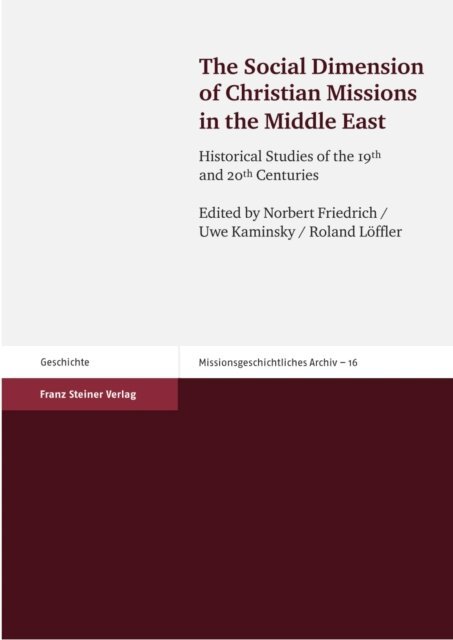
Christian missions in the Middle East were and still are a highly sensitive topic. For a number of academics, they have destroyed indigenous cultures and are nothing else than the religious wing of imperialism. A new development in historiography gives a different interpretation: Missions seem to have strongly contributed to the development of social work, healthcare, education, and science in certain regions of the world - sometimes even implementing basic social infrastructure that has been neglected by local rulers for decades or centuries. In particular, the missions in the Middle East have exhibited a strong "e;social dimension"e;. Thus, one could even speak of a specific "e;trademark"e;, for conversions hardly took place in the "e;house of Islam"e;, and also among Jews during the 19th and 20th century. This volumne brings together some of the essential papers of a conference dealing with questions of cultural, religious and social history in this field of research. It contributes to the historiography of Christian missions, welfare organisations as well as of Christian Churches in the Middle East. The book challenges the predominantly eurocentric depiction of the history of Christianity by juxtaposing a transnational reading of Christian activism in the Orient.
Inbunden, Engelska, 2010
1 357 kr
Skickas inom 11-20 vardagar
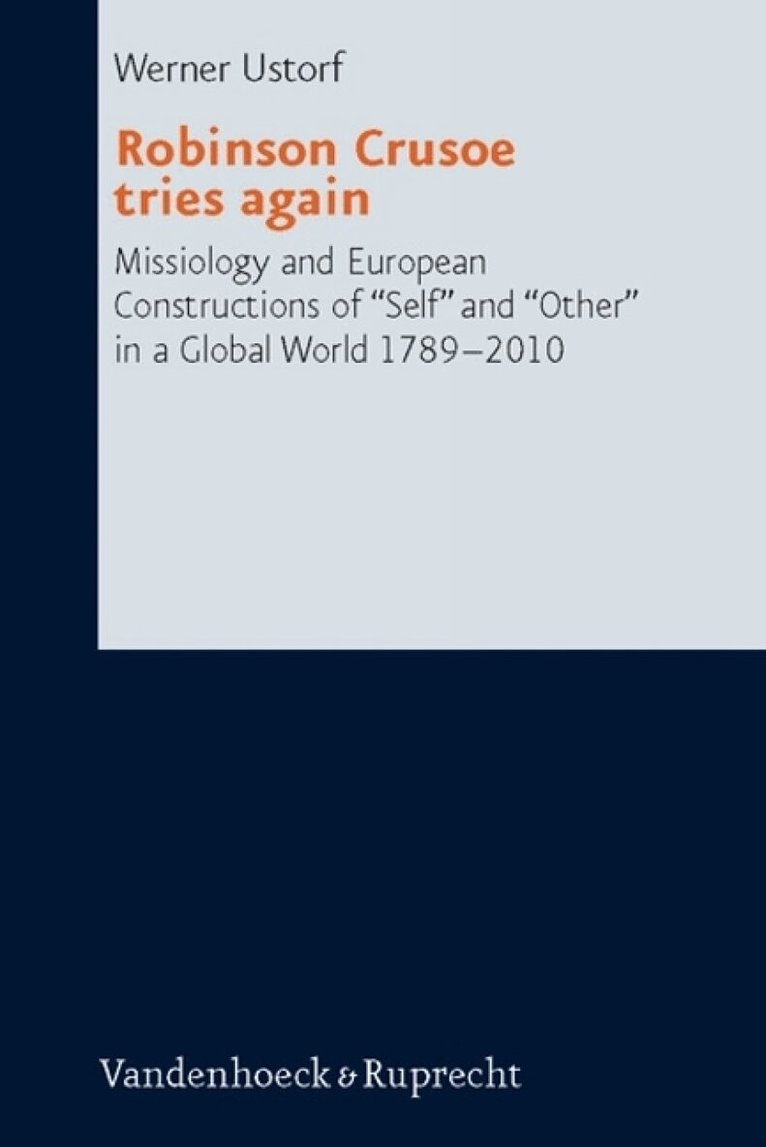
The Christian experience in modern Europe is fragmented. It shows great diversity in various geographical contexts and, historically, a considerable alternation of extremes, high or low tides of engagement. One aspect of the Christianity in Europe's past is its mission history. The spread of Christianity from the West -- as one of its most important results -- into the continents of the Global South has been deeply ambivalent in character. On the one hand, the mission from the West helped to build the historical foundations for Christian education, "adolescence" and maturation to responsible "adulthood" in a global, diverse, segregated and pluralistic world. As a mature global player, Christianity was in a prime position to contribute to peaceful conflict resolution, in the religious, social and political fields. On the other hand, the darkness and utter insufficiency of the encounter between the European, Christian "self" and the many "others" worldwide brought along problematic projections of different beliefs attacked in a hostile way as "alien" and, inevitably, as "conquered". The consequences, particularly for the "primal other" -- the indigenous people -- were often disastrous. Werner Ustorf has been a leading missiologist worldwide for thirty years. This book not only analyses the interaction between mission and individual, the construction of the "self" and the "other" in a mission context, but also proves the analytical strength of theology in conceptualizing future Christian experiences in Europe. Ustorf illustrates that apart from traditional dimension of faith, a non-religious interpretation and critical trust in transcendence, is crucial for the formation of the new interculturation of Christianity in Europe. Thus, this book demonstrates how mission history can be transformed to a research concept for a global and pluralistic Christianity.
E-bok
PDF, Engelska, 2010931 kr
Läs direkt efter köp
The Christian experience in modern Europe is fragmented. It shows great diversity in various geographical contexts and, historically, a considerable alternation of extremes, high or low tides of engagement. One aspect of the Christianity in Europe''s past is its mission history. The spread of Christianity from the West – as one of its most important results – into the continents of the Global South has been deeply ambivalent in character. On the one hand, the mission from the West helped to build the historical foundations for Christian education, "adolescence" and maturation to responsible "adulthood" in a global, diverse, segregated and pluralistic world. As a mature global player, Christianity was in a prime position to contribute to peaceful conflict resolution, in the religious, social and political fields. On the other hand, the darkness and utter insufficiency of the encounter between the European, Christian "self" and the many "others" worldwide brought along problematic projections of different beliefs attacked in a hostile way as "alien" and, inevitably, as "conquered". The consequences, particularly for the "primal other" – the indigenous people – were often disastrous. Werner Ustorf has been a leading missiologist worldwide for thirty years. This book not only analyses the interaction between mission and individual, the construction of the "self" and the "other" in a mission context, but also proves the analytical strength of theology in conceptualizing future Christian experiences in Europe. Ustorf illustrates that apart from traditional dimension of faith, a non-religious interpretation and critical trust in transcendence, is crucial for the formation of the new interculturation of Christianity in Europe. Thus, this book demonstrates how mission history can be transformed to a research concept for a global and pluralistic Christianity.