Rolf G. Beutel – författare
4 167 kr
Skickas inom 5-8 vardagar
4 343 kr
Skickas inom 5-8 vardagar
3 624 kr
Skickas inom 5-8 vardagar
4 697 kr
Skickas inom 5-8 vardagar
1 293 kr
Skickas inom 5-8 vardagar
1 096 kr
Läs direkt efter köp
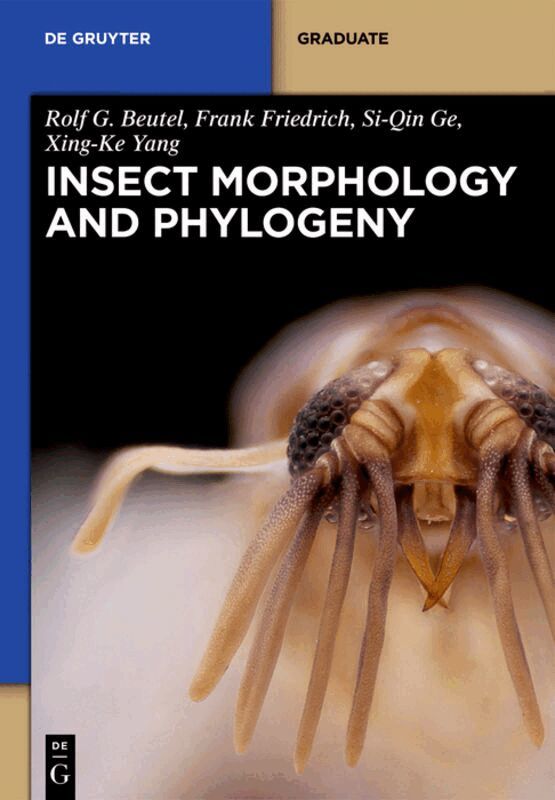
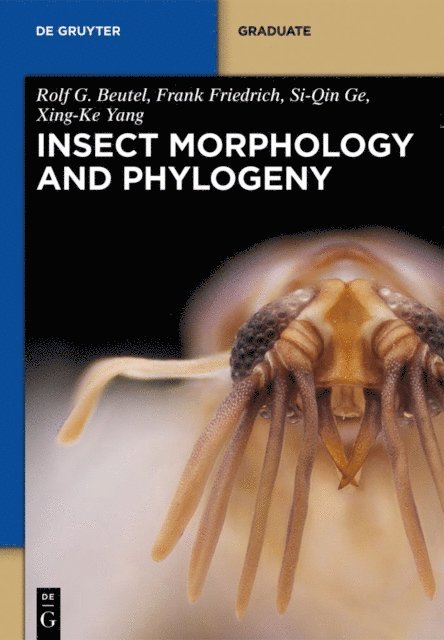
In the last decades a remarkable renaissance has materialized in insect morphology, mainly triggered by the development of new cutting-edge technologies. This is an exciting time for biological synthesis where the mysteries and data derived from genomes can be combined with centuries of data from morphology and development. And, now, more than ever, detailed knowledge of morphology is essential to understanding the evolution of all groups of organisms. In this “age of phylogenomics” researchers rely on morphological data to support molecular findings, test complex evolutionary scenarios, and for placing fossil taxa. This textbook provides an in-depth treatment of the structures and the phylogeny of the megadiverse Hexapoda. The first part presents an up-to-date overview of general insect morphology with detailed drawings, scanning electron micrographs, and 3-D reconstructions. Also included is a chapter covering innovative morphological techniques (e.g., µ-computer tomography, 3-D modeling), brief treatments of insect development and phylogenetic methods, and a comprehensive morphological glossary. The second part is of a modern synthesis of insect systematics that includes taxon-specific morphological information for all Orders. The work is an invaluable reference for students and researchers working in all facets of biology and is a must for evolutionary biologists. A detailed understanding of morphology is essential in unraveling phylogenetic relationships and developing complex evolutionary scenarios. Increasingly researchers in phylogenomics are re/turning to morphological data to support their findings, while the development of new cutting-edge technologies has further increased interest in this growing field. This definitive handbook provides an in-depth treatment of insect morphology. The first part presents an up-to-date overview of insect morphology with detailed drawings, brilliant scanning electron micrographs and 3-D reconstructions as interactive PDFs. This is complemented by a chapter on innovative morphological techniques (e.g., µ-computer tomography, 3-D modeling) and a comprehensive morphological glossary. The second part treats the state of the art in insect systematics and includes taxon-specific morphological information for all orders. Systematics are treated formally, with for example the arguments for relationships (“apomorphies”) always listed explicitly. The work is a useful reference for students and researchers working in different fields of biology and a must for those dealing with insects from an evolutionary perspective.
4 201 kr
Läs direkt efter köp
Nannochoristidae (=Nannomecoptera) and Boreidae (=Neomecoptera) are traditionally assigned to the holometabolan Order Mecoptera. Both are presently in the focus of insect systematists. They differ strikingly from the "typical" mecopteran pattern, not only in their larval and adult morphology, but also in their life style and reproductive biology. Phylogenetic affinities between Boreidae ("snow fleas") and fleas were postulated mainly based on molecular data, and morphological characters related to food uptake and larval features suggest a close relationship between Nannochoristidae and true flies. Both groups display fascinating features such as preferred temperatures around 0°C, extremely slender larvae adapted to running water, and a highly unusual mating behaviour. Despite of the extremely low number of known species, there is no doubt that both groups are key taxa and in their own way highlights in the evolution of the extremely successful Holometabola. This and an impressive number of recent studies on various aspects of Nannochoristidae and Boreidae more than justifies a new volume in the series Handbook of Zoology dedicated to these highly unusual taxa.
3 768 kr
Skickas inom 5-8 vardagar
4 751 kr
Läs direkt efter köp
This book is a revised edition of the first of three volumes in the Handbook of Zoology series which treats the systematics and biology of Coleoptera. With over 380,000 described species, Coleoptera are by far the most species-rich order of insects and the largest group of animals of comparable geological age. Moreover, numerous species are tremendously important economically. The beetle volumes meet the demand of modern biologists seeking to answer questions about Coleoptera phylogeny, evolution, and ecology. This first Coleoptera volume covers the suborders Archostemata, Myxophaga and Adephaga, and the basal series of Polyphaga, with information on world distribution, biology, morphology of all life stages, phylogeny and comments on taxonomy.
4 201 kr
Läs direkt efter köp
Nannochoristidae (=Nannomecoptera) and Boreidae (=Neomecoptera) are traditionally assigned to the holometabolan Order Mecoptera. Both are presently in the focus of insect systematists. They differ strikingly from the "typical" mecopteran pattern, not only in their larval and adult morphology, but also in their life style and reproductive biology. Phylogenetic affinities between Boreidae ("snow fleas") and fleas were postulated mainly based on molecular data, and morphological characters related to food uptake and larval features suggest a close relationship between Nannochoristidae and true flies. Both groups display fascinating features such as preferred temperatures around 0°C, extremely slender larvae adapted to running water, and a highly unusual mating behaviour. Despite of the extremely low number of known species, there is no doubt that both groups are key taxa and in their own way highlights in the evolution of the extremely successful Holometabola. This and an impressive number of recent studies on various aspects of Nannochoristidae and Boreidae more than justifies a new volume in the series Handbook of Zoology dedicated to these highly unusual taxa.
4 709 kr
Läs direkt efter köp
This book is a revised edition of the first of three volumes in the Handbook of Zoology series which treats the systematics and biology of Coleoptera. With over 380,000 described species, Coleoptera are by far the most species-rich order of insects and the largest group of animals of comparable geological age. Moreover, numerous species are tremendously important economically. The beetle volumes meet the demand of modern biologists seeking to answer questions about Coleoptera phylogeny, evolution, and ecology. This first Coleoptera volume covers the suborders Archostemata, Myxophaga and Adephaga, and the basal series of Polyphaga, with information on world distribution, biology, morphology of all life stages, phylogeny and comments on taxonomy.
3 855 kr
Läs direkt efter köp
Covering 100 years of zoological research, the Handbook of Zoology represents a vast store of knowledge.
Handbook of Zoology provides an in-depth treatment of the entire animal kingdom covering both invertebrates and vertebrates. It publishes comprehensive overviews on animal systematics and morphology and covers extensively further aspects like physiology, behavior, ecology and applied zoological research. Although our knowledge regarding many taxonomic groups has grown enormously over the last decades, it is still the objective of the Handbook of Zoology to be comprehensive in the sense that text and references together provide a solid basis for further research. Editors and authors seek a balance between describing species richness and diversity, explaining the importance of certain groups in a phylogenetic context and presenting a review of available knowledge and up-to-date references. New contributions to the series present the combined effort of an international team of editors and authors, entirely published in English and tailored to the needs of the international scientific community.
Upcoming volumes and projects in progress include volumes on Annelida (Volumes 1-3), Bryozoa, Mammalia, Miscellaneous Invertebrates, Nannomecoptera, Neomecoptera and Strepsiptera and are followed later by fishes, reptiles and further volumes on mammals.
Background
The renowned German reference work Handbook of Zoology was founded in the 1920''s by Professor Willi Kükenthal in Berlin and treated the complete animal kingdom from single cell organisms to mammals in eight thematic volumes:
Volume I Protozoa, Porifera, Colenteratea, Mesozoa (1925); Volume II Vermes (1933/34); Volume III Arthropoda ex. Insecta (1927/1932); Volume IV Arthropoda: Insecta; Volume V Solenogastres, Mollusca, Echinoderma (1925); Volume VI Pisces / Amphibia (1930); Volume VII Reptilia / Aves (1931); Volume VIII Mammalia.The Volumes IV Arthropoda: Insecta and VII Mammalia continued publication into the present with the most recent contributions in English language.
Adapting to the accelerating speed of scientific discovery in the past decades the Handbook of Zoology entered a next phase in 2010.
In the new edition of the Handbook of Zoology, the original eight thematic volumes gave way for smaller and more flexible groupings that reflect the current state of phylogenetic knowledge. All subsequent volumes were published in print as well as e-book format.
The Handbook of Zoology is additionally offered as a database, the Handbook of Zoology Online, which can easily be searched and rapidly updated.
Original Handbook material (ca. 28 000 pages) has been reordered along taxonomic (instead of bibliographical) categories and forms the historical basis of this Online Reference Work. As a living Online Reference, the content is continuously updated and new content added. The material can be accessed through taxonomic and subject categories as well as free text, with a diversity of linking and search options.
Faster publication times through online-first publication, reference- and cross-linking, and make the Handbook of Zoology highly attractive to both authors and users.

5 036 kr
Läs direkt efter köp
Dieses Buch ist der zweite von vier Bänden der Reihe "Handbuch der Zoologie", die die Systematik, Morphologie und Biologie der Coleoptera behandeln.Die Bände beantworten alle Fragen zu Phylogenese, Evolution und Ökologie der Coleoptera. Der zweite Band umfasst die Unterordnungen Elateroidea, Bostrichiformia und Cucujiformia zum Teil. Er informiert über weltweite Verbreitung, Biologie, Morphologie aller Lebensabschnitte (einschließlich Anatomie) und Phylogenese und liefert Erläuterungen zur Taxonomie. Die morphologischen Abhandlungen sind besonders detailliert illustriert und enthalten SEM-Bilder, Zeichnungen und Habitus-Darstellungen.