Rolf Isermann – författare
1 619 kr
Skickas inom 10-15 vardagar
1 214 kr
Läs direkt efter köp
Many processes and systems manifest an increasing integration of mechanical and electronic components with information processing capacity. The development of such mechatronic systems opens the way to many innovative solutions not possible with mechanics or electronics alone.
"Mechatronic Systems" introduces these developments by considering the dynamic modelling of components together with their interactions. Structured tutorial style takes learning from the basics of theoretical modelling, through information processing to examples of system development. End-of-chapter exercises provide ready-made homework or self-tests. Based on the experience of students working on real research projects, offers practical advice of real value.
"Mechatronic Systems" will be of great value to advanced students working in control, electrical and mechanical engineering. It will be useful to practising engineers wanting an in-depth understanding of how these disciplines are becoming interlinked.
975 kr
Skickas inom 10-15 vardagar
610 kr
Skickas inom 10-15 vardagar
867 kr
Skickas inom 10-15 vardagar
1 069 kr
Läs direkt efter köp
With increasing demands for efficiency and product quality and progressing integration of automatic control systems in high-cost mechatronic and safety-critical processes, the field of supervision (or monitoring), fault detection and fault diagnosis plays an important role.
The book gives an introduction into advanced methods of fault detection and diagnosis (FDD). After definitions of important terms, the reliability, availability, safety and systems integrity of technical processes is considered. Then fault-detection methods for single signals without models like limit and trend checking and with harmonic and stochastic models, like Fourier analysis, correlation and wavelets are treated. This is followed by fault detection with process models using the relationships between signals like parameter estimation, parity equations, observers and principal component analysis. The treated fault-diagnosis methods include classification methods from Bayes classification to neural networks with decision trees and inference methods from approximate reasoning with fuzzy logic to hybrid fuzzy-neuro systems.
Especially for safety-critical processes fault-tolerant systems are required. Basic redundant structures like n-out-of-m systems, cold and hot standby are considered and ways to design fault-tolerant sensors, actuators and control systems are outlined.
Several practical examples for fault detection and diagnosis of DC motor drives, a centrifugal pump, automotive suspension and tire show applications.
610 kr
Skickas inom 10-15 vardagar
433 kr
Läs direkt efter köp
Mechatronische Systeme entstehen durch Integration von vorwiegend mechanischen und elektronischen Systemen sowie zugehöriger Informationsverarbeitung. Wesentlich ist dabei die Integration der mechanischen und elektronischen Elemente durch ihre räumliche Anordnung und durch ihre Funktionen sowie die Erzielung synergetischer Effekte. Die örtliche Integration erfolgt durch den konstruktiven Entwurf, die funktionelle Integration durch die Informationsverarbeitung und damit durch die Gestaltung der Software.
Das vorliegende Buch führt in den Aufbau und die Modellbildung mechatronischer Systeme in einer einheitlichen Form ein und stellt das Verhalten von mechanischen Bauelementen, elektrischen Antrieben, Maschinen, Sensoren, Aktoren und Mikrorechnern dar. Ziel dabei ist, ein bestimmtes Systemverhalten zu erreichen.
Die zweite Auflage enthält wesentliche Erweiterungen bei der Entwicklungsmethodik, bei mechanischen Komponenten, elektrischen Antrieben, Beispielen von Maschinenmodellen, Sensoren, hydraulischen und pneumatischen Aktoren und fehlertoleranten Systemen. Aufgabensammlungen ergänzen die einzelnen Kapitel.
1 011 kr
Skickas inom 10-15 vardagar
1 189 kr
Skickas inom 10-15 vardagar
1 069 kr
Läs direkt efter köp
1 512 kr
Skickas inom 10-15 vardagar
1 379 kr
Läs direkt efter köp
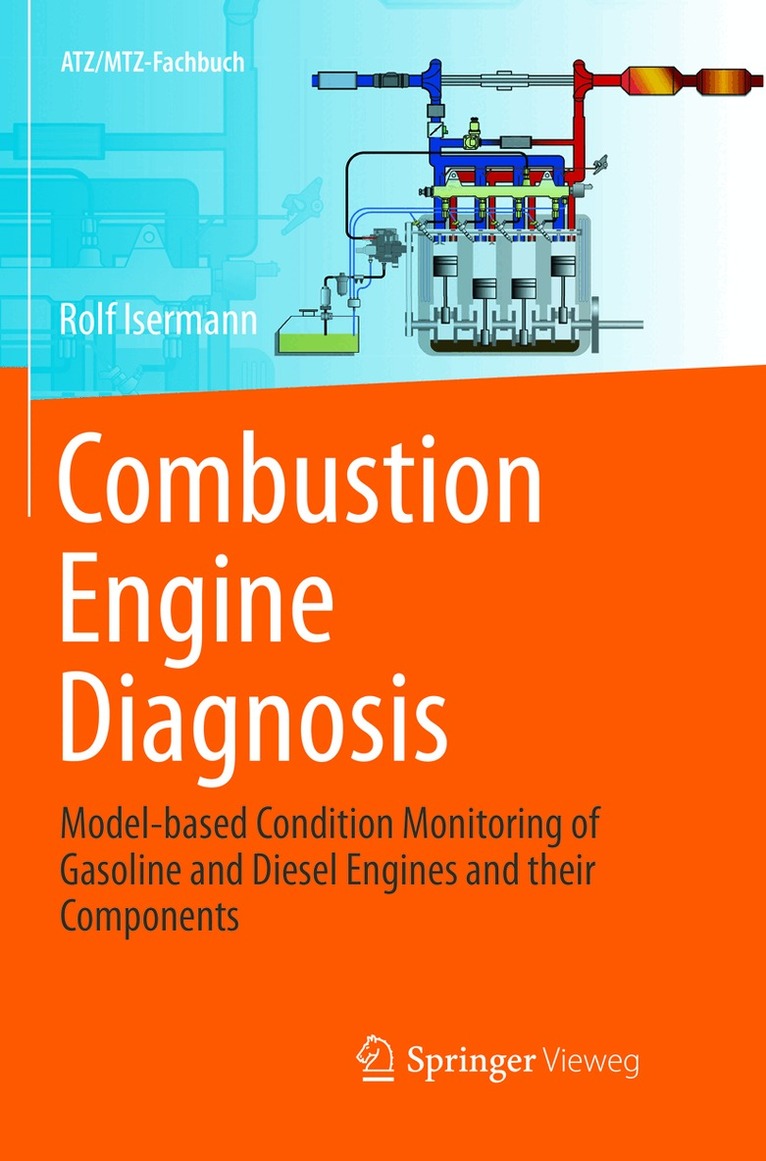
Supervision, condition-monitoring, fault detection, fault diagnosis and fault management play an increasing role for technical processes and vehicles in order to improve reliability, availability, maintenance and lifetime. For safety-related processes fault-tolerant systems with redundancy are required in order to reach comprehensive system integrity.
This book is a sequel of the book “Fault-Diagnosis Systems” published in 2006, where the basic methods were described. After a short introduction into fault-detection and fault-diagnosis methods the book shows how these methods can be applied for a selection of 20 real technical components and processes as examples, such as:
Electrical drives (DC, AC)
Electrical actuators
Fluidic actuators (hydraulic, pneumatic)
Centrifugal and reciprocating pumps
Pipelines (leak detection)
Industrial robots
Machine tools (main and feed drive, drilling, milling, grinding)
Heat exchangers
Also realized fault-tolerant systems for electrical drives, actuators and sensors are presented.
The book describes why and how the various signal-model-based and process-model-based methods were applied and which experimental results could be achieved. In several cases a combination of different methods was most successful.
The book is dedicated to graduate students of electrical, mechanical, chemical engineering and computer science and for engineers.
1 977 kr
Läs direkt efter köp
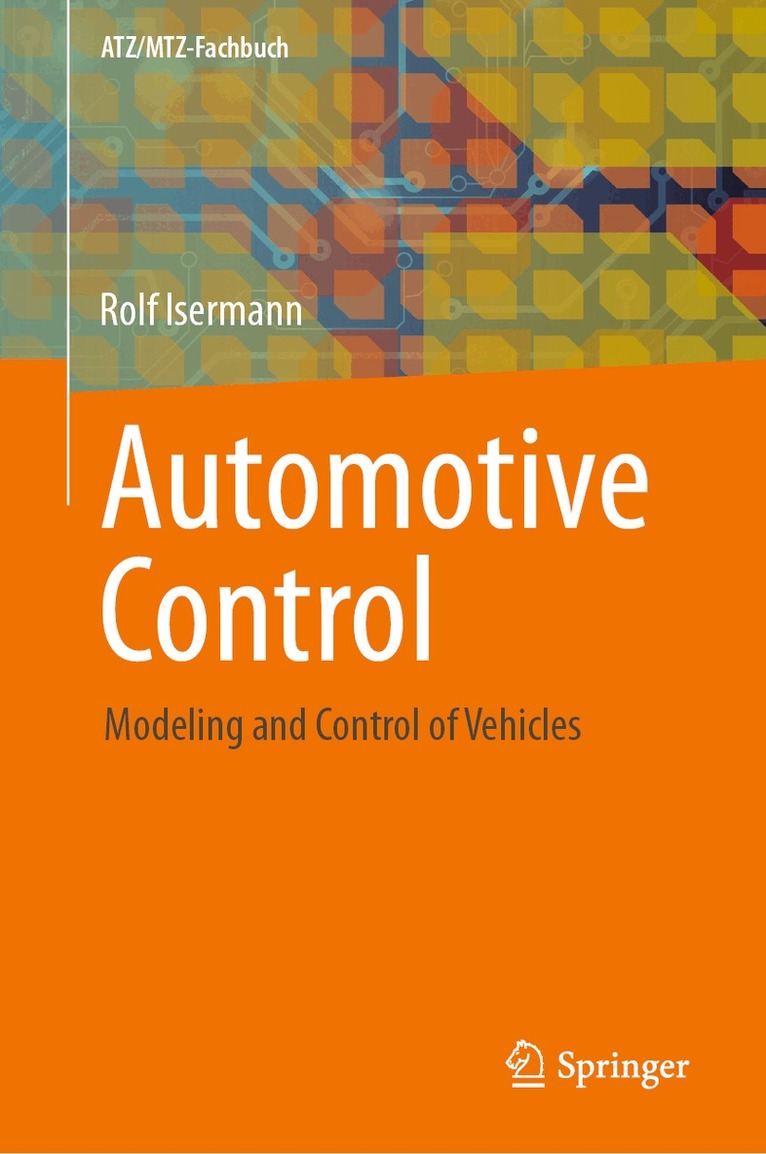
The introduction of mechatronic components for the powertrain, steering and braking systems opens the way to automatic driving functions. Together with internal and environmental sensors, various driver assistance systems are going to be developed for improving driving comfort and safety. Automatic driving control functions suppose a well-designed vehicle behavior. In order to develop and implement the software-based control functions mathematical vehicle models for the stationary and dynamic behavior are required. The book first introduces basic theoretically derived models for the tire traction and force transfer, the longitudinal, lateral, roll and pitch dynamic behavior and related components, like suspensions, steering systems and brakes. These models have to be tailored to allow an identification of the many unknown parameters during driving, also in dependence of different road conditions, velocity and vehicle load. Based on these mathematical models drive dynamiccontrol systems are developed for semi-active and active suspensions, hydraulic and electromechanical brakes including ABS, traction and steering control. Then driver assistance systems like adaptive cruise control (ACC), electronic stability control (ESC), electronic course control and anti-collision control systems are considered. The anti-collision systems are designed and tested for emergency braking, emergency steering and avoiding of overtaking accidents. The book is dedicated to automotive engineers as well as to graduate students of mechanical, electrical and mechatronic engineering and computer science.
1 941 kr
Skickas inom 10-15 vardagar
1 672 kr
Läs direkt efter köp
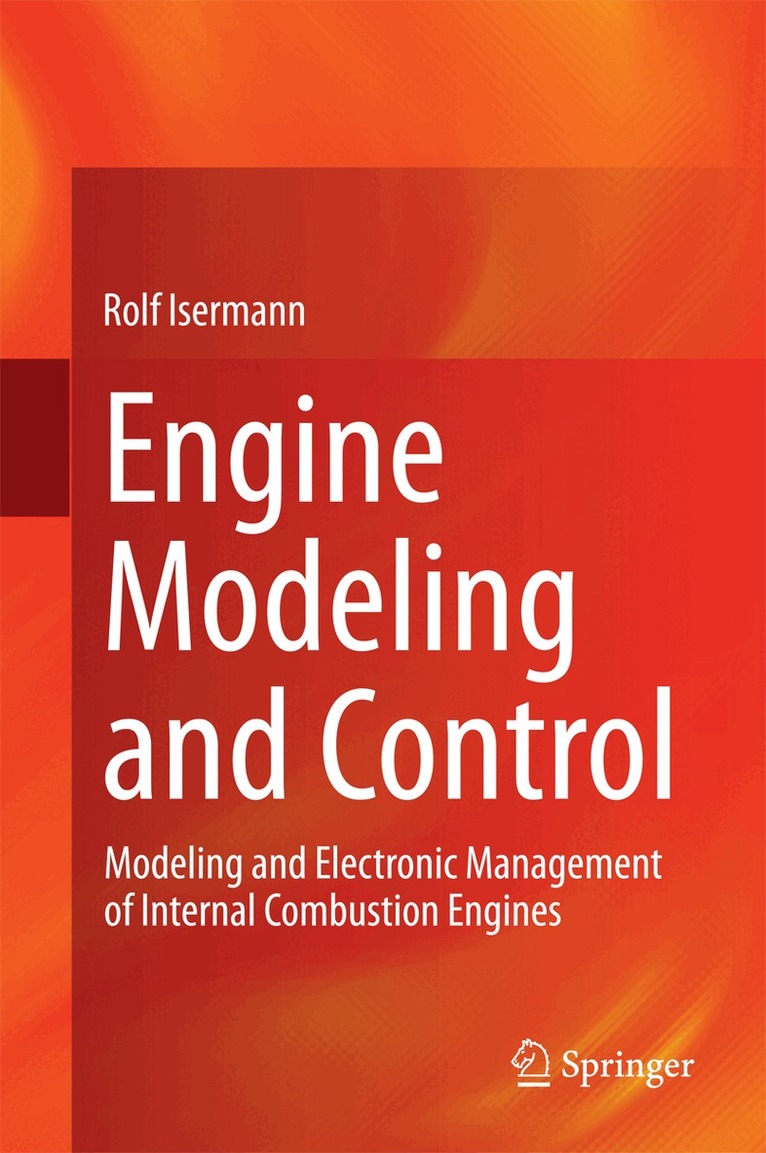
The increasing demands for internal combustion engines with regard to fuel consumption, emissions and driveability lead to more actuators, sensors and complex control functions. A systematic implementation of the electronic control systems requires mathematical models from basic design through simulation to calibration.
The book treats physically-based as well as models based experimentally on test benches for gasoline (spark ignition) and diesel (compression ignition) engines and uses them for the design of the different control functions. The main topics are:
- Development steps for engine control
- Stationary and dynamic experimental modeling
- Physical models of intake, combustion, mechanical system, turbocharger, exhaust, cooling, lubrication, drive train
- Engine control structures, hardware, software, actuators, sensors, fuel supply, injection system, camshaft
- Engine control methods, static and dynamic feedforward and feedback control, calibration and optimization, HiL, RCP, control software development
- Control of gasoline engines, control of air/fuel, ignition, knock, idle, coolant, adaptive control functions
- Control of diesel engines, combustion models, air flow and exhaust recirculation control, combustion-pressure-based control (HCCI), optimization of feedforward and feedback control, smoke limitation and emission control
This book is an introduction to electronic engine management with many practical examples, measurements and research results. It is aimed at advanced students of electrical, mechanical, mechatronic and control engineering and at practicing engineers in the field of combustion engine and automotive engineering.
974 kr
Skickas inom 10-15 vardagar
1 082 kr
Skickas inom 10-15 vardagar
975 kr
Kommande
1 075 kr
Läs direkt efter köp
672 kr
Läs direkt efter köp
660 kr
Skickas inom 10-15 vardagar
611 kr
Läs direkt efter köp
610 kr
Skickas inom 10-15 vardagar
687 kr
Läs direkt efter köp
544 kr
Skickas inom 10-15 vardagar
1 069 kr
Läs direkt efter köp
867 kr
Skickas inom 10-15 vardagar
409 kr
Skickas inom 10-15 vardagar
519 kr
Skickas inom 5-8 vardagar