Romuald M. Brunner - Böcker
Visar alla böcker från författaren Romuald M. Brunner. Handla med fri frakt och snabb leverans.
3 produkter
3 produkter
671 kr
Skickas inom 7-10 vardagar
Was wenn Kinder und Jugendliche plötzlich über eigenartige Wahrnehmungen klagen, wenn sie nicht mehr laufen oder stehen können, sie einfach ohne körperlichen Grund umfallen? Traumatische Ereignisse oder Stress können Auslöser dieser Störungsbilder sein. – Nicht jedes Trauma führt zu einer dissoziativen Störung, aber die verstörenden Symptome machen Angst. Dieses Manual gibt Antworten auf die Fragen:- Wie können diese Phänomene verstanden und von anderen psychischen Störungen unterschieden werden? - Gibt es körperliche Erkrankungen, die diese Symptomatik ausgelöst haben könnten? - Was können Therapeuten tun?Alles Wesentliche zu Diagnostik und Therapie finden Sie hier praxisnah erläutert. Die Reihe "Psychische Störungen im Kindes- und Jugendalter" verfolgt drei wesentliche Ziele:Interdisziplinärer Ansatz: Der Patient steht im Mittelpunkt - der Therapeut muss sein Bestes geben, die Störung zu diagnostizieren und adäquat zu behandeln. Kinder- und Jugendpsychiater, Psychiater und Psychologen sind hier gefordert, ihr Wissen beizutragen und über den Tellerrand zu blicken.Praxisrelevanz: Alle Theorie ist grau - diese Reihe gibt Ihnen die Tipps und Tricks an die Hand, mit denen Sie Ihren schwierigen Alltag ein bisschen besser meistern können.Didaktik und Struktur: Alle Bände sind gleich strukturiert und warten mit einer übersichtlichen Didaktik auf. Das Lesen soll Spaß machen und die entscheidenden Informationen müssen schnell erfasst werden können.
2 563 kr
Skickas inom 10-15 vardagar
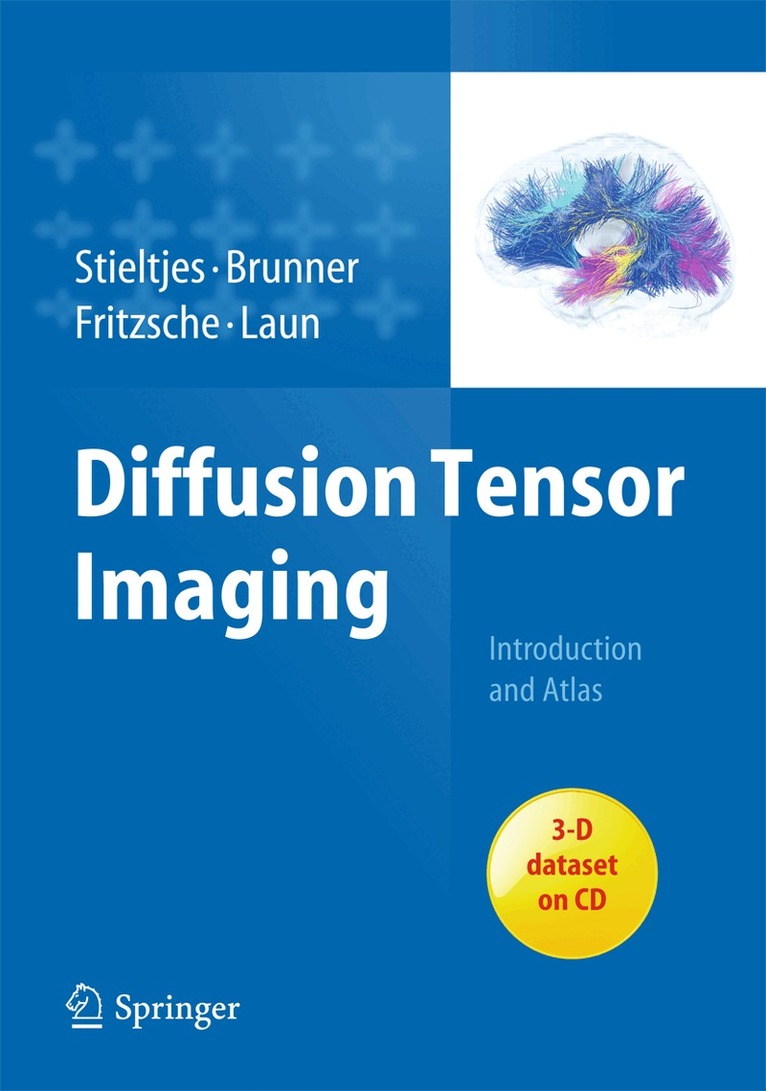
Diffusion Tensor Imaging (DTI) is a variation of diffusion-weighed imaging. Particularly in the neurosciences, this technique has gained tremendous momentum in the past decade, both from a technical point of view as well as in its applications. DTI is mainly used in neurological diagnosis and psychiatric and neurologic research, e.g. in order to locate brain tumors and depict their invasivity.DTI offers a unique in-vivo insight into the three-dimensional structure of the human central nervous system. While easy interpretation and evaluation is often hampered by the complexity of both the technique and neuroanatomy, this atlas helps you recognize every one of the important structures rapidly and unambiguously.In the introduction, this atlas provides a concise outline of the evolution of diffusion imaging and describes its potential applications. In the core part of the atlas, the neuroanatomically important structures are clearly labeled both on DTI-derived color maps and conventional MRI. Complex fiber architecture is illustrated schematically and described concisely in textboxes directly on the relevant page. In the final part of the atlas, a straightforward, step-by-step approach for the three-dimensional reconstruction of the most prominent fiber structures is given, and potential pitfalls are indicated.The atlas aims at neuroscientists, neuroanatomists, neurologists, psychiatrists, clinical psychologists, physicists, and computer scientists. For advanced users, the atlas may serve as a reference work, while students and scientists are thoroughly introduced into DTI.
2 390 kr
Skickas inom 10-15 vardagar
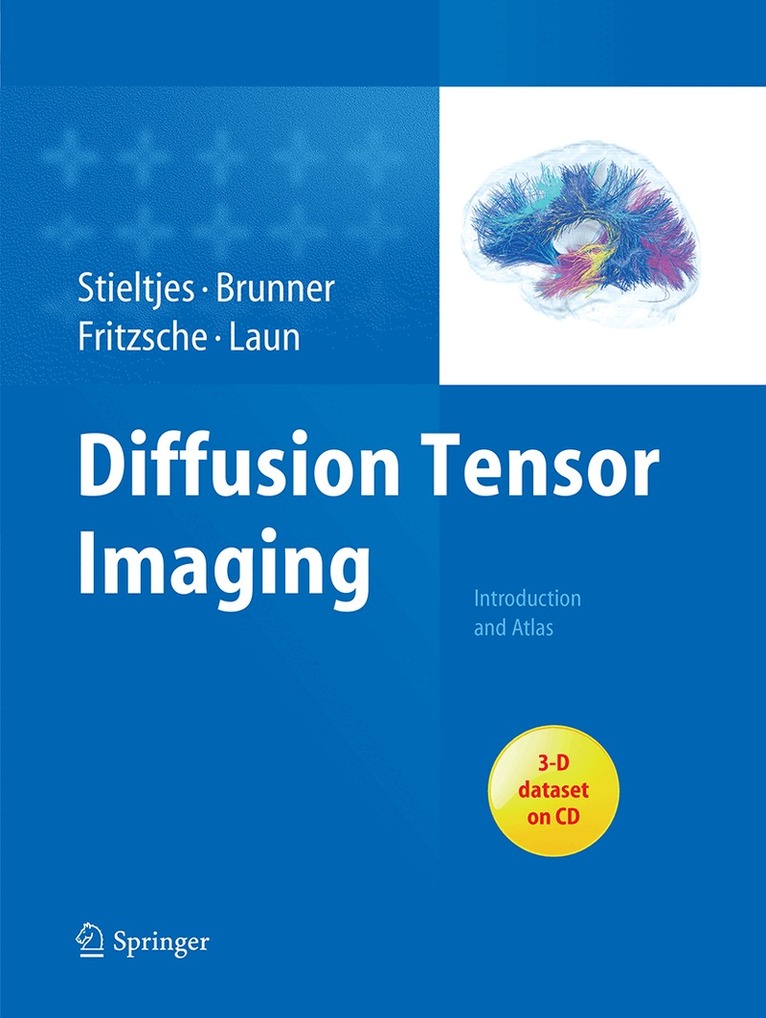
Diffusion Tensor Imaging (DTI) is a variation of diffusion-weighed imaging. Particularly in the neurosciences, this technique has gained tremendous momentum in the past decade, both from a technical point of view as well as in its applications. DTI is mainly used in neurological diagnosis and psychiatric and neurologic research, e.g. in order to locate brain tumors and depict their invasivity.DTI offers a unique in-vivo insight into the three-dimensional structure of the human central nervous system. While easy interpretation and evaluation is often hampered by the complexity of both the technique and neuroanatomy, this atlas helps you recognize every one of the important structures rapidly and unambiguously.In the introduction, this atlas provides a concise outline of the evolution of diffusion imaging and describes its potential applications. In the core part of the atlas, the neuroanatomically important structures are clearly labeled both on DTI-derived color maps and conventional MRI. Complex fiber architecture is illustrated schematically and described concisely in textboxes directly on the relevant page. In the final part of the atlas, a straightforward, step-by-step approach for the three-dimensional reconstruction of the most prominent fiber structures is given, and potential pitfalls are indicated.The atlas aims at neuroscientists, neuroanatomists, neurologists, psychiatrists, clinical psychologists, physicists, and computer scientists. For advanced users, the atlas may serve as a reference work, while students and scientists are thoroughly introduced into DTI.