Ron A. Boschma – författare
Visar alla böcker från författaren Ron A. Boschma. Handla med fri frakt och snabb leverans.
3 produkter
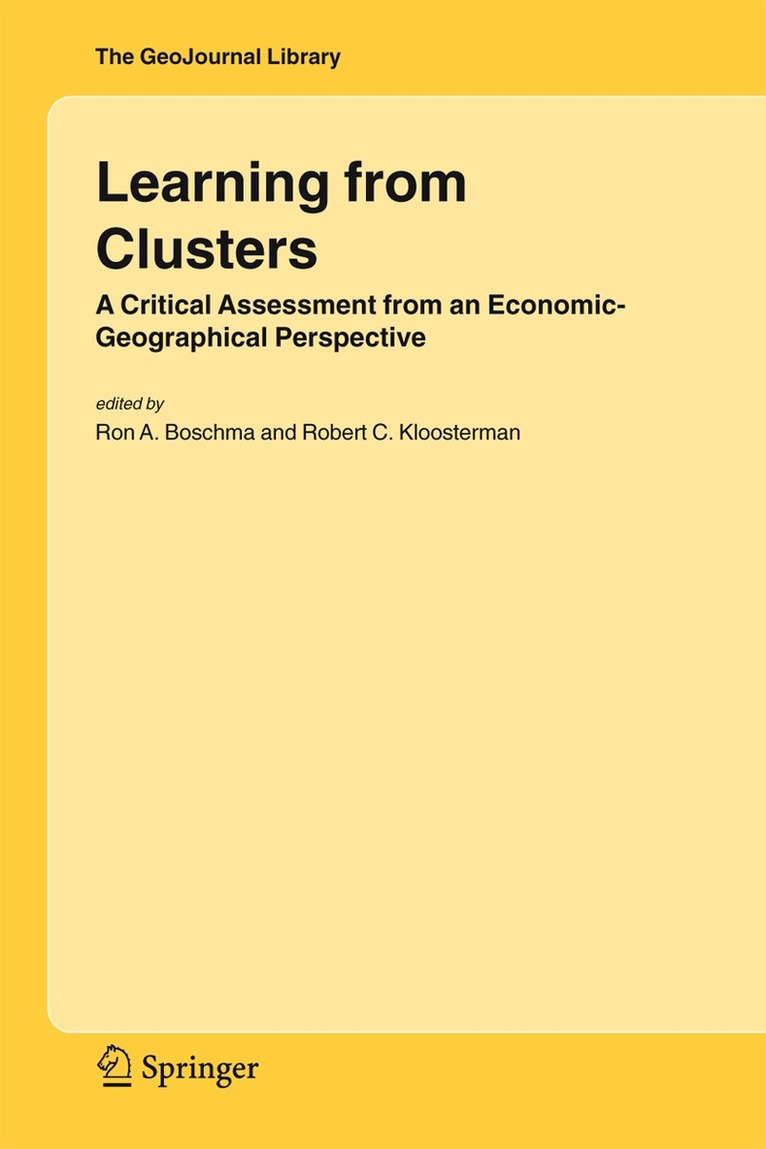
Learning from Clusters
A Critical Assessment from an Economic-Geographical Perspective
Av Ron A. Boschma, Robert C. Kloosterman
Inbunden, 2005
1639 kr
Lägg i varukorg
Jan Lambooy retired in October 2002. When Jan was asked how he wanted to celebrate this occasion, he was adamant that no great festivities should take place. Characteristically, Jan wanted just a scientific conference so he “could learn something from it” and, as he insisted, no great festivities. …
Learning from Clusters
A Critical Assessment from an Economic-Geographical Perspective
Av Robert C. Kloosterman, Ron A. Boschma
E-bok, 2006
2111 kr
Lägg i varukorg
Jan Lambooy retired in October 2002. When Jan was asked how he wanted to celebrate this occasion, he was adamant that no great festivities should take place. Characteristically, Jan wanted just a scientific conference so he “could learn something from it” and, as he insisted, no great festivities. …
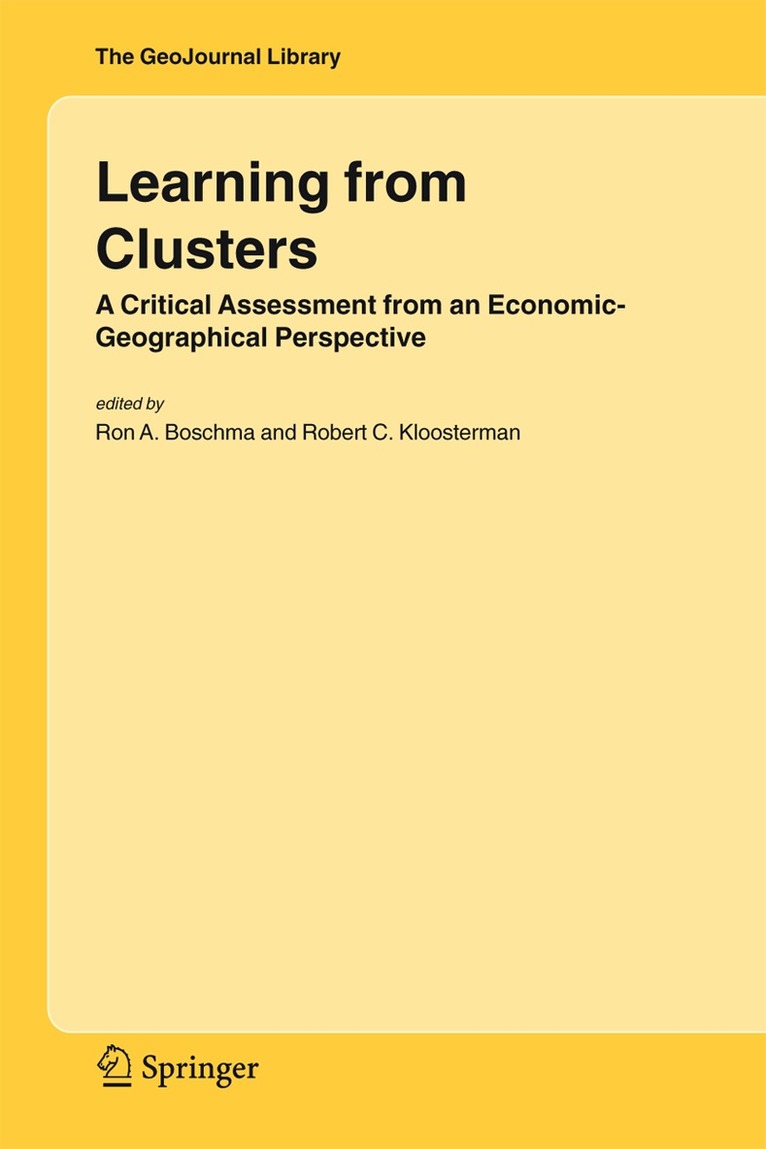
Learning from Clusters
A Critical Assessment from an Economic-Geographical Perspective
Av Ron A. Boschma, Robert C. Kloosterman
Häftad, 2011
1643 kr
Lägg i varukorg
Jan Lambooy retired in October 2002. When Jan was asked how he wanted to celebrate this occasion, he was adamant that no great festivities should take place. Characteristically, Jan wanted just a scientific conference so he “could learn something from it” and, as he insisted, no great festivities. …