Ron Brookmeyer - Böcker
Visar alla böcker från författaren Ron Brookmeyer. Handla med fri frakt och snabb leverans.
3 produkter
3 produkter
Del 23 - Monographs in Epidemiology and Biostatistics
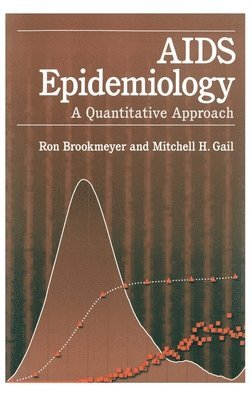
AIDS Epidemiology
A Quantitative Approach
Inbunden, Engelska, 1994
1 146 kr
Skickas inom 5-8 vardagar
AIDS has appeared in more than 130 countries, and over 100,000 cases of AIDS have been reported in the U.S. alone. More and more, the public will be depending on statisticians to provide answers about the future course of this epidemic. This comprehensive work confronts the problems that are unique to AIDS research and unites them under a single conceptual framework. It focuses on methods for the design and analysis of epidemiologic studies, the natural history of AIDS and the transmission of HIV, methods for tracking and projecting the course of the epidemic, and statistical issues in therapeutic trials. The various methods of monitoring and forecasting this disease receive comprehensive treatment. These methods include back-calculation, which the authors developed; interpretation of survey data on HIV prevalence; mathematical models for HIV transmission; and approaches that combine different types of epidemiological data. Much of this material -- such as a discussion of methods for assessing safety of the blood supply, an evaluation of survey approaches, and methods to project paediatric AIDS incidence -- is not available in any other work.This is an essential purchase for all AIDS investigators and epidemiologists.
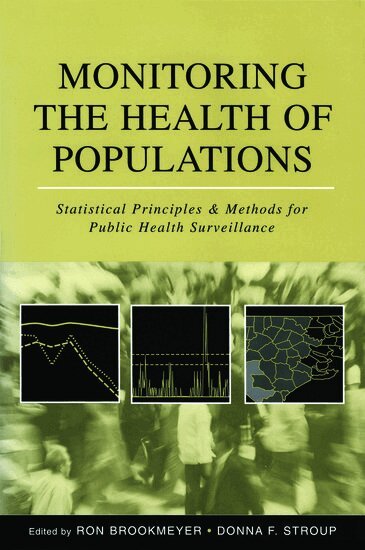
Monitoring the Health of Populations
Statistical Principles and Methods for Public Health Surveillance
Inbunden, Engelska, 2003
1 236 kr
Skickas inom 5-8 vardagar
Public health faces critical challenges ranging from outbreaks of new and old pathogens to the threat of bioterrorism and the impact of lifestyle and environmental changes on health. Modern tools of health surveillance and sound statistical practices are essential for meeting these challenges and providing accurate warnings about real public health threats without wasting resources on false alarms. Advances in statistical techniques, computing power and the Internet have led to many new approaches to monitoring population health, analyzing the data, and rapidly sharing it.This text explores the critical issues in the statistical analysis and interpretation of public health surveillance data. It covers statistical methods for detecting disease outbreaks and clusters, the use of survey methods, interpreting time trends and geographic patterns, exploratory statistical analysis of surveillance data, and web-based health reporting systems for the rapid detection of public health problems, among other topics. The methodological approaches are illustrated in discussions of several current public health issues, including the HIV/AIDS epidemic, anthrax, health effects of particulate air pollution, and trends in prostate cancer. The methods are broadly applicable to surveillance systems and registries for numerous health conditions, e.g. infectious diseases, chronic diseases, adverse drug reactions.The book provides numerous illustrations, worked examples, and practical information for actually implementing the methods. It will serve as a reference for public health practitioners and as a textbook for courses on disease surveillance taken by students of statistics biostatistics, epidemiology or public health.
1 020 kr
Skickas inom 5-8 vardagar
How successful are HIV prevention programs? Which HIV prevention programs are most cost effective? Which programs are worth expanding and which should be abandoned altogether? This book addresses the quantitative evaluation of HIV prevention programs, assessing for the first time several different quantitative methods of evaluation.The authors of the book include behavioral scientists, biologists, economists, epidemiologists, health service researchers, operations researchers, policy makers, and statisticians. They present a wide variety of perspectives on the subject, including an overview of HIV prevention programs in developing countries, economic analyses that address questions of cost effectiveness and resource allocation, case studies such as Israel’s ban on Ethiopian blood donors, and descriptions of new methodologies and problems.