
Ron Christenson – författare
Visar alla böcker från författaren . Handla med fri frakt och snabb leverans.
8 produkter
8 produkter
Inbunden, Engelska, 2007
2 404 kr
Skickas inom 10-15 vardagar
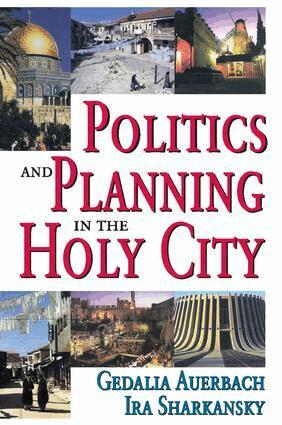
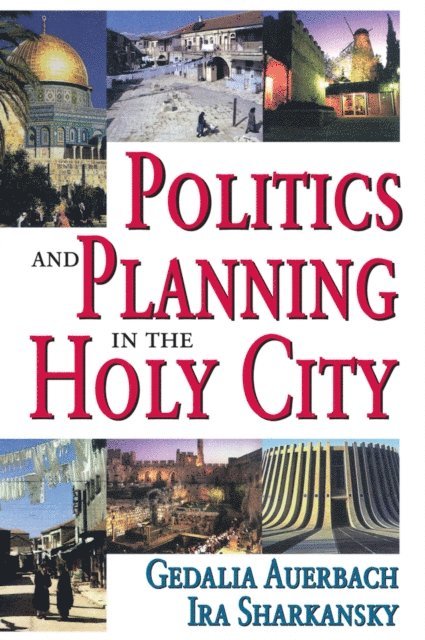
Jerusalem is not just another city that illustrates the conflict between interests of professional planners and competing political perspectives. It is the Holy City, with a history of some 3,000 years. Moreover, numerous layers of historical remains have importance for intense and competitive religious and national interests. Israelis claim it as the capital of their country, and Palestinians want it--or part of it--as the capital of their not yet created state.Jerusalem is also a place where more than 700,000 people live, and the center of a metropolitan area with more than twice that number. Along with religious and national interests, there are the customary conflicts between what various groups--property developers, politicians, professional planners, neighborhood residents, and environmental activists--want to do with the land. Politics and Planning in the Holy City describes and analyzes the tensions between politics and planning.The authors tackle the economic, social, and political contexts that shape conflicts. Such problems include deciding what should be called "Jerusalem" and difficulties surrounding the construction of a defense barrier to protect Israelis from Palestinian terrorists--in the framework of a multicultural city where 30 to 40 percent of its residents are Palestinians. There is dissent over locating rail lines to the city, as some interests want them here, there, or nowhere, and over building a light rail line within a city already crowded and beset with conflicting interests. The creation of a football stadium is another venue for conflict, as many religious Jews view sports as a threat to their way of life.Issues include locating a site for housing new immigrants, as few Jerusalemites want large numbers of newcomers in their neighborhoods, and deciding which sites merit preservation in a city with many deserving candidates, but severely limited resources. This volume will attract urban specialists as well as those concerned with larger political issues.
Häftad, Engelska, 1999
739 kr
Skickas inom 10-15 vardagar
Political trials take issues of responsibility, conscience, representation, and legitimacy, which are tied in tight political and legal knots, and force us to face questions about our public identity, our standards for public policy, and our sense of history. Ron Christenson explores how political trials, especially those within the rule of law, engage society's conflicting values and loyalties. He examines numerous political trials throughout history, bringing into question basic foundations of law, politics, and society. Christenson classifies political trials according to the issues they generate in the political sphere: partisan trials are spurious legal proceedings but politically expedient; trials of corruption and insanity raise questions of public and personal responsibility; trials of dissenters involve problems of conscience; trials of nationalists highlight the nature of representation and the relationship of the part to the whole; and trials of regimes engage the most fundamental concept of both law and politics--legitimacy. Political Trials brings these considerations to bear on some of the best-known cases in history, including the Gunpowder Plot; the Spanish Inquisition; the Dreyfus affair; the Nuremburg trials; trials of dissenters such as Socrates, Thomas More, Roger Williams, and the Berrigan brothers; and trials of nationalists such as Joan of Arc, Gandhi, Knut Hamsun, and the Irish republicans. Since the first edition appeared, a number of notable political trials have raised critical issues for society. Shocking public exposures about the Guildford 4 and Maguire 7 trials shook the British criminal justice establishment, while in the United States trials concerning the beating of Rodney King led up to the O.J. Simpson spectacle and a host of parallel questions. The trials of right-wing terrorists such as Paul Hill, found guilty of murdering an abortion doctor, and Timothy McVeigh, convicted of the Oklahoma City federal building bombing, parallel the case of left-wing dissenter Karl Armstrong in the 1970s. Finally, the South African Truth and Reconciliation Committee provides a test case of whether a nation can not only remember but grant amnesty and achieve true reconciliation. In examining the dilemmas involved in these trials, Christenson shows how they make a positive contribution to an open and democratic society. Political Trials will be an important addition to the libraries of historians, legal scholars, and political scientists.
Inbunden, Engelska, 2017
2 404 kr
Skickas inom 10-15 vardagar
Political trials take issues of responsibility, conscience, representation, and legitimacy, which are tied in tight political and legal knots, and force us to face questions about our public identity, our standards for public policy, and our sense of history. Ron Christenson explores how political trials, especially those within the rule of law, engage society's conflicting values and loyalties. He examines numerous political trials throughout history, bringing into question basic foundations of law, politics, and society. Christenson classifies political trials according to the issues they generate in the political sphere: partisan trials are spurious legal proceedings but politically expedient; trials of corruption and insanity raise questions of public and personal responsibility; trials of dissenters involve problems of conscience; trials of nationalists highlight the nature of representation and the relationship of the part to the whole; and trials of regimes engage the most fundamental concept of both law and politics--legitimacy. Political Trials brings these considerations to bear on some of the best-known cases in history, including the Gunpowder Plot; the Spanish Inquisition; the Dreyfus affair; the Nuremburg trials; trials of dissenters such as Socrates, Thomas More, Roger Williams, and the Berrigan brothers; and trials of nationalists such as Joan of Arc, Gandhi, Knut Hamsun, and the Irish republicans. Since the first edition appeared, a number of notable political trials have raised critical issues for society. Shocking public exposures about the Guildford 4 and Maguire 7 trials shook the British criminal justice establishment, while in the United States trials concerning the beating of Rodney King led up to the O.J. Simpson spectacle and a host of parallel questions. The trials of right-wing terrorists such as Paul Hill, found guilty of murdering an abortion doctor, and Timothy McVeigh, convicted of the Oklahoma City federal building bombing, parallel the case of left-wing dissenter Karl Armstrong in the 1970s. Finally, the South African Truth and Reconciliation Committee provides a test case of whether a nation can not only remember but grant amnesty and achieve true reconciliation. In examining the dilemmas involved in these trials, Christenson shows how they make a positive contribution to an open and democratic society. Political Trials will be an important addition to the libraries of historians, legal scholars, and political scientists.
E-bok
Engelska, 2017858 kr
Läs direkt efter köp
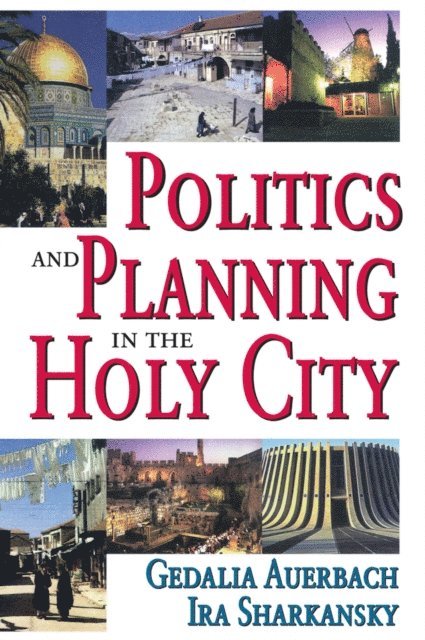
Jerusalem is not just another city that illustrates the conflict between interests of professional planners and competing political perspectives. It is the Holy City, with a history of some 3,000 years. Moreover, numerous layers of historical remains have importance for intense and competitive religious and national interests. Israelis claim it as the capital of their country, and Palestinians want it--or part of it--as the capital of their not yet created state.Jerusalem is also a place where more than 700,000 people live, and the center of a metropolitan area with more than twice that number. Along with religious and national interests, there are the customary conflicts between what various groups--property developers, politicians, professional planners, neighborhood residents, and environmental activists--want to do with the land. Politics and Planning in the Holy City describes and analyzes the tensions between politics and planning.The authors tackle the economic, social, and political contexts that shape conflicts. Such problems include deciding what should be called Jerusalem and difficulties surrounding the construction of a defense barrier to protect Israelis from Palestinian terrorists--in the framework of a multicultural city where 30 to 40 percent of its residents are Palestinians. There is dissent over locating rail lines to the city, as some interests want them here, there, or nowhere, and over building a light rail line within a city already crowded and beset with conflicting interests. The creation of a football stadium is another venue for conflict, as many religious Jews view sports as a threat to their way of life.Issues include locating a site for housing new immigrants, as few Jerusalemites want large numbers of newcomers in their neighborhoods, and deciding which sites merit preservation in a city with many deserving candidates, but severely limited resources. This volume will attract urban specialists as well as those concerned with larger p
E-bok
PDF, Engelska, 2017858 kr
Läs direkt efter köp
Jerusalem is not just another city that illustrates the conflict between interests of professional planners and competing political perspectives. It is the Holy City, with a history of some 3,000 years. Moreover, numerous layers of historical remains have importance for intense and competitive religious and national interests. Israelis claim it as the capital of their country, and Palestinians want it--or part of it--as the capital of their not yet created state.Jerusalem is also a place where more than 700,000 people live, and the center of a metropolitan area with more than twice that number. Along with religious and national interests, there are the customary conflicts between what various groups--property developers, politicians, professional planners, neighborhood residents, and environmental activists--want to do with the land. Politics and Planning in the Holy City describes and analyzes the tensions between politics and planning.The authors tackle the economic, social, and political contexts that shape conflicts. Such problems include deciding what should be called Jerusalem and difficulties surrounding the construction of a defense barrier to protect Israelis from Palestinian terrorists--in the framework of a multicultural city where 30 to 40 percent of its residents are Palestinians. There is dissent over locating rail lines to the city, as some interests want them here, there, or nowhere, and over building a light rail line within a city already crowded and beset with conflicting interests. The creation of a football stadium is another venue for conflict, as many religious Jews view sports as a threat to their way of life.Issues include locating a site for housing new immigrants, as few Jerusalemites want large numbers of newcomers in their neighborhoods, and deciding which sites merit preservation in a city with many deserving candidates, but severely limited resources. This volume will attract urban specialists as well as those concerned with larger p
E-bok
Engelska, 2017883 kr
Läs direkt efter köp
"Political trials take issues of responsibility, conscience, representation, and legitimacy, which are tied in tight political and legal knots, and force us to face questions about our public identity, our standards for public policy, and our sense of history. Ron Christenson explores how political trials, especially those within the rule of law, engage society''s conflicting values and loyalties. He examines numerous political trials throughout history, bringing into question basic foundations of law, politics, and society. Christenson classifies political trials according to the issues they generate in the political sphere: partisan trials are spurious legal proceedings but politically expedient; trials of corruption and insanity raise questions of public and personal responsibility; trials of dissenters involve problems of conscience; trials of nationalists highlight the nature of representation and the relationship of the part to the whole; and trials of regimes engage the most fundamental concept of both law and politics--legitimacy. Political Trials brings these considerations to bear on some of the best-known cases in history, including the Gunpowder Plot; the Spanish Inquisition; the Dreyfus affair; the Nuremburg trials; trials of dissenters such as Socrates, Thomas More, Roger Williams, and the Berrigan brothers; and trials of nationalists such as Joan of Arc, Gandhi, Knut Hamsun, and the Irish republicans. Since the first edition appeared, a number of notable political trials have raised critical issues for society. Shocking public exposures about the Guildford 4 and Maguire 7 trials shook the British criminal justice establishment, while in the United States trials concerning the beating of Rodney King led up to the O.J. Simpson spectacle and a host of parallel questions. The trials of right-wing terrorists such as Paul Hill, found guilty of murdering an abortion doctor, and Timothy McVeigh, convicted of the Oklahoma City federal building bombing, parallel "
E-bok
PDF, Engelska, 2017883 kr
Läs direkt efter köp
"Political trials take issues of responsibility, conscience, representation, and legitimacy, which are tied in tight political and legal knots, and force us to face questions about our public identity, our standards for public policy, and our sense of history. Ron Christenson explores how political trials, especially those within the rule of law, engage society''s conflicting values and loyalties. He examines numerous political trials throughout history, bringing into question basic foundations of law, politics, and society. Christenson classifies political trials according to the issues they generate in the political sphere: partisan trials are spurious legal proceedings but politically expedient; trials of corruption and insanity raise questions of public and personal responsibility; trials of dissenters involve problems of conscience; trials of nationalists highlight the nature of representation and the relationship of the part to the whole; and trials of regimes engage the most fundamental concept of both law and politics--legitimacy. Political Trials brings these considerations to bear on some of the best-known cases in history, including the Gunpowder Plot; the Spanish Inquisition; the Dreyfus affair; the Nuremburg trials; trials of dissenters such as Socrates, Thomas More, Roger Williams, and the Berrigan brothers; and trials of nationalists such as Joan of Arc, Gandhi, Knut Hamsun, and the Irish republicans. Since the first edition appeared, a number of notable political trials have raised critical issues for society. Shocking public exposures about the Guildford 4 and Maguire 7 trials shook the British criminal justice establishment, while in the United States trials concerning the beating of Rodney King led up to the O.J. Simpson spectacle and a host of parallel questions. The trials of right-wing terrorists such as Paul Hill, found guilty of murdering an abortion doctor, and Timothy McVeigh, convicted of the Oklahoma City federal building bombing, parallel "
Häftad, Engelska, 1986
508 kr
Tillfälligt slut
Second edition of a book which examines several political trials throughout history, questioning the basic foundations of law, politics and society.