Rosa Linda Fregoso - Böcker
Visar alla böcker från författaren Rosa Linda Fregoso. Handla med fri frakt och snabb leverans.
6 produkter
6 produkter
341 kr
Skickas inom 10-15 vardagar
Filmmaker Lourdes Portillo sees her mission as "channeling the hopes and dreams of a people." Clearly, political commitment has inspired her choice of subjects. With themes ranging from state repression to AIDS, Portillo's films include: DespuÉs del Terremoto, the Oscar-nominated Las Madres: The Mothers of the Plaza de Mayo,La Ofrenda: The Days of the Dead,The Devil Never Sleeps, and Corpus: A Home Movie for Selena.The first study of Portillo and her films, this collection is collaborative and multifaceted in approach, emphasizing aspects of authorial creativity, audience reception, and production processes typically hidden from view. Rosa Linda Fregoso, the volume editor, has organized the book into three parts: interviews (by Fregoso and Kathleen Newman and B. Ruby Rich); critical perspectives (essays by Fregoso, Yvonne Yarbro-Bejarano, Sylvie Thouard, Norma Iglesias, and Barbara McBane); and production materials (screenplays, script notes, storyboards, etc.). This innovative collection provides "inside" information on the challenges of making independent films. By describing the production constraints Portillo has surmounted, Fregoso deepens our appreciation of this gifted filmmaker's life, her struggles, and the evolution of her art.
Del 12 - American Crossroads
meXicana Encounters
The Making of Social Identities on the Borderlands
Häftad, Engelska, 2003
591 kr
Skickas inom 3-6 vardagar
"MeXicana Encounters" charts the dynamic and contradictory representation of Mexicanas and Chicanas in culture. Rosa Linda Fregoso's deft analysis of the cultural practices and symbolic forms that shape social identities takes her across a wide and varied terrain. Among the subjects she considers are the recent murders and disappearances of women in Ciudad Juarez; transborder feminist texts that deal with private, domestic forms of violence; how films like John Sayles' "Lone Star" re-center white masculinity; and the significance of la familia to the identity of Chicanas/os and how it can subordinate gender and sexuality to masculinity and heterosexual roles. Fregoso's self-reflexive approach to cultural politics embraces the movement for social justice and offers new insights into the ways that racial and gender differences are inscribed in cultural practices.
231 kr
Skickas inom 7-10 vardagar
"Born in East LA","La Bamba", "American Me" and "Zoot Suit" are all recent films by and about chicanos. In this study, the author offers an explanation of the cultural significance of these and other films, using approaches from feminist studies, cultural studies and film theory. "The Bronze Screen" explores the historical conditions that produced the "bronze" explosions on Hollywood and independent film screens. Fregoso also puts forth social, textual and cultural readings that examine questions of cultural nationalism, feminism, and sexuality as contemporary issues facing the chicano and chicana communities. Ultimately, this work takes readers on a critical tour of the chicano cinema that emerged during the chicano power movement of the late 60s - when films were staged on the ground of anti-racism politics in the United States - and continues through more recent films of the 1980s and 1990s.
382 kr
Skickas inom 7-10 vardagar
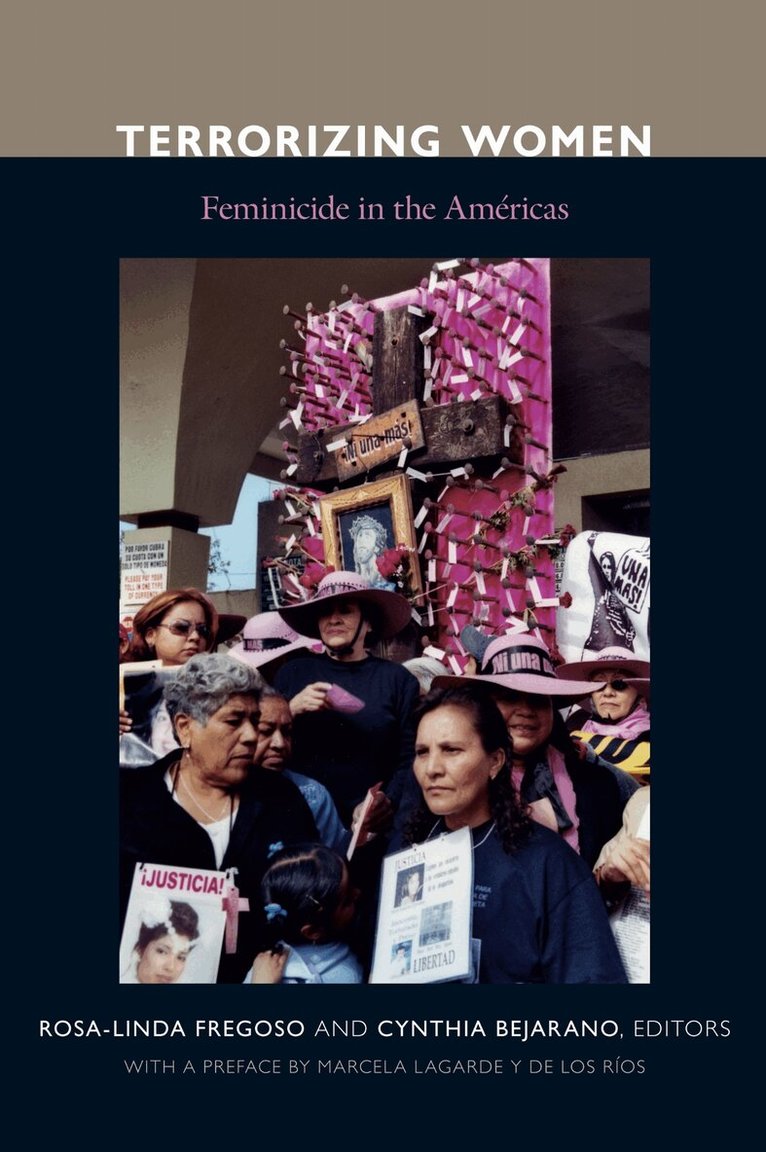
More than 600 women and girls have been murdered and more than 1,000 have disappeared in the Mexican state of Chihuahua since 1993. Violence against women has increased throughout Mexico and in other countries, including Argentina, Costa Rica, Guatemala, and Peru. Law enforcement officials have often failed or refused to undertake investigations and prosecutions, creating a climate of impunity for perpetrators and denying truth and justice to survivors of violence and victims’ relatives. Terrorizing Women is an impassioned yet rigorously analytical response to the escalation in violence against women in Latin America during the past two decades. It is part of a feminist effort to categorize violence rooted in gendered power structures as a violation of human rights. The analytical framework of feminicide is crucial to that effort, as the editors explain in their introduction. They define feminicide as gender-based violence that implicates both the state (directly or indirectly) and individual perpetrators. It is structural violence rooted in social, political, economic, and cultural inequalities. Terrorizing Women brings together essays by feminist and human rights activists, attorneys, and scholars from Latin America and the United States, as well as testimonios by relatives of women who were disappeared or murdered. In addition to investigating egregious violations of women’s human rights, the contributors consider feminicide in relation to neoliberal economic policies, the violent legacies of military regimes, and the sexual fetishization of women’s bodies. They suggest strategies for confronting feminicide; propose legal, political, and social routes for redressing injustices; and track alternative remedies generated by the communities affected by gender-based violence. In a photo essay portraying the justice movement in Chihuahua, relatives of disappeared and murdered women bear witness to feminicide and demand accountability. Contributors: Pascha Bueno-Hansen, Adriana Carmona LÓpez, Ana Carcedo CabaÑas, Jennifer Casey, Lucha Castro RodrÍguez , AngÉlica ChÁzaro, Rebecca Coplan, HÉctor DomÍnguez-Ruvalcaba, Marta Fontenla, Alma Gomez Caballero, Christina Iturralde, Marcela Lagarde y de los RÍos, Julia Estela MonÁrrez Fragoso, Hilda Morales Trujillo, Mercedes Olivera, Patricia Ravelo Blancas, Katherine Ruhl, Montserrat Sagot, Rita Laura Segato, Alicia Schmidt Camacho, William Paul Simmons, Deborah M. Weissman, Melissa W. Wright
1 062 kr
Skickas inom 7-10 vardagar
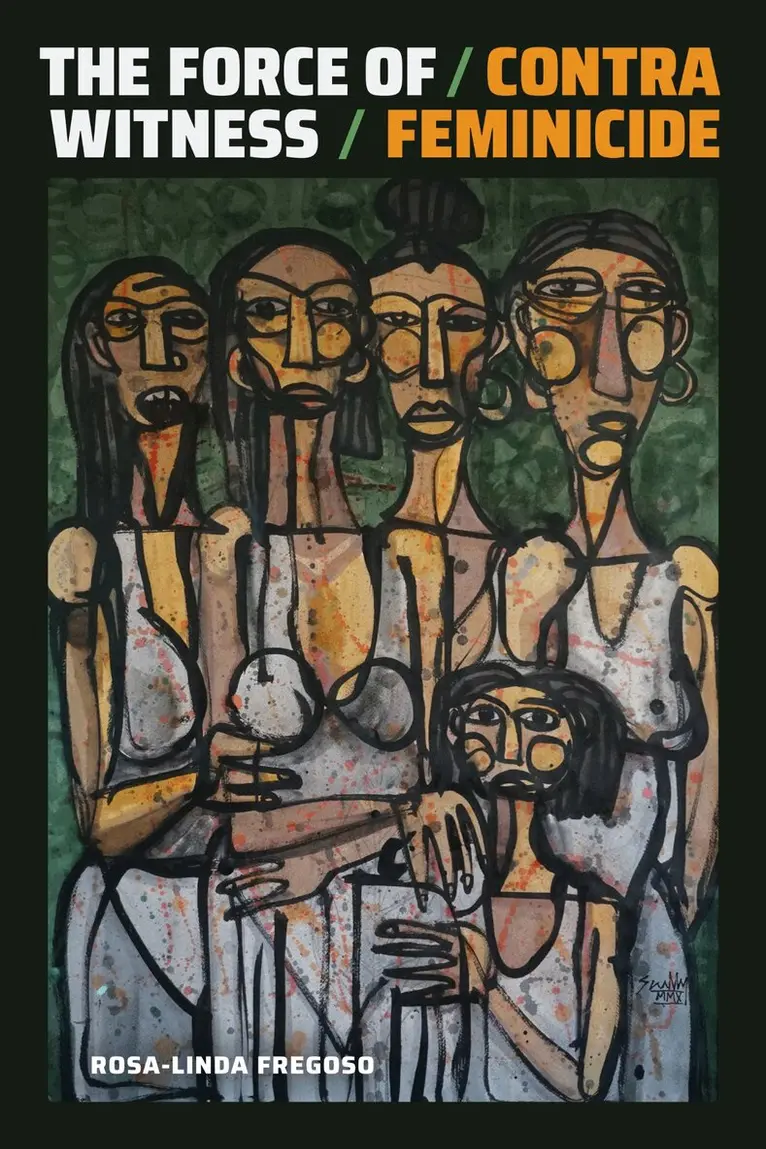
In The Force of Witness Rosa-Linda Fregoso examines the contra feminicide movement in Mexico and other feminist efforts to eradicate gender violence. Drawing on interviews, art, documentaries, and her years of activism, Fregoso traces the micro and macro scales of misogyny and the patterns of state complicity with gender violence. She shows how different forms of witnessing-from activist-mothers’ bearing witness to the memories of their daughters and expert witnesses in court cases to communal witnessing and a scholar-activist-citizen witnessing her own actions-are key to resisting feminicidal violence. Fregoso situates these forms of witness in the histories, contexts, structures, bodies, and intersectional struggles they emerge from. By outlining the complexities of feminicidal violence in relation to witnessing processes, Fregoso challenges the notion of witness as an individual or autonomous subject inscribed solely in the legal or religious arenas. Rather, she theorizes witness as a force of collectivity and a constellation of multiple social locations and intersectional practices that work together to abolish feminicidal violence.
259 kr
Skickas
In The Force of Witness Rosa-Linda Fregoso examines the contra feminicide movement in Mexico and other feminist efforts to eradicate gender violence. Drawing on interviews, art, documentaries, and her years of activism, Fregoso traces the micro and macro scales of misogyny and the patterns of state complicity with gender violence. She shows how different forms of witnessing-from activist-mothers’ bearing witness to the memories of their daughters and expert witnesses in court cases to communal witnessing and a scholar-activist-citizen witnessing her own actions-are key to resisting feminicidal violence. Fregoso situates these forms of witness in the histories, contexts, structures, bodies, and intersectional struggles they emerge from. By outlining the complexities of feminicidal violence in relation to witnessing processes, Fregoso challenges the notion of witness as an individual or autonomous subject inscribed solely in the legal or religious arenas. Rather, she theorizes witness as a force of collectivity and a constellation of multiple social locations and intersectional practices that work together to abolish feminicidal violence.