Roy M. MacLeod – författare
Visar alla böcker från författaren Roy M. MacLeod. Handla med fri frakt och snabb leverans.
12 produkter
12 produkter
Inbunden, Engelska, 1996
572 kr
Skickas inom 10-15 vardagar
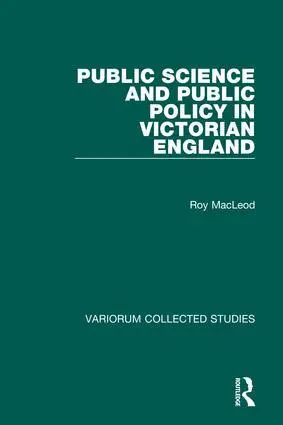
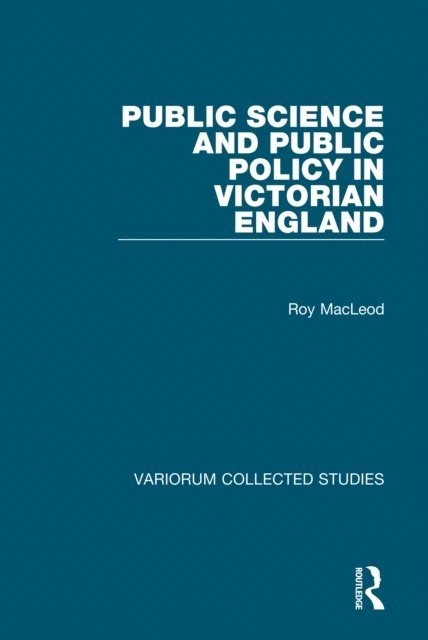
This book comprises nine essays, selected from Roy MacLeod's work on the social history of Victorian science, and is concerned with the analysis of science as a responsibility and opportunity for 19th-century statecraft. It illuminates the origins of environmental regulation, the creation of scientific inspectorates, the reform of scientific institutions, and the association of government with the patronage and support of fundamental research. Above all, it explores several of the ways in which British scientists became 'statesmen in disguise', negotiating interests and professional goals by association with the interests of the state as 'provider' and agent of efficiency in education and in the application of research.
Inbunden, Engelska, 2000
1 343 kr
Skickas inom 5-8 vardagar
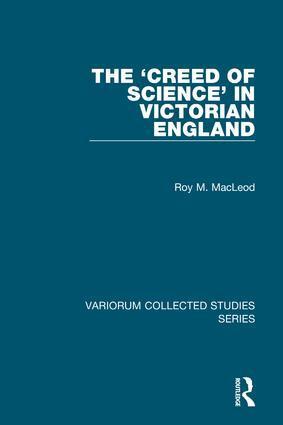
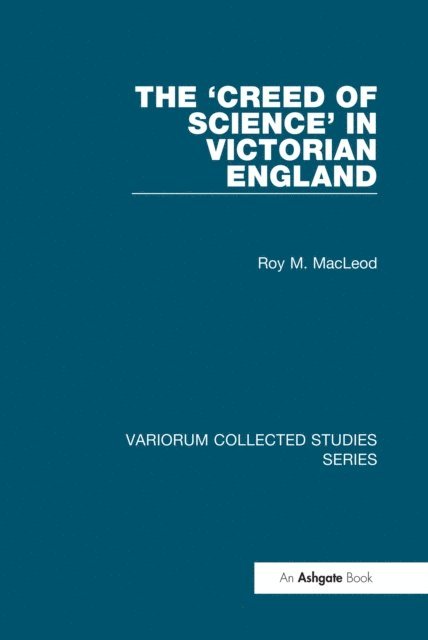
The nineteenth century, which saw the triumph of the idea of progress and improvement, saw also the triumph of science as a political and cultural force. In England, as science and its methods claimed privilege and space, its language acquired the vocabulary of religion. The new ’creed’ of science embraced what John Tyndall called the ’scientific movement’; it was, in the language of T.H. Huxley, a militant creed. The ’march’ of invention, the discoveries of chemistry, and the wonders of steam and electricity culminated in a crusade against ignorance and unbelief. It was a creed that looked to its own apostolic succession from Copernicus, Galileo and the martyrs of the ’scientific revolution’. Yet, it was a creed whose doctrines were divisive, and whose convictions resisted. Alongside arguments for materialism, utility, positivism, and evolutionary naturalism, persisted reservations about the nature of man, the role of ethics, and the limits of scientific method. These essays discuss leading strategists in the scientific movement of late-Victorian England. At the same time, they show how ’science established’ served not only the scientific community, but also the interests of imperial and colonial powers.
E-bok
Engelska, 2024970 kr
Läs direkt efter köp
The nineteenth century, which saw the triumph of the idea of progress and improvement, saw also the triumph of science as a political and cultural force. In England, as science and its methods claimed privilege and space, its language acquired the vocabulary of religion. The new ’creed’ of science embraced what John Tyndall called the ’scientific movement’; it was, in the language of T.H. Huxley, a militant creed. The ’march’ of invention, the discoveries of chemistry, and the wonders of steam and electricity culminated in a crusade against ignorance and unbelief. It was a creed that looked to its own apostolic succession from Copernicus, Galileo and the martyrs of the ’scientific revolution’. Yet, it was a creed whose doctrines were divisive, and whose convictions resisted. Alongside arguments for materialism, utility, positivism, and evolutionary naturalism, persisted reservations about the nature of man, the role of ethics, and the limits of scientific method. These essays discuss leading strategists in the scientific movement of late-Victorian England. At the same time, they show how ’science established’ served not only the scientific community, but also the interests of imperial and colonial powers.
E-bok
PDF, Engelska, 2024639 kr
Läs direkt efter köp
This book comprises nine essays, selected from Roy MacLeod''s work on the social history of Victorian science, and is concerned with the analysis of science as a responsibility and opportunity for 19th-century statecraft. It illuminates the origins of environmental regulation, the creation of scientific inspectorates, the reform of scientific institutions, and the association of government with the patronage and support of fundamental research. Above all, it explores several of the ways in which British scientists became ''statesmen in disguise'', negotiating interests and professional goals by association with the interests of the state as ''provider'' and agent of efficiency in education and in the application of research.
E-bok
PDF, Engelska, 2024970 kr
Läs direkt efter köp
The nineteenth century, which saw the triumph of the idea of progress and improvement, saw also the triumph of science as a political and cultural force. In England, as science and its methods claimed privilege and space, its language acquired the vocabulary of religion. The new ’creed’ of science embraced what John Tyndall called the ’scientific movement’; it was, in the language of T.H. Huxley, a militant creed. The ’march’ of invention, the discoveries of chemistry, and the wonders of steam and electricity culminated in a crusade against ignorance and unbelief. It was a creed that looked to its own apostolic succession from Copernicus, Galileo and the martyrs of the ’scientific revolution’. Yet, it was a creed whose doctrines were divisive, and whose convictions resisted. Alongside arguments for materialism, utility, positivism, and evolutionary naturalism, persisted reservations about the nature of man, the role of ethics, and the limits of scientific method. These essays discuss leading strategists in the scientific movement of late-Victorian England. At the same time, they show how ’science established’ served not only the scientific community, but also the interests of imperial and colonial powers.
E-bok
Engelska, 2024639 kr
Läs direkt efter köp
This book comprises nine essays, selected from Roy MacLeod''s work on the social history of Victorian science, and is concerned with the analysis of science as a responsibility and opportunity for 19th-century statecraft. It illuminates the origins of environmental regulation, the creation of scientific inspectorates, the reform of scientific institutions, and the association of government with the patronage and support of fundamental research. Above all, it explores several of the ways in which British scientists became ''statesmen in disguise'', negotiating interests and professional goals by association with the interests of the state as ''provider'' and agent of efficiency in education and in the application of research.
Del 207 - Boston Studies in the Philosophy and History of Science
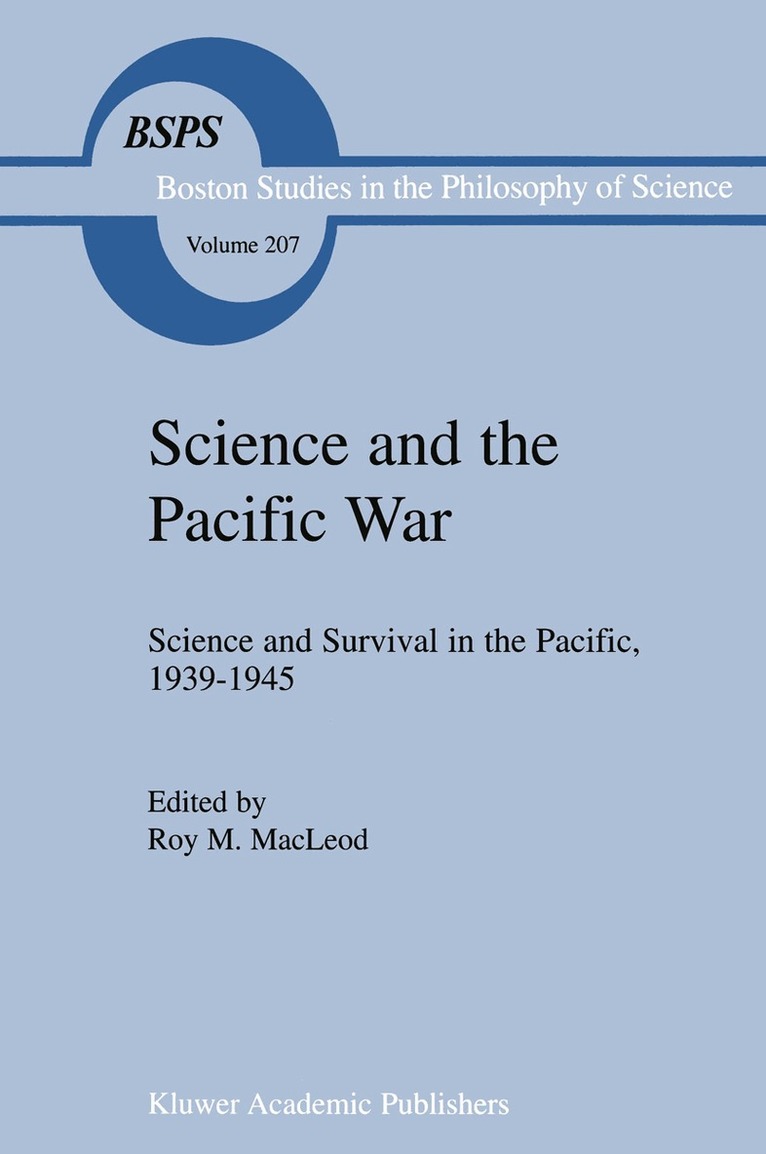
Science and the Pacific War
Science and Survival in the Pacific, 1939–1945
Häftad, Engelska, 2001
1 084 kr
Skickas inom 10-15 vardagar
In 1995, the fiftieth anniversary of the end of the Second World War occasioned many reflections on the place of science and technology in the conflict. That the war ended with Allied victory in the Pacific theatre, inevitably focussed attention upon the Pacific region, and particularly upon the Manhattan project and its outcome. It was in the Pacific that Western physics and engineering gave birth to the Atomic Age. However, the Pacific war had also proved a testing time, and a testing space, for other disciplines and institutions. Extreme environments and opemtional distances, and the fundamental demands of logistics, required the Allies and the Japanese to innovate many scientific and technological practices. Just as medicine and botany were called upon to fight tropical diseases and insect pests, so engineers, anthropol ogists and geographers were called upon to understand local conditions and cli mates, and to work with local peoples whose traditional lives were changed forever by the experience. At the same time, the war played midwife to a host of new de velopments, not least in scientific intelligence and in chemical and biological weapons, which were to acquire far greater importance after 1945.
Del 228 - Boston Studies in the Philosophy and History of Science
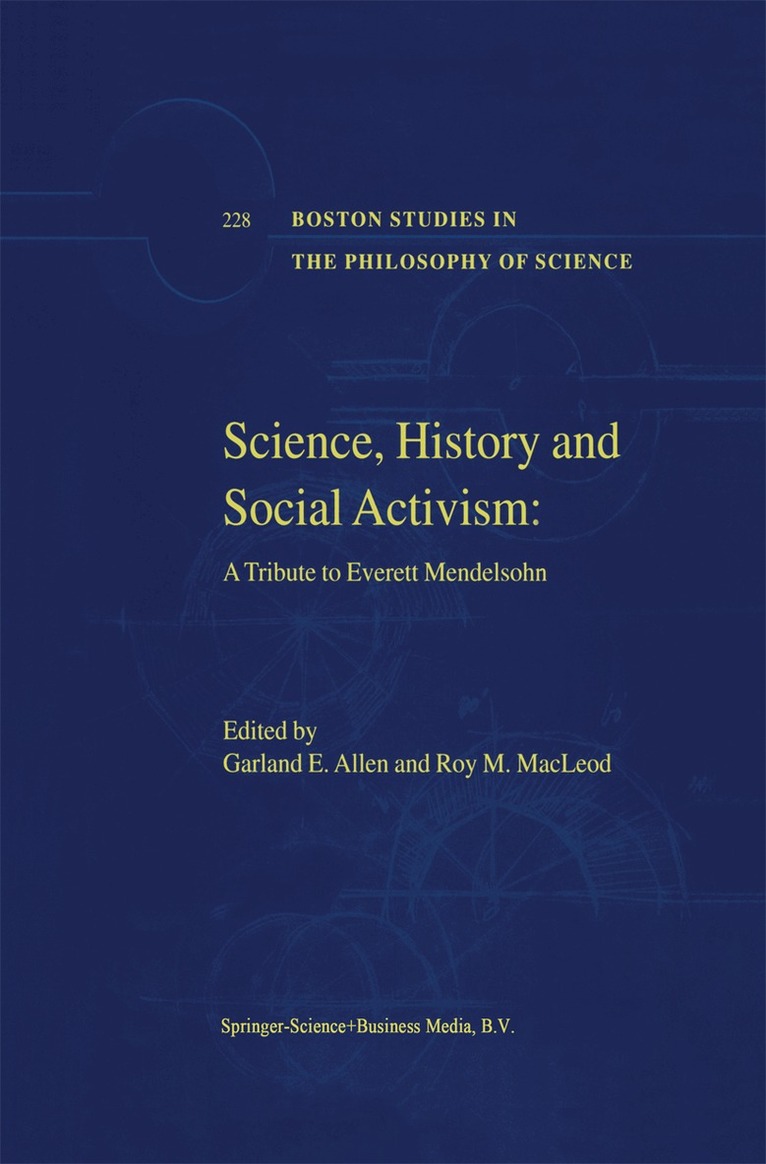
Science, History and Social Activism
A Tribute to Everett Mendelsohn
Inbunden, Engelska, 2002
1 623 kr
Skickas inom 10-15 vardagar
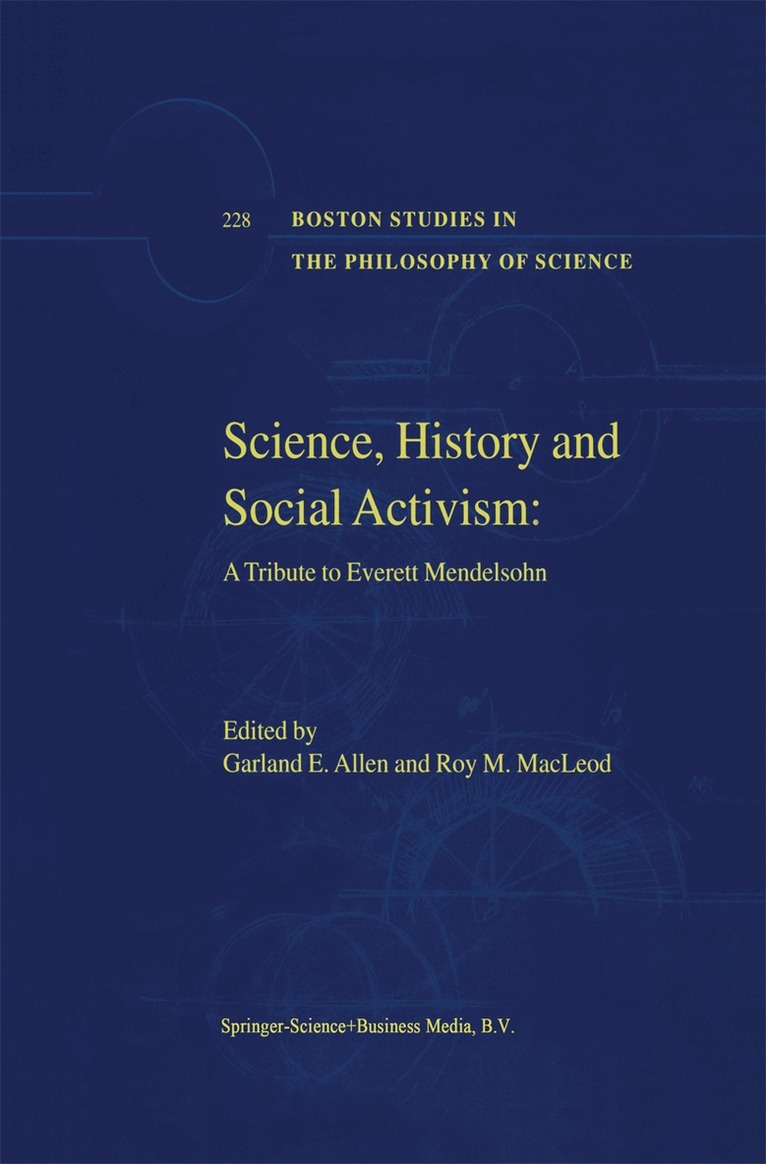
"To earn a degree, every doctoral candidate should go out to Harvard Square, find an audience, and explain his [or her] dissertation". Everett Mendelsohn's worldly advice to successive generations of students, whether apocryphal or real, has for over forty years spoken both to the essence of his scholarship, and to the role of the scholar. Possibly no one has done more to establish the history of the life sciences as a recognized university discipline in the United States, and to inspire a critical concern for the ways in which science and technology operate as central features of Western society. This book is both an act of homage and of commemoration to Professor Mendelsohn on his 70th birthday. As befits its subject, the work it presents is original, comparative, wide-ranging, and new. Since 1960, Everett Mendelsohn has been identified with Harvard Univer sity, and with its Department of the History of Science. Those that know him as a teacher, will also know him as a scholar. In 1968, he began- and after 30 years, has just bequeathed to others - the editorship of the Journal of the History of Biology, among the earliest and one of the most important publications in its field. At the same time, he has been a pioneer in the social history and sociology of science. He has formed particularly close working relationships with colleagues in Sweden and Germany - as witnessed by his editorial presence in the Sociology of Science Yearbook.
Inbunden, Engelska, 1976
1 623 kr
Skickas inom 10-15 vardagar
Del 228 - Boston Studies in the Philosophy and History of Science
Science, History and Social Activism
A Tribute to Everett Mendelsohn
Häftad, Engelska, 2010
1 623 kr
Skickas inom 10-15 vardagar
"To earn a degree, every doctoral candidate should go out to Harvard Square, find an audience, and explain his [or her] dissertation". Everett Mendelsohn's worldly advice to successive generations of students, whether apocryphal or real, has for over forty years spoken both to the essence of his scholarship, and to the role of the scholar. Possibly no one has done more to establish the history of the life sciences as a recognized university discipline in the United States, and to inspire a critical concern for the ways in which science and technology operate as central features of Western society. This book is both an act of homage and of commemoration to Professor Mendelsohn on his 70th birthday. As befits its subject, the work it presents is original, comparative, wide-ranging, and new. Since 1960, Everett Mendelsohn has been identified with Harvard Univer sity, and with its Department of the History of Science. Those that know him as a teacher, will also know him as a scholar. In 1968, he began- and after 30 years, has just bequeathed to others - the editorship of the Journal of the History of Biology, among the earliest and one of the most important publications in its field. At the same time, he has been a pioneer in the social history and sociology of science. He has formed particularly close working relationships with colleagues in Sweden and Germany - as witnessed by his editorial presence in the Sociology of Science Yearbook.
Häftad, Engelska, 2010
1 671 kr
Skickas inom 10-15 vardagar
E-bok
PDF, Engelska, 20131 977 kr
Läs direkt efter köp
"To earn a degree, every doctoral candidate should go out to Harvard Square, find an audience, and explain his [or her] dissertation". Everett Mendelsohn''s worldly advice to successive generations of students, whether apocryphal or real, has for over forty years spoken both to the essence of his scholarship, and to the role of the scholar. Possibly no one has done more to establish the history of the life sciences as a recognized university discipline in the United States, and to inspire a critical concern for the ways in which science and technology operate as central features of Western society. This book is both an act of homage and of commemoration to Professor Mendelsohn on his 70th birthday. As befits its subject, the work it presents is original, comparative, wide-ranging, and new. Since 1960, Everett Mendelsohn has been identified with Harvard Univer sity, and with its Department of the History of Science. Those that know him as a teacher, will also know him as a scholar. In 1968, he began- and after 30 years, has just bequeathed to others - the editorship of the Journal of the History of Biology, among the earliest and one of the most important publications in its field. At the same time, he has been a pioneer in the social history and sociology of science. He has formed particularly close working relationships with colleagues in Sweden and Germany - as witnessed by his editorial presence in the Sociology of Science Yearbook.