Rudolf Toman – författare
Visar alla böcker från författaren . Handla med fri frakt och snabb leverans.
5 produkter
5 produkter
E-bok
Engelska, 20121 678 kr
Läs direkt efter köp
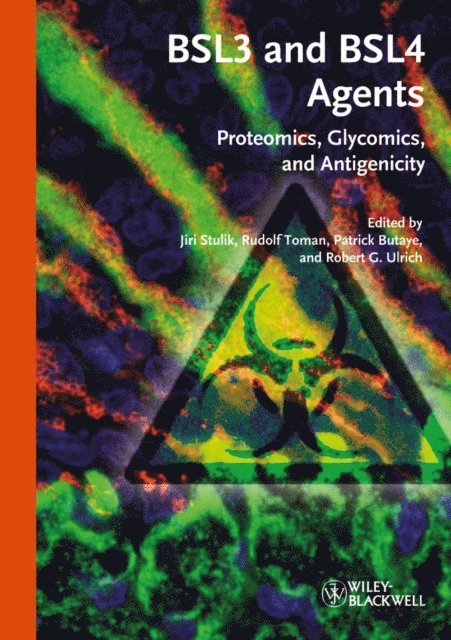
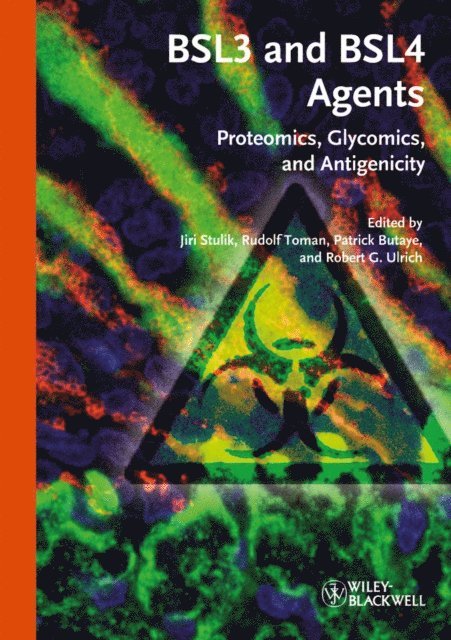
Unique coverage of proteomic and glycomic approaches to better distinguish highly dangerous pathogens, as well as using these to explore novel treatment and prevention options. The editors and authors are either part of a specialized European network initiated to develop fast and reliable detection and therapy options, or are associated with the core military research complex of the United States. With its description of the methods, their advantages and limitations, as well as the principle outcomes, this is a must-have resource for all professionals dealing with BSL3 and/or BSL 4 agents.
E-bok
PDF, Engelska, 20111 678 kr
Läs direkt efter köp
Unique coverage of proteomic and glycomic approaches to better distinguish highly dangerous pathogens, as well as using these to explore novel treatment and prevention options. The editors and authors are either part of a specialized European network initiated to develop fast and reliable detection and therapy options, or are associated with the core military research complex of the United States. With its description of the methods, their advantages and limitations, as well as the principle outcomes, this is a must-have resource for all professionals dealing with BSL3 and/or BSL 4 agents.
Inbunden, Engelska, 2012
2 215 kr
Skickas inom 10-15 vardagar
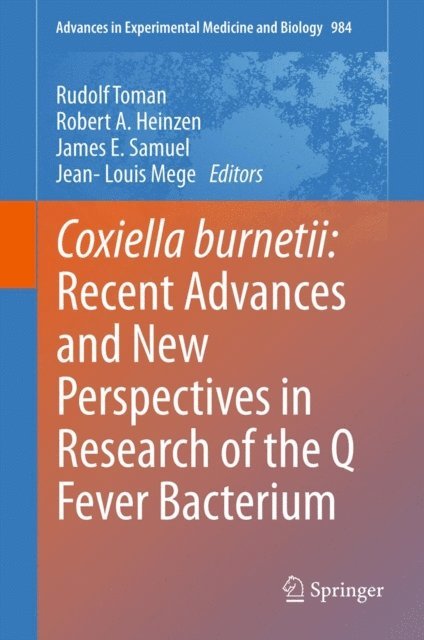
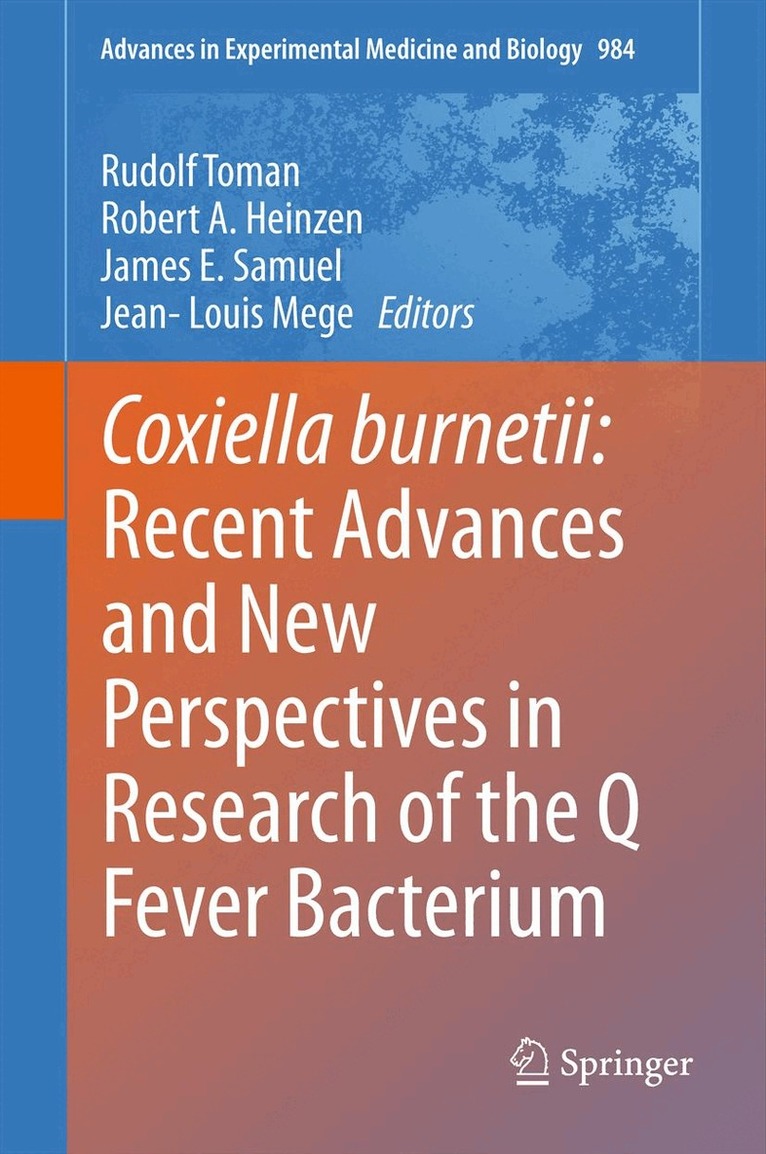
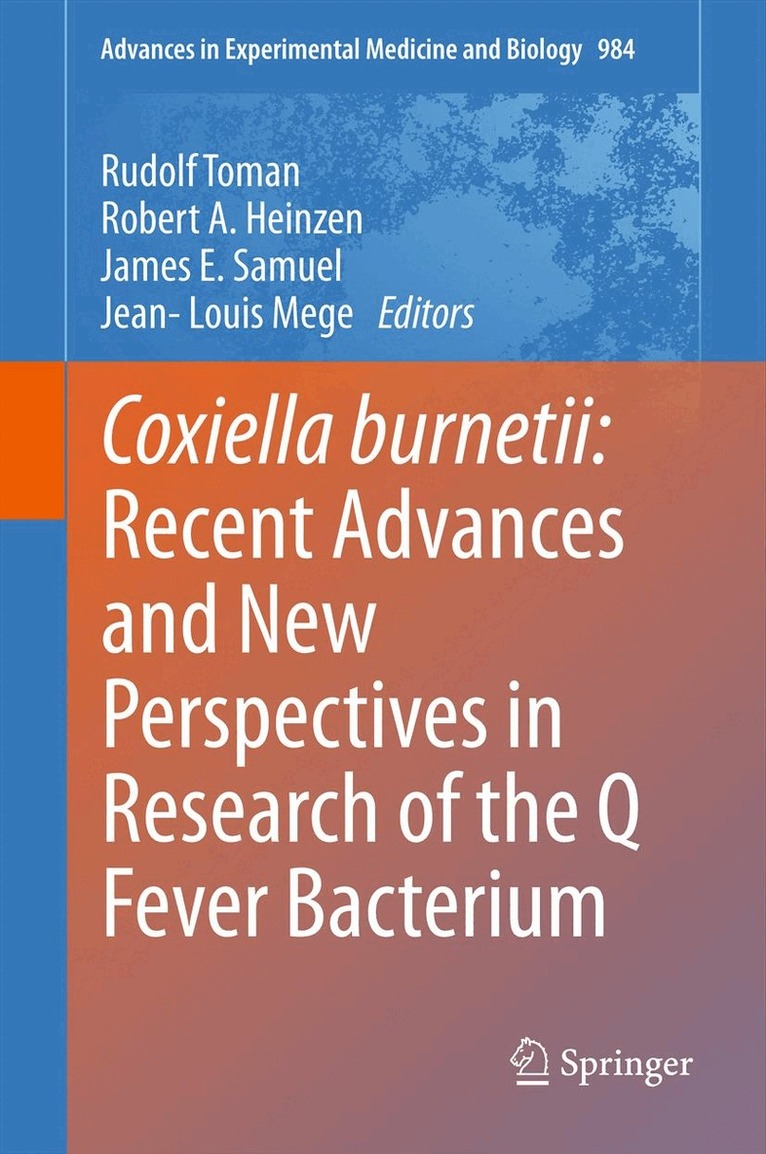
Coxiella burnetii is the etiological agent of Q fever, a zoonotic disease found worldwide. The bacterium is a fascinating example of intracellular parasitism that has uniquely evolved to thrive in the most inhospitable of cellular compartments-the phagolysosome. Understanding how C. burnetii resists the degradative functions of this vacuole, and the host cell functions coopted for successful parasitism, are central to understanding Q fever pathogenesis. Recent achievements in glycomics and proteomics are guiding development of enhanced detection schemes for the bacterium in addition to shedding light on the host immune response to the pathogen. Several chapters survey immune functions that control or potentially exacerbate Coxiella infection and delve into correlates of protective immunity elicited by vaccination. Comparative genomics is also the foundation of chapters discussing diagnostic antigen discovery and molecular typing of the bacterium, with significance for development of new clinical, epidemiologic, and forensic tools.
E-bok
PDF, Engelska, 20122 925 kr
Läs direkt efter köp
Coxiella burnetii is the etiological agent of Q fever, a zoonotic disease found worldwide. The bacterium is a fascinating example of intracellular parasitism that has uniquely evolved to thrive in the most inhospitable of cellular compartments-the phagolysosome. Understanding how C. burnetii resists the degradative functions of this vacuole, and the host cell functions coopted for successful parasitism, are central to understanding Q fever pathogenesis. Recent achievements in glycomics and proteomics are guiding development of enhanced detection schemes for the bacterium in addition to shedding light on the host immune response to the pathogen. Several chapters survey immune functions that control or potentially exacerbate Coxiella infection and delve into correlates of protective immunity elicited by vaccination. Comparative genomics is also the foundation of chapters discussing diagnostic antigen discovery and molecular typing of the bacterium, with significance for development of new clinical, epidemiologic, and forensic tools.
Häftad, Engelska, 2014
2 215 kr
Skickas inom 10-15 vardagar
Coxiella burnetii is the etiological agent of Q fever, a zoonotic disease found worldwide. The bacterium is a fascinating example of intracellular parasitism that has uniquely evolved to thrive in the most inhospitable of cellular compartments-the phagolysosome. Understanding how C. burnetii resists the degradative functions of this vacuole, and the host cell functions coopted for successful parasitism, are central to understanding Q fever pathogenesis. Recent achievements in glycomics and proteomics are guiding development of enhanced detection schemes for the bacterium in addition to shedding light on the host immune response to the pathogen. Several chapters survey immune functions that control or potentially exacerbate Coxiella infection and delve into correlates of protective immunity elicited by vaccination. Comparative genomics is also the foundation of chapters discussing diagnostic antigen discovery and molecular typing of the bacterium, with significance for development of new clinical, epidemiologic, and forensic tools.