Ruiqi Wang – författare
Visar alla böcker från författaren Ruiqi Wang. Handla med fri frakt och snabb leverans.
3 produkter
3 produkter
1 098 kr
Skickas inom 10-15 vardagar
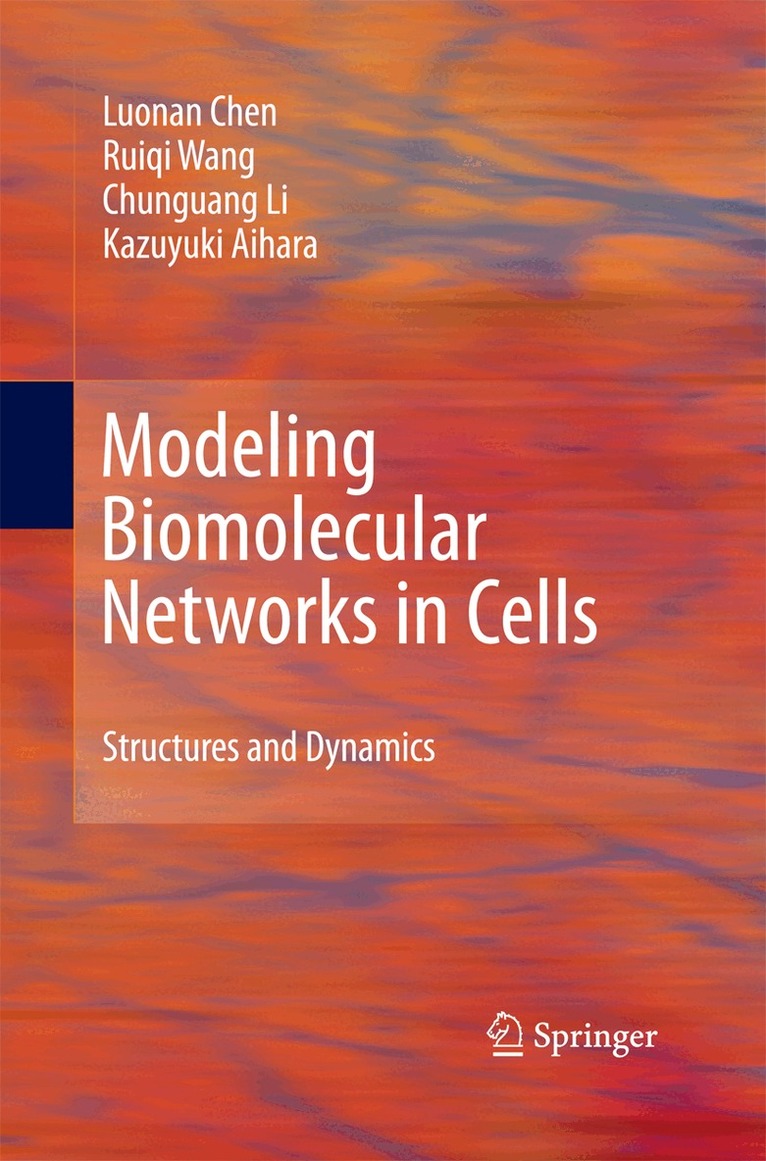
Modeling Biomolecular Networks in Cells shows how the interaction between the molecular components of basic living organisms can be modelled mathematically and the models used to create artificial biological entities within cells.
1 098 kr
Skickas inom 10-15 vardagar
Modeling Biomolecular Networks in Cells shows how the interaction between the molecular components of basic living organisms can be modelled mathematically and the models used to create artificial biological entities within cells. Such forward engineering is a difficult task but the nonlinear dynamical methods espoused in this book simplify the biology so that it can be successfully understood and the synthesis of simple biological oscillators and rhythm-generators made feasible. Such simple units can then be co-ordinated using intercellular signal biomolecules. The formation of such man-made multicellular networks with a view to the production of biosensors, logic gates, new forms of integrated circuitry based on "gene-chips" and even biological computers is an important step in the design of faster and more flexible "electronics". The book also provides theoretical frameworks and tools with which to analyze the nonlinear dynamical phenomena which arise from the connection of building units in a biomolecular network.

929 kr
Kommande
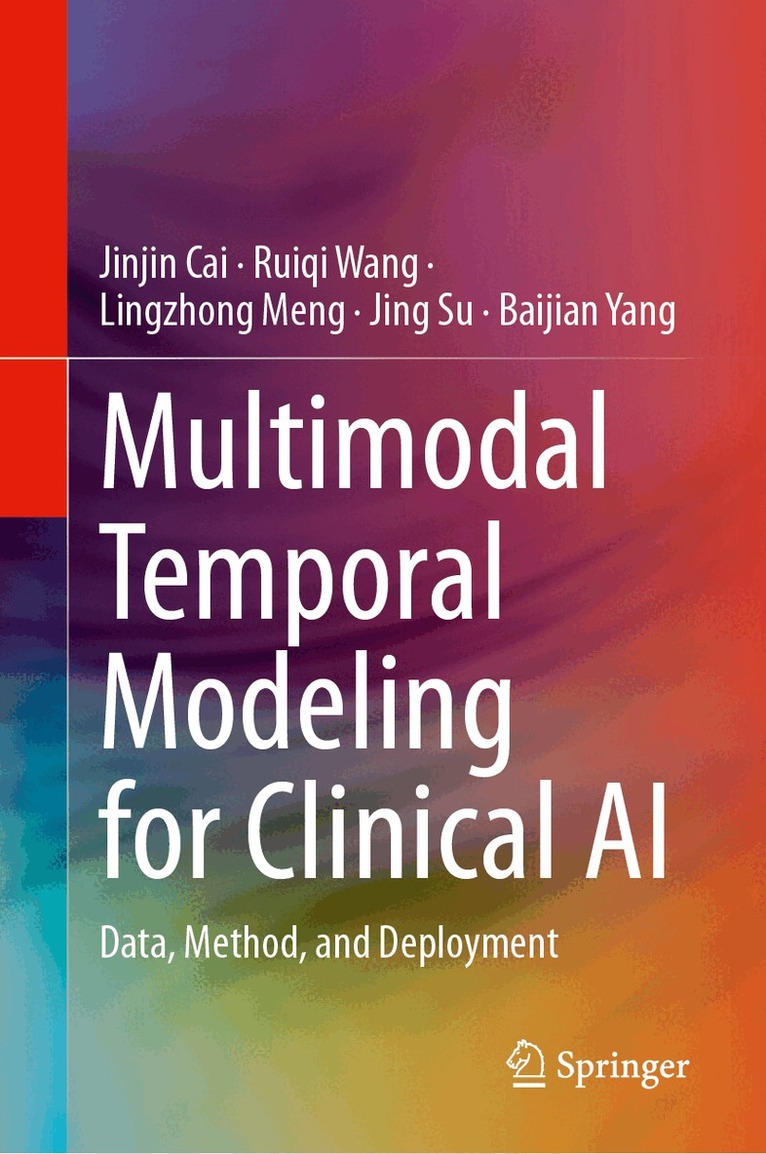
This book discusses how multimodal temporal AI is transforming healthcare by combining diverse medical data and health records over time. With clear explanations, cutting-edge methods, and real-world case studies, the book provides researchers, clinicians, and innovators the tools they need to turn AI breakthroughs into smarter and personalized care and treatment. Unlike existing literature that focuses narrowly on specific techniques or applications, this book provides a comprehensive, big-picture perspective on multimodal temporal modeling in clinical AI. The authors not only explain technical methods, but also explore the core principles, challenges, and future directions that shape the field. Readers will find practical guidance for deploying these models in real healthcare settings, along with actionable strategies that can be applied immediately. Covering the full spectrum of topics, from data to methods to deployment, the book offers a complete roadmap rather than fragmented insights. As a timely and up-to-date resource, the book captures the momentum of a rapidly evolving field and provides readers a forward-looking guide to the future of AI in healthcare.