Rupert Jones – författare
Visar alla böcker från författaren Rupert Jones. Handla med fri frakt och snabb leverans.
6 produkter
6 produkter
E-bok
PDF, Engelska, 20131 881 kr
Läs direkt efter köp
Millington and Sutherland Williams on The Proceeds of Crime provides a definitive guide to all aspects of the law concerning the recovery of the proceeds of crime in England and Wales. It provides an easily navigable step-by-step approach that considers how the legislation is geared to ensuring that criminals do not benefit from their crimes financially, as well as detailed coverage of every stage of the confiscation process.This new edition has been fully updated to include all important legislative changes over the last three years, and covers all significant case law, including discussion on R v WayaThe new edition incorporates in-depth coverage of the relevant legislation, with analysis of the Proceeds of Crime Act 2002 and reference to case law under both the Drug Trafficking Act 1994 and the Criminal Justice Act 1988, as well as the most recent amendments under the Crime and Courts Act 2013.The new edition contains carefully selected appendices, including extracts from the Proceeds of Crime Act 2002, and draft restraint, receivership and civil recovery orders.
E-bok
Engelska, 20131 370 kr
Läs direkt efter köp
Millington and Sutherland Williams on The Proceeds of Crime provides a definitive guide to all aspects of the law concerning the recovery of the proceeds of crime in England and Wales. It provides an easily navigable step-by-step approach that considers how the legislation is geared to ensuring that criminals do not benefit from their crimes financially, as well as detailed coverage of every stage of the confiscation process.This new edition has been fully updated to include all important legislative changes over the last three years, and covers all significant case law, including discussion on R v WayaThe new edition incorporates in-depth coverage of the relevant legislation, with analysis of the Proceeds of Crime Act 2002 and reference to case law under both the Drug Trafficking Act 1994 and the Criminal Justice Act 1988, as well as the most recent amendments under the Crime and Courts Act 2013.The new edition contains carefully selected appendices, including extracts from the Proceeds of Crime Act 2002, and draft restraint, receivership and civil recovery orders.
E-bok
PDF, Engelska, 20212 939 kr
Läs direkt efter köp
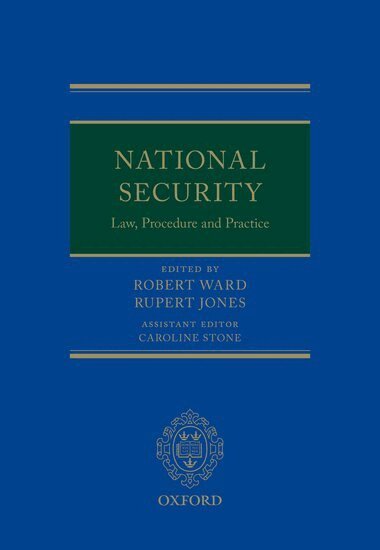
This detailed, practitioner text, explains national security law in all its aspects. It collates and explains the core elements of the law, both substantive and procedural, and the practical issues which may arise in national security litigation. The book draws on the professional experience of a team of expert contributors. The first part explores the meaning of “national security”, examines the respective roles in this area of Parliament, the executive and the courts, and explains the law relating to the security and intelligence agencies, their powers and oversight. The core of the book addresses the various executive measures used to disrupt terrorism, espionage and other hostile state activity, usually on the basis of secret intelligence, and the civil proceedings that may result from executive action taken for the national security purposes. The third part addresses national security and the criminal law. The remaining chapters address national security law in such diverse contexts as inquests, inquiries, employment, vetting, family, freedom of information, and data protection proceedings. National security law is now of relevance to a wide range of practising lawyers, judges, legislators, policymakers, oversight bodies, and academic experts working in a variety of legal fields well beyond public law. The highly-specialised nature of the topic make this book a vital text not only for those seeking an overview of the law, but also for experienced practitioners instructed to act in proceedings in which national security issues may arise. The intense media and public scrutiny which accompanies many national security cases will also make this book of interest to a wider audience seeking to understand the legal context of such cases.
E-bok
Engelska, 20212 939 kr
Läs direkt efter köp
This detailed, practitioner text, explains national security law in all its aspects. It collates and explains the core elements of the law, both substantive and procedural, and the practical issues which may arise in national security litigation. The book draws on the professional experience of a team of expert contributors. The first part explores the meaning of “national security”, examines the respective roles in this area of Parliament, the executive and the courts, and explains the law relating to the security and intelligence agencies, their powers and oversight. The core of the book addresses the various executive measures used to disrupt terrorism, espionage and other hostile state activity, usually on the basis of secret intelligence, and the civil proceedings that may result from executive action taken for the national security purposes. The third part addresses national security and the criminal law. The remaining chapters address national security law in such diverse contexts as inquests, inquiries, employment, vetting, family, freedom of information, and data protection proceedings. National security law is now of relevance to a wide range of practising lawyers, judges, legislators, policymakers, oversight bodies, and academic experts working in a variety of legal fields well beyond public law. The highly-specialised nature of the topic make this book a vital text not only for those seeking an overview of the law, but also for experienced practitioners instructed to act in proceedings in which national security issues may arise. The intense media and public scrutiny which accompanies many national security cases will also make this book of interest to a wider audience seeking to understand the legal context of such cases.
4 107 kr
Skickas inom 5-8 vardagar
This detailed, practitioner text, explains national security law in all its aspects. It collates and explains the core elements of the law, both substantive and procedural, and the practical issues which may arise in national security litigation. The book draws on the professional experience of a team of expert contributors. The first part explores the meaning of "national security", examines the respective roles in this area of Parliament, the executive and the courts, and explains the law relating to the security and intelligence agencies, their powers and oversight. The core of the book addresses the various executive measures used to disrupt terrorism, espionage and other hostile state activity, usually on the basis of secret intelligence, and the civil proceedings that may result from executive action taken for the national security purposes. The third part addresses national security and the criminal law. The remaining chapters address national security law in such diverse contexts as inquests, inquiries, employment, vetting, family, freedom of information, and data protection proceedings. National security law is now of relevance to a wide range of practising lawyers, judges, legislators, policymakers, oversight bodies, and academic experts working in a variety of legal fields well beyond public law. The highly-specialised nature of the topic make this book a vital text not only for those seeking an overview of the law, but also for experienced practitioners instructed to act in proceedings in which national security issues may arise. The intense media and public scrutiny which accompanies many national security cases will also make this book of interest to a wider audience seeking to understand the legal context of such cases.The enhanced digital product (included) provides both offline and online access wherever you are on OUP LawReader. Synchronize your notes and bookmarks across all of your devices, and take advantage of the quick and simple search function to find what you need, whenever you need it.
Inbunden, Engelska, 2021
3 904 kr
Skickas inom 5-8 vardagar
This detailed, practitioner text, explains national security law in all its aspects. It collates and explains the core elements of the law, both substantive and procedural, and the practical issues which may arise in national security litigation. The book draws on the professional experience of a team of expert contributors. The first part explores the meaning of “national security”, examines the respective roles in this area of Parliament, the executive and the courts, and explains the law relating to the security and intelligence agencies, their powers and oversight. The core of the book addresses the various executive measures used to disrupt terrorism, espionage and other hostile state activity, usually on the basis of secret intelligence, and the civil proceedings that may result from executive action taken for the national security purposes. The third part addresses national security and the criminal law. The remaining chapters address national security law in such diverse contexts as inquests, inquiries, employment, vetting, family, freedom of information, and data protection proceedings. National security law is now of relevance to a wide range of practising lawyers, judges, legislators, policymakers, oversight bodies, and academic experts working in a variety of legal fields well beyond public law. The highly-specialised nature of the topic make this book a vital text not only for those seeking an overview of the law, but also for experienced practitioners instructed to act in proceedings in which national security issues may arise. The intense media and public scrutiny which accompanies many national security cases will also make this book of interest to a wider audience seeking to understand the legal context of such cases.