Robert Ward – författare
610 kr
Läs direkt efter köp
An introduction to the complex world of options that every investor can use
Too many books on options trading make the mistake of assuming that readers can already tell a delta from a sigma summation. Options and Options Trading breaks the code that envelops the often-foreign language of options, providing an accessible introduction into how the options market works as it explains the rules that traders must understand if they hope to take part in this high-leverage, high-profit game. Author Robert Ward''s goal is simple--to demystify the tangled world of options trading without leaving readers too confused and frustrated to continue. The book to read before continuing on to the more detailed, and much higher-level, existing library of options trading guides, Options and Options Trading features:
End-of-chapter material including "Things to Think About" and "Key Concepts"Simplified explanations of complex mathematical equationsStep-by-step rationales to help readers move from basic to complex2 939 kr
Läs direkt efter köp
2 939 kr
Läs direkt efter köp
4 107 kr
Skickas inom 5-8 vardagar
3 904 kr
Skickas inom 5-8 vardagar
3 693 kr
Skickas inom 5-8 vardagar
333 kr
Skickas inom 3-6 vardagar
341 kr
Läs direkt efter köp
Geo-economic strategy – deploying economic instruments to secure foreign-policy aims and to project power – has long been a key element of statecraft. In recent years, it has acquired even greater salience given China’s growing antagonism with the United States and the willingness of both Beijing and Washington to wield economic power in their confrontation. This trend has particular significance for Japan given its often tense political relationship with China, which remains its largest trading partner. While Japan’s post-war geo-economic performance often failed to match its status as one of the world’s largest economies, more recently Tokyo has demonstrated increased geo-economic agency and effectiveness.
In this Adelphi book, Yuka Koshino and Robert Ward draw on multiple disciplines – including economics, political economy, foreign policy and security policy – and interviews with key policymakers to examine Japan’s geo-economic power in the context of great-power competition between the US and China. They examine Japan’s previous underperformance, how Tokyo’s understanding of geo-economics has evolved and, given constraints on its national power-projection, what actions Japan might feasibly take to become a more effective geo-economic actor. Their conclusions will be of direct interest not only for all those concerned with Japanese grand strategy and the Asia-Pacific, but also for those middle powers seeking to navigate great-power competition in the coming decades.
341 kr
Läs direkt efter köp
Geo-economic strategy – deploying economic instruments to secure foreign-policy aims and to project power – has long been a key element of statecraft. In recent years, it has acquired even greater salience given China’s growing antagonism with the United States and the willingness of both Beijing and Washington to wield economic power in their confrontation. This trend has particular significance for Japan given its often tense political relationship with China, which remains its largest trading partner. While Japan’s post-war geo-economic performance often failed to match its status as one of the world’s largest economies, more recently Tokyo has demonstrated increased geo-economic agency and effectiveness.
In this Adelphi book, Yuka Koshino and Robert Ward draw on multiple disciplines – including economics, political economy, foreign policy and security policy – and interviews with key policymakers to examine Japan’s geo-economic power in the context of great-power competition between the US and China. They examine Japan’s previous underperformance, how Tokyo’s understanding of geo-economics has evolved and, given constraints on its national power-projection, what actions Japan might feasibly take to become a more effective geo-economic actor. Their conclusions will be of direct interest not only for all those concerned with Japanese grand strategy and the Asia-Pacific, but also for those middle powers seeking to navigate great-power competition in the coming decades.
345 kr
Skickas inom 5-8 vardagar
492 kr
Skickas inom 5-8 vardagar
180 kr
Skickas inom 5-8 vardagar
373 kr
Skickas inom 5-8 vardagar
293 kr
Skickas inom 10-15 vardagar
519 kr
Skickas inom 10-15 vardagar
600 kr
Läs direkt efter köp
Strategic links between Japan and Europe during the Cold War were limited. During this period the IISS helped bridge the gap between the two, exposing its membership base to the international affairs of Asia and Japan and providing Japanese scholars, strategists and diplomats with a platform from which to amplify their voices in the West. Analyses by these experts often appeared in IISS publications, but the Institute also gained key insights through its well-established conferences and lecture series. These initiatives illuminated Japanese strategic thinking and perspectives on contemporary critical issues in Japan’s and Asia’s foreign, security and defence policy.
This Adelphi book, through its collection of earlier analysis, helps the reader to understand the evolution of Japanese strategic thought from the 1960s until today, and shines a light on the continuities and changes in this thinking. New, original analysis of the material seeks to identify areas where such thinking was prescient and remains relevant to the contemporary strategic environment, and other areas where predictions failed or assumptions were proved wrong. These new essays were also informed by interviews of Japanese senior scholars and diplomats who spent time with the IISS. This book seeks to frame, educate and guide strategic thinking on the most pressing issues of today, both in and outside Japan and Asia, and will be of great interest to analysts, practitioners and students of international affairs.
600 kr
Läs direkt efter köp
Strategic links between Japan and Europe during the Cold War were limited. During this period the IISS helped bridge the gap between the two, exposing its membership base to the international affairs of Asia and Japan and providing Japanese scholars, strategists and diplomats with a platform from which to amplify their voices in the West. Analyses by these experts often appeared in IISS publications, but the Institute also gained key insights through its well-established conferences and lecture series. These initiatives illuminated Japanese strategic thinking and perspectives on contemporary critical issues in Japan’s and Asia’s foreign, security and defence policy.
This Adelphi book, through its collection of earlier analysis, helps the reader to understand the evolution of Japanese strategic thought from the 1960s until today, and shines a light on the continuities and changes in this thinking. New, original analysis of the material seeks to identify areas where such thinking was prescient and remains relevant to the contemporary strategic environment, and other areas where predictions failed or assumptions were proved wrong. These new essays were also informed by interviews of Japanese senior scholars and diplomats who spent time with the IISS. This book seeks to frame, educate and guide strategic thinking on the most pressing issues of today, both in and outside Japan and Asia, and will be of great interest to analysts, practitioners and students of international affairs.
292 kr
Läs direkt efter köp
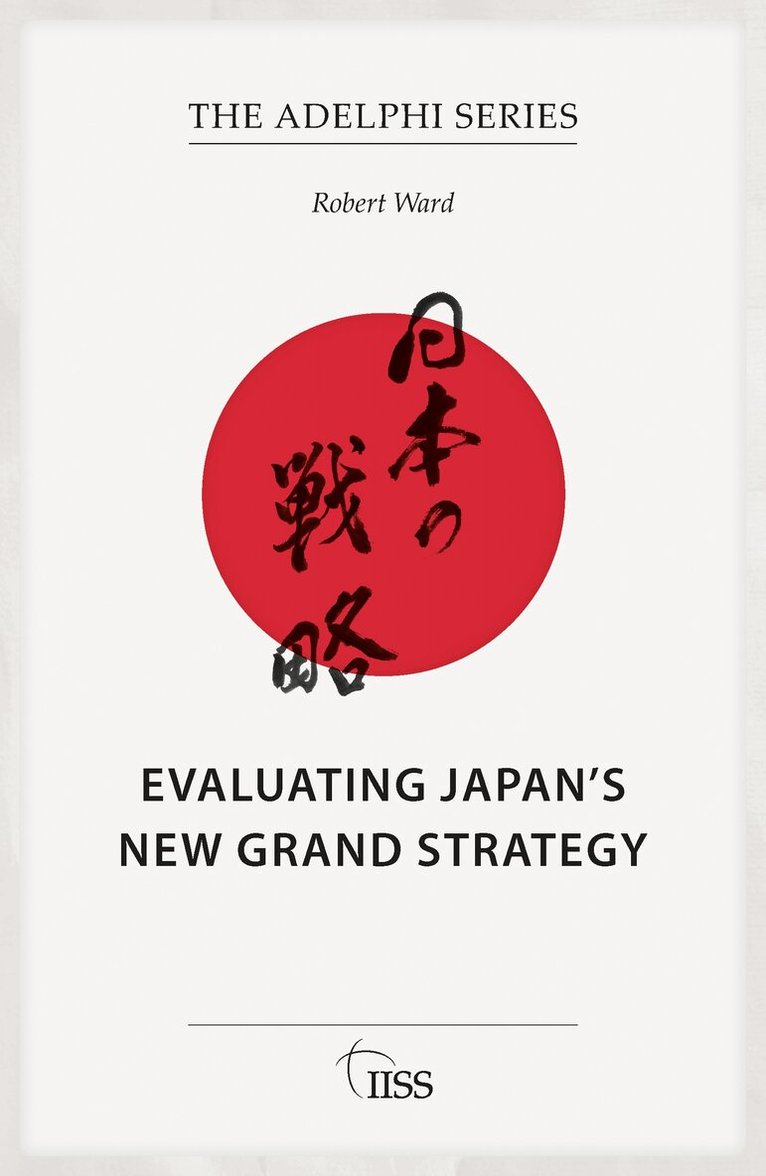
Geopolitical stresses in the Indo-Pacific are increasing and intensifying. These stresses derive from China’s more assertive regional behaviour; growing alignments between China and Russia on the one hand and Russia and North Korea on the other; and most recently from the apparent recalibration of United States foreign policy under the second Trump administration. They have magnified Japan’s significance as a strategic actor both in the Indo-Pacific and beyond.
As such, it is of global importance whether Japan can meet the grand-strategic goals that it established in its 2022 National Security Strategy, National Defense Strategy and Defense Buildup Program. This Adelphi book evaluates Japan’s new grand strategy, considering whether it and associated reforms are sufficiently robust to fulfil Japan’s goal of ensuring its security even in the scenario of a Chinese attack on Taiwan.
292 kr
Läs direkt efter köp
Geopolitical stresses in the Indo-Pacific are increasing and intensifying. These stresses derive from China’s more assertive regional behaviour; growing alignments between China and Russia on the one hand and Russia and North Korea on the other; and most recently from the apparent recalibration of United States foreign policy under the second Trump administration. They have magnified Japan’s significance as a strategic actor both in the Indo-Pacific and beyond.
As such, it is of global importance whether Japan can meet the grand-strategic goals that it established in its 2022 National Security Strategy, National Defense Strategy and Defense Buildup Program. This Adelphi book evaluates Japan’s new grand strategy, considering whether it and associated reforms are sufficiently robust to fulfil Japan’s goal of ensuring its security even in the scenario of a Chinese attack on Taiwan.
256 kr
Skickas inom 10-15 vardagar
32 kr
Läs direkt efter köp
134 kr
Skickas inom 5-8 vardagar
665 kr
Skickas inom 10-15 vardagar
277 kr
Skickas inom 5-8 vardagar
290 kr
Skickas inom 5-8 vardagar
328 kr
Skickas inom 5-8 vardagar
314 kr
Skickas inom 5-8 vardagar
99 kr
Läs direkt efter köp
99 kr
Läs direkt efter köp
99 kr
Läs direkt efter köp