• Fri frakt över 249 kr
  • •
  • Snabba leveranser
  • •
  • Billiga böcker
Kundservice

Du är på sajten för privatpersoner.

Företag, bibliotek eller offentlig verksamhet?

Du handlar på classic.bokus.com, där alla dina funktioner finns intakta.
Till classic.bokus.com
Bokus logotyp. Gå till startsidan.
  • Erbjudanden
  • Nyheter
  • Student
  • Topplistor
  • Barn & ungdom
  • Bokus Play
  • E-böcker
  • Pocketböcker
  • Spel & pussel

10% rabatt på allt med kod: NYSTART10 →

Sidfot

Mina sidor

    Hjälp

    • Kundservice
    • Vanliga frågor och svar
    • Frakt och leverans
    • Retur vid ångerrätt
    • Reklamera vara
    • Betalning
    • Köpvillkor
    • Allmänna villkor
    • Information om webbplatsens tillgänglighet

    Om Bokus

    • Om oss
    • Pressrum
    • För studenter
    • För företag
    • För bibliotek och offentlig verksamhet
    • För leverantörer
    • Hållbarhet

    Populärt

    • Aktuella erbjudanden
    • Presentkort
    • Studentlitteratur
    • Nya böcker
    • Topplistor
    • Signerade böcker
    • Engelska böcker

    Inspiration

    • Boktips
    • BookTok
    • Populära bokserier
    • Barnbokskaraktärer
    • Populära författare
    Logotyp för Bokus
    Följ oss på Facebook (extern länk)Följ oss på Instagram (extern länk)Följ oss på YouTube (extern länk)Följ oss på TikTok (extern länk)
    bokus @ CookiesAnpassa cookiesIntegritetspolicyKöpvillkor
    Till Citymail hemsida (extern länk)Till Budbee hemsida (extern länk)Till Postnord hemsida (extern länk)Till Schenker hemsida (extern länk)Till Early Bird hemsida (extern länk)Till Walleys hemsida (extern länk)
    1. Samhälle och politik
    2. Politik och statsskick
    3. Internationella relationer

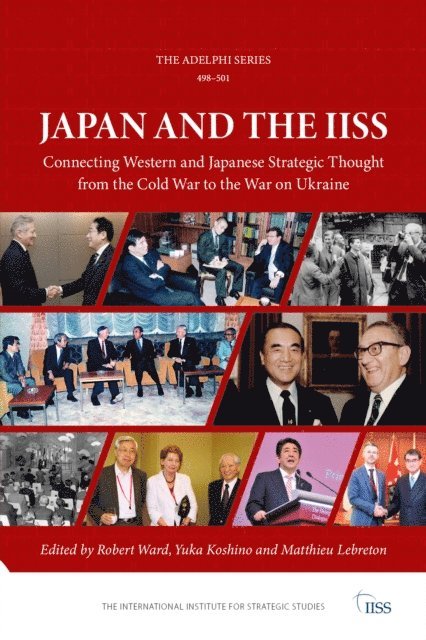
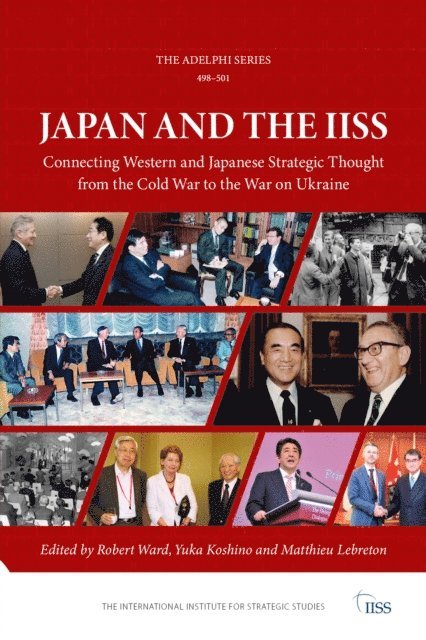
    Japan and the IISS

    Connecting Western and Japanese Strategic Thought from the Cold War to the War on Ukraine

    AvRobert Ward,Yuka Koshino

    Häftad, Engelska, 2023

    Del i serien Adelphi series

    555 kr

    Beställningsvara. Skickas inom 10-15 vardagar. Fri frakt över 249 kr.

    Beskrivning

    Strategic links between Japan and Europe during the Cold War were limited. During this period the IISS helped bridge the gap between the two, exposing its membership base to the international affairs of Asia and Japan and providing Japanese scholars, strategists and diplomats with a platform from which to amplify their voices in the West. Analyses by these experts often appeared in IISS publications, but the Institute also gained key insights through its well-established conferences and lecture series. These initiatives illuminated Japanese strategic thinking and perspectives on contemporary critical issues in Japan’s and Asia’s foreign, security and defence policy.This Adelphi book, through its collection of earlier analysis, helps the reader to understand the evolution of Japanese strategic thought from the 1960s until today, and shines a light on the continuities and changes in this thinking. New, original analysis of the material seeks to identify areas where such thinking was prescient and remains relevant to the contemporary strategic environment, and other areas where predictions failed or assumptions were proved wrong. These new essays were also informed by interviews of Japanese senior scholars and diplomats who spent time with the IISS. This book seeks to frame, educate and guide strategic thinking on the most pressing issues of today, both in and outside Japan and Asia, and will be of great interest to analysts, practitioners and students of international affairs.


    Produktinformation

    • Utgivningsdatum:2023-12-12
    • Mått:156 x 234 x 37 mm
    • Vikt:1 040 g
    • Format:Häftad
    • Språk:Engelska
    • Serie:Adelphi series
    • Antal sidor:568
    • Förlag:Taylor & Francis Ltd
    • ISBN:9781032734781

    Utforska kategorier

    • Internationella relationer inom Samhälle och politik

    Mer om författaren

    Robert Ward is the IISS Japan Chair and leads the Institute’s Geo-economics and Strategy research programme, which focuses on a range of issues including global economic governance, rules and standards setting, and how economic coercion impacts policy at a national and corporate level.Yuka Koshino is a Research Fellow for Security and Technology Policy at the IISS where she carries out independent research on the impact of emerging technologies on security. Her research contributes both to the Defence and Military Analysis Programme and the Japan Chair Programme.Matthieu Lebreton was a Research Assistant for the Japan Chair Programme at the IISS between January 2022 and June 2023.

    Recensioner i media

    ‘This notable book collects and considers important articles and speeches on strategic questions by Japanese prime ministers, diplomats, journalists and scholars. It serves as a historical record of Japan’s evolving strategic thought over the past six decades. It will be of great interest to anyone interested in Japan’s transition since 1945 into a peaceful nation and then an international power as the sole Asian member of the G7; as well as Tokyo’s more recent geopolitical adaptations in response to China’s rise as an economic and military challenge.’Professor Nishihara Masashi, former President, Research Institute for Peace and Security (RIPS) and former President, National Defense Academy‘This authoritative work is a must-read for anyone interested in the evolution of Japanese strategic thought and how Japan sees itself in the world. The careful curation of articles from each era, alongside excellent introductory chapters, results in an engaging and insightful work. With the signing of the Hiroshima Accord, the work of the IISS and the deep understanding and knowledge codified in this work have never been more vital.’Michael Rivera King, Chief Executive, The Japan Society

    Innehållsförteckning

    • Editors’ Note Contributors Acknowledgements Map: East Asia Foreword Introduction Chapter One: Japan’s bridging role between Asia and the West Chapter Two: The role of the IISS in bridging Japanese and Western strategic thinking 1960s Timeline of events (1945–1960s) Chapter Three: The Japanese attitude towards China Chapter Four: American–Japanese relations Chapter Five: The Asian balance of power: a comparison with European precedents Chapter Six: The non-proliferation treaty and Japan 1970s Timeline of events Chapter Seven: Japan’s security in a multipolar world Chapter Eight: Japan’s non-nuclear policy Chapter Nine: Options for Japan’s foreign policy Chapter Ten: The energy problem and alliance systems: Japan Chapter Eleven: Naval competition and security in East Asia 1980s Timeline of events Chapter Twelve: The changing security circumstances in the 1980s Chapter Thirteen The 1984 Alastair Buchan Memorial Lecture Chapter Fourteen: Japanese security policy: address by Mr Tadashi Kuranari, foreign minister of Japan, 8 September 1986 (excerpts) Chapter Fifteen: East Asia, the Pacific and the West: strategic trends and implications: part II Chapter Sixteen: The security of north-east Asia: part I Chapter Seventeen: Prospects for security co-operation between East Asia and the West 1990s Timeline of events Chapter Eighteen: Japan’s role in international affairs Chapter Nineteen: What role for Europe in Asian affairs? Chapter Twenty: Rethinking Japan–US relations: security issues Chapter Twenty-One: Identities and security in East Asia 2000–2020s Timeline of events Chapter Twenty-Two: China debates missile defence Chapter Twenty-Three: Great-power relations in Asia: a Japanese perspective Chapter Twenty-Four: The 13th IISS Asia Security Summit – the Shangri-La Dialogue: keynote address Chapter Twenty-Five: ‘We are all small countries now’: IISS 2019 Alastair Buchan Lecture Chapter Twenty-Six The 19th Regional Security Summit – the Shangri-La Dialogue: keynote address Index