Russ Miles – författare
211 kr
Skickas inom 5-8 vardagar
328 kr
Skickas inom 5-8 vardagar
428 kr
Läs direkt efter köp
"Since its original introduction in 1997, the Unified Modeling Language has revolutionized software development. Every integrated software development environment in the world--open-source, standards-based, and proprietary--now supports UML and, more importantly, the model-driven approach to software development. This makes learning the newest UML standard, UML 2.0, critical for all software developers--and there isn''t a better choice than this clear, step-by-step guide to learning the language."--Richard Mark Soley, Chairman and CEO, OMG
If you''re like most software developers, you''re building systems that are increasingly complex. Whether you''re creating a desktop application or an enterprise system, complexity is the big hairy monster you must manage.
The Unified Modeling Language (UML) helps you manage this complexity. Whether you''re looking to use UML as a blueprint language, a sketch tool, or as a programming language, this book will give you the need-to-know information on how to apply UML to your project. While there are plenty of books available that describe UML, Learning UML 2.0 will show you how to use it. Topics covered include:
Capturing your system''s requirements in your model to help you ensure that your designs meet your users'' needsModeling the parts of your system and their relationshipsModeling how the parts of your system work together to meet your system''s requirementsModeling how your system moves into the real world, capturing how your system will be deployedEngaging and accessible, this book shows you how to use UML to craft and communicate your project''s design. Russ Miles and Kim Hamilton have written a pragmatic introduction to UML based on hard-earned practice, not theory. Regardless of the software process or methodology you use, this book is the one source you need to get up and running with UML 2.0. Additional information including exercises can be found at www.learninguml2.com.
Russ Miles is a software engineer for General Dynamics UK, where he works with Java and Distributed Systems, although his passion at the moment is Aspect Orientation and, in particular, AspectJ. Kim Hamilton is a senior software engineer at Northrop Grumman, where she''s designed and implemented a variety of systems including web applications and distributed systems, with frequent detours into algorithms development.
489 kr
Läs direkt efter köp
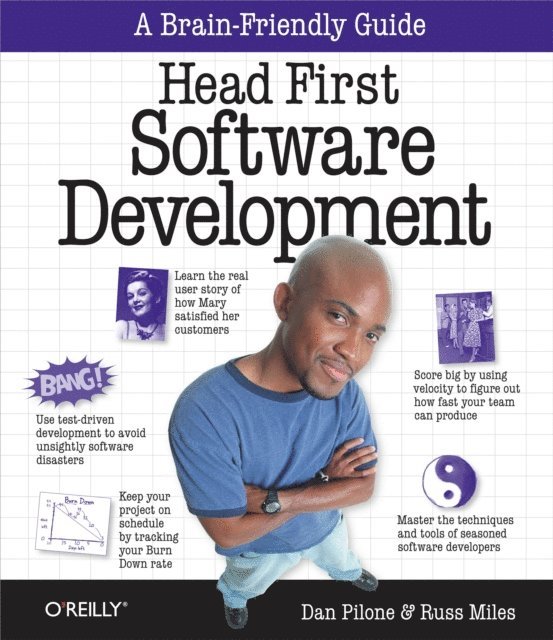
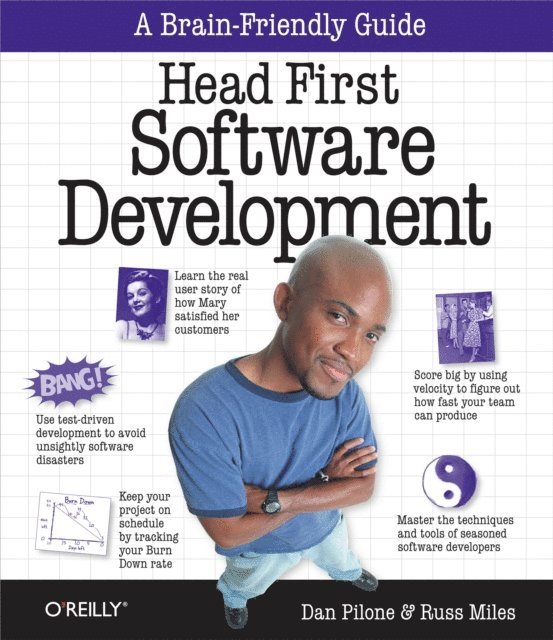
Even the best developers have seen well-intentioned software projects fail -- often because the customer kept changing requirements, and end users didn''t know how to use the software you developed. Instead of surrendering to these common problems, let Head First Software Development guide you through the best practices of software development. Before you know it, those failed projects will be a thing of the past.With its unique visually rich format, this book pulls together the hard lessons learned by expert software developers over the years. You''ll gain essential information about each step of the software development lifecycle -- requirements, design, coding, testing, implementing, and maintenance -- and understand why and how different development processes work.This book is for you if you are:
Tired of your customers assuming you''re psychic. You''ll learn not only how to get good requirements, but how to make sure you''re always building the software that customers want (even when they''re not sure themselves)Wondering when the other 15 programmers you need to get your project done on time are going to show up. You''ll learn how some very simple scheduling and prioritizing will revolutionize your success rate in developing software.Confused about being rational, agile, or a tester. You''ll learn not only about the various development methodologies out there, but how to choose a solution that''s right for your project.Confused because the way you ran your last project worked so well, but failed miserably this time around. You''ll learn how to tackle each project individually, combine lessons you''ve learned on previous projects with cutting-edge development techniques, and end up with great software on every project.Head First Software Development is here to help you learn in a way that your brain likes... and you''ll have a blast along the way. Why pick up hundreds of boring books on the philosophy of this approach or the formal techniques required for that one? Stick with Head First Software Development, and your projects will succeed like never before. Go on, get started... you''ll learn and have fun. We promise.413 kr
Läs direkt efter köp
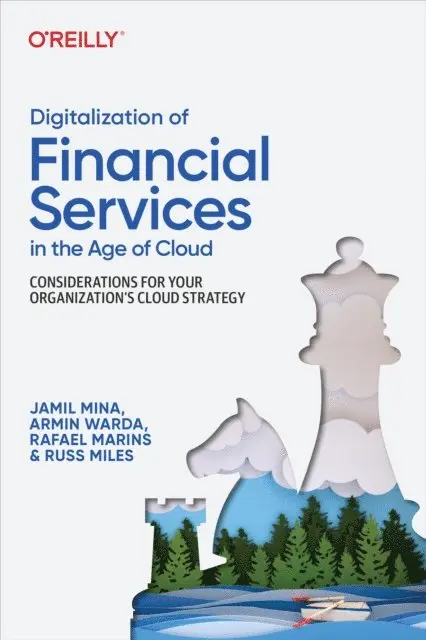
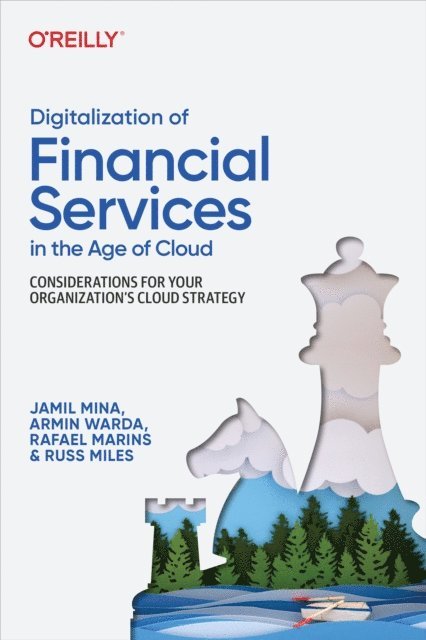
If you''re planning, building, or implementing a cloud strategy that supports digitalization for your financial services business, this invaluable guide clearly sets out the crucial factors and questions to consider first. With it, you''ll learn how to avoid the costly and time-consuming pitfalls and disappointments of cloud adoption and take full advantage of the cloud operational model. You''ll discover cloud tactics that unlock the benefits of digitalization and how to create a cloud strategy that has the flexibility to streamline operations, integrate channels, and encourage innovation in your firm.
Packed with invaluable advice and real-world case studies, this book will show you how to:
Select the right operational models for your needsBuild resilience into your company''s technologiesAssess the trade-offs of third-party digital native services versus developing them in-houseEnsure operability across cloud services providersBalance innovation and accountabilityDeal with digitalization issues of particular importance in finance, such as governance, security, and regulatory complianceAnd more398 kr
Läs direkt efter köp
If you''re planning, building, or implementing a cloud strategy that supports digitalization for your financial services business, this invaluable guide clearly sets out the crucial factors and questions to consider first. With it, you''ll learn how to avoid the costly and time-consuming pitfalls and disappointments of cloud adoption and take full advantage of the cloud operational model. You''ll discover cloud tactics that unlock the benefits of digitalization and how to create a cloud strategy that has the flexibility to streamline operations, integrate channels, and encourage innovation in your firm.
Packed with invaluable advice and real-world case studies, this book will show you how to:
Select the right operational models for your needsBuild resilience into your company''s technologiesAssess the trade-offs of third-party digital native services versus developing them in-houseEnsure operability across cloud services providersBalance innovation and accountabilityDeal with digitalization issues of particular importance in finance, such as governance, security, and regulatory complianceAnd more349 kr
Skickas inom 5-8 vardagar
605 kr
Läs direkt efter köp
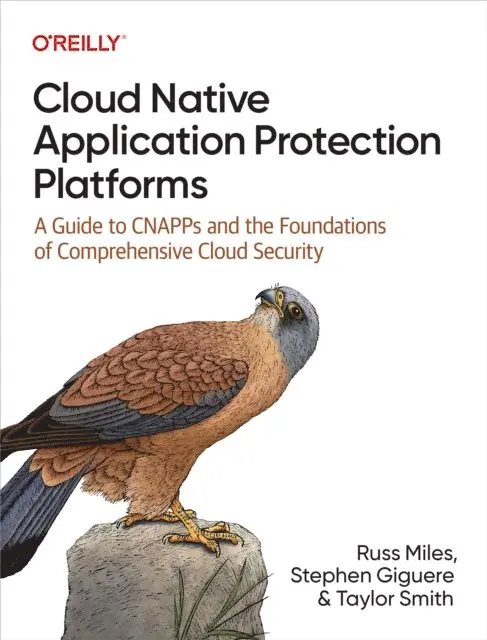
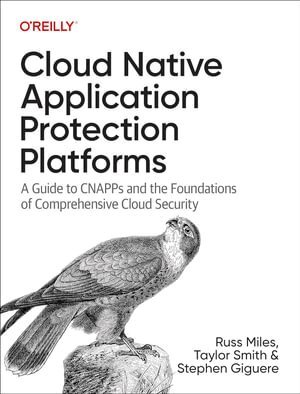
Cloud native security isn''t a game for individual players. It requires team collaboration with a platform that can help cloud security engineers, developers, and operations people do their best work. That''s what the cloud native application protection platform (CNAPP) delivers. With this practical guide, you''ll learn how CNAPPs can help you consolidate security through DevSecOps across cloud native technologies, practices, and application lifecycles.
Through real-life attack scenarios, authors Russ Miles, Steve Giguere, and Taylor Smith help you explore how CNAPP not only mitigates multidimensional threats, but also reduces complexity and helps your team stay one step ahead of attackers. CNAPP provides a holistic approach to your cloud native development across identities, workloads, networks, and infrastructure.
With this book, you will:
Examine threats to different parts of the cloud native stack, including pipelines, supply chains, infrastructure, workloads, and applicationsLearn what CNAPP is and how it enables the context-sharing and collaboration necessary to secure your applications from development to runtimeAssess your own attack surface from a code and runtime standpointIdentify blind spots in your existing cloud native security coverageLeverage CNAPP to achieve a holistic, collaborative security environment627 kr
Läs direkt efter köp
Cloud native security isn''t a game for individual players. It requires team collaboration with a platform that can help cloud security engineers, developers, and operations people do their best work. That''s what the cloud native application protection platform (CNAPP) delivers. With this practical guide, you''ll learn how CNAPPs can help you consolidate security through DevSecOps across cloud native technologies, practices, and application lifecycles.
Through real-life attack scenarios, authors Russ Miles, Steve Giguere, and Taylor Smith help you explore how CNAPP not only mitigates multidimensional threats, but also reduces complexity and helps your team stay one step ahead of attackers. CNAPP provides a holistic approach to your cloud native development across identities, workloads, networks, and infrastructure.
With this book, you will:
Examine threats to different parts of the cloud native stack, including pipelines, supply chains, infrastructure, workloads, and applicationsLearn what CNAPP is and how it enables the context-sharing and collaboration necessary to secure your applications from development to runtimeAssess your own attack surface from a code and runtime standpointIdentify blind spots in your existing cloud native security coverageLeverage CNAPP to achieve a holistic, collaborative security environment498 kr
Skickas inom 5-8 vardagar
428 kr
Läs direkt efter köp
When Object Oriented programming (OO) first appeared, it was a revelation. OO gave developers the ability to create software that was more flexible and robust, but as time went on and applications became more sophisticated, too, certain areas of "traditional" OO architectures were found wanting. Aspect-oriented programming (AOP) addresses those issues by extending the OO approach even further.Many developers are interested in AOP--especially in AspectJ, the open source extension of the Java programming language that explicitly supports the AOP approach. Yet, although AspectJ is included with Eclipse, the increasingly popular open source IDE for Java, finding a practical and non-theoretical way to learn this language and other AOP tools and techniques has been a real problem.Until now. The AspectJ Cookbook offers a hands-on solution--in fact, several--with a wide variety of code recipes for solving day-to-day design and coding problems using AOP''s unique approach.AOP allows the global properties of a program to determine how it''s compiled into an executable program. Before AOP, important program design decisions were difficult to capture in actual code. Instead, the implementation of those design decisions--known as "aspects"--were scattered throughout, resulting in "tangled" code that was hard to develop and maintain. AOP has been compared to the manufacturing of cloth, in which threads are automatically interwoven. Without AOP, programmers must stitch the threads by hand.The AspectJ Cookbook shows readers why, and how, common Java development problems can be solved by using AOP techniques. With our popular problem-solution-discussion format, the book presents real world examples to demonstrate that AOP is more than just a concept; it''s a development process that will benefit users in an immediate and visible manner.If you''re interested in how AOP is changing the way software is developed, and how you can use AspectJ to make code more modular, easier to develop, maintain, evolve and deploy, this is the book that really delivers.
428 kr
Läs direkt efter köp
When Object Oriented programming (OO) first appeared, it was a revelation. OO gave developers the ability to create software that was more flexible and robust, but as time went on and applications became more sophisticated, too, certain areas of "traditional" OO architectures were found wanting. Aspect-oriented programming (AOP) addresses those issues by extending the OO approach even further.Many developers are interested in AOP--especially in AspectJ, the open source extension of the Java programming language that explicitly supports the AOP approach. Yet, although AspectJ is included with Eclipse, the increasingly popular open source IDE for Java, finding a practical and non-theoretical way to learn this language and other AOP tools and techniques has been a real problem.Until now. The AspectJ Cookbook offers a hands-on solution--in fact, several--with a wide variety of code recipes for solving day-to-day design and coding problems using AOP''s unique approach.AOP allows the global properties of a program to determine how it''s compiled into an executable program. Before AOP, important program design decisions were difficult to capture in actual code. Instead, the implementation of those design decisions--known as "aspects"--were scattered throughout, resulting in "tangled" code that was hard to develop and maintain. AOP has been compared to the manufacturing of cloth, in which threads are automatically interwoven. Without AOP, programmers must stitch the threads by hand.The AspectJ Cookbook shows readers why, and how, common Java development problems can be solved by using AOP techniques. With our popular problem-solution-discussion format, the book presents real world examples to demonstrate that AOP is more than just a concept; it''s a development process that will benefit users in an immediate and visible manner.If you''re interested in how AOP is changing the way software is developed, and how you can use AspectJ to make code more modular, easier to develop, maintain, evolve and deploy, this is the book that really delivers.
405 kr
Läs direkt efter köp
Even the best developers have seen well-intentioned software projects fail -- often because the customer kept changing requirements, and end users didn''t know how to use the software you developed. Instead of surrendering to these common problems, let Head First Software Development guide you through the best practices of software development. Before you know it, those failed projects will be a thing of the past.With its unique visually rich format, this book pulls together the hard lessons learned by expert software developers over the years. You''ll gain essential information about each step of the software development lifecycle -- requirements, design, coding, testing, implementing, and maintenance -- and understand why and how different development processes work.This book is for you if you are:
Tired of your customers assuming you''re psychic. You''ll learn not only how to get good requirements, but how to make sure you''re always building the software that customers want (even when they''re not sure themselves)Wondering when the other 15 programmers you need to get your project done on time are going to show up. You''ll learn how some very simple scheduling and prioritizing will revolutionize your success rate in developing software.Confused about being rational, agile, or a tester. You''ll learn not only about the various development methodologies out there, but how to choose a solution that''s right for your project.Confused because the way you ran your last project worked so well, but failed miserably this time around. You''ll learn how to tackle each project individually, combine lessons you''ve learned on previous projects with cutting-edge development techniques, and end up with great software on every project.Head First Software Development is here to help you learn in a way that your brain likes... and you''ll have a blast along the way. Why pick up hundreds of boring books on the philosophy of this approach or the formal techniques required for that one? Stick with Head First Software Development, and your projects will succeed like never before. Go on, get started... you''ll learn and have fun. We promise.527 kr
Läs direkt efter köp
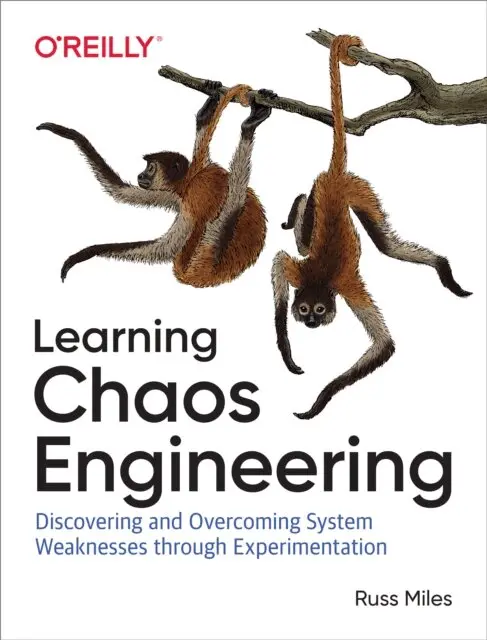
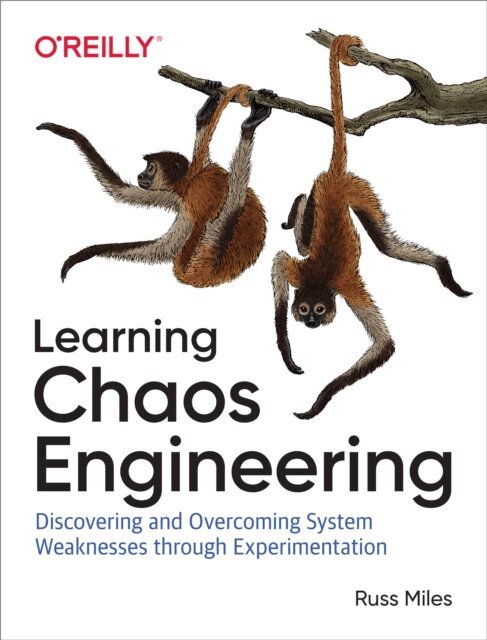
Most companies work hard to avoid costly failures, but in complex systems a better approach is to embrace and learn from them. Through chaos engineering, you can proactively hunt for evidence of system weaknesses before they trigger a crisis. This practical book shows software developers and system administrators how to plan and run successful chaos engineering experiments.
System weaknesses go beyond your infrastructure, platforms, and applications to include policies, practices, playbooks, and people. Author Russ Miles explains why, when, and how to test systems, processes, and team responses using simulated failures on Game Days. You’ll also learn how to work toward continuous chaos through automation with features you can share across your team and organization.
Learn to think like a chaos engineerBuild a hypothesis backlog to determine what could go wrong in your systemDevelop your hypotheses into chaos engineering experiment Game DaysWrite, run, and learn from automated chaos experiments using the open source Chaos ToolkitTurn chaos experiments into tests to confirm that you’ve overcome the weaknesses you discoveredObserve and control your automated chaos experiments while they are running527 kr
Läs direkt efter köp
Most companies work hard to avoid costly failures, but in complex systems a better approach is to embrace and learn from them. Through chaos engineering, you can proactively hunt for evidence of system weaknesses before they trigger a crisis. This practical book shows software developers and system administrators how to plan and run successful chaos engineering experiments.
System weaknesses go beyond your infrastructure, platforms, and applications to include policies, practices, playbooks, and people. Author Russ Miles explains why, when, and how to test systems, processes, and team responses using simulated failures on Game Days. You’ll also learn how to work toward continuous chaos through automation with features you can share across your team and organization.
Learn to think like a chaos engineerBuild a hypothesis backlog to determine what could go wrong in your systemDevelop your hypotheses into chaos engineering experiment Game DaysWrite, run, and learn from automated chaos experiments using the open source Chaos ToolkitTurn chaos experiments into tests to confirm that you’ve overcome the weaknesses you discoveredObserve and control your automated chaos experiments while they are running498 kr
Skickas inom 5-8 vardagar