Ruth Taplin – författare
Visar alla böcker från författaren Ruth Taplin. Handla med fri frakt och snabb leverans.
67 produkter
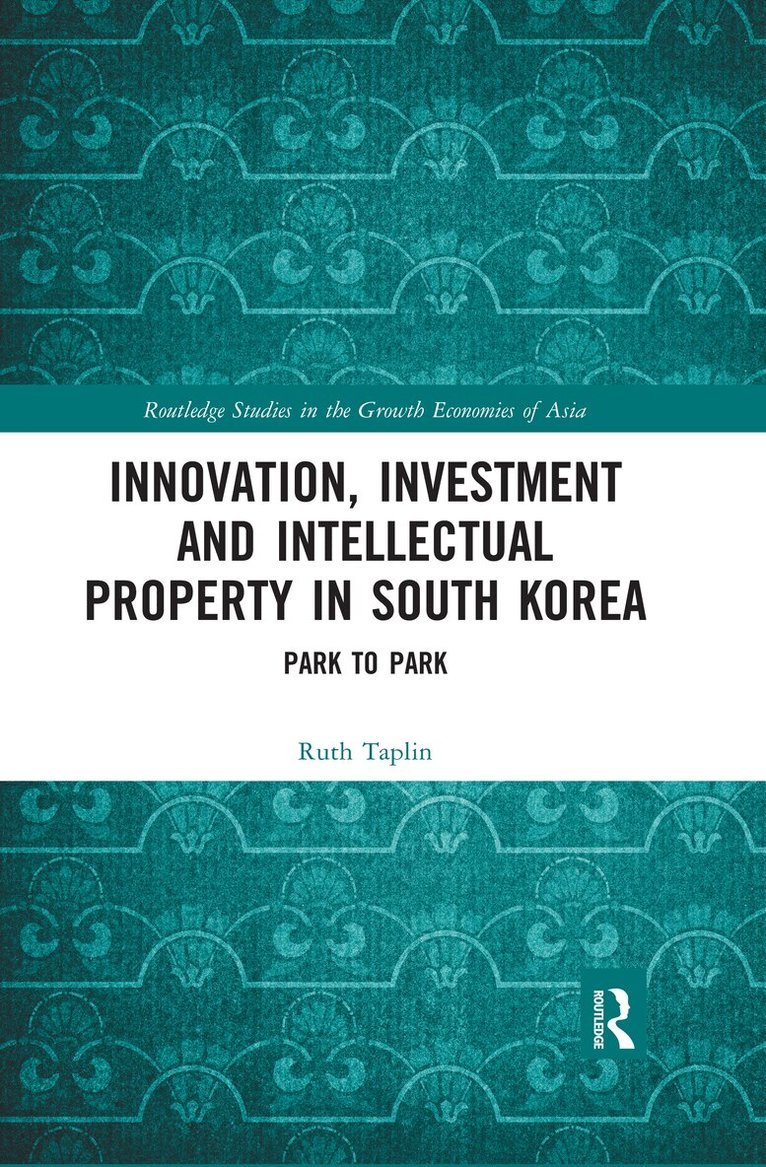
Innovation, Investment and Intellectual Property in South Korea
Park to Park
Av Ruth Taplin
Häftad, 2020
661 kr
Lägg i varukorg
South Korea known as the hermit kingdom was wrenched from its isolation in the mid-seventies with the forced industialisation of its economy by Park Chung-hee during his dictatorial regime. This led South Korea to becoming the most rapidly industialised country in the world with world class …
Cyber Risk, Intellectual Property Theft and Cyberwarfare
Asia, Europe and the USA
Av Ruth Taplin
Häftad, 2022
634 kr
Lägg i varukorg
The desire to steal the intellectual property (IP) of others, be they creative individuals or company teams working in patent pools to create new innovations, remains the same. Political methods have become more sophisticated in terms of devaluing the output of creative humans by creating open- …
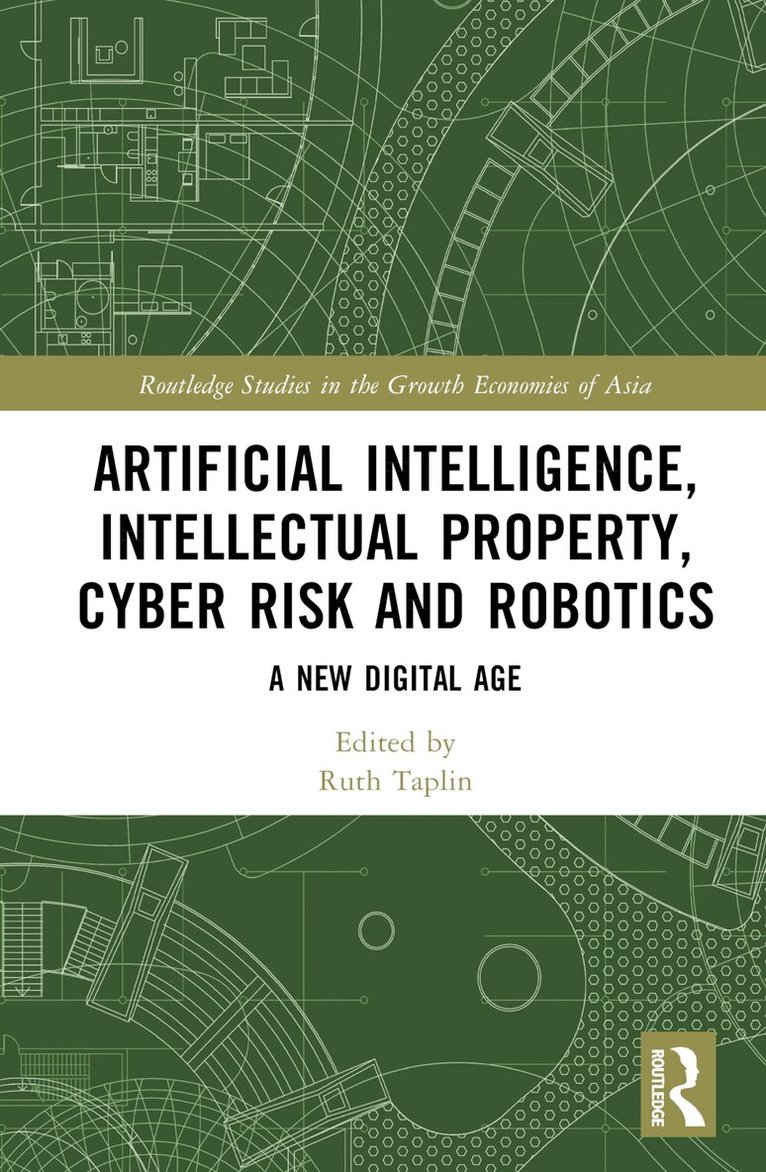
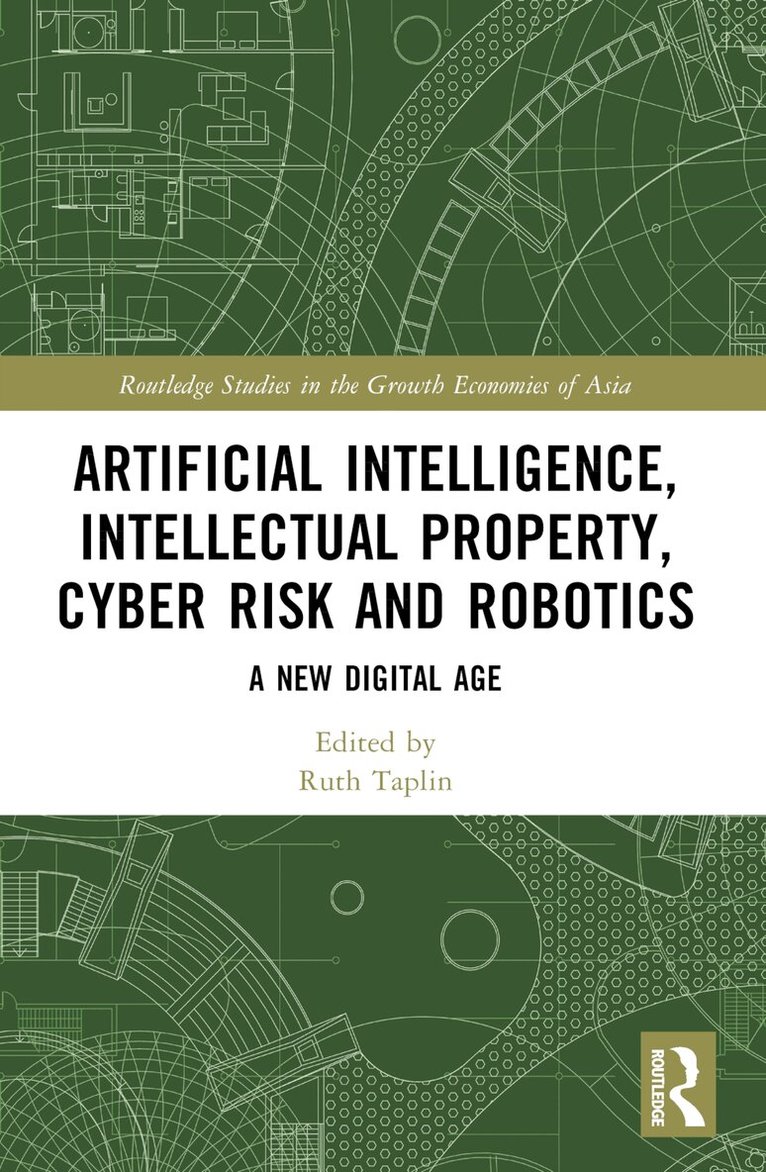
Artificial Intelligence, Intellectual Property, Cyber Risk and Robotics
A New Digital Age
Av Ruth Taplin
Inbunden, 2022
2126 kr
Lägg i varukorg
Artificial Intelligence (AI) is the most rapidly developing technology in the current Digital Age, but it is also the least defined, understood and adequately explained technological advance. This book brings together a group of leading experts who assess different aspects of AI from different …
Valuing Intellectual Property in Japan, Britain and the United States
Av Ruth Taplin
Inbunden, 2004
2303 kr
Lägg i varukorg
As over half the assets of many major companies are now intangible assets, there is an increasing need to assess more accurately the value of intellectual property (IP) from a wider interdisciplinary perspective. Re-evaluating risk and understanding the true value of intellectual property is a …
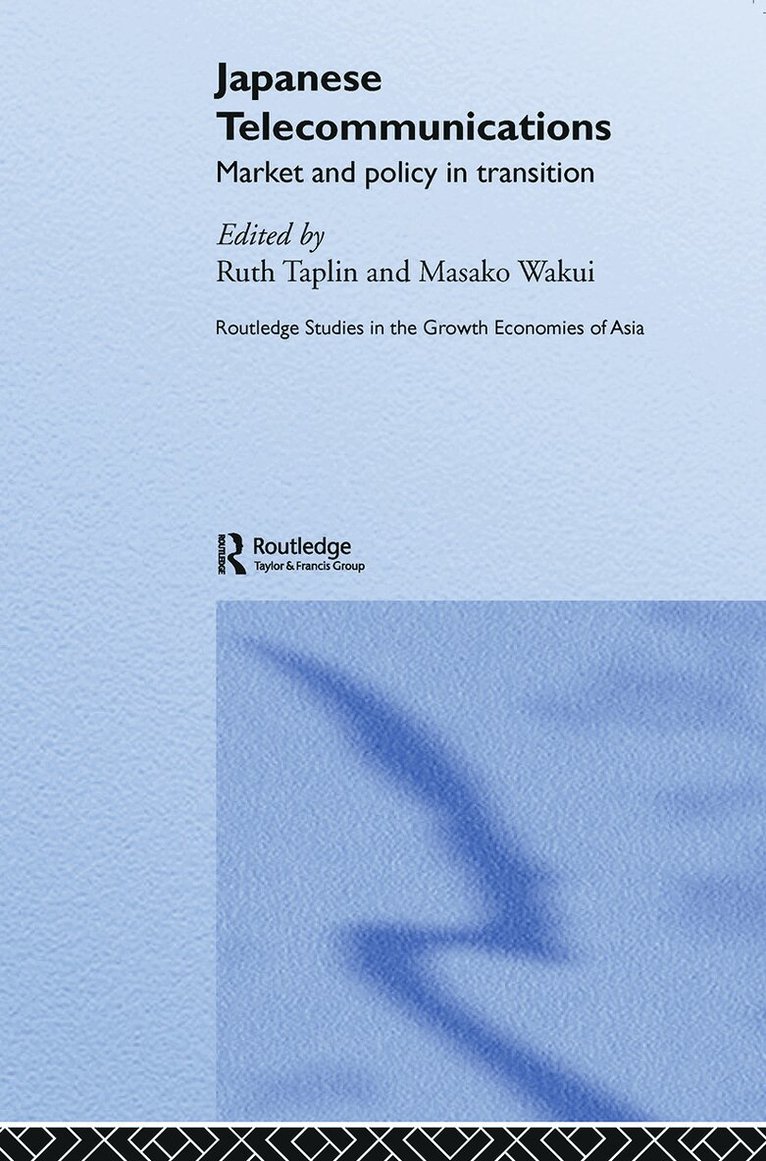
Japanese Telecommunications
Market and Policy in Transition
Inbunden, 2006
1882 kr
Lägg i varukorg
Presenting a comprehensive survey of the telecommunications industry in Japan, Taplin and Wakui cover the different sectors of the industry – including mobile, broadband and satellite, whilst considering key questions such as the structure and economics of the industry, government policy, and …
Risk Management and Innovation in Japan, Britain and the USA
Av Ruth Taplin
Inbunden, 2005
753 kr
Lägg i varukorg
Assessing and managing risk is vitally important, and is increasingly studied in a range of areas including politics and international relations, finance and insurance, and innovation and the valuing of intangible assets such as patents and intellectual property. The degree to which innovation is …
Innovation and Business Partnering in Japan, Europe and the United States
Av Ruth Taplin
Inbunden, 2006
2586 kr
Lägg i varukorg
Innovation studies and partnering/collaborative alliances are rapidly growing areas of interest. Originally combining the two areas, this book examines the role of business partnering as a pathway to innovation for small and medium enterprises – SMEs. This text outlines global and regional trends, …
Outsourcing and Human Resource Management
An International Survey
Av Ruth Taplin
Inbunden, 2007
787 kr
Lägg i varukorg
Outsourcing is an increasingly popular strategy deployed by a variety of institutions, including banks, multinational companies and small and medium-sized enterprises (SMEs). The book assesses the problems and solutions for those attempting to outsource through an analysis of human resource …
Intellectual Property and the New Global Japanese Economy
Av Ruth Taplin
Inbunden, 2009
2311 kr
Lägg i varukorg
The Japanese economy is the second largest in the world and is becoming once more one of the most competitive. Despite the stagnation and deflation experienced during the 1990s, Japan has progressively become more aware of the need to be a global player, in particular under the radical …
Intellectual Property Valuation and Innovation
Towards global harmonisation
Av Ruth Taplin
Inbunden, 2013
2303 kr
Lägg i varukorg
With the recent global economic crisis, attitudes and practices in relation to intellectual property valuation are changing as exemplified by the dichotomy explained in this book, which makes it unique. While there has been a move towards global harmonisation in terms of valuation of both tangible …
Outsourcing and Human Resource Management
An International Survey
Av Ruth Taplin
Häftad, 2012
381 kr
Lägg i varukorg
Outsourcing is an increasingly popular strategy deployed by a variety of institutions, including banks, multinational companies and small and medium-sized enterprises (SMEs). The book assesses the problems and solutions for those attempting to outsource through an analysis of human resource …
Intellectual Property, Innovation and Management in Emerging Economies
Av Ruth Taplin, Alojzy Z. Nowak
Inbunden, 2010
2303 kr
Lägg i varukorg
This book argues that intellectual property (IP) management development and innovation are fundamental to economic development , especially in newly emerging economies which often hold vast reserves of natural resources and human knowledge that remain unprotected. It sheds light on countries that …
Japanese Telecommunications
Market and Policy in Transition
Häftad, 2012
500 kr
Lägg i varukorg
Presenting a comprehensive survey of the telecommunications industry in Japan, Taplin and Wakui cover the different sectors of the industry – including mobile, broadband and satellite, whilst considering key questions such as the structure and economics of the industry, government policy, and …
Risk Management and Innovation in Japan, Britain and the USA
Av Ruth Taplin
Häftad, 2012
307 kr
Lägg i varukorg
Assessing and managing risk is vitally important, and is increasingly studied in a range of areas including politics and international relations, finance and insurance, and innovation and the valuing of intangible assets such as patents and intellectual property. The degree to which innovation is …
Valuing Intellectual Property in Japan, Britain and the United States
Av Ruth Taplin
Häftad, 2012
661 kr
Lägg i varukorg
As over half the assets of many major companies are now intangible assets, there is an increasing need to assess more accurately the value of intellectual property (IP) from a wider interdisciplinary perspective. Re-evaluating risk and understanding the true value of intellectual property is a …
Innovation and Business Partnering in Japan, Europe and the United States
Av Ruth Taplin
Häftad, 2013
740 kr
Lägg i varukorg
Innovation studies and partnering/collaborative alliances are rapidly growing areas of interest. Originally combining the two areas, this book examines the role of business partnering as a pathway to innovation for small and medium enterprises – SMEs. This text outlines global and regional trends, …
Mental Health Care in Japan
Av Ruth Taplin, Sandra J. Lawman
Inbunden, 2012
2504 kr
Lägg i varukorg
Mental health, including widespread depression, a high suicide rate and institutionalisation, is a major problem in Japan. At the same time, the mental health care system in Japan has historically been more restrictive than elsewhere in the world. This book looks at the challenges of mental health …
Intellectual Property, Innovation and Management in Emerging Economies
Av Ruth Taplin, Alojzy Z. Nowak
Häftad, 2013
661 kr
Lägg i varukorg
This book argues that intellectual property (IP) management development and innovation are fundamental to economic development , especially in newly emerging economies which often hold vast reserves of natural resources and human knowledge that remain unprotected. It sheds light on countries that …
Cyber Risk, Intellectual Property Theft and Cyberwarfare
Asia, Europe and the USA
Av Ruth Taplin
E-bok, 2020
802 kr
Lägg i varukorg
The desire to steal the intellectual property (IP) of others, be they creative individuals or company teams working in patent pools to create new innovations, remains the same. Political methods have become more sophisticated in terms of devaluing the output of creative humans by creating open- …
Cyber Risk, Intellectual Property Theft and Cyberwarfare
Asia, Europe and the USA
Av Ruth Taplin
E-bok, 2020
777 kr
Lägg i varukorg
The desire to steal the intellectual property (IP) of others, be they creative individuals or company teams working in patent pools to create new innovations, remains the same. Political methods have become more sophisticated in terms of devaluing the output of creative humans by creating open- …
Artificial Intelligence, Intellectual Property, Cyber Risk and Robotics
A New Digital Age
Av Ruth Taplin
E-bok, 2022
701 kr
Lägg i varukorg
Artificial Intelligence (AI) is the most rapidly developing technology in the current Digital Age, but it is also the least defined, understood and adequately explained technological advance. This book brings together a group of leading experts who assess different aspects of AI from different …
Artificial Intelligence, Intellectual Property, Cyber Risk and Robotics
A New Digital Age
Av Ruth Taplin
E-bok, 2022
686 kr
Lägg i varukorg
Artificial Intelligence (AI) is the most rapidly developing technology in the current Digital Age, but it is also the least defined, understood and adequately explained technological advance. This book brings together a group of leading experts who assess different aspects of AI from different …
Artificial Intelligence, Intellectual Property, Cyber Risk and Robotics
A New Digital Age
Av Ruth Taplin
Häftad, 2024
646 kr
Lägg i varukorg
Artificial Intelligence (AI) is the most rapidly developing technology in the current Digital Age, but it is also the least defined, understood and adequately explained technological advance. This book brings together a group of leading experts who assess different aspects of AI from different …
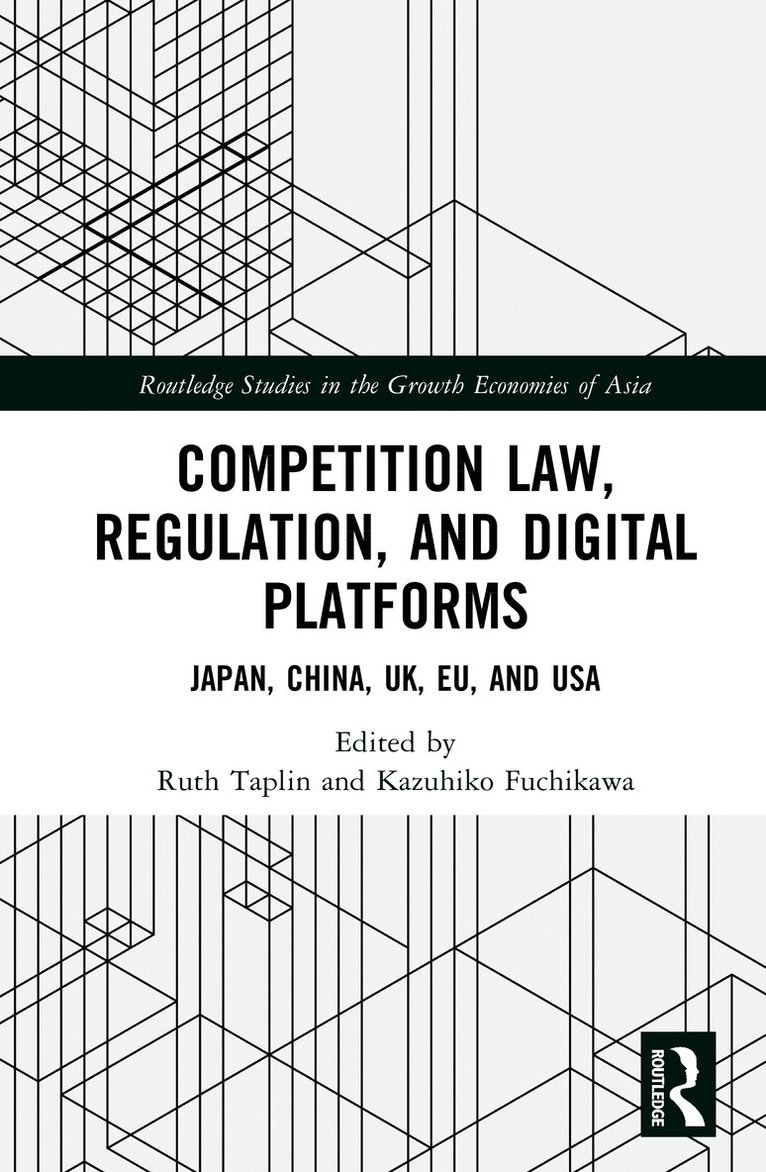
Competition Law, Regulation and Digital Platforms
Japan, China, UK, EU and USA
Av Ruth Taplin, Kazuhiko Fuchikawa
Inbunden, 2025
2303 kr
Lägg i varukorg
This book confronts and analyses how competition law in its present form is unable to deal with the new advances in digital technology that have made tech giants not subject to national jurisdictions as they straddle the world, with a particular focus on Japan, China, UK, EU and USA.Demonstrating …
Competition Law, Regulation and Digital Platforms
Japan, China, UK, EU and USA
Av Ruth Taplin, Kazuhiko Fuchikawa
Häftad, 2026
647 kr
Lägg i varukorg
This book confronts and analyses how competition law in its present form is unable to deal with the new advances in digital technology that have made tech giants not subject to national jurisdictions as they straddle the world, with a particular focus on Japan, China, UK, EU and USA.Demonstrating …
Competition Law, Regulation and Digital Platforms
Japan, China, UK, EU and USA
Av Kazuhiko Fuchikawa, Ruth Taplin
E-bok, 2025
831 kr
Lägg i varukorg
This book confronts and analyses how competition law in its present form is unable to deal with the new advances in digital technology that have made tech giants not subject to national jurisdictions as they straddle the world, with a particular focus on Japan, China, UK, EU and USA. Demonstrating …
Competition Law, Regulation and Digital Platforms
Japan, China, UK, EU and USA
Av Kazuhiko Fuchikawa, Ruth Taplin
E-bok, 2025
831 kr
Lägg i varukorg
This book confronts and analyses how competition law in its present form is unable to deal with the new advances in digital technology that have made tech giants not subject to national jurisdictions as they straddle the world, with a particular focus on Japan, China, UK, EU and USA. Demonstrating …
Intellectual Property and the New Global Japanese Economy
Av Ruth Taplin
E-bok, 2009
813 kr
Lägg i varukorg
The Japanese economy is the second largest in the world and is becoming once more one of the most competitive. Despite the stagnation and deflation experienced during the 1990s, Japan has progressively become more aware of the need to be a global player, in particular under the radical …
Intellectual Property and the New Global Japanese Economy
Av Ruth Taplin
E-bok, 2009
813 kr
Lägg i varukorg
The Japanese economy is the second largest in the world and is becoming once more one of the most competitive. Despite the stagnation and deflation experienced during the 1990s, Japan has progressively become more aware of the need to be a global player, in particular under the radical …
Outsourcing and Human Resource Management
An International Survey
Av Ruth Taplin
E-bok, 2007
436 kr
Lägg i varukorg
Outsourcing is an increasingly popular strategy deployed by a variety of institutions, including banks, multinational companies and small and medium-sized enterprises (SMEs). The book assesses the problems and solutions for those attempting to outsource through an analysis of human resource …