Ryan Calo – författare
Visar alla böcker från författaren Ryan Calo. Handla med fri frakt och snabb leverans.
10 produkter
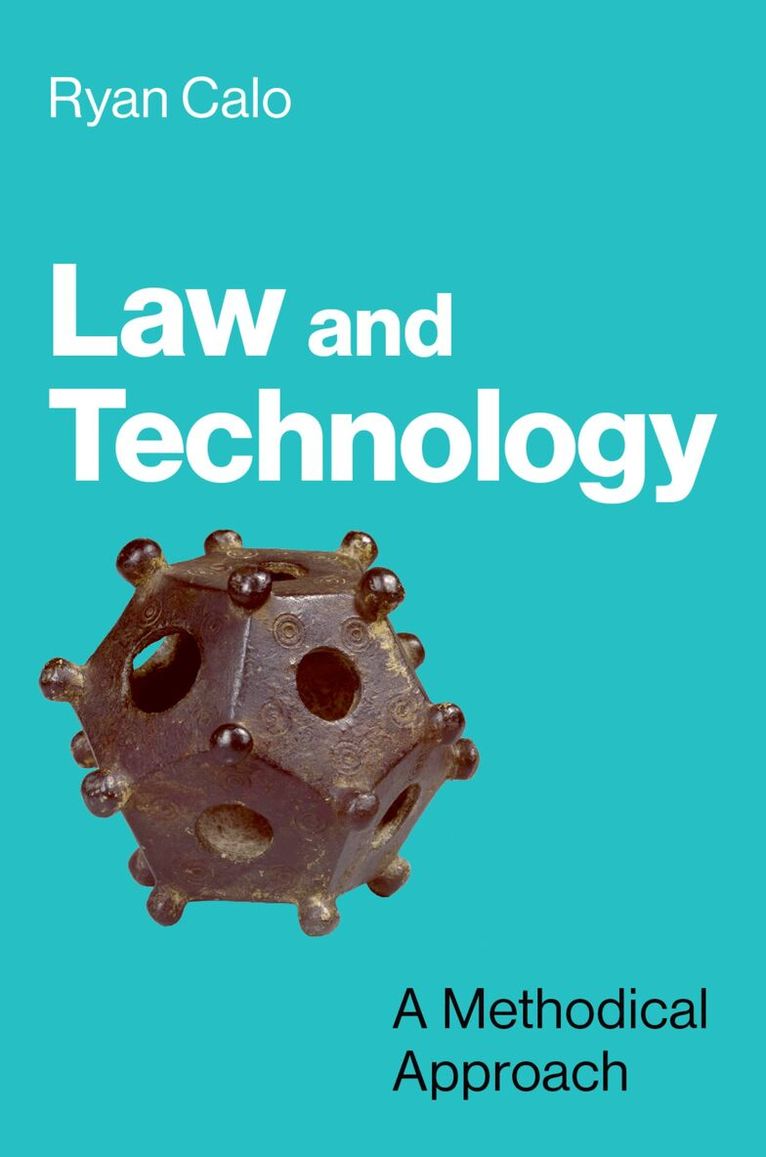
Law and Technology
A Methodical Approach
Av Ryan Calo
Inbunden, 2026
348 kr
Lägg i varukorg
Law and Technology: A Methodical Approach offers a defensible and consistent approach to the legal analysis of technology. It puts forward a step-by-step methodology for thinking about and ultimately challenging technology to meet society's demands.
Law and Technology
A Methodical Approach
Av Ryan Calo
E-bok, 2025
358 kr
Lägg i varukorg
Technology is difficult to study, let alone regulate. While law is uniquely positioned to channel technology toward human flourishing, technology poses special challenges to law and governance, obscuring human will and responsibility, stalling regulatory action, and putting rights and values into …
Law and Technology
A Methodical Approach
Av Ryan Calo
E-bok, 2025
366 kr
Lägg i varukorg
Technology is difficult to study, let alone regulate. While law is uniquely positioned to channel technology toward human flourishing, technology poses special challenges to law and governance, obscuring human will and responsibility, stalling regulatory action, and putting rights and values into …
Cambridge Handbook of Generative AI and the Law
Av Ryan Calo, Martin Ebers m. fl.
E-bok, 2025
2567 kr
Lägg i varukorg
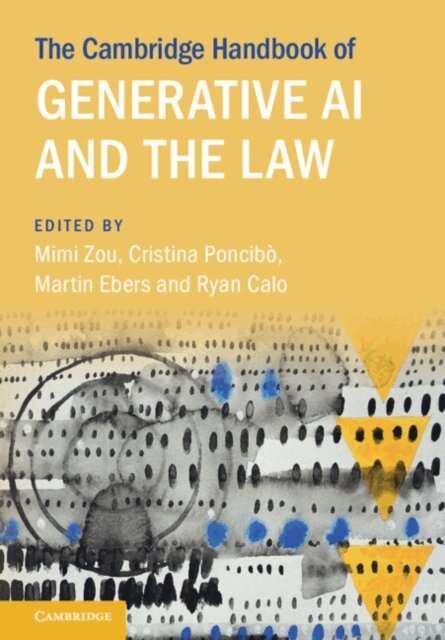
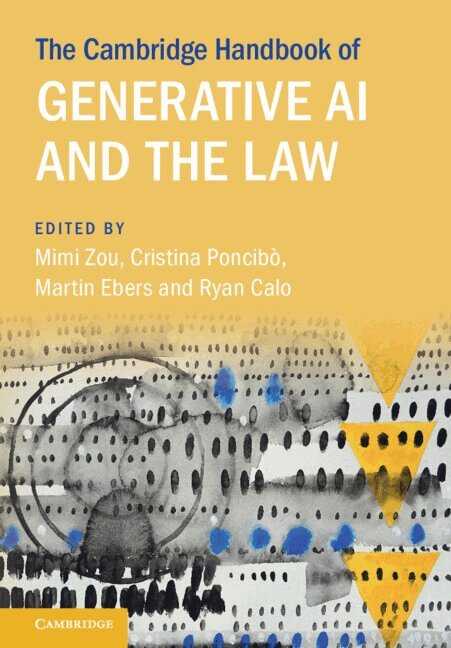
The Cambridge Handbook of Generative AI and the Law
Av Mimi Zou, Cristina Poncib- m. fl.
Inbunden, 2025
2580 kr
Lägg i varukorg
This handbook offers an important exploration of generative AI and its legal and regulatory implications from interdisciplinary perspectives. The volume is divided into four parts. Part I provides the necessary context and background to understand the topic, including its technical underpinnings …
Cambridge Handbook of Generative AI and the Law
Av Ryan Calo, Martin Ebers m. fl.
E-bok, 2025
2624 kr
Lägg i varukorg
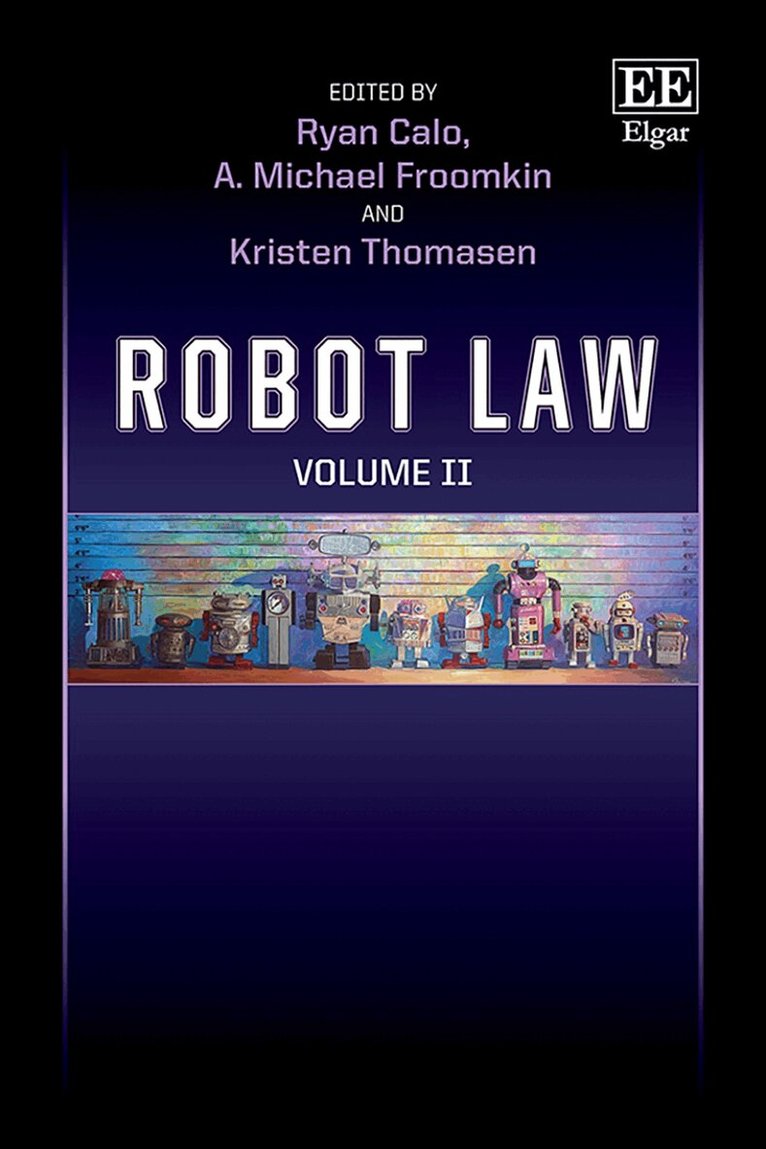
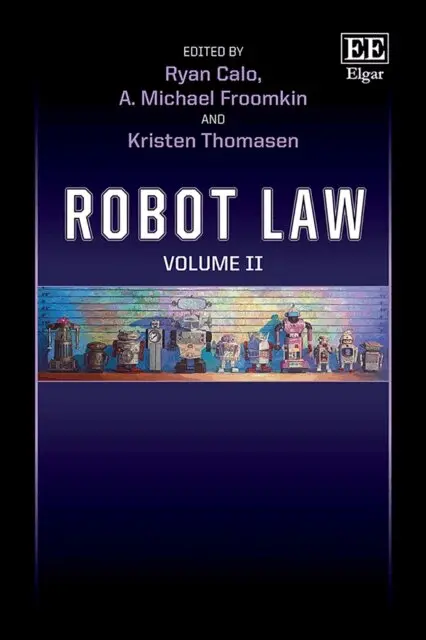
Robot Law: Volume II
Av Kristen Thomasen, A. M. Froomkin m. fl.
E-bok, 2025
449 kr
Lägg i varukorg
Volume II discusses the societal and economic transformations introduced by robotics. Editors Ryan Calo, A. Michael Froomkin and Kristen Thomasen, alongside their contributing authors, explore the legal, ethical, and societal challenges that robotics and automated systems pose, investigating the …
Robot Law
Av Ian Kerr, A. Michael Froomkin m. fl.
E-bok, 2016
422 kr
Lägg i varukorg
Like the Internet before it, robotics is a socially and economically transformative technology. Robot Law explores how the increasing sophistication of robots and their widespread deployment into hospitals, public spaces, and battlefields requires rethinking of a wide variety of philosophical and …
Robot Law: Volume II
Av Ryan Calo, A. M. Froomkin m. fl.
Inbunden, 2025
2336 kr
Lägg i varukorg
Volume II discusses the societal and economic transformations introduced by robotics. Editors Ryan Calo, A. Michael Froomkin and Kristen Thomasen, alongside their contributing authors, explore the legal, ethical, and societal challenges that robotics and automated systems pose, investigating the …
Robot Law: Volume II
Av Kristen Thomasen, A. M. Froomkin m. fl.
E-bok, 2025
459 kr
Lägg i varukorg
Volume II discusses the societal and economic transformations introduced by robotics. Editors Ryan Calo, A. Michael Froomkin and Kristen Thomasen, alongside their contributing authors, explore the legal, ethical, and societal challenges that robotics and automated systems pose, investigating the …