S. Matthew Liao - Böcker
Visar alla böcker från författaren S. Matthew Liao. Handla med fri frakt och snabb leverans.
9 produkter
9 produkter
991 kr
Skickas inom 5-8 vardagar
S. Matthew Liao argues here that children have a right to be loved. To do so he investigates questions such as whether children are rightholders; what grounds a child's right to beloved; whether love is an appropriate object of a right; and other philosophical and practical issues. His proposal is that all human beings have rights to the fundamental conditions for pursuing a good life; therefore, as human beings, children have human rights to the fundamental conditions for pursuing a good life. Since being loved is one of those fundamental conditions, children thus have a right to be loved. Liao shows that this claim need not be merely empty rhetoric, and that the arguments for this right can hang together as a coherent whole. This is the first book to make a sustained philosophical case for the right of children to be loved. It makes a unique contribution to the fast-growing literature on family ethics, in particular, on children's rights and parental rights and responsibilities, and to the emerging field of the philosophy of human rights.
1 479 kr
Skickas inom 5-8 vardagar
As Artificial Intelligence (AI) technologies rapidly progress, questions about the ethics of AI, in both the near-future and the long-term, become more pressing than ever. This volume features seventeen original essays by prominent AI scientists and philosophers and represents the state-of-the-art thinking in this fast-growing field. Organized into four sections, this volume explores the issues surrounding how to build ethics into machines; ethical issues in specific technologies, including self-driving cars, autonomous weapon systems, surveillance algorithms, and sex robots; the long term risks of superintelligence; and whether AI systems can be conscious or have rights.Though the use and practical applications of AI are growing exponentially, discussion of its ethical implications is still in its infancy. This volume provides an invaluable resource for thinking through the ethical issues surrounding AI today and for shaping the study and development of AI in the coming years.
556 kr
Skickas inom 5-8 vardagar
As Artificial Intelligence (AI) technologies rapidly progress, questions about the ethics of AI, in both the near-future and the long-term, become more pressing than ever. This volume features seventeen original essays by prominent AI scientists and philosophers and represents the state-of-the-art thinking in this fast-growing field. Organized into four sections, this volume explores the issues surrounding how to build ethics into machines; ethical issues in specific technologies, including self-driving cars, autonomous weapon systems, surveillance algorithms, and sex robots; the long term risks of superintelligence; and whether AI systems can be conscious or have rights.Though the use and practical applications of AI are growing exponentially, discussion of its ethical implications is still in its infancy. This volume provides an invaluable resource for thinking through the ethical issues surrounding AI today and for shaping the study and development of AI in the coming years.
1 757 kr
Skickas inom 5-8 vardagar
In the last fifteen years, there has been significant interest in studying the brain structures involved in moral judgments using novel techniques from neuroscience such as functional magnetic resonance imaging (fMRI). Many people, including a number of philosophers, believe that results from neuroscience have the potential to settle seemingly intractable debates concerning the nature, practice, and reliability of moral judgments. This has led to a flurry of scientific and philosophical activities, resulting in the rapid growth of the new field of moral neuroscience. There is now a vast array of ongoing scientific research devoted towards understanding the neural correlates of moral judgments, accompanied by a large philosophical literature aimed at interpreting and examining the methodology and the results of this research. This is the first volume to take stock of fifteen years of research of this fast-growing field of moral neuroscience and to recommend future directions for research. It features the most up-to-date research in this area, and it presents a wide variety of perspectives on this topic.
564 kr
Skickas inom 5-8 vardagar
In the last fifteen years, there has been significant interest in studying the brain structures involved in moral judgments using novel techniques from neuroscience such as functional magnetic resonance imaging (fMRI). Many people, including a number of philosophers, believe that results from neuroscience have the potential to settle seemingly intractable debates concerning the nature, practice, and reliability of moral judgments. This has led to a flurry of scientific and philosophical activities, resulting in the rapid growth of the new field of moral neuroscience. There is now a vast array of ongoing scientific research devoted towards understanding the neural correlates of moral judgments, accompanied by a large philosophical literature aimed at interpreting and examining the methodology and the results of this research. This is the first volume to take stock of fifteen years of research of this fast-growing field of moral neuroscience and to recommend future directions for research. It features the most up-to-date research in this area, and it presents a wide variety of perspectives on this topic.
1 932 kr
Skickas inom 5-8 vardagar
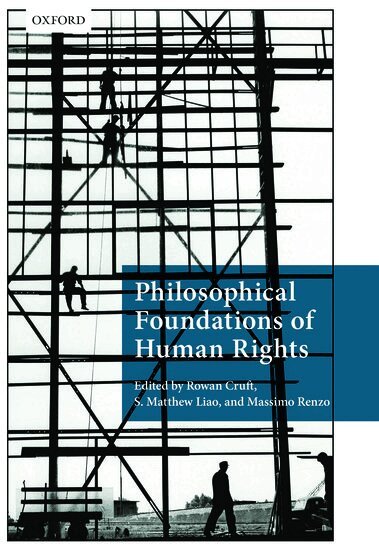
What makes something a human right? What is the relationship between the moral foundations of human rights and human rights law? What are the difficulties of appealing to human rights?This book offers the first comprehensive survey of current thinking on the philosophical foundations of human rights. Divided into four parts, this book focusses firstly on the moral grounds of human rights, for example in our dignity, agency, interests or needs. 'Secondly, it looks at the implications that different moral perspectives on human rights bear for human rights law and politics. Thirdly, it discusses specific and topical human rights including freedom of expression and religion, security, health and more controversial rights such as a human right to subsistence. The final part discusses nuanced critical and reformative views on human rights from feminist, Kantian and relativist perspectives among others.The essays represent new and canonical research by leading scholars in the field. Each part is comprised of a set of essays and replies, offering a comprehensive analysis of different positions within the debate in question.The introduction from the editors will guide researchers and students navigating the diversity of views on the philosophical foundations of human rights.
1 027 kr
What makes something a human right? What is the relationship between the moral foundations of human rights and human rights law? What are the difficulties of appealing to human rights?This book offers the first comprehensive survey of current thinking on the philosophical foundations of human rights. Divided into four parts, this book focuses firstly on the moral grounds of human rights, for example in our dignity, agency, interests or needs. Secondly, it looks at the implications that different moral perspectives on human rights bear for human rights law and politics. Thirdly, it discusses specific and topical human rights including freedom of expression and religion, security, health and more controversial rights such as a human right to subsistence. The final part discusses nuanced critical and reformative views on human rights from feminist, Kantian and relativist perspectives among others.The essays represent new and canonical research by leading scholars in the field. Each section is structured as a set of essays and replies, offering a comprehensive analysis of different positions within the debate in question. The introduction from the editors will guide researchers and students navigating the diversity of views on the philosophical foundations of human rights.
630 kr
Skickas inom 10-15 vardagar
Bioethics is the study of ethical issues arising out of advances in the life sciences and medicine. Historically, bioethics has been associated with issues in research ethics and clinical ethics as a result of research scandals such as the Tuskegee Syphilis Study and public debates about the definition of death, medical paternalism, health care rationing, and abortion. As biomedical technologies have advanced, challenging new questions have arisen for bioethics and new sub-disciplines such as neuroethics and public health ethics have entered the scene. This volume features ten original essays on five cutting-edge controversies in bioethics written by leading philosophers. I. Research Ethics: How Should We Justify Ancillary Care Duties? II. Clinical Ethics: Are Psychopaths Morally Accountable?III. Reproductive Ethics: Is There A Solution to the Non-Identity Problem?IV. Neuroethics: What is Addiction and Does It Excuse? V. Public Health Ethics: Is Luck Egalitarianism Implausibly Harsh?S. Matthew Liao and Collin O’Neil’s concise introduction to the essays in the volume, the annotated bibliographies and study questions for each controversy, and the supplemental guide to additional current controversies in bioethics give the reader a broad grasp of the different kinds of challenges in bioethics.
2 222 kr
Skickas inom 10-15 vardagar
Bioethics is the study of ethical issues arising out of advances in the life sciences and medicine. Historically, bioethics has been associated with issues in research ethics and clinical ethics as a result of research scandals such as the Tuskegee Syphilis Study and public debates about the definition of death, medical paternalism, health care rationing, and abortion. As biomedical technologies have advanced, challenging new questions have arisen for bioethics and new sub-disciplines such as neuroethics and public health ethics have entered the scene. This volume features ten original essays on five cutting-edge controversies in bioethics written by leading philosophers. I. Research Ethics: How Should We Justify Ancillary Care Duties? II. Clinical Ethics: Are Psychopaths Morally Accountable?III. Reproductive Ethics: Is There A Solution to the Non-Identity Problem?IV. Neuroethics: What is Addiction and Does It Excuse? V. Public Health Ethics: Is Luck Egalitarianism Implausibly Harsh?S. Matthew Liao and Collin O’Neil’s concise introduction to the essays in the volume, the annotated bibliographies and study questions for each controversy, and the supplemental guide to additional current controversies in bioethics give the reader a broad grasp of the different kinds of challenges in bioethics.