S. Sasaki – författare
Visar alla böcker från författaren S. Sasaki. Handla med fri frakt och snabb leverans.
3 produkter
3 produkter
Inbunden, Engelska, 2005
1 633 kr
Skickas inom 10-15 vardagar
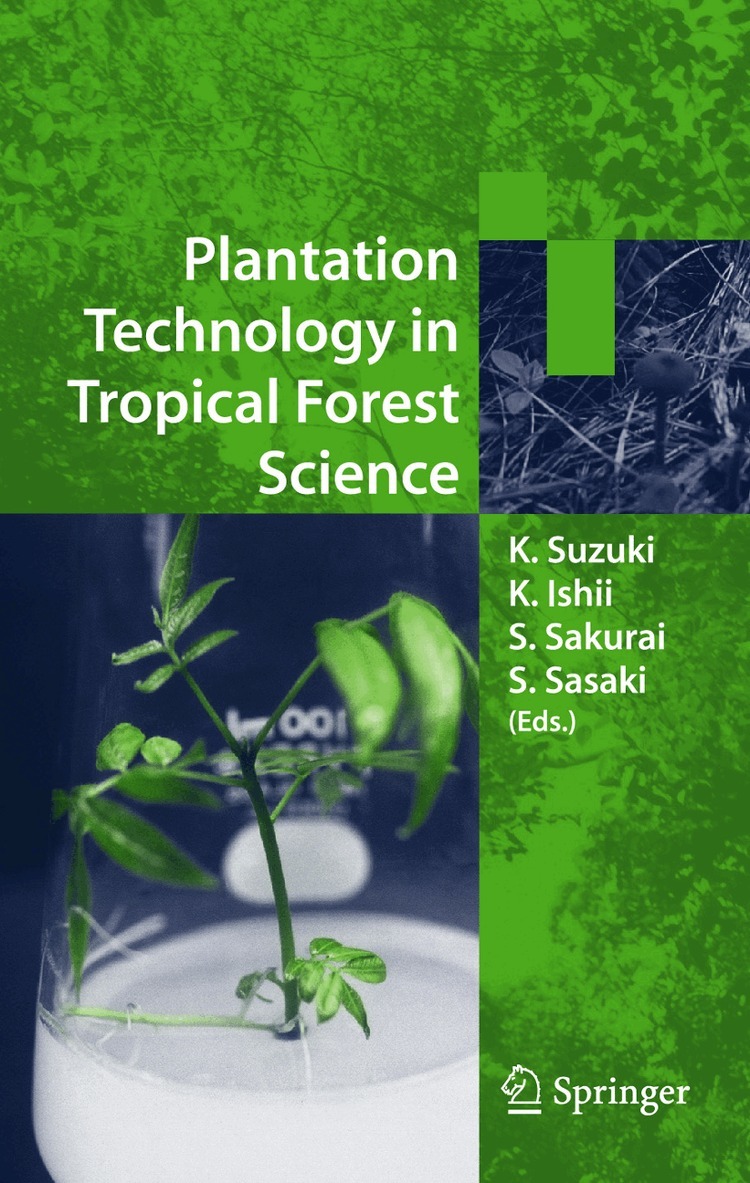
This book is intended to be a record of the Biotechnology-Assisted Re/Afforestation Project in the Asia-Pacific Region (BIO-REFOR) since 1992, conducted in coop eration with the International Union of Forest Research Organizations (lUFRO). The purpose of the project is to promote exchanges of information of fundamental research on indigenous species in the Asia-Pacific Region in order to restore natural forests. The production, cultivation, and maintenance of forest tree species provide highly sustainable production systems that conserve soils, the microenvironment, and biodiversity The key technology for biomass production of forests is propagation via micropropagation or traditional propagation. However, there are many recalci trant species among useful forest trees to be propagated in large numbers. Recent advances in mycorrhizal technology and in vitro culture have made it possible to commercially propagate useful trees for re/afforestation. In this book, comprehensive information is provided on propagation, mycor rhizal inoculation, and reforestation of economically and environmentally impor tant forest trees, information that usually is available only in widely scattered re sources. Here, we include a wide area of the ecology and physiology of dipterocarps as a general overview, and then cover propagation techniques, mycorrhizal symbio sis, man-made forests, and biodiversity in the Asia-Pacific region.
E-bok
PDF, Engelska, 20062 049 kr
Läs direkt efter köp
This book is intended to be a record of the Biotechnology-Assisted Re/Afforestation Project in the Asia-Pacific Region (BIO-REFOR) since 1992, conducted in coop eration with the International Union of Forest Research Organizations (lUFRO). The purpose of the project is to promote exchanges of information of fundamental research on indigenous species in the Asia-Pacific Region in order to restore natural forests. The production, cultivation, and maintenance of forest tree species provide highly sustainable production systems that conserve soils, the microenvironment, and biodiversity The key technology for biomass production of forests is propagation via micropropagation or traditional propagation. However, there are many recalci trant species among useful forest trees to be propagated in large numbers. Recent advances in mycorrhizal technology and in vitro culture have made it possible to commercially propagate useful trees for re/afforestation. In this book, comprehensive information is provided on propagation, mycor rhizal inoculation, and reforestation of economically and environmentally impor tant forest trees, information that usually is available only in widely scattered re sources. Here, we include a wide area of the ecology and physiology of dipterocarps as a general overview, and then cover propagation techniques, mycorrhizal symbio sis, man-made forests, and biodiversity in the Asia-Pacific region.
Häftad, Engelska, 2016
1 633 kr
Skickas inom 10-15 vardagar
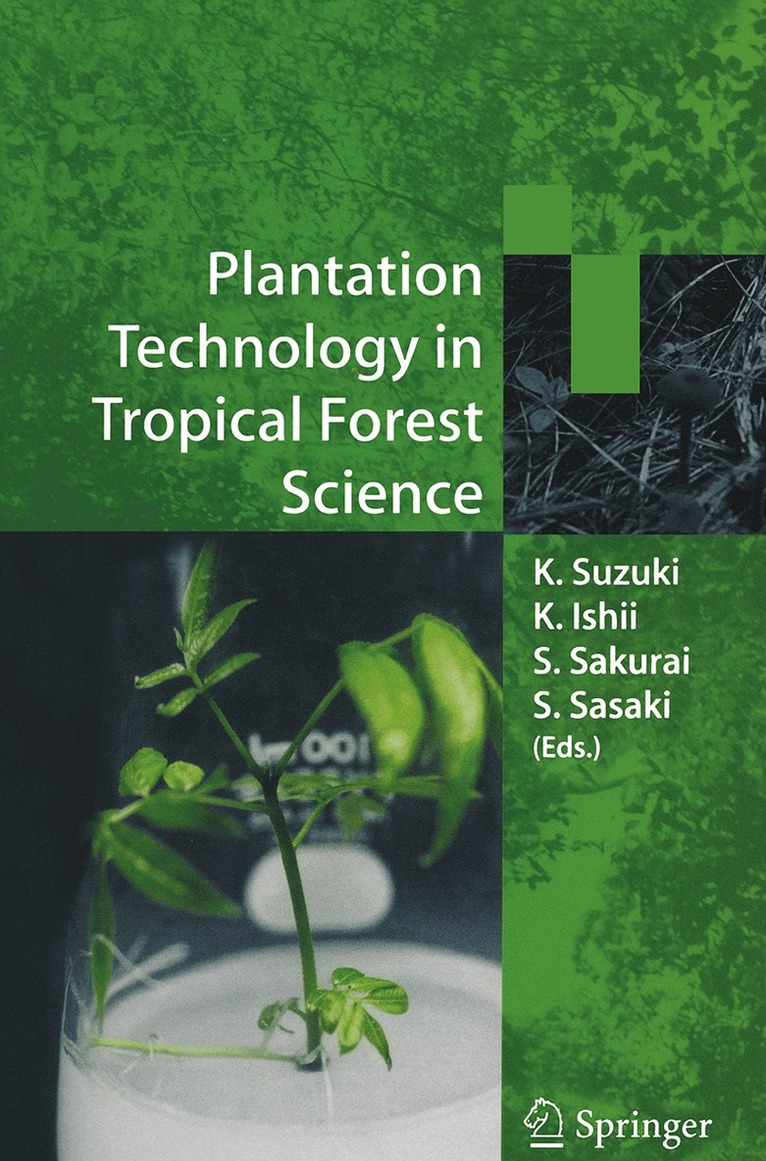
This book is intended to be a record of the Biotechnology-Assisted Re/Afforestation Project in the Asia-Pacific Region (BIO-REFOR) since 1992, conducted in coop eration with the International Union of Forest Research Organizations (lUFRO). The purpose of the project is to promote exchanges of information of fundamental research on indigenous species in the Asia-Pacific Region in order to restore natural forests. The production, cultivation, and maintenance of forest tree species provide highly sustainable production systems that conserve soils, the microenvironment, and biodiversity The key technology for biomass production of forests is propagation via micropropagation or traditional propagation. However, there are many recalci trant species among useful forest trees to be propagated in large numbers. Recent advances in mycorrhizal technology and in vitro culture have made it possible to commercially propagate useful trees for re/afforestation. In this book, comprehensive information is provided on propagation, mycor rhizal inoculation, and reforestation of economically and environmentally impor tant forest trees, information that usually is available only in widely scattered re sources. Here, we include a wide area of the ecology and physiology of dipterocarps as a general overview, and then cover propagation techniques, mycorrhizal symbio sis, man-made forests, and biodiversity in the Asia-Pacific region.