S Usha – författare
Visar alla böcker från författaren . Handla med fri frakt och snabb leverans.
5 produkter
5 produkter
Inbunden, Engelska, 2026
2 292 kr
Kommande
The rapid growth of complex computational tasks in such areas as Artificial Intelligence, machine and deep learning, Big Data analytics, Internet of Things, blockchain, and edge/fog computing demands architectural advancements in computing systems. Traditional single-core, low-power architectures are insufficient to meet modern requirements for scalability, compatibility, performance, efficiency, and security. Multi-core processors, such specialized architecture as GPUs, and emerging designs like RISC-V and ARM have become essential for handling heavy workloads while maintaining energy efficiency.Computer Architecture and Organization for Distributed and Intelligent Systems covers this new generation of computer architecture. The book provides a broad contextual overview of how modern computing paradigms are evolving to handle increasing complexity, data volumes, and connectivity demands, setting the stage for detailed discussions on CPU architectures, memory systems, distributed computing, cloud and data-driven processing, Internet of Everything (IoE), blockchain, bio-inspired intelligence, and quantum computing. It also addresses increasing concerns about data security and providing timely firmware and software updates, enabling CPUs to adapt, safeguard information, and enhance performance.Another challenge the book addresses is low-powered architecture with a limited core, which is inadequate for the heavy workloads these fields demand. To overcome this limitation, the text covers such modern solutions as GPUs for deep learning, RISC-V for open and customizable designs, and ARM architectures for energy-efficient performance. The book also looks at the critical function of memory in advanced computer architecture. It discusses how internal memory (e.g., cache and registers), external memory (e.g., hard disks and SSDs), and virtual memory each support the system differently. Delving into distributed memory systems, the book explains why message passing becomes key for data sharing and why ensuring data consistency, reducing latency, and optimizing data locality for performance are such challenges. To conclude its examination of the evolution and transformation of computer organization and architecture, the book peeks into the next generation architecture.
Del 737 - Lecture Notes in Civil Engineering
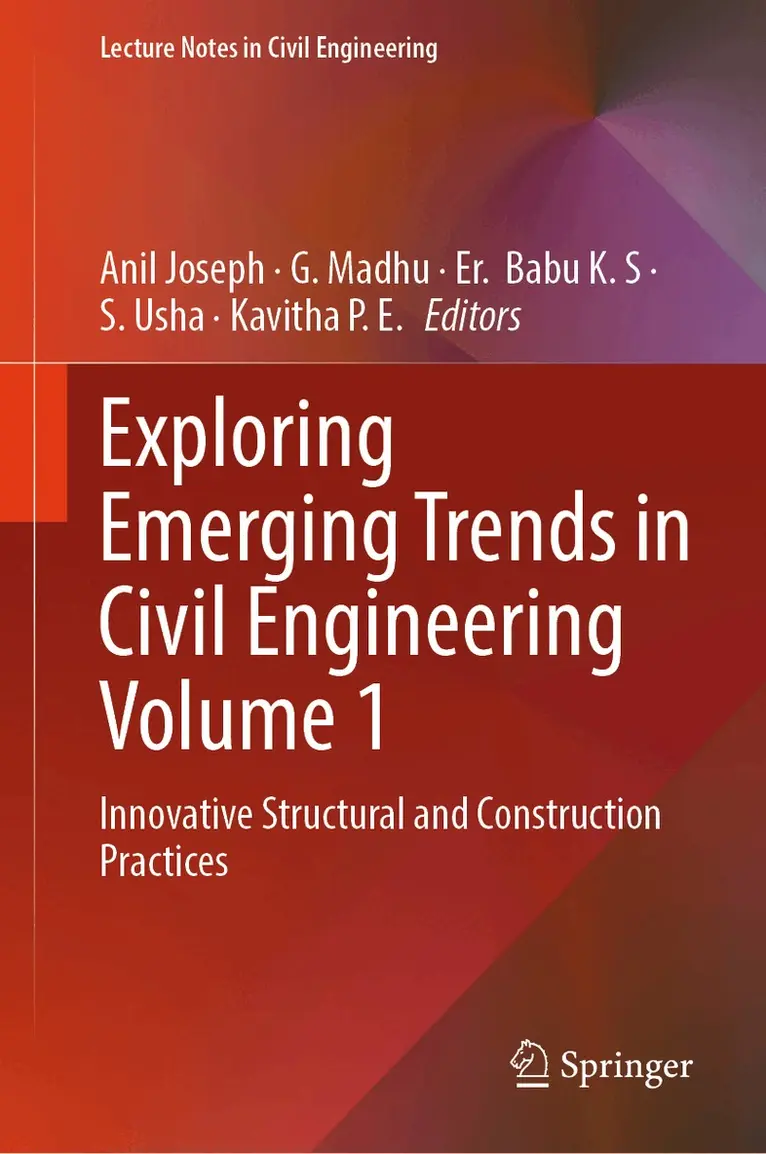
Exploring Emerging Trends in Civil Engineering Volume 1
Innovative Structural and Construction Practices
Inbunden, Engelska, 2025
4 071 kr
Skickas inom 10-15 vardagar
This national convention on engineering topics will explore the dynamic shifts and emerging trends that are reshaping civil engineering,emphasizing their vital role in developing safer, more efficient, and sustainable infrastructure. Our focus willspan several transformative innovations, beginning with the integration of 3D printing and robotics inconstruction. These technologies are revolutionizing the field by enhancing productivity, slashing labor costs,and improving safety through automated processes and the ability to produce complex structures. Theconvention will also highlight the increasing importance of resilience in our infrastructure, a response to themore frequent natural disasters driven by climate change. Today’s civil engineers integrate considerations ofthese changes in their designs to construct buildings and structures that withstand and adapt to theseevolving conditions. Sustainability remains a crucial theme, driven by the urgent need for environmentalconservation and the realities of climate change. Our discussions will delve into green engineering practices,such as the use of eco-friendly materials, waste minimization, and the design of energy-efficient buildings.Innovations like Geopolymer technology offer rapid strength gain and reduced water use, presenting asustainable alternative to traditional concrete. Similarly, Bacterial Concrete represents a breakthrough inenhancing the durability and reducing the maintenance costs of concrete structures while lowering carbonemissions. The convention will also examine the role of advanced technologies like Cartography, remotesensing, and GIS applications, which are transforming our understanding and representation of the world,pushing the boundaries of traditional cartography into new digital frontiers. Additionally, modular constructionwill be discussed as a key contributor to efficiency, waste reduction, and quality in building processes,especially in its potential to address the critical needs for affordable housing and sustainable urban development. Furthermore, the financial benefits of retrofitting, which reduces energy consumption and offerssignificant cost savings, will be explored, showcasing its attractiveness and positive return on investmentover time. This convention is not just an event, but a call to action for civil engineering professionals toembrace these innovations, stay informed of cutting-edge developments, and play a pivotal role in crafting asafer, more efficient, and sustainable built environment. Join us as we leverage these trends to propel theindustry forward, ensuring our built environment can meet the demands of tomorrow.
E-bok
Engelska, 20255 213 kr
Läs direkt efter köp
This national convention on engineering topics will explore the dynamic shifts and emerging trends that are reshaping civil engineering,emphasizing their vital role in developing safer, more efficient, and sustainable infrastructure. Our focus willspan several transformative innovations, beginning with the integration of 3D printing and robotics inconstruction. These technologies are revolutionizing the field by enhancing productivity, slashing labor costs,and improving safety through automated processes and the ability to produce complex structures. Theconvention will also highlight the increasing importance of resilience in our infrastructure, a response to themore frequent natural disasters driven by climate change. Today’s civil engineers integrate considerations ofthese changes in their designs to construct buildings and structures that withstand and adapt to theseevolving conditions. Sustainability remains a crucial theme, driven by the urgent need for environmentalconservation and the realities of climate change. Our discussions will delve into green engineering practices,such as the use of eco-friendly materials, waste minimization, and the design of energy-efficient buildings.Innovations like Geopolymer technology offer rapid strength gain and reduced water use, presenting asustainable alternative to traditional concrete. Similarly, Bacterial Concrete represents a breakthrough inenhancing the durability and reducing the maintenance costs of concrete structures while lowering carbonemissions. The convention will also examine the role of advanced technologies like Cartography, remotesensing, and GIS applications, which are transforming our understanding and representation of the world,pushing the boundaries of traditional cartography into new digital frontiers. Additionally, modular constructionwill be discussed as a key contributor to efficiency, waste reduction, and quality in building processes,especially in its potential to address the critical needs for affordable housing and sustainable urban development. Furthermore, the financial benefits of retrofitting, which reduces energy consumption and offerssignificant cost savings, will be explored, showcasing its attractiveness and positive return on investmentover time. This convention is not just an event, but a call to action for civil engineering professionals toembrace these innovations, stay informed of cutting-edge developments, and play a pivotal role in crafting asafer, more efficient, and sustainable built environment. Join us as we leverage these trends to propel theindustry forward, ensuring our built environment can meet the demands of tomorrow.
Del 738 - Lecture Notes in Civil Engineering
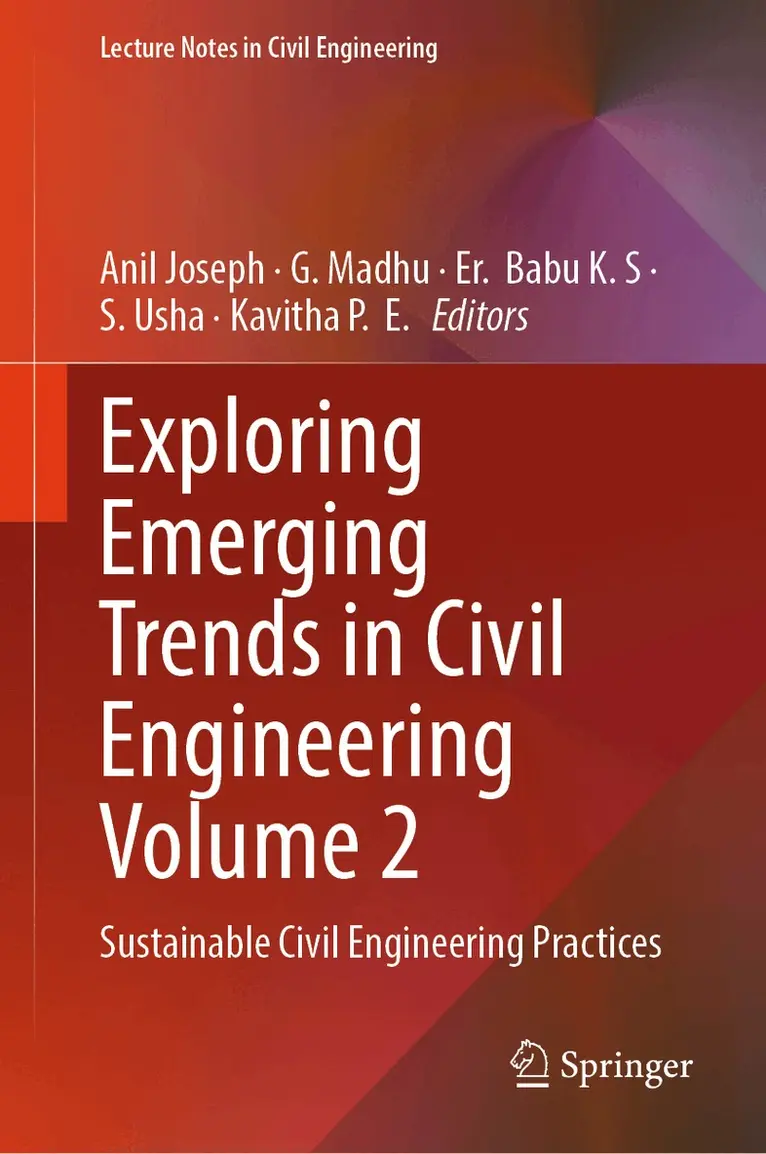
Exploring Emerging Trends in Civil Engineering Volume 2
Sustainable Civil Engineering Practices
Inbunden, Engelska, 2025
4 071 kr
Skickas inom 10-15 vardagar
This national convention on engineering topics will explore the dynamic shifts and emerging trends that are reshaping civil engineering,emphasizing their vital role in developing safer, more efficient, and sustainable infrastructure. Our focus willspan several transformative innovations, beginning with the integration of 3D printing and robotics inconstruction. These technologies are revolutionizing the field by enhancing productivity, slashing labor costs,and improving safety through automated processes and the ability to produce complex structures. The convention will also highlight the increasing importance of resilience in our infrastructure, a response to themore frequent natural disasters driven by climate change. Today’s civil engineers integrate considerations ofthese changes in their designs to construct buildings and structures that withstand and adapt to theseevolving conditions. Sustainability remains a crucial theme, driven by the urgent need for environmentalconservation and the realities of climate change. Our discussions will delve into green engineering practices,such as the use of eco-friendly materials, waste minimization, and the design of energy-efficient buildings.Innovations like Geopolymer technology offer rapid strength gain and reduced water use, presenting asustainable alternative to traditional concrete. Similarly, Bacterial Concrete represents a breakthrough inenhancing the durability and reducing the maintenance costs of concrete structures while lowering carbonemissions. The convention will also examine the role of advanced technologies like Cartography, remotesensing, and GIS applications, which are transforming our understanding and representation of the world,pushing the boundaries of traditional cartography into new digital frontiers. Additionally, modular constructionwill be discussed as a key contributor to efficiency, waste reduction, and quality in building processes,especially in its potential to address the critical needs for affordable housing and sustainable urban development. Furthermore, the financial benefits of retrofitting, which reduces energy consumption and offerssignificant cost savings, will be explored, showcasing its attractiveness and positive return on investmentover time. This convention is not just an event, but a call to action for civil engineering professionals toembrace these innovations, stay informed of cutting-edge developments, and play a pivotal role in crafting asafer, more efficient, and sustainable built environment. Join us as we leverage these trends to propel theindustry forward, ensuring our built environment can meet the demands of tomorrow.
E-bok
Engelska, 20255 213 kr
Läs direkt efter köp
This national convention on engineering topics will explore the dynamic shifts and emerging trends that are reshaping civil engineering,emphasizing their vital role in developing safer, more efficient, and sustainable infrastructure. Our focus willspan several transformative innovations, beginning with the integration of 3D printing and robotics inconstruction. These technologies are revolutionizing the field by enhancing productivity, slashing labor costs,and improving safety through automated processes and the ability to produce complex structures. The convention will also highlight the increasing importance of resilience in our infrastructure, a response to themore frequent natural disasters driven by climate change. Today’s civil engineers integrate considerations ofthese changes in their designs to construct buildings and structures that withstand and adapt to theseevolving conditions. Sustainability remains a crucial theme, driven by the urgent need for environmentalconservation and the realities of climate change. Our discussions will delve into green engineering practices,such as the use of eco-friendly materials, waste minimization, and the design of energy-efficient buildings.Innovations like Geopolymer technology offer rapid strength gain and reduced water use, presenting asustainable alternative to traditional concrete. Similarly, Bacterial Concrete represents a breakthrough inenhancing the durability and reducing the maintenance costs of concrete structures while lowering carbonemissions. The convention will also examine the role of advanced technologies like Cartography, remotesensing, and GIS applications, which are transforming our understanding and representation of the world,pushing the boundaries of traditional cartography into new digital frontiers. Additionally, modular constructionwill be discussed as a key contributor to efficiency, waste reduction, and quality in building processes,especially in its potential to address the critical needs for affordable housing and sustainable urban development. Furthermore, the financial benefits of retrofitting, which reduces energy consumption and offerssignificant cost savings, will be explored, showcasing its attractiveness and positive return on investmentover time. This convention is not just an event, but a call to action for civil engineering professionals toembrace these innovations, stay informed of cutting-edge developments, and play a pivotal role in crafting asafer, more efficient, and sustainable built environment. Join us as we leverage these trends to propel theindustry forward, ensuring our built environment can meet the demands of tomorrow.