Saber Elsayed - Böcker
Visar alla böcker från författaren Saber Elsayed. Handla med fri frakt och snabb leverans.
4 produkter
4 produkter
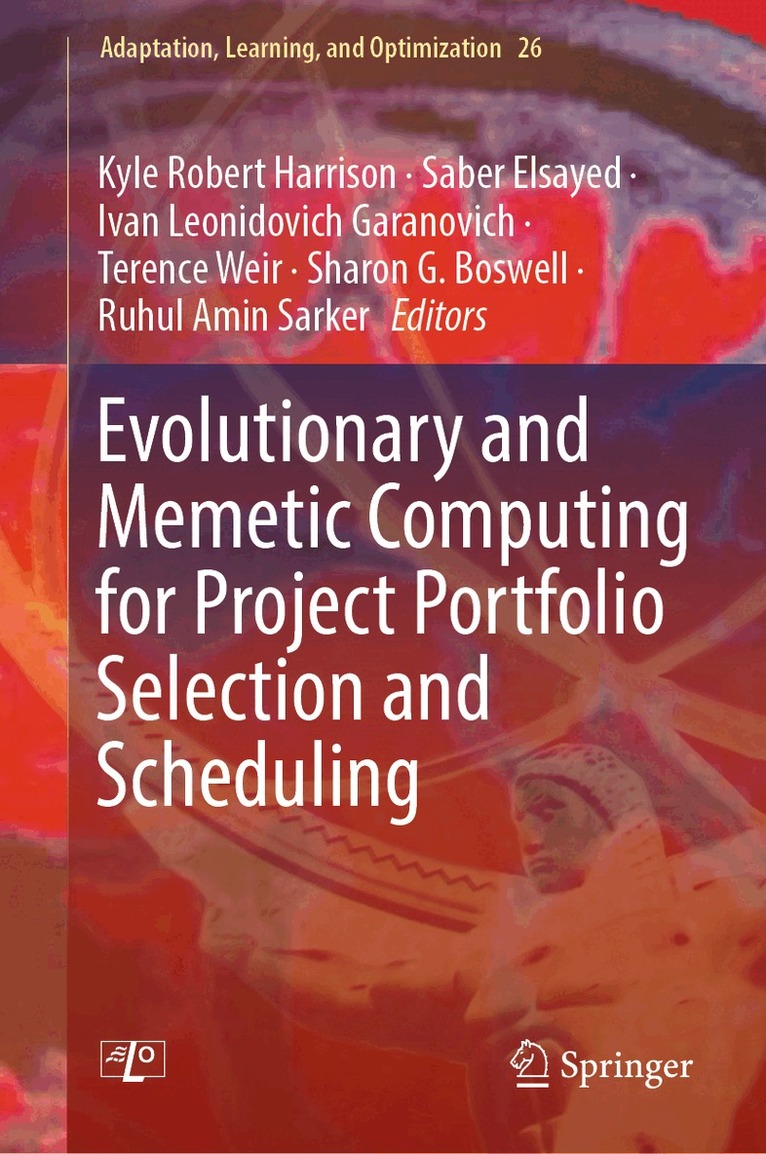
Evolutionary and Memetic Computing for Project Portfolio Selection and Scheduling
Inbunden, Engelska, 2021
1 630 kr
Skickas inom 10-15 vardagar
This book consists of eight chapters, authored by distinguished researchers and practitioners, that highlight the state of the art and recent trends in addressing the project portfolio selection and scheduling problem (PPSSP) across a variety of domains, particularly defense, social programs, supply chains, and finance. Many organizations face the challenge of selecting and scheduling a subset of available projects subject to various resource and operational constraints. In the simplest scenario, the primary objective for an organization is to maximize the value added through funding and implementing a portfolio of projects, subject to the available budget. However, there are other major difficulties that are often associated with this problem such as qualitative project benefits, multiple conflicting objectives, complex project interdependencies, workforce and manufacturing constraints, and deep uncertainty regarding project costs, benefits, and completion times.It is well known that the PPSSP is an NP-hard problem and, thus, there is no known polynomial-time algorithm for this problem. Despite the complexity associated with solving the PPSSP, many traditional approaches to this problem make use of exact solvers. While exact solvers provide definitive optimal solutions, they quickly become prohibitively expensive in terms of computation time when the problem size is increased. In contrast, evolutionary and memetic computing afford the capability for autonomous heuristic approaches and expert knowledge to be combined and thereby provide an efficient means for high-quality approximation solutions to be attained. As such, these approaches can provide near real-time decision support information for portfolio design that can be used to augment and improve existing human-centric strategic decision-making processes. This edited book provides the reader with a broad overview of the PPSSP, its associated challenges, and approaches to addressing the problem using evolutionary and memetic computing.
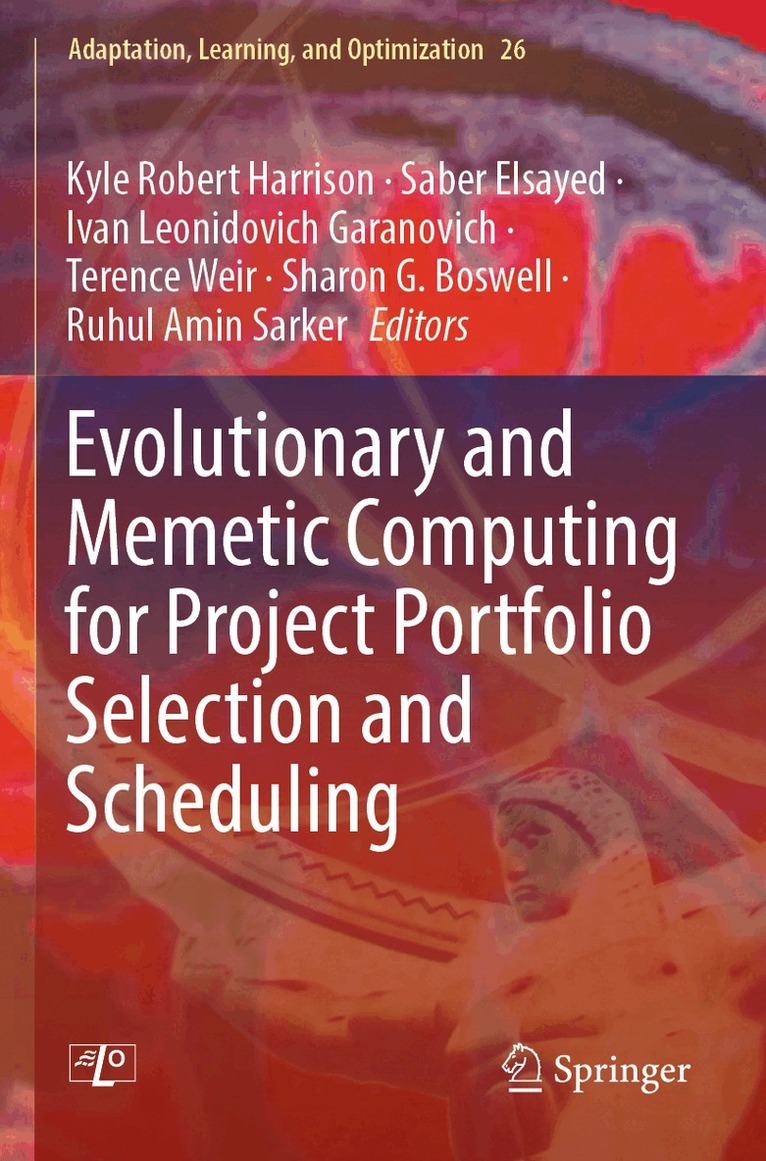
Evolutionary and Memetic Computing for Project Portfolio Selection and Scheduling
Häftad, Engelska, 2022
1 630 kr
Skickas inom 10-15 vardagar
This book consists of eight chapters, authored by distinguished researchers and practitioners, that highlight the state of the art and recent trends in addressing the project portfolio selection and scheduling problem (PPSSP) across a variety of domains, particularly defense, social programs, supply chains, and finance. Many organizations face the challenge of selecting and scheduling a subset of available projects subject to various resource and operational constraints. In the simplest scenario, the primary objective for an organization is to maximize the value added through funding and implementing a portfolio of projects, subject to the available budget. However, there are other major difficulties that are often associated with this problem such as qualitative project benefits, multiple conflicting objectives, complex project interdependencies, workforce and manufacturing constraints, and deep uncertainty regarding project costs, benefits, and completion times.It is well known that the PPSSP is an NP-hard problem and, thus, there is no known polynomial-time algorithm for this problem. Despite the complexity associated with solving the PPSSP, many traditional approaches to this problem make use of exact solvers. While exact solvers provide definitive optimal solutions, they quickly become prohibitively expensive in terms of computation time when the problem size is increased. In contrast, evolutionary and memetic computing afford the capability for autonomous heuristic approaches and expert knowledge to be combined and thereby provide an efficient means for high-quality approximation solutions to be attained. As such, these approaches can provide near real-time decision support information for portfolio design that can be used to augment and improve existing human-centric strategic decision-making processes. This edited book provides the reader with a broad overview of the PPSSP, its associated challenges, and approaches to addressing the problem using evolutionary and memetic computing.
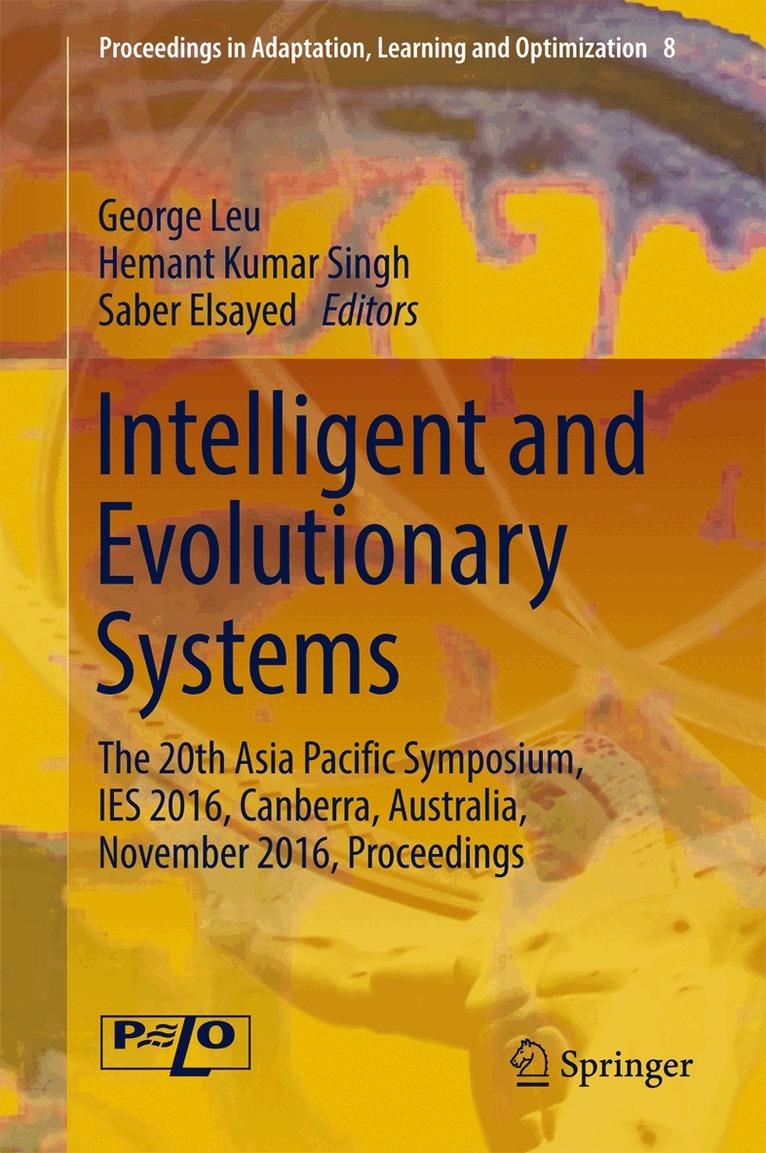
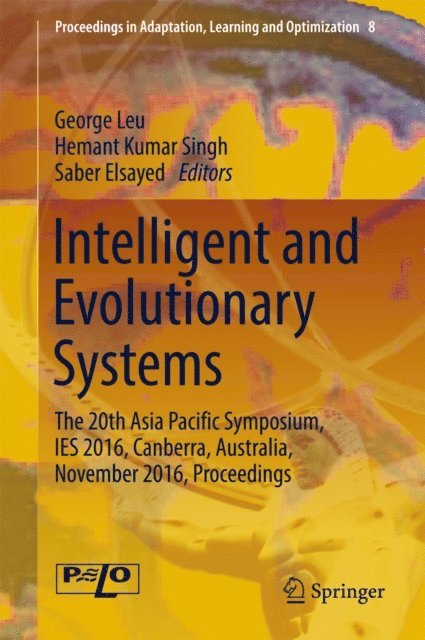
Intelligent and Evolutionary Systems
The 20th Asia Pacific Symposium, IES 2016, Canberra, Australia, November 2016, Proceedings
Inbunden, Engelska, 2016
2 181 kr
Skickas inom 10-15 vardagar
Over the last two decades the field of Intelligent Systems delivered to human kind significant achievements, while also facing major transformations. 20 years ago, automation and knowledge-based AI were still the dominant paradigms fueling the efforts of both researchers and practitioners. Later, 10 years ago, statistical machine intelligence was on the rise, heavily supported by the digital computing, and led to the unprecedented advances in and dependence on digital technology. However, the resultant intelligent systems remained designer-based endeavors and thus, were limited in their true learning and development abilities. Today, the challenge is to have in placeintelligent systems that can develop themselves on behalf of their creators, and gain abilities with no or limited supervision in the tasks they are meant to perform. Cognitive development systems, and the supporting cognitive computing are on the rise today, promising yet other significant achievements for the future of human kind.This book captures this unprecedented evolution of the field of intelligent systems, presenting a compilation of studies that covers all research directions in the field over the last two decades, offering to the reader a broad view over the field, while providing a solid foundation from which outstanding new ideas may emerge.
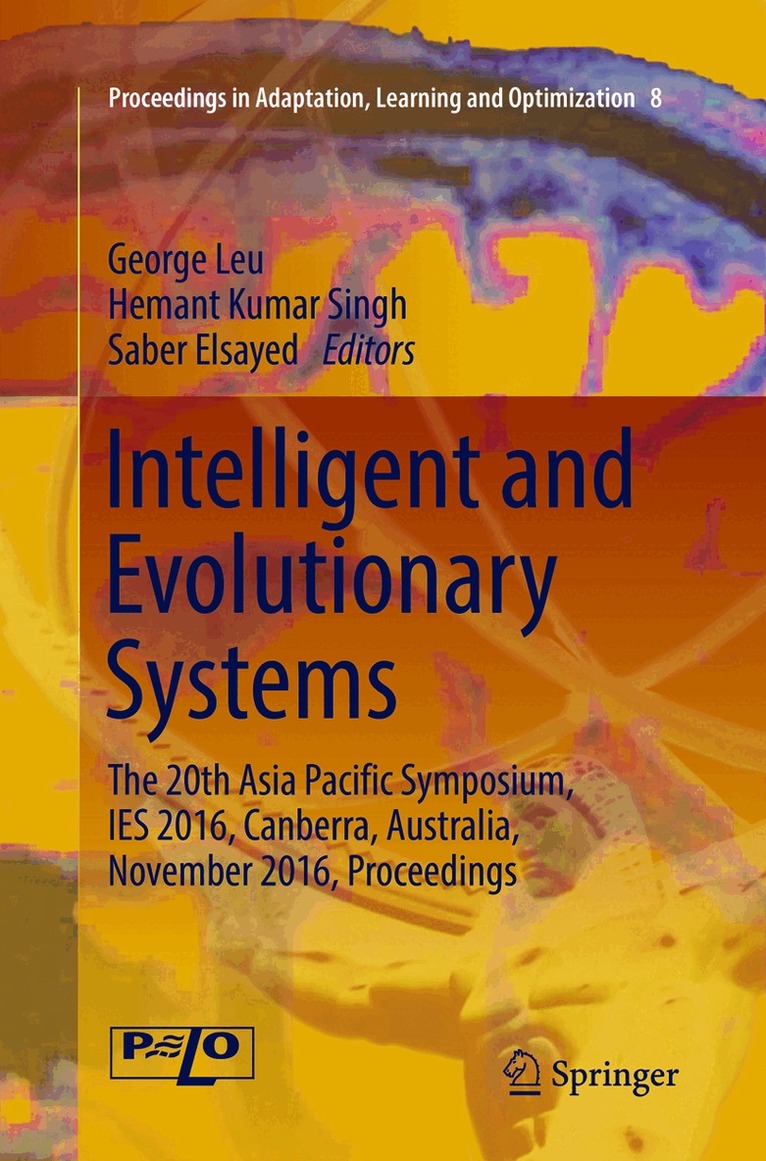
Intelligent and Evolutionary Systems
The 20th Asia Pacific Symposium, IES 2016, Canberra, Australia, November 2016, Proceedings
Häftad, Engelska, 2018
2 170 kr
Skickas inom 10-15 vardagar
Over the last two decades the field of Intelligent Systems delivered to human kind significant achievements, while also facing major transformations. 20 years ago, automation and knowledge-based AI were still the dominant paradigms fueling the efforts of both researchers and practitioners. Later, 10 years ago, statistical machine intelligence was on the rise, heavily supported by the digital computing, and led to the unprecedented advances in and dependence on digital technology. However, the resultant intelligent systems remained designer-based endeavors and thus, were limited in their true learning and development abilities. Today, the challenge is to have in placeintelligent systems that can develop themselves on behalf of their creators, and gain abilities with no or limited supervision in the tasks they are meant to perform. Cognitive development systems, and the supporting cognitive computing are on the rise today, promising yet other significant achievements for the future of human kind.This book captures this unprecedented evolution of the field of intelligent systems, presenting a compilation of studies that covers all research directions in the field over the last two decades, offering to the reader a broad view over the field, while providing a solid foundation from which outstanding new ideas may emerge.