Sabine Schmolinsky – författare
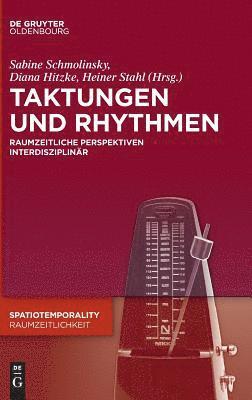
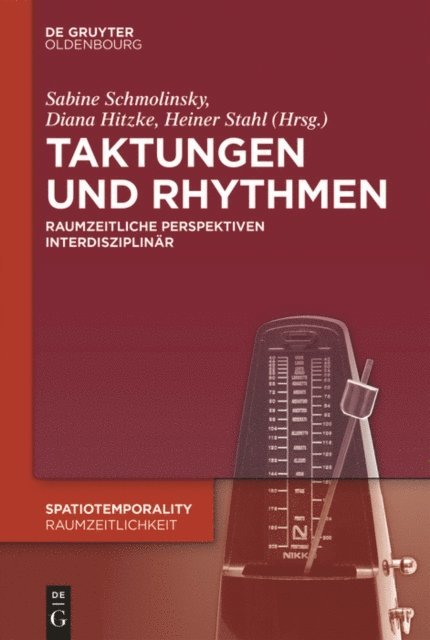
Taktungen und Rhythmen
1 045 kr
Skickas inom 5-8 vardagar
1 053 kr
Läs direkt efter köp
Welches Potential besitzt der Begriff Rhythmus, um die Verzahnung von Raum und Zeit konzeptionell zu erfassen? Dieser Frage nähern sich die interdisziplinären Beiträge über Saisonalität und Rhythmus, über Verkehr, Transport und Logistik, über Rhythmus und Zeit sowie Musik und Raum. Theoretischer Ausgangspunkt ist das Konzept der Rhythmusanalyse des französischen Soziologen Henri Lefebvre.
1 053 kr
Läs direkt efter köp
Welches Potential besitzt der Begriff Rhythmus, um die Verzahnung von Raum und Zeit konzeptionell zu erfassen? Dieser Frage nähern sich die interdisziplinären Beiträge über Saisonalität und Rhythmus, über Verkehr, Transport und Logistik, über Rhythmus und Zeit sowie Musik und Raum. Theoretischer Ausgangspunkt ist das Konzept der Rhythmusanalyse des französischen Soziologen Henri Lefebvre.
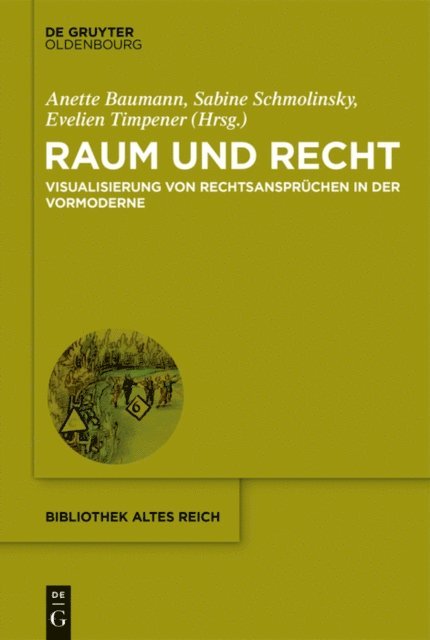
Raum Und Recht
Visualisierung Von Rechtsansprüchen in Der Vormoderne
984 kr
Skickas inom 5-8 vardagar
1 025 kr
Läs direkt efter köp
Der Tagungsband geht von der Beobachtung aus, dass der Raum in der Vormoderne nicht nur textuell beschrieben, sondern auch mit performativen Praktiken in Augenschein genommen und abgebildet wurde. Bei den Abbildungen handelt es sich um Visualisierungen des beanspruchten Raums, anschaulich gemachte Inaugenscheinnahmen und bildlich dargestellte Augenzeugenschaft. Wie wurden rechtliche Verhältnisse kartographiert? Diese zentrale Frage hat eine europäische Perspektive, die uns nach Entwicklungen und Einflüssen fragen lässt. Die Untersuchung gilt einerseits den Objekten der Raumdarstellung – wie Karten, Gemälden und Skizzen – andererseits den mit ihnen sich verbindenden performativen Praktiken.
Der Band enthält eine englische Übersetzung der Einleitung und einen Ausblick in die zukünftige Dokumentation von historischen Karten.
1 306 kr
Skickas inom 3-6 vardagar
1 014 kr
Läs direkt efter köp
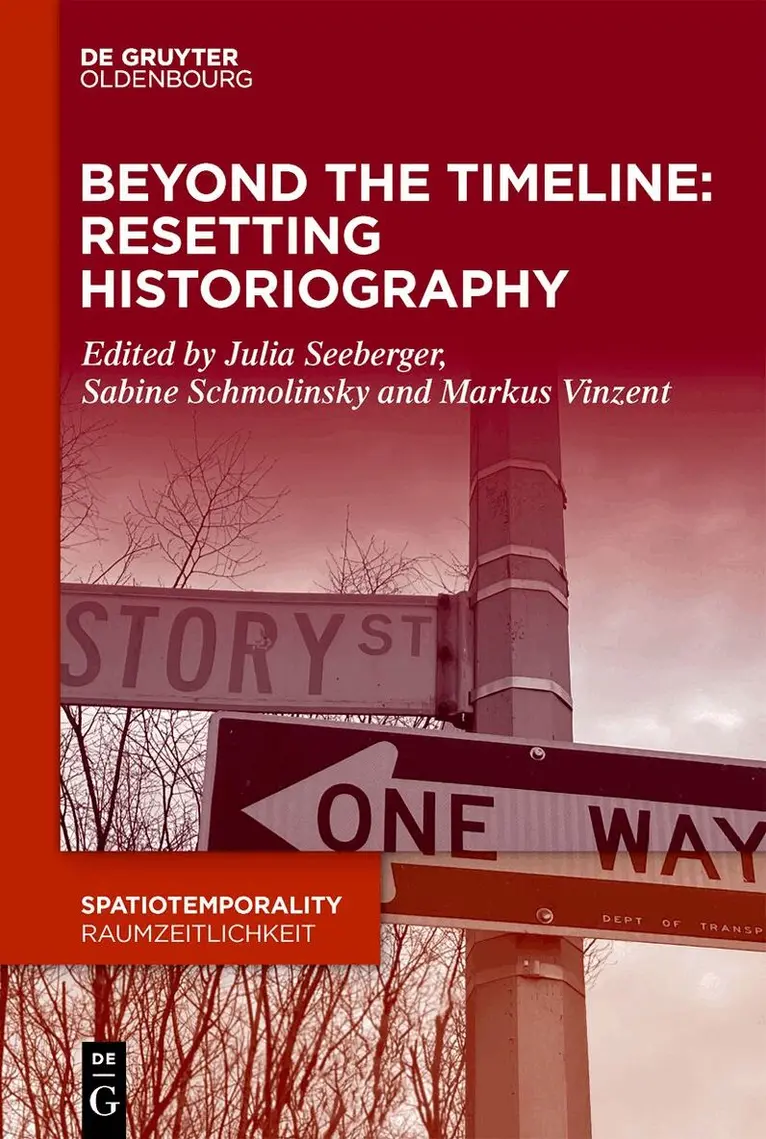
Different from literary works (prose, drama etc.) with techniques like montage and contemporary media (film, documentaries, video games, internet) where time-lines are being questioned through flashbacks and flashwords, historiography seems to have resisted such challenges. Most historiographical works (biographies, scholarly studies) still adhere to chronological narratives, even though the boundaries between history and literary fiction have been blurred over the past decades.
Responding to 20th/21st c. attempts like Walter Benjamin’s prophetic historian, this volume asks: How to write history without following the chronologically oriented trajectory of time? The interdisciplinary contributions from a broad range of history (medieval, modern, music, sciences), sociology, life sciences, genocide research go back to a symposium that responded to a publication of Markus Vinzent (Writing the History of Early Christianity. From Reception to Retrospection of 2019, Cambridge University Press). The scholars engage with the idea of retrospection as a method of critical historiography.
Writing retrospectively is not simply a matter of presentism, reversing chronology, it disrupts continuities and teleologies and opens creative futures.

1 005 kr
Läs direkt efter köp
Different from literary works (prose, drama etc.) with techniques like montage and contemporary media (film, documentaries, video games, internet) where time-lines are being questioned through flashbacks and flashwords, historiography seems to have resisted such challenges. Most historiographical works (biographies, scholarly studies) still adhere to chronological narratives, even though the boundaries between history and literary fiction have been blurred over the past decades.
Responding to 20th/21st c. attempts like Walter Benjamin’s prophetic historian, this volume asks: How to write history without following the chronologically oriented trajectory of time? The interdisciplinary contributions from a broad range of history (medieval, modern, music, sciences), sociology, life sciences, genocide research go back to a symposium that responded to a publication of Markus Vinzent (Writing the History of Early Christianity. From Reception to Retrospection of 2019, Cambridge University Press). The scholars engage with the idea of retrospection as a method of critical historiography.
Writing retrospectively is not simply a matter of presentism, reversing chronology, it disrupts continuities and teleologies and opens creative futures.