Säde Hormio - Böcker
Visar alla böcker från författaren Säde Hormio. Handla med fri frakt och snabb leverans.
5 produkter
5 produkter
674 kr
Skickas inom 10-15 vardagar
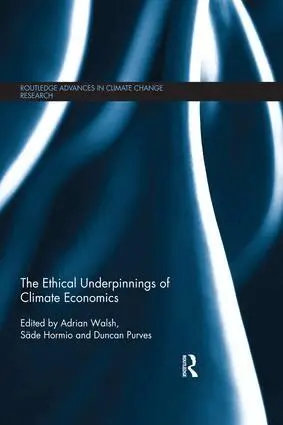
Despite their obvious importance, the ethical implications of climate change are often neglected in economic evaluations of mitigation and adaptation policies. Economic climate models provide estimates of the value of mitigation benefits, provide understanding of the costs of reducing emissions, and develop tools for making policy choices under uncertainty. They have thus offered theoretical and empirical instruments for the design and implementation of a range of climate policies, but the ethical assumptions included in the calculations are usually left unarticulated. This book, which brings together scholars from both economics and ethical theory, explores the interrelation between climate ethics and economics. Examining a wide range of topics including sustainability, conceptions of value, risk management and the monetization of harm, the book will explore the ethical limitations of economic analysis but will not assume that economic theory cannot accommodate the concerns raised. The aim in part is to identify ethical shortcomings of economic analysis and to propose solutions. Given the on-going role of economics in government thinking on mitigation, a constructive approach is vital if we are to deal adequately with climate change.This volume will be of great interest to students and scholars of environmental ethics, economics, political science, political philosophy and the philosophy of economics.
2 165 kr
Skickas inom 10-15 vardagar
Despite their obvious importance, the ethical implications of climate change are often neglected in economic evaluations of mitigation and adaptation policies. Economic climate models provide estimates of the value of mitigation benefits, provide understanding of the costs of reducing emissions, and develop tools for making policy choices under uncertainty. They have thus offered theoretical and empirical instruments for the design and implementation of a range of climate policies, but the ethical assumptions included in the calculations are usually left unarticulated. This book, which brings together scholars from both economics and ethical theory, explores the interrelation between climate ethics and economics. Examining a wide range of topics including sustainability, conceptions of value, risk management and the monetization of harm, the book will explore the ethical limitations of economic analysis but will not assume that economic theory cannot accommodate the concerns raised. The aim in part is to identify ethical shortcomings of economic analysis and to propose solutions. Given the on-going role of economics in government thinking on mitigation, a constructive approach is vital if we are to deal adequately with climate change.This volume will be of great interest to students and scholars of environmental ethics, economics, political science, political philosophy and the philosophy of economics.
1 175 kr
Skickas inom 10-15 vardagar
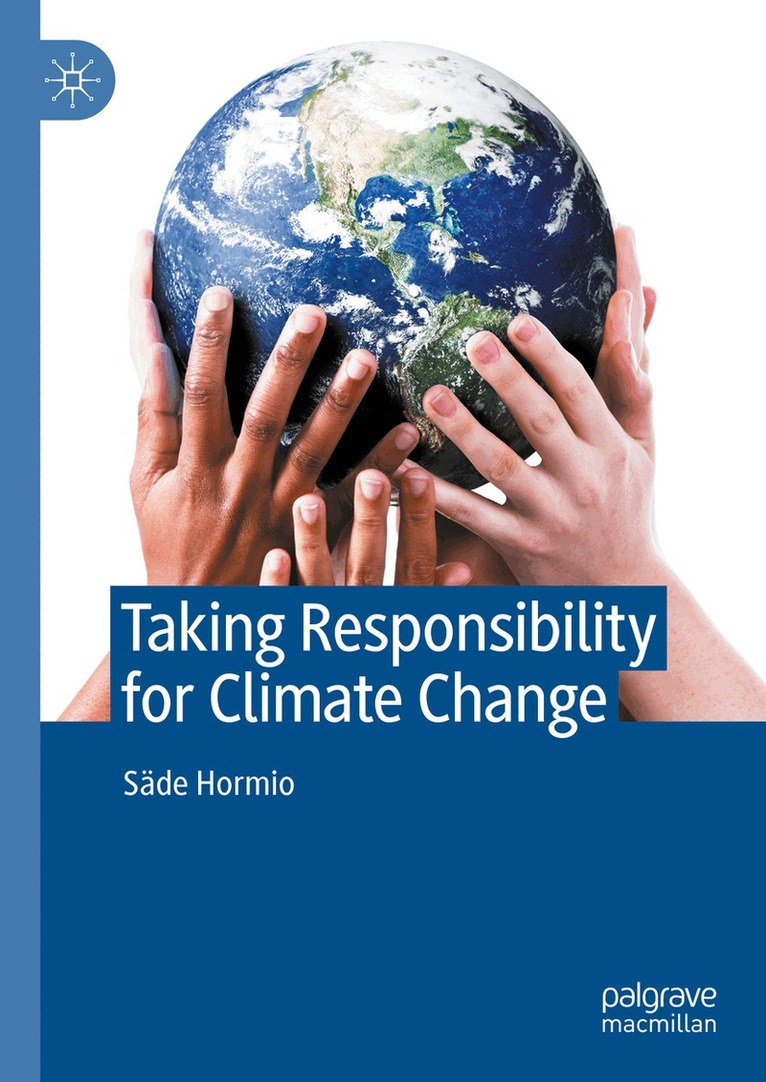
This book proposes that it is not only states and international bodies that have a responsibility to take action toward mitigating climate change. Other collective agents, such as corporations, need to also come onboard. Additionally, the book argues that climate change is not solely a problem for collective agents, but also for individuals, as they are members of collectives and groups of several kinds. Therefore, framing climate change responsibility exclusively from either the collective or the individual perspective leaves out something crucial: how we all are influenced by the collectives we belong to and how, in turn, collectives are influenced by individuals. The focus of the book is on areas of climate change responsibility that are often left out of the picture or get too little attention in climate ethics, such as carbon inequality within countries. But why should any theoretical arguments about normative issues matter when we have a real-life climate crisis on our hands? Säde Hormio argues that ethical arguments have an important role in setting climate policy: they can highlight what values are at stake and help ground normative arguments in public deliberations.
1 175 kr
Skickas inom 10-15 vardagar
This book proposes that it is not only states and international bodies that have a responsibility to take action toward mitigating climate change. Other collective agents, such as corporations, need to also come onboard. Additionally, the book argues that climate change is not solely a problem for collective agents, but also for individuals, as they are members of collectives and groups of several kinds. Therefore, framing climate change responsibility exclusively from either the collective or the individual perspective leaves out something crucial: how we all are influenced by the collectives we belong to and how, in turn, collectives are influenced by individuals. The focus of the book is on areas of climate change responsibility that are often left out of the picture or get too little attention in climate ethics, such as carbon inequality within countries. But why should any theoretical arguments about normative issues matter when we have a real-life climate crisis on our hands? Säde Hormio argues that ethical arguments have an important role in setting climate policy: they can highlight what values are at stake and help ground normative arguments in public deliberations.
Collective Responsibility
Perspectives on Political Philosophy from Social Ontology
Inbunden, Engelska, 2024
1 387 kr
Skickas inom 10-15 vardagar
Individual chapters address issues such as the relationship between collective obligations and collective responsibility, the kinds of groups which can be the subjects of collective responsibility and obligations, and the relationship between the obligations of groups and the obligations of individual members of those groups.