
Saily Tanja Saily – författare
Visar alla böcker från författaren Saily Tanja Saily. Handla med fri frakt och snabb leverans.
2 produkter
2 produkter
E-bok
Engelska, 20171 384 kr
Läs direkt efter köp
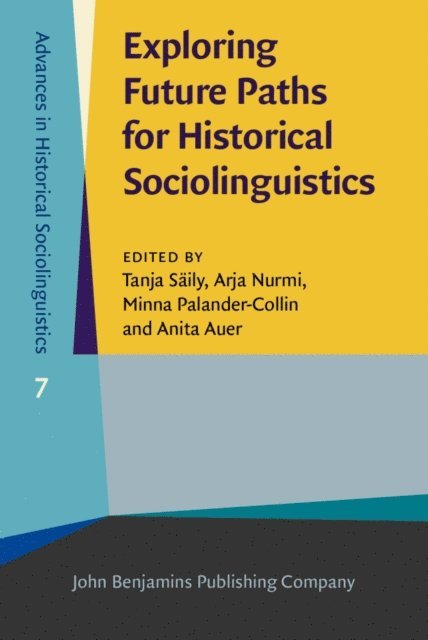
This volume explores potential paths in historical sociolinguistics, with a particular focus on the inter-related areas of methodological innovations, hitherto un- or under-explored textual resources, and theoretical advancements and challenges. The individual chapters cover Dutch, Finnish and different varieties of English and are based on data spanning from the fifteenth century to the present day. Paying tribute to Terttu Nevalainen's pioneering work, the book highlights the wide range and complexity of the field of historical sociolinguistics and presents achievements and challenges of interdisciplinary collaboration. The book is of interest to a wide readership, ranging from scholars of historical linguistics, sociolinguistics, corpus linguistics and digital humanities to (advanced) graduate and postgraduate students in courses on language variation and change.
E-bok
PDF, Engelska, 20111 305 kr
Läs direkt efter köp
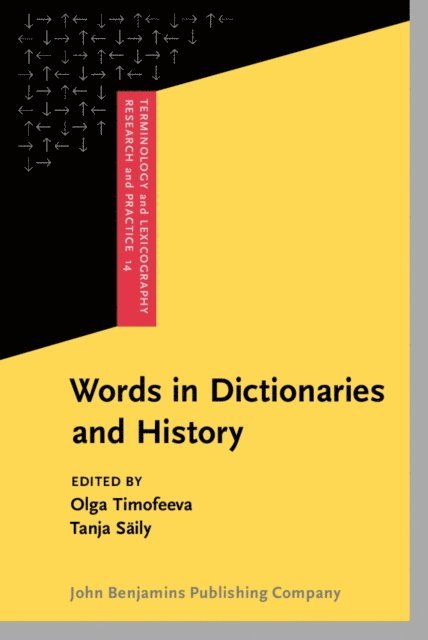
Bringing together fifteen articles by scholars in Europe and North America, this collection aims to represent and advance studies in historical lexis. It highlights the significance of the understanding of dictionary-making and language-making as important socio-cultural phenomena. With its general focus on England and English, the book investigates the reception and development of historical and modern English vocabulary and culture in different periods, social and professional strata, geographical varieties of English, and other national cultures. The volume is based on individual (meta)lexicographical, etymological, lexicosemantic and corpus studies, representing two large areas of research: the first part focuses on the history of dictionaries, analysing them in diachrony from the first professional dictionaries of the Baroque period via Enlightenment and Romanticism to exploring the possibilities of the new online lexicographical publications; and the second part looks at the interfaces between etymology, semantic development and word-formation on the one hand, and changes in society and culture on the other.