Sajjad Rizvi – författare
Visar alla böcker från författaren Sajjad Rizvi. Handla med fri frakt och snabb leverans.
4 produkter
4 produkter
1 162 kr
Skickas inom 5-8 vardagar
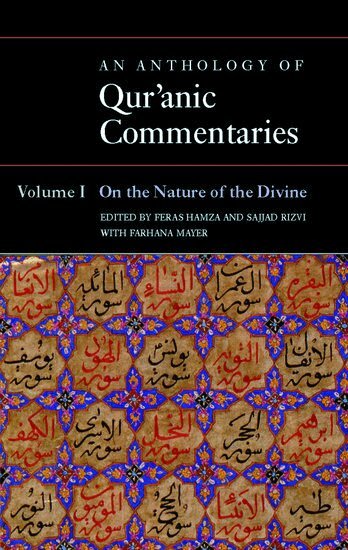
This pioneering volume, the first in a series, presents a plurality of voices, methods and concerns in Qur'anic interpretation ranging from the 8th century to the present day. No previous work has drawn on such a comprehensive range of commentaries and covered such a wide spectrum of theological approaches.On the Nature of the Divine analyses the works of twenty selected Sunni, Shi'i, Ibadi, Mu'tazili, and Sufi commentators on six Qur'anic verses, revealing varied approaches to the scripture and its meaning. In their attempts to discern God's nature, the commentators inevitably introduce their own particular theological concerns into their commentaries. Contextual introductions and annotated translations allow the reader to follow the genesis of key intellectual debates and religio-political attitudes still relevant to the lives of Muslims today. This combination of previously untranslated texts and extensive annotation provides an invaluable and innovative contribution to the field of Islamic studies.
Del 18 - Journal of Semitic Studies Supplement
Mulla Sadra Shirazi: His Life and Works and the Sources for Safavid Philosophy
Häftad, Engelska, 2007
277 kr
Skickas inom 5-8 vardagar
Mulla Sadra Shirazi is the first attempt in English to produce a thorough preparatory study of the intellectual biography of this famous Safavid thinker. Previous attempts by other thinkers have been marred by ideological prejudice and the lack of serious intellectual rigour. A proper understanding of Islamic intellectual history requires the study of canonical thinkers, of which Mulla Sadra is certainly one in the philosophical tradition of Iran. The book eschews legends and theoretical constructs of bibliography in favour of a rigorous life that draws upon a wide range of primary sources, many of which are unpublished, and that demonstrate the significance and context of the intellectual contributions of Mulla Sadra. Mulla Sadra Shirazi is quite a traditional biography in that it seeks to locate the life of the thinker and his works in his historical and intellectual content. The course of ideas in Islam is an area of research that is of great interest at the moment; even the study of philosophy has flourished in recent years. Consistently, with recent works on other Islamic philosophers, this book sets the standard for approaching Islamic intellectual history by insisting upon an historical and source-critical approach, allied with a keen philological, but also philosophical, appreciation of the intellectual life of a thinker. The life is based upon the most recent scholarship on Safavid history and draws widely upon primary sources in Arabic and Persian, including a number of works in manuscript. For students of Islamic thought in the early modern period and those with a particular interest in philosophy in Safavid Iran, this book should be the first point of reference. Mulla Sadra Shirazi will become the foundation for further research both on Mulla Sadra and his thought, as well as the thought and intellectual trends of his period.
539 kr
Skickas inom 10-15 vardagar
This book explores the protests of Job from the perspectives of Jewish, Christian, and Islamic religious and philosophical traditions.
1 985 kr
Skickas inom 5-8 vardagar
The study of Islam and of Islamic history is enjoying something of a revival with an emphasis on intellectual history and a greater concern with the 'subaltern' with that. Why does religion continue to hold significance in our times? Are humans better off, adaptable, less violent, consistently unpredictable? How can we understand the course of our political history and the seeming dominance of democracy and its discontents, not least the legacies of coloniality and empire? While nationalist historiographies prevail in many contexts as well as Marxist and other approaches, the trend seems to be towards connected histories, the transnational and the global. Much of this constitutes intellectual history, which as one leading expert puts it, "seeks to restore a lost world, to recover perspectives and ideas from the ruins, to pull back the veil, and explain why the ideas resonated in the past and convinced their advocates." (Richard Whatmore) Ideas are expressive of cultures and norms, practices and dispositions, of actions and events that lie at the very core of human experience such as sovereignty and power, mind and matter, profanity and spirituality. There are noticeable differences of approach in the various chapters presented but what brings them together is a careful study of texts, not in a reductively philological manner derided quite often these days but in the way in which we recognise that texts are forms of speech acts and lie alongside other forms of self-expression that can elucidate and illuminate as well as occlude.