Sally Faulkner - Böcker
Visar alla böcker från författaren Sally Faulkner. Handla med fri frakt och snabb leverans.
10 produkter
10 produkter
213 kr
Skickas inom 5-8 vardagar
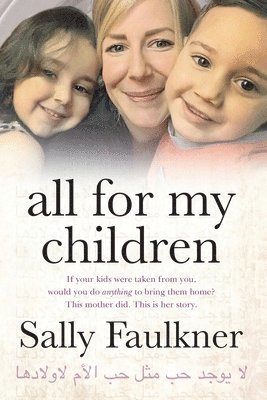
ALL FOR MY CHILDREN is Sally Faulkner's unforgettable true story, showing how one Australian mother's life fractured in the moment she kissed her kids goodbye. This is a book Sally had to write, because it is the only way her children Lahela and Noah will know she never stopped trying to bring them home.In May 2015, Sally hugged her children as they left Australia for a two-week holiday to Beirut with their father, Ali Elamine. Though separated, custody of two-year-old Noah and four-year-old Lahela had not been an issue. The kids lived with Sally in Brisbane and their dad often visited from his home in Lebanon. To Sally, everything seemed fine.Twenty-four hours after that farewell, Ali said, 'The kids aren't coming back.' It was every parent's nightmare . . . and it was only going to get worse. After ten months without any contact with her children, missing birthdays and her daughter's first day at school, Sally had exhausted every avenue she could - pleading with Ali, using the courts, calling government departments and contacting the media.Waking in a Beirut prison cell handcuffed to a 60 MINUTES television reporter, Sally couldn't help asking herself . . . how did I get here? Looking back, 21-year-old Sally had scored her dream life as an Emirates flight attendant. She was dazzled by a world far removed from the suburbs of Brisbane. Then, she met Ali, a charismatic charmer with a Californian accent, who she thought was the perfect man, married him and had the children she'd always hoped for. But her dream life didn't last.
1 283 kr
Tillfälligt slut
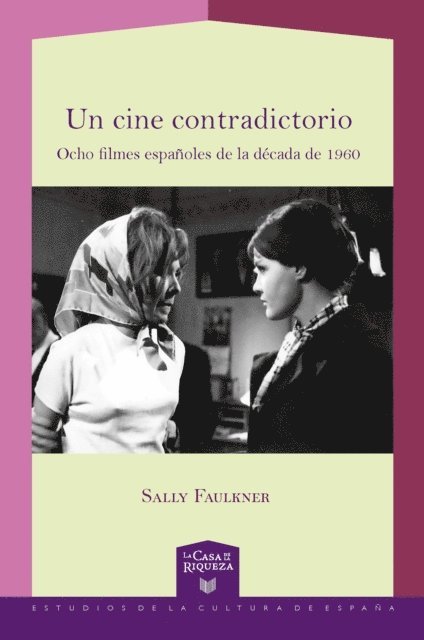
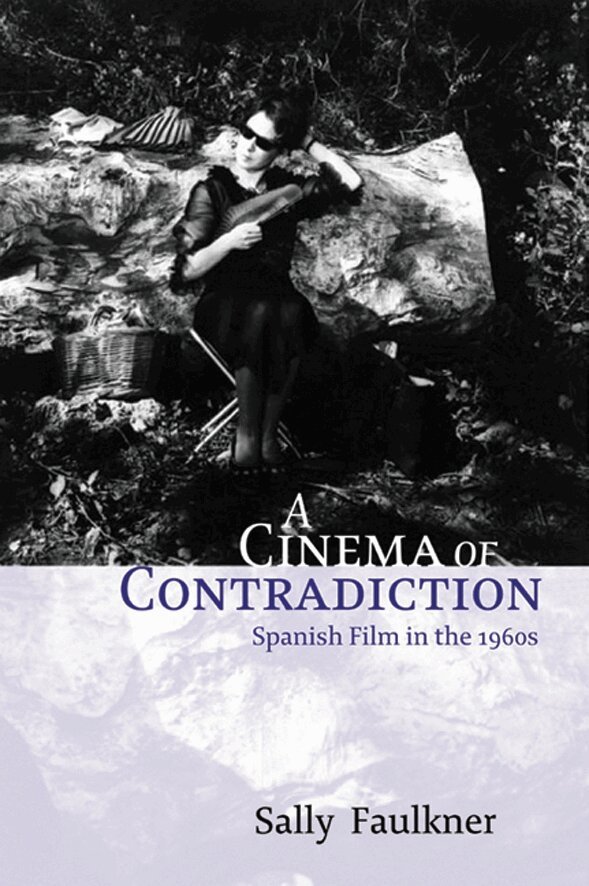
A key decade in world cinema, the 1960s was also a crucial era of change in Spain. A Cinema of Contradiction, the first book to focus in depth on this period in Spain, analyses six films that reflect and interpret these transformations. The coexistence of traditional and modern values and the timid acceptance of limited change by Franco’s authoritarian regime are symptoms of the uneven modernity that characterises the period. Contradiction - the unavoidable effect of that unevenness - is the conceptual terrain explored by these six filmmakers. One of the most significant movements of Spanish film history, the ‘New Spanish Cinema’ art films explore contradictions in their subject matter, yet are themselves the contradictory products of the state’s protection and promotion of films that were ideologically opposed to it. A Cinema of Contradiction argues for a new reading of the movement as a compromised yet nonetheless effective cinema of critique. It also demonstrates the possible contestatory value of popular films of the era, suggesting that they may similarly explore contradictions. This book therefore reveals the overlaps between art and popular film in the period, and argues that we should see these as complementary rather than opposing areas of cinematic activity in Spain.Features* The first book-length study of Spanish cinema of the 1960s in English* Includes case studies of six key films: La gran familia (The Great Family), La ciudad no es para mí (The City’s Not For Me), Los farsantes (Frauds), La tía Tula (Aunt Tula), Nueve cartas a Berta (Nine Letters to Berta) and La caza (The Hunt)* Considers Spanish popular cinema of the period* Offers a detailed analysis of one of the key artistic movements of the Franco dictatorship in Spain, the ‘Nuevo Cine Español’ (New Spanish Cinema).
404 kr
Skickas inom 10-15 vardagar
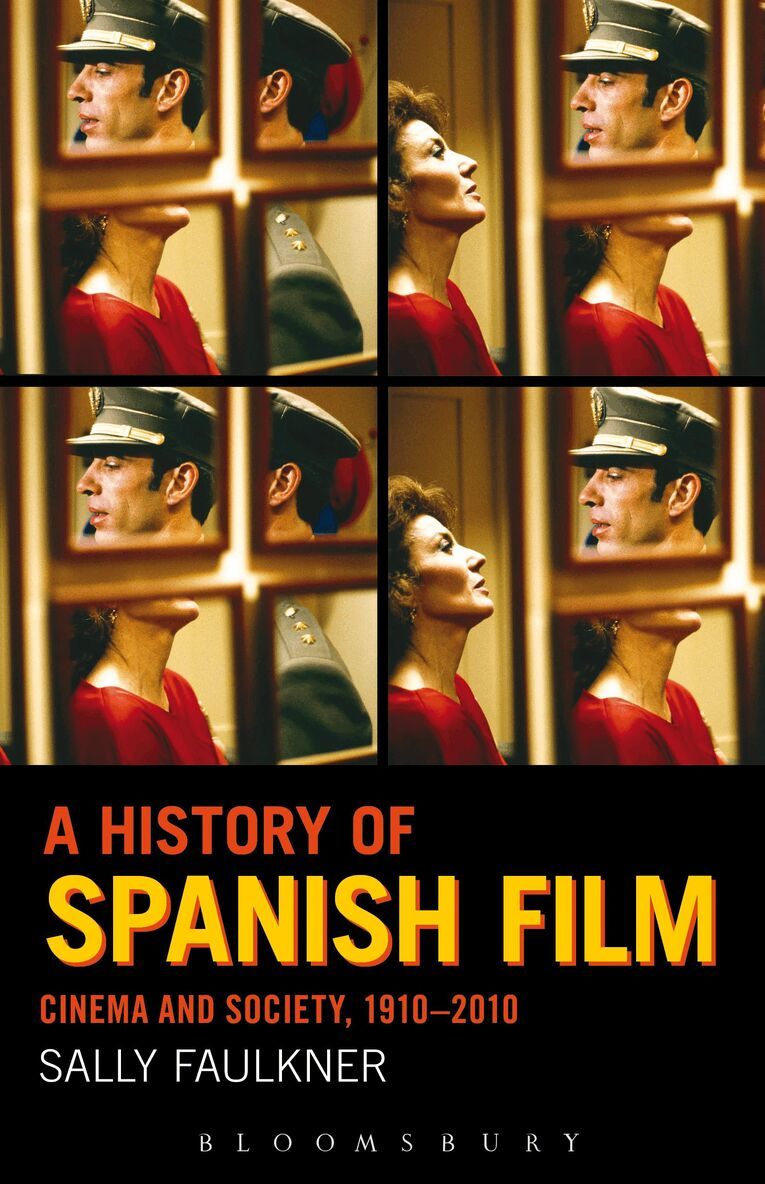
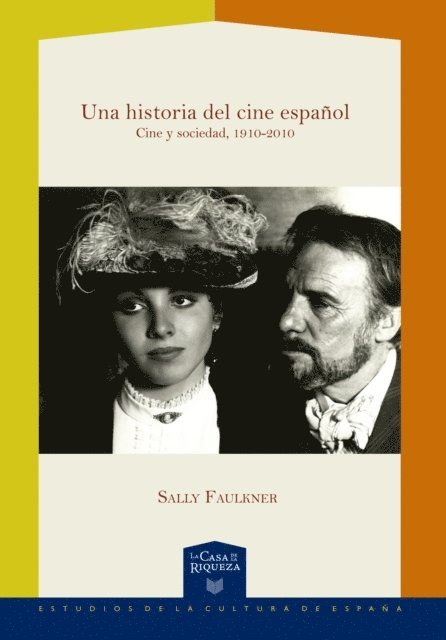
A History of Spanish Film explores Spanish film from the beginnings of the industry to the present day by combining some of the most exciting work taking place in film studies with some of the most urgent questions that have preoccupied twentieth-century Spain. It addresses new questions in film studies, like 'prestige film' and 'middlebrow cinema', and places these in the context of a country defined by social mobility, including the 1920s industrial boom, the 1940s post-Civil War depression, and the mass movement into the middle classes from the 1960s onwards. Close textual analysis of some 42 films from 1910-2010 provides an especially useful avenue into the study of this cinema for the student.- Uniquely offers extensive close readings of 42 films, which are especially useful to students and teachers of Spanish cinema.- Analyses Spanish silent cinema and films of the Franco era as well as contemporary examples.- Interrogates film's relations with other media, including literature, pictorial art and television.- Explores both 'auteur' and 'popular' cinemas.- Establishes 'prestige' and the 'middlebrow' as crucial new terms in Spanish cinema studies.- Considers the transnationality of Spanish cinema throughout its century of existence.- Contemporary directors covered in this book include Almodóvar, Bollaín, Díaz Yanes and more.
2 103 kr
Skickas inom 10-15 vardagar
Middlebrow Cinema challenges an often uninterrogated hostility to middlebrow culture that frequently dismisses it as conservative, which it often is not, and feminized or middle-class, which it often is. The volume defines the term relationally against shifting concepts of ‘high’ and ‘low’, and considers its deployment in connection with text, audience and institution.In exploring the concept of the middlebrow, this book recovers films that were widely meaningful to contemporary audiences, yet sometimes overlooked by critics interested in popular and arthouse extremes. It also addresses the question of socially-mobile audiences, who might express their aspirations through film-watching; and traces the cultural consequences of the movement of films across borders and between institutions. The first study of its kind, the volume comprises 11 original essays that test the purchase of the term ‘middlebrow’ across cultures, including those of Europe, Asia and the Americas, from the 1930s to the present day. Middlebrow Cinema brings into view a popular and aspirational - and thus especially relevant and dynamic - area of film and film culture. Ideal for students and researchers in this area, this book: Remaps ‘Popular’ and ‘arthouse’ approaches Explores British, Chinese, French, Indian, Mexican, Spanish ‘national’ cinemas alongside Continental, Hollywood, Queer, Transnational cinemas Analyses Biopic, Heritage, Historical Film, Melodrama, Musical, Sex Comedy genres.
183 kr
Skickas inom 10-15 vardagar
Middlebrow Cinema challenges an often uninterrogated hostility to middlebrow culture that frequently dismisses it as conservative, which it often is not, and feminized or middle-class, which it often is. The volume defines the term relationally against shifting concepts of ‘high’ and ‘low’, and considers its deployment in connection with text, audience and institution.In exploring the concept of the middlebrow, this book recovers films that were widely meaningful to contemporary audiences, yet sometimes overlooked by critics interested in popular and arthouse extremes. It also addresses the question of socially-mobile audiences, who might express their aspirations through film-watching; and traces the cultural consequences of the movement of films across borders and between institutions. The first study of its kind, the volume comprises 11 original essays that test the purchase of the term ‘middlebrow’ across cultures, including those of Europe, Asia and the Americas, from the 1930s to the present day. Middlebrow Cinema brings into view a popular and aspirational - and thus especially relevant and dynamic - area of film and film culture. Ideal for students and researchers in this area, this book: Remaps ‘Popular’ and ‘arthouse’ approaches Explores British, Chinese, French, Indian, Mexican, Spanish ‘national’ cinemas alongside Continental, Hollywood, Queer, Transnational cinemas Analyses Biopic, Heritage, Historical Film, Melodrama, Musical, Sex Comedy genres.
1 488 kr
Kommande
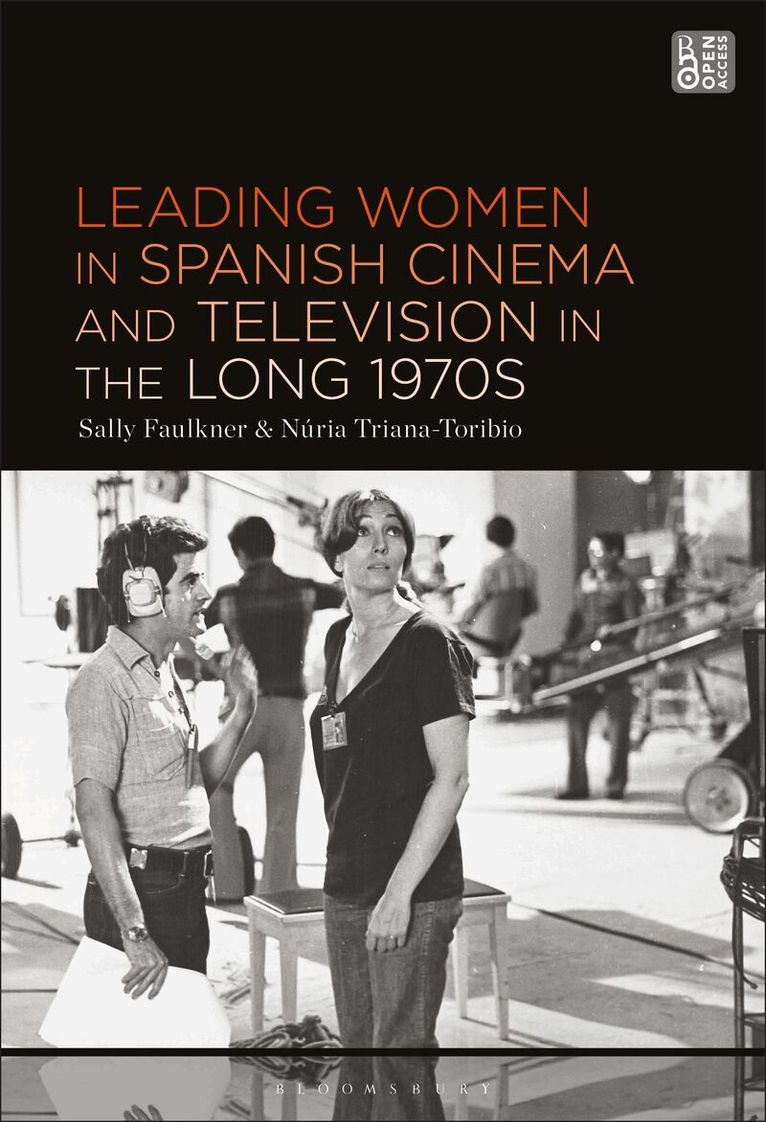
This open access book offers a feminist cultural history of Spain of the 1970s, exploring the work of women in the audio-visual industries who joined the workforce in significant numbers over this decade of Transition from the Franco dictatorship, to a democracy that enshrined gender equality in its constitution of 1978.Leading Women in Spanish Cinema and Television in the Long 1970s seeks the work of women in new places and analyses it in new ways. Rejecting the director-auteur approach, which has endured for over seventy-five years in both Film and Television Studies - despite the fact that it tends to occlude the work of women - the authors look instead at below-the-line roles in cinema, and at television. In particular, they investigate editing, forgotten or overlooked areas of television broadcasting, such as children’s programming, and film activism in the period, such as in the co-operative Drac Màgic: in these places the work of women can be found.The ebook editions of this book are available open access under a CC BY-NC-ND 4.0 licence on bloomsburycollections.com. Open access was funded by The Arts and Humanities Research Council.
1 239 kr
Skickas inom 5-8 vardagar
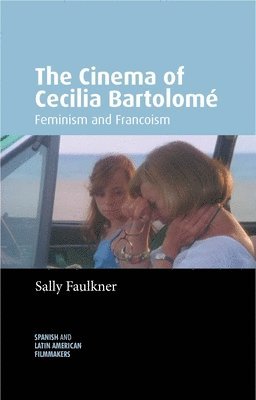
Were it not for authoritarian state censorship, Cecilia Bartolomé’s name would figure alongside those of her contemporaries Agnès Varda and Claire Denis as a pioneering feminist filmmaker of the twentieth century. With this bold claim, this book seeks both to write the history of Bartolomé’s extant filmography, and speculate about censored and un-filmed work, thereby fashioning a new way of writing a feminist creative life in film.The first volume on this director to be written in English, The Cinema of Cecilia Bartolomé is also the first volume on the director published in any language for over twenty years. By focusing on Spanish-language cinema of the 1960s-90s, the period when feminism, like democracy, was re-born and seemingly consolidated in Spain, the study brings historical depth and transnational reach to current debates in the wake of #MeToo.
375 kr
Skickas inom 5-8 vardagar
Were it not for authoritarian state censorship, Cecilia Bartolomé’s name would figure alongside those of her contemporaries Agnès Varda and Claire Denis as a pioneering feminist filmmaker of the twentieth century. With this bold claim, this book seeks both to write the history of Bartolomé’s extant filmography, and speculate about censored and un-filmed work, thereby fashioning a new way of writing a feminist creative life in film.The first volume on this director to be written in English, The Cinema of Cecilia Bartolomé is also the first volume on the director published in any language for over twenty years. By focusing on Spanish-language cinema of the 1960s-90s, the period when feminism, like democracy, was re-born and seemingly consolidated in Spain, the study brings historical depth and transnational reach to current debates in the wake of #MeToo.
1 209 kr
Skickas inom 10-15 vardagar
New readings of 20th-century literary cinematic texts are presented here in historical context, informed by cultural theory.New readings of literary and cinematic texts are presented here in historical context, informed by cultural theory. In her survey of the history of Spanish cinema in the dictatorship and democratic periods, the author argues thatstudies of adaptations must simultaneously address questions of 'text' - formal issues central to the study of film and literature - and 'context' - ideological concerns crucial to late twentieth-century Spain. She examines threethemes of particular importance to contemporary Spanish culture - the recuperation of history, the negotiation of the rural and the urban, and the representation of gender - and considers the related stylistic issues of the affinities between cinematic expression and nostalgia, the city and phallocentrism. The study concludes with an analysis of the formal question of the narrator in film and literature, through an assessment of Buñuel's previously unacknowledged stylistic debt to Galdós as manifested in his adaptations of Nazarín and Tristana.SALLY FAULKNER is Lecturer in Hispanic Studies at the University of Exeter.
214 kr
Skickas
From Hollywood dreams to Nazi nightmares- the truth Sally Faulkner kept buried from the world for decades.