Salvatore Graziani - Böcker
Visar alla böcker från författaren Salvatore Graziani. Handla med fri frakt och snabb leverans.
4 produkter
4 produkter
1 578 kr
Skickas inom 10-15 vardagar
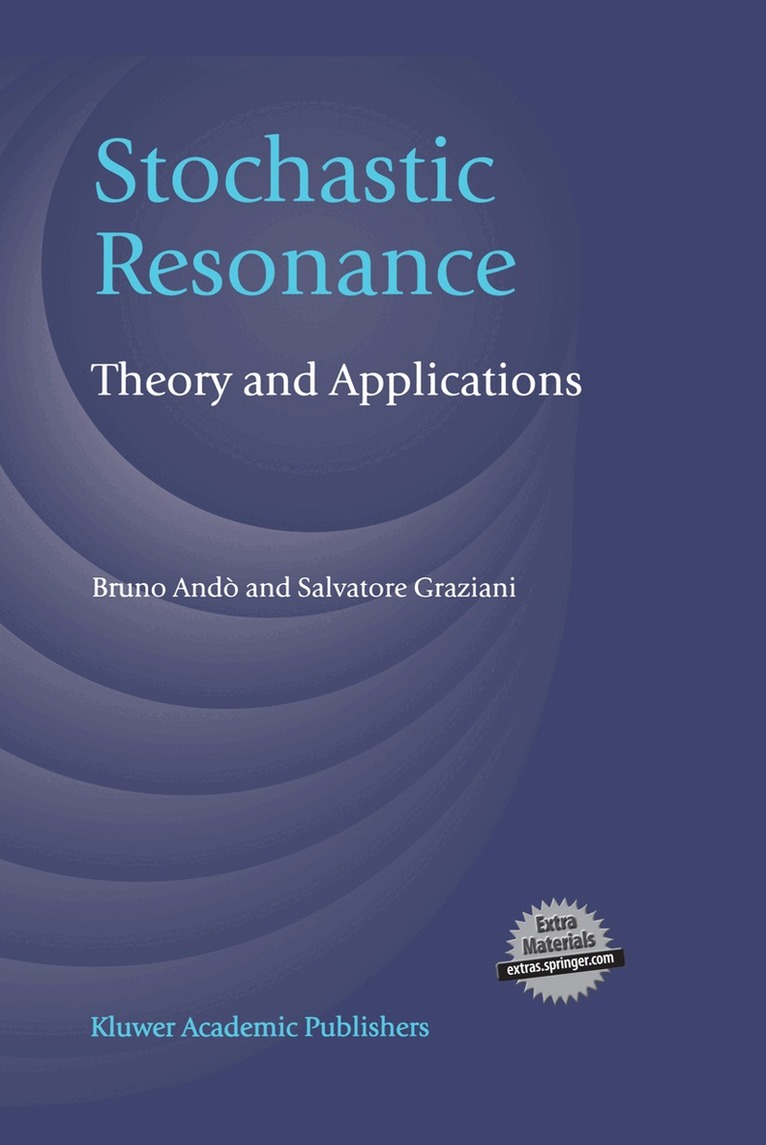
This work deals with the theory of noise-added systems and in particular with stochastic resonance, a quite novel theory that was introduced in the 1980s to provide better understanding of some natural phenomena (for example, ice age recurrence). Following the very first works, a number of different applications to both natural and human-produced phenomena were proposed. The book aims to improve the understanding of noise-based techniques and to focus on practical applications of this class of phenomena. Based on this objective, the book is roughly divided into two parts. The first part deals with the essential theory of noise-added systems and in particular a new approach to noise-added techniques that allows a number of strategies proposed in previous years to be unified. The proposed approach also allows real-time control of the noise characteristics, assuring optimal system performance. In the second part a large number of applications are described in detail in the field of electric and electronic devices, with the aim of allowing readers to build their own experimental set. The book comes with a diskette of educational software that the authors developed.
1 578 kr
Skickas inom 10-15 vardagar
Stochastic Resonance: Theory and Applications deals with the theory of noise-added systems and in particular with Stochastic Resonance, a quite novel theory that was introduced in the 1980s to provide better understanding of some natural phenomena (e.g. ice age recurrence). Following the very first works, a number of different applications to both natural and human-produced phenomena were proposed. The book aims to improve the understanding of noise-based techniques and to focus on practical applications of this class of phenomena (an aspect that has been very poorly investigated up to now). Based on this objective, the book is roughly divided into two parts. The first part deals with the essential theory of noise-added systems and in particular a new approach to noise-added techniques that allows a number of strategies proposed in previous years to be unified. The proposed approach also allows real-time control of the noise characteristics, assuring optimal system performance. In the second part a large number of applications are described in detail in the field of electric and electronic devices, with the aim of allowing readers to build their own experimental set. The book comes with a diskette of educational software that the authors developed. Stochastic Resonance: Theory and Applications is an invaluable reference for students, researchers and engineering professionals working in the fields of electric and electronic measurements, electronics and signal theory.
1 892 kr
Skickas inom 10-15 vardagar
focussed on the key steps in soft sensor design: data selection; model structure selection and model validation, respectively. Extensions to the basic steps of soft sensor design, namely soft sensor performance enhancement and the modifications needed to facilitate different industrial process applications follow in Chapter 7 and 8, respectively. Widening the applications range and role of soft sensors to fault detection and sensor validation configurations is dealt with in Chapter 9. A great strength of Soft Sensors for Monitoring and Control of Industrial Processes is the use, throughout the text, of a set of industrial case studies to demonstrate the successes and drawbacks of the different methods used to create soft sensor models. A number of different methods may be used in each separate step of the soft sensor design process and the industrial case studies are often used to provide explicit comparisons of the performance of these methods. The industrial control and process engineer will find these comparison exercises invaluable illustrations of the sort of results that might be found in industrial applications. The monograph also highlights the importance of using knowledge from industrial experts and from the existing industrial process literature. This is an important aspect of industrial control that is not very widely acknowledged or taught in control courses. Most industrial processes have already generated a significant experimental knowledge base and the control engineer should develop ways of tapping into this valuable resource when designing industrial control schemes.
1 660 kr
Skickas inom 5-8 vardagar
focussed on the key steps in soft sensor design: data selection; model structure selection and model validation, respectively. Extensions to the basic steps of soft sensor design, namely soft sensor performance enhancement and the modifications needed to facilitate different industrial process applications follow in Chapter 7 and 8, respectively. Widening the applications range and role of soft sensors to fault detection and sensor validation configurations is dealt with in Chapter 9. A great strength of Soft Sensors for Monitoring and Control of Industrial Processes is the use, throughout the text, of a set of industrial case studies to demonstrate the successes and drawbacks of the different methods used to create soft sensor models. A number of different methods may be used in each separate step of the soft sensor design process and the industrial case studies are often used to provide explicit comparisons of the performance of these methods. The industrial control and process engineer will find these comparison exercises invaluable illustrations of the sort of results that might be found in industrial applications. The monograph also highlights the importance of using knowledge from industrial experts and from the existing industrial process literature. This is an important aspect of industrial control that is not very widely acknowledged or taught in control courses. Most industrial processes have already generated a significant experimental knowledge base and the control engineer should develop ways of tapping into this valuable resource when designing industrial control schemes.