Samita Sen – författare
Visar alla böcker från författaren Samita Sen. Handla med fri frakt och snabb leverans.
10 produkter
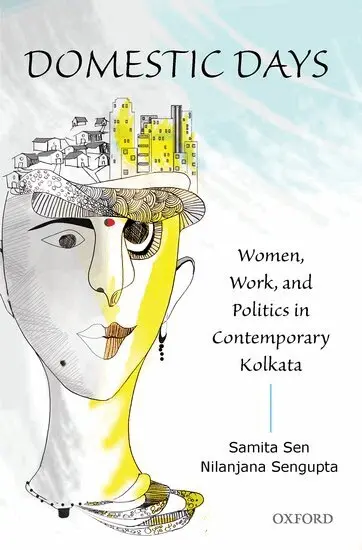
Domestic Days
Women, Work, and Politics in Contemporary Kolkata
Av Samita Sen, Nilanjana Sengupta
Inbunden, 2016
736 kr
Lägg i varukorg
'Maids' have become an inseparable part of the daily lives of 'middle-class' urban households in India. Despite the fact that increasing numbers of poor women are joining this profession, very little has been written about them, especially the part-time domestic workers, each of whom services a …
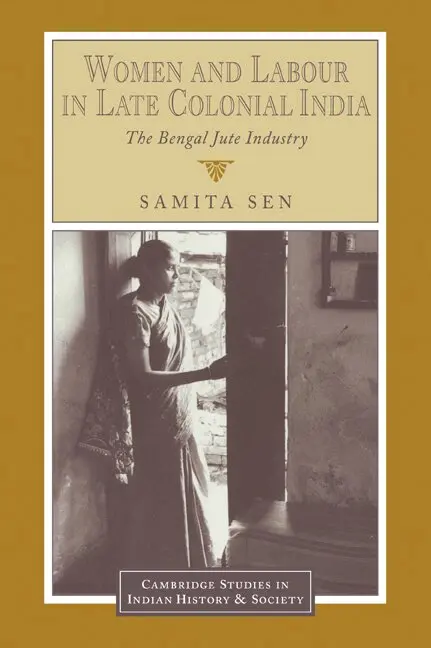
Women and Labour in Late Colonial India
The Bengal Jute Industry
Av Samita Sen, Christopher Alan Bayly m. fl.
Häftad, 2006
902 kr
Lägg i varukorg
Samita Sen's history of labouring women in Calcutta in the late nineteenth and early twentieth centuries considers how social constructions of gender shaped their lives. Dr Sen demonstrates how - in contrast to the experience of their male counterparts - the long-term trends in the Indian economy …
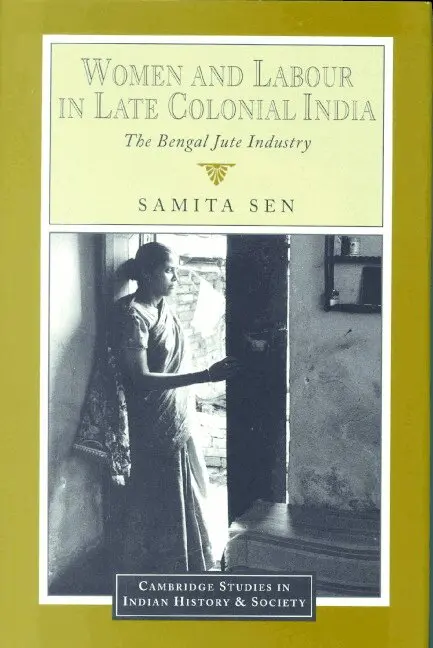
Women and Labour in Late Colonial India
The Bengal Jute Industry
Av Samita Sen
Inbunden, 1999
1677 kr
Lägg i varukorg
Samita Sen's history of labouring women in Calcutta in the late nineteenth and early twentieth centuries considers how social constructions of gender shaped their lives. Dr Sen demonstrates how - in contrast to the experience of their male counterparts - the long-term trends in the Indian economy …
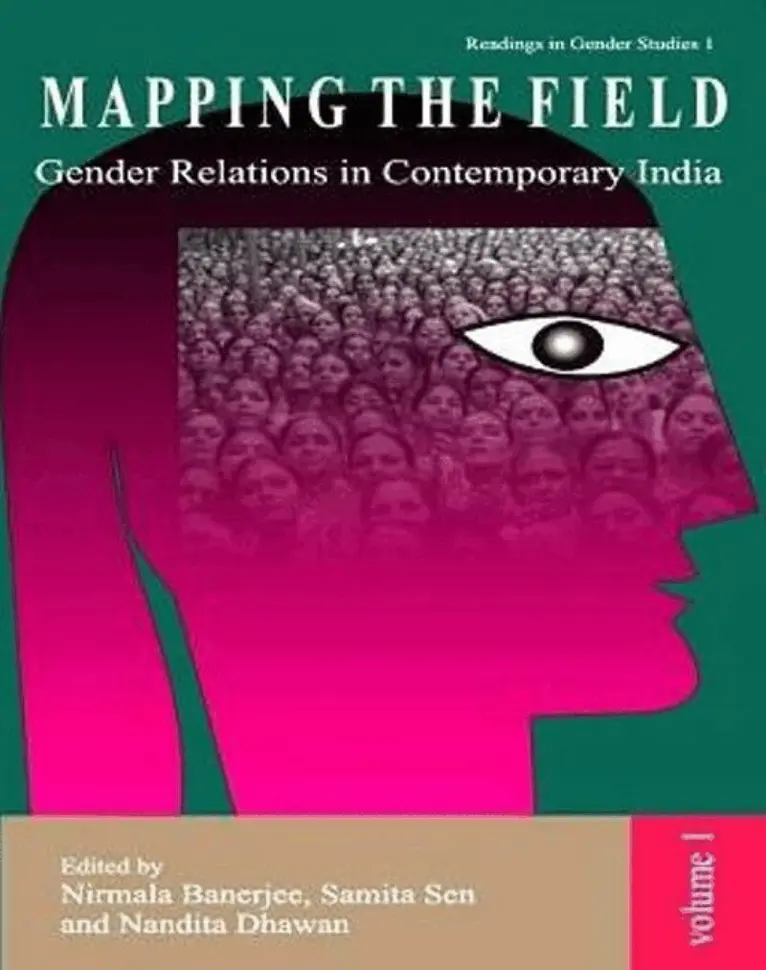
Mapping the Field
Gender Relations in Contemporary India
Av Nirmala Banerjee, Samita Sen m. fl.
Häftad, 2013
496 kr
Lägg i varukorg
This is the first of four readers for students of women's studies, particularly for Masters' level courses in women's studies, and more generally across undergraduate and certificate courses as the concept of 'gender' has been introduced at all levels of curricula. The reader reflects many of the …
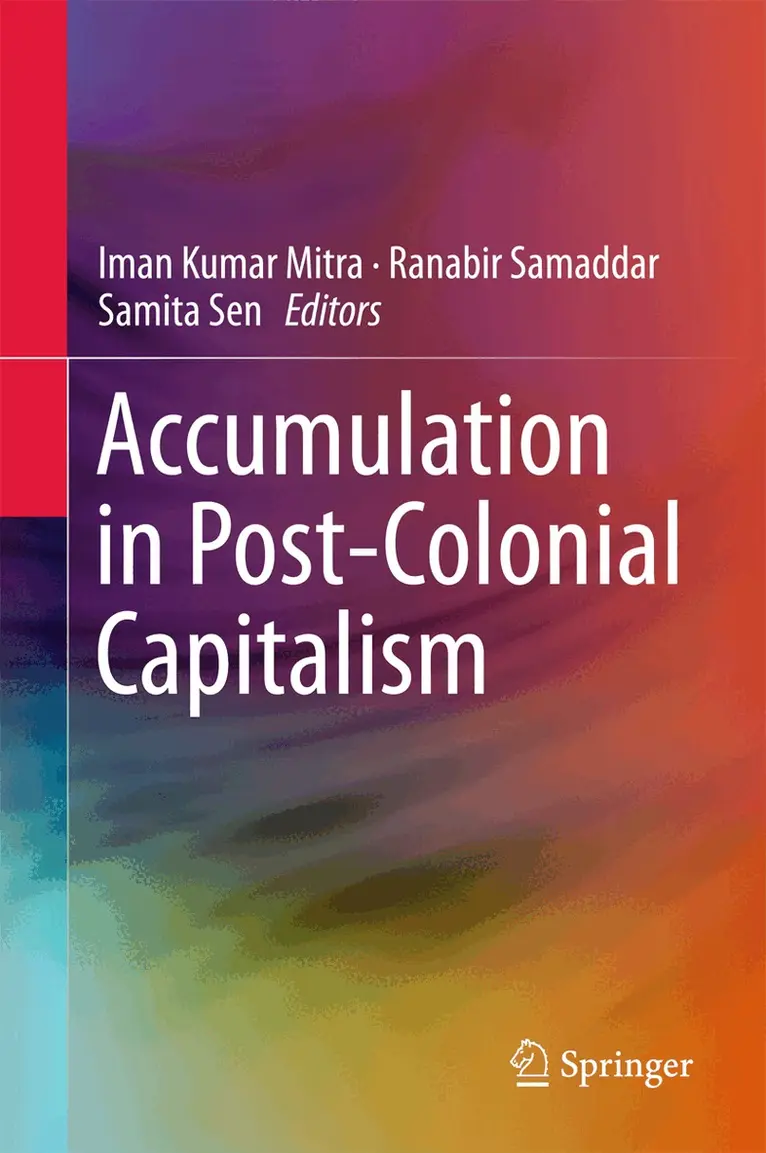
Accumulation in Post-Colonial Capitalism
Av Iman Kumar Mitra, Ranabir Samaddar m. fl.
Inbunden, 2016
566 kr
Lägg i varukorg
This volume looks at how accumulation in postcolonial capitalism blurs the boundaries of space, institutions, forms, financial regimes, labour processes, and economic segments on one hand, and creates zones and corridors on the other. It draws our attention to the peculiar but structurally …
Accumulation in Post-Colonial Capitalism
Av Samita Sen, Ranabir Samaddar m. fl.
E-bok, 2016
734 kr
Lägg i varukorg
This volume looks at how accumulation in postcolonial capitalism blurs the boundaries of space, institutions, forms, financial regimes, labour processes, and economic segments on one hand, and creates zones and corridors on the other. It draws our attention to the peculiar but structurally …
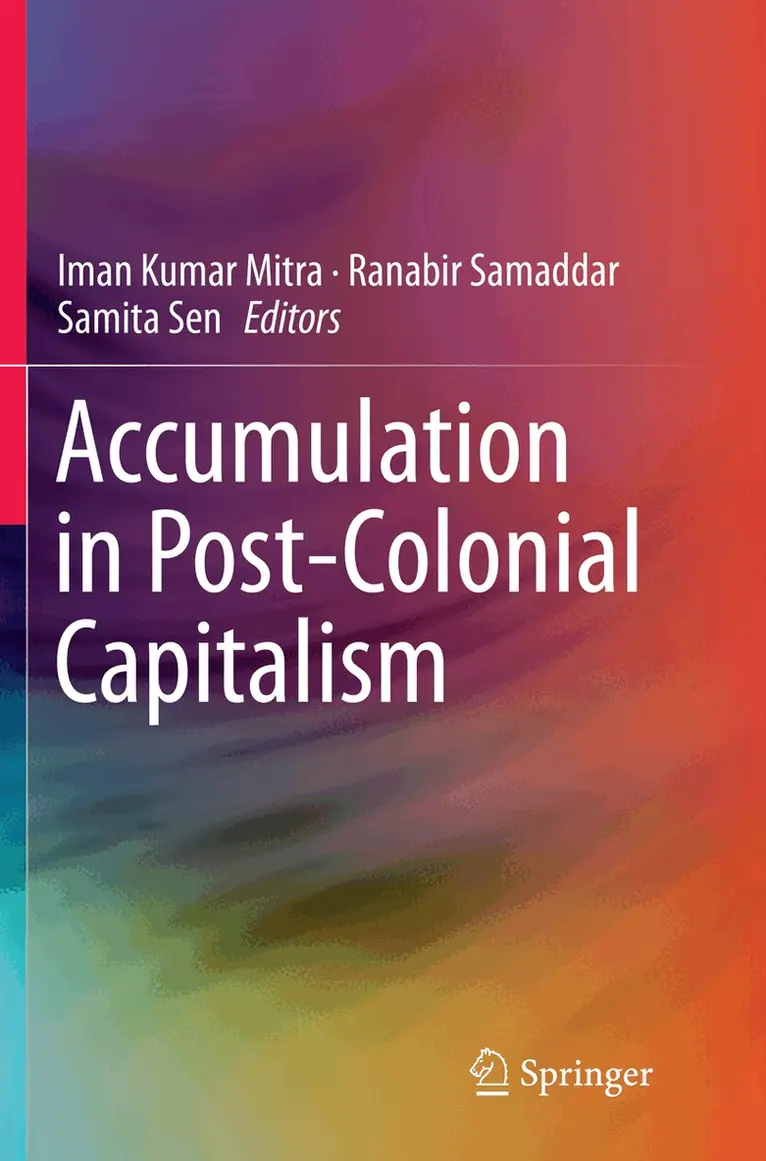
Accumulation in Post-Colonial Capitalism
Av Iman Kumar Mitra, Ranabir Samaddar m. fl.
Häftad, 2018
550 kr
Lägg i varukorg
This volume looks at how accumulation in postcolonial capitalism blurs the boundaries of space, institutions, forms, financial regimes, labour processes, and economic segments on one hand, and creates zones and corridors on the other. It draws our attention to the peculiar but structurally …
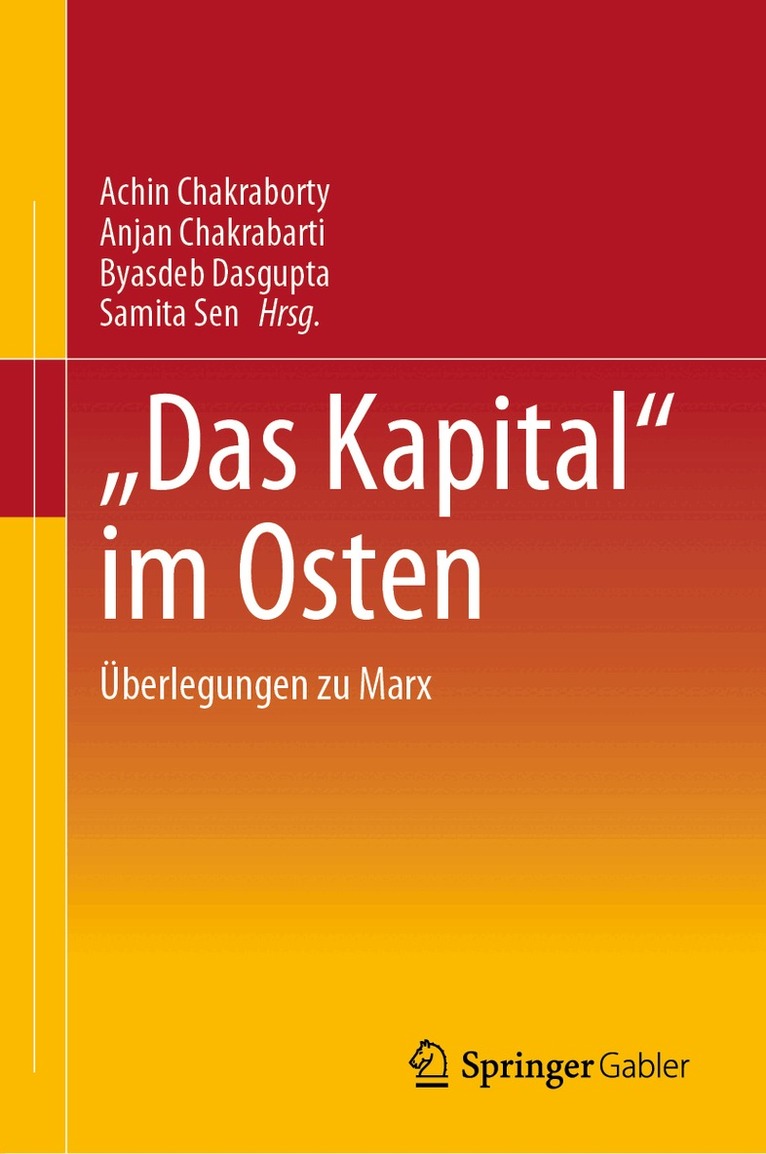
"Das Kapital“ im Osten
Überlegungen zu Marx
Av Achin Chakraborty, Anjan Chakrabarti m. fl.
Inbunden, 2024
920 kr
Lägg i varukorg
Dieses Buch verfolgt einen marxistischen Ansatz mit dem Schwerpunkt auf der Klasse, um über Marx' Kapital im Kontext des Ostens nachzudenken. Es nimmt eine kritische Neubewertung einiger vertrauter Konzepte im Kapital vor und arbeitet Themen heraus, die an dessen Rand liegen. In verschiedenen …
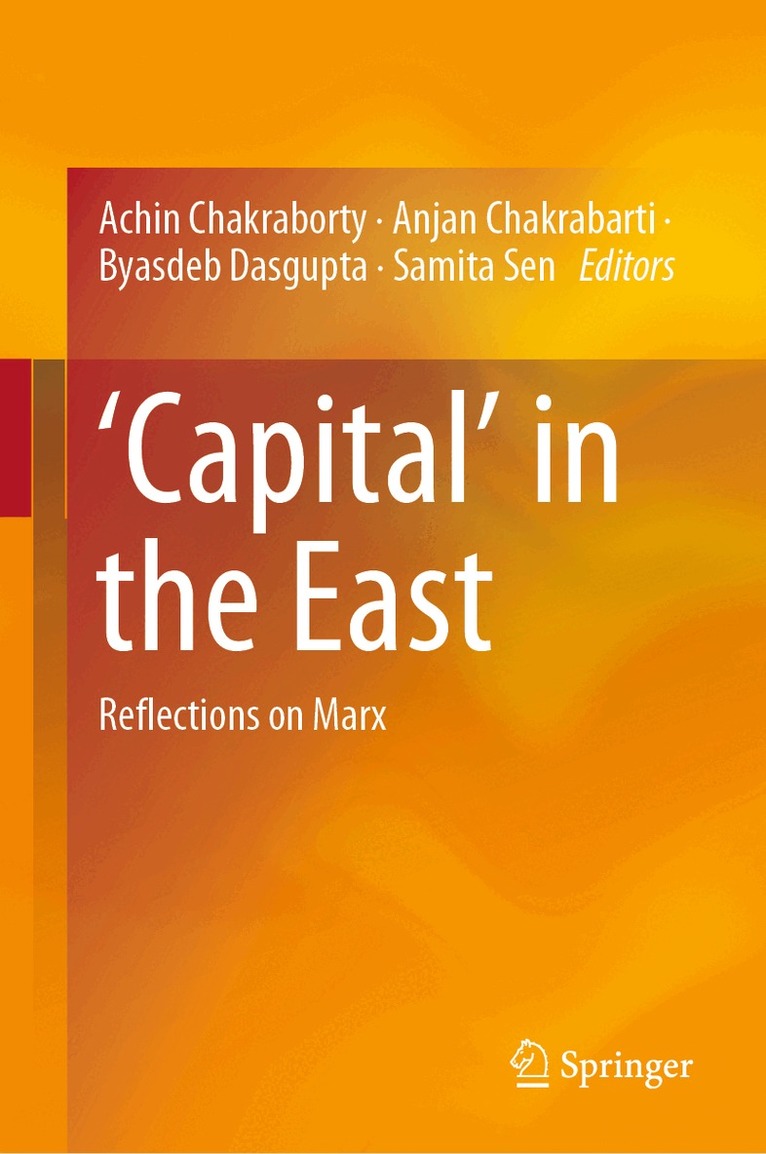
‘Capital’ in the East
Reflections on Marx
Av Achin Chakraborty, Anjan Chakrabarti m. fl.
Inbunden, 2019
1093 kr
Lägg i varukorg
This book pursues a Marxist approach with an emphasis on class to reflect on Marx’s Capital in the context of the East. It critically reassesses some of the familiar concepts in Capital and teases out issues that are at its periphery. In various essays, it explores this borderland to promote new …
'Capital' in the East
Reflections on Marx
Av Samita Sen, Byasdeb Dasgupta m. fl.
E-bok, 2019
1459 kr
Lägg i varukorg
This book pursues a Marxist approach with an emphasis on class to reflect on Marx’s Capital in the context of the East. It critically reassesses some of the familiar concepts in Capital and teases out issues that are at its periphery. In various essays, it explores this borderland to promote new …