Samuel Handlin - Böcker
Visar alla böcker från författaren Samuel Handlin. Handla med fri frakt och snabb leverans.
4 produkter
4 produkter
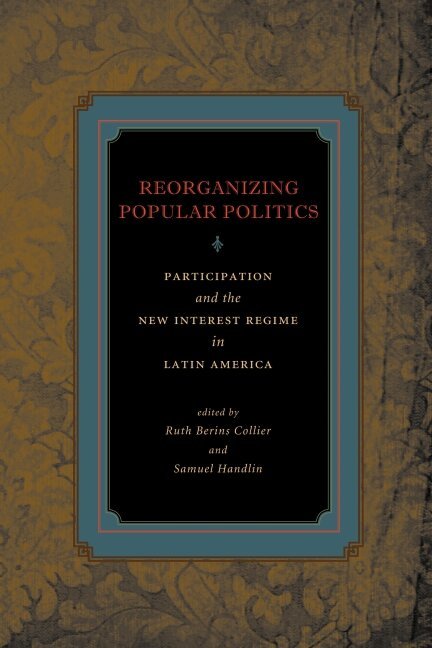
Reorganizing Popular Politics
Participation and the New Interest Regime in Latin America
Inbunden, Engelska, 2010
839 kr
Skickas inom 7-10 vardagar
A historic shift has occurred in the organizational structures through which the lower classes in Latin America express voice and find political representation. With the political and economic reforms of the 1980s and 1990s, networks of community-based associations and nongovernmental organizations replaced party-affiliated labor unions as the predominant organizations to which the lower classes turned. This volume examines the new “interest regime” in Argentina, Chile, Peru, and Venezuela through two extensive surveys—one of individuals and one of associations—undertaken in those nations’ capital cities. Contrary to common perceptions, the new interest regime is neither a vibrant, autonomous civil society nor a set of weak, atomized organizations. Participation in associations is generally high, compared to “direct action” as a strategy for pursuing collective interests, and associations more frequently coordinate and engage the state than has sometimes been assumed. However, various forms of interaction with the state pose a classic trade-off between representation and state control, and the new interest regime is marked by representational distortion, in that the lower classes are less likely to use the new structures than the middle classes. Within these general patterns, distinct national models are emerging. This volume represents the most ambitious and systematic effort to date to examine individual participation and associational life in Latin America and to carry out a cross-national analysis of new forms of political representation.
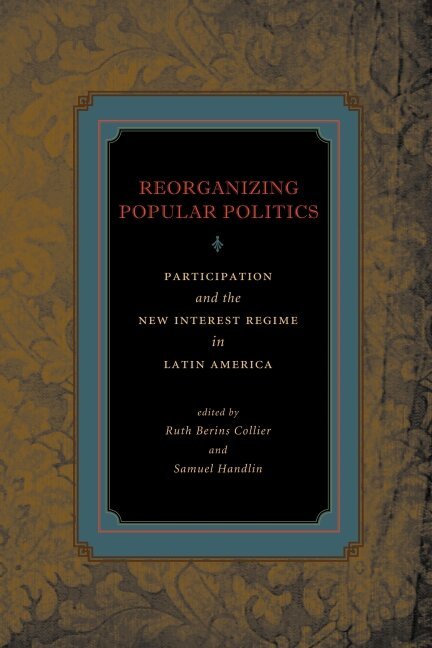
Reorganizing Popular Politics
Participation and the New Interest Regime in Latin America
Häftad, Engelska, 2009
502 kr
Skickas inom 5-8 vardagar
A historic shift has occurred in the organizational structures through which the lower classes in Latin America express voice and find political representation. With the political and economic reforms of the 1980s and 1990s, networks of community-based associations and nongovernmental organizations replaced party-affiliated labor unions as the predominant organizations to which the lower classes turned. This volume examines the new “interest regime” in Argentina, Chile, Peru, and Venezuela through two extensive surveys—one of individuals and one of associations—undertaken in those nations’ capital cities. Contrary to common perceptions, the new interest regime is neither a vibrant, autonomous civil society nor a set of weak, atomized organizations. Participation in associations is generally high, compared to “direct action” as a strategy for pursuing collective interests, and associations more frequently coordinate and engage the state than has sometimes been assumed. However, various forms of interaction with the state pose a classic trade-off between representation and state control, and the new interest regime is marked by representational distortion, in that the lower classes are less likely to use the new structures than the middle classes. Within these general patterns, distinct national models are emerging. This volume represents the most ambitious and systematic effort to date to examine individual participation and associational life in Latin America and to carry out a cross-national analysis of new forms of political representation.
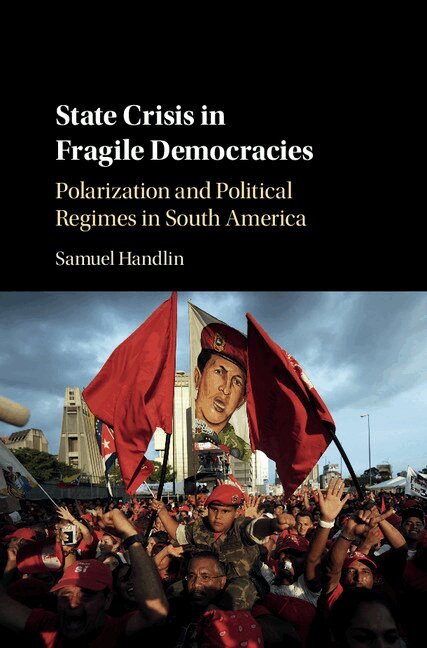
State Crisis in Fragile Democracies
Polarization and Political Regimes in South America
Häftad, Engelska, 2019
428 kr
Skickas inom 7-10 vardagar
This book offers a novel political-institutional explanation for variation in political polarization, outsider populism, and the fate of democratic regimes across twenty-first-century South America. Drawing upon a wealth of primary evidence and employing process tracing tests to evaluate key causal claims, the book examines how the occurrence - or not - of state crises and the inherited strength of left wing political actors combined to push countries onto distinct party system trajectories characterized by different kinds of left parties and movements, highly variant levels of polarization, and ultimately divergent political regime dynamics. The book challenges extant interpretations of political variation during Latin America's turn to the left, which have centered on economic explanations. It also develops new theoretical propositions for understanding polarization, populism, and democratic erosion in young democracies across the world.
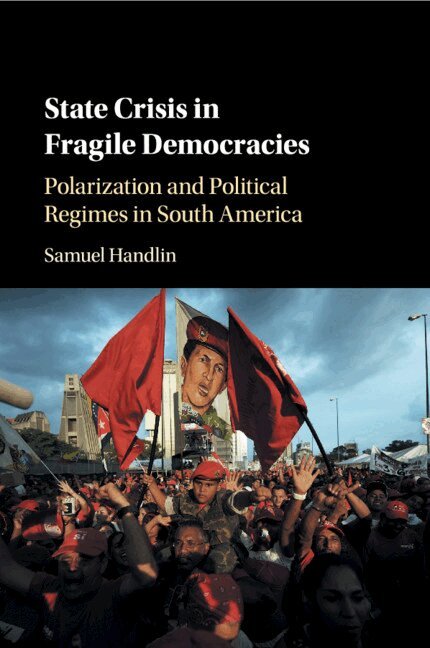
State Crisis in Fragile Democracies
Polarization and Political Regimes in South America
Inbunden, Engelska, 2017
1 271 kr
Skickas inom 7-10 vardagar
This book offers a novel political-institutional explanation for variation in political polarization, outsider populism, and the fate of democratic regimes across twenty-first-century South America. Drawing upon a wealth of primary evidence and employing process tracing tests to evaluate key causal claims, the book examines how the occurrence - or not - of state crises and the inherited strength of left wing political actors combined to push countries onto distinct party system trajectories characterized by different kinds of left parties and movements, highly variant levels of polarization, and ultimately divergent political regime dynamics. The book challenges extant interpretations of political variation during Latin America's turn to the left, which have centered on economic explanations. It also develops new theoretical propositions for understanding polarization, populism, and democratic erosion in young democracies across the world.