Sandra Fredman - Böcker
Visar alla böcker från författaren Sandra Fredman. Handla med fri frakt och snabb leverans.
12 produkter
12 produkter
1 611 kr
Skickas
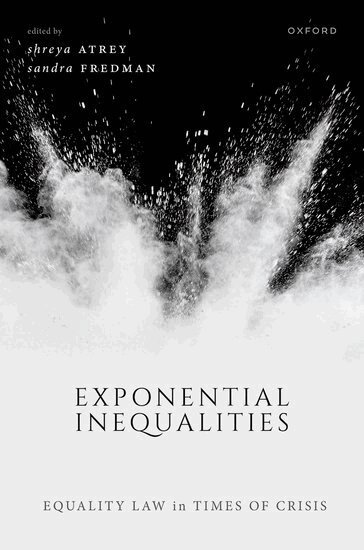
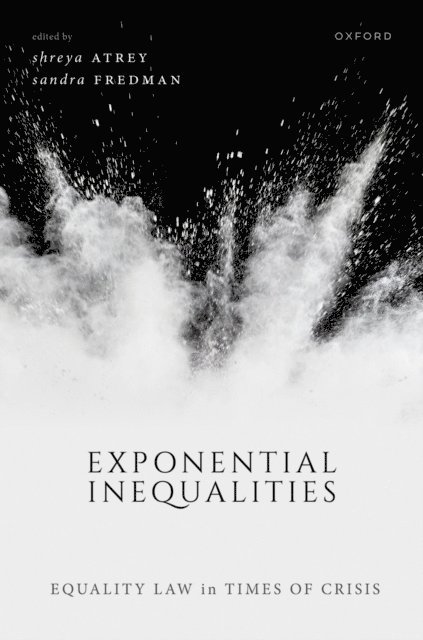
This thoughtfully edited volume explores the operation of equality and discrimination law in times of crisis. It aims to understand how existing inequalities are exacerbated in crises and whether equality law has the tools to understand and address this contingency. Experience during the COVID-19 crisis shows that the pandemic has acted as a catalyst for 'exponential inequalities' related to racism, xenophobia, sexism, homophobia, transphobia, ageism, and ableism. Yet, the field of equality law (which is meant to be addressing such discrimination or inequality) has had little immediate relevance in mitigating these exponential inequalities. This is despite the fact that countries like the UK have a rather recent and state-of-the-art legislation in the field, namely the Equality Act 2010. Exponential Inequalities offers readers an understanding of how these inequalities came to be and how crises such as the global pandemic, the climate emergency, or the economic downturn, can exacerbate an already untenable situation. It illuminates both the structural and the conceptual, as well as the practical and doctrinal difficulties currently experienced in equality law, and discusses whether or not equality law even has the tools to both understand and then address this contingency. Written by a team of internationally recognized experts, Exponential Inequalities provides a comparative perspective on the functioning of equality laws across a range of contexts and jurisdictions and represents an essential read for scholars and policy makers alike.
1 456 kr
Skickas inom 5-8 vardagar
As the millennium draws to a close, it is clear that equality between men and women remains a pipe-dream. Thus argues Sandra Fredman in her stimulating, new book on women and the law. Women's pay still lags significantly behind that of men; and women continue to congregate in low status, low paid jobs. Yet men and women are now formally equal before the law: indeed, legislation positively outlawing discrimination has been in force for over two decades both in the UK and the European Union. The key question asked by the author is: Why has the law had so little impact? The answer, the author argues, lies in the structure of the law itself. In a wide-ranging examination of sources drawn from political theory, social history and law, the first part of the book develops a critical framework to illuminate the limitations of the law in addressing women's disadvantaged status. In particular, the author unmask the apparent objectivity and neutrality of law, exposing the assumptions which have systematically impeded women's progress. Part II of the book applies this critique to a detailed examination of key legal issues in the UK and EU, with illuminating references to the law in North America and Australia. The result is an original and incisive analysis of pressing legal issues ranging from low pay, sexual harassment and flexible working to parenting rights and reverse discrimination. The book locates women's role in the family as a key contributory factor to their continued disadvantage within the paid workforce. Yet, in signalling the way forward, the author rejects the notion that the aim is simply to slot more women into existing structures. Instead of expecting women to conform to structures which exclude and devalue caring responsibilities, she argues, real change will only occur if paid work is restructured so that both men and women can be active participants in family life as well as in the paid workforce. The book does not, however, offer single dimensional solutions. In particular, the very difficult conflicts of interest which can arise between women, on grounds such as class or race, are directly confronted.
775 kr
Skickas inom 5-8 vardagar
As the millennium draws to a close, it is clear that equality between men and women remains a pipe-dream. Thus argues Sandra Fredman in her stimulating, new book on women and the law. Women's pay still lags significantly behind that of men; and women continue to congregate in low status, low paid jobs. Yet men and women are now formally equal before the law: indeed, legislation positively outlawing discrimination has been in force for over two decades both in the UK and the European Union. The key question asked by the author is: Why has the law had so little impact? The answer, the author argues, lies in the structure of the law itself. In a wide-ranging examination of sources drawn from political theory, social history and law, the first part of the book develops a critical framework to illuminate the limitations of the law in addressing women's disadvantaged status. In particular, the author unmask the apparent objectivity and neutrality of law, exposing the assumptions which have systematically impeded women's progress. Part II of the book applies this critique to a detailed examination of key legal issues in the UK and EU, with illuminating references to the law in North America and Australia. The result is an original and incisive analysis of pressing legal issues ranging from low pay, sexual harassment and flexible working to parenting rights and reverse discrimination. The book locates women's role in the family as a key contributory factor to their continued disadvantage within the paid workforce. Yet, in signalling the way forward, the author rejects the notion that the aim is simply to slot more women into existing structures. Instead of expecting women to conform to structures which exclude and devalue caring responsibilities, she argues, real change will only occur if paid work is restructured so that both men and women can be active participants in family life as well as in the paid workforce. The book does not, however, offer single dimensional solutions. In particular, the very difficult conflicts of interest which can arise between women, on grounds such as class or rase, are directly confronted.
1 537 kr
Skickas inom 5-8 vardagar
This set of essays provides and important contribution to the debate about the role of human rights law in combating racism. The first essay examines the right to equality in the context of racism, drawing on a wide range of international and comparative sources to create a critical framework of analysis. The second essay locates the discussion within the context of multi-culturalism, ethnicity, and group rights, with specific reference to ethnicity within Europe. The next set of essays is concerned with international istruments to address racism, followed by a critical examination of the newly developed race discrimination directive at EU level. The particular problem of race hatred on the internet is examined in the seventh chapter, followed by an important discussion of enforcement and remedial structures.
812 kr
Skickas inom 7-10 vardagar
This set of essays provides and important contribution to the debate about the role of human rights law in combating racism. The first essay examines the right to equality in the context of racism, drawing on a wide range of international and comparative sources to create a critical framework of analysis. The second essay locates the discussion within the context of multi-culturalism, ethnicity, and group rights, with specific reference to ethnicity within Europe. The next set of essays is concerned with international istruments to address racism, followed by a critical examination of the newly developed race discrimination directive at EU level. The particular problem of race hatred on the internet is examined in the seventh chapter, followed by an important discussion of enforcement and remedial structures.
1 120 kr
Skickas inom 5-8 vardagar
1 659 kr
Skickas inom 5-8 vardagar
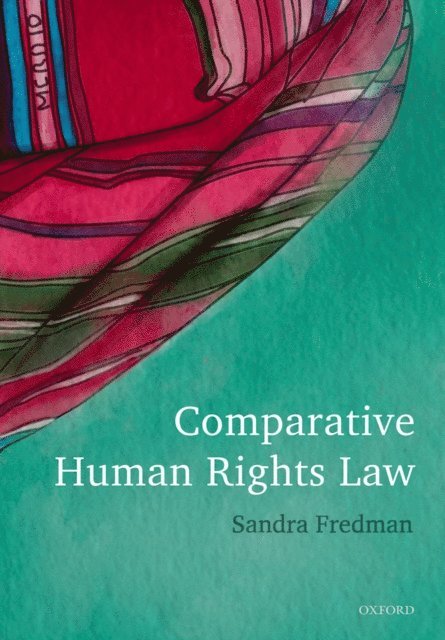
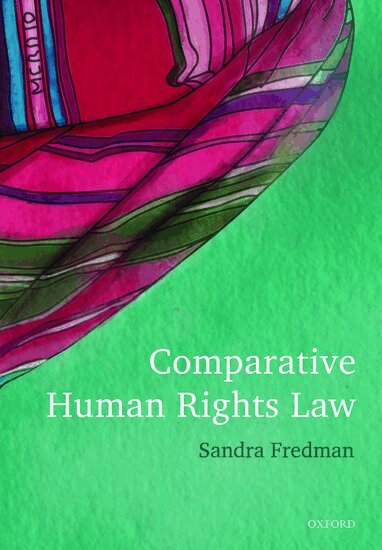
Courts in different jurisdictions face similar human rights questions. Does the death penalty breach human rights? Does freedom of speech include racist speech? Is there a right to health? This book uses the prism of comparative law to examine the fascinating ways in which these difficult questions are decided. On the one hand, the shared language of human rights suggests that there should be similar solutions to comparable problems. On the other hand, there are important differences. Constitutional texts are worded differently; courts have differing relationships with the legislature; and there are divergences in socio-economic development, politics, and history. Nevertheless, there is a growing transnational conversation between courts, with cases in one jurisdiction being cited in others. Part I sets out the cross-cutting themes which shape the ways judges respond to challenging human rights issues. It examines when it is legitimate to refer to foreign materials; how universality and cultural relativity are balanced in human rights law; the appropriate role of courts in adjudicating human rights in a democracy; and the principles judges use to interpret human rights texts. The book is unusual in transcending the distinction between socio-economic rights and civil and political rights. Part II applies these cross-cutting themes to comparing human rights law in the US, UK, South Africa, Canada, and India. Its focus is on seven particularly challenging issues: the death penalty, abortion, housing, health, speech, education and religion, with the aim of inspiring further comparative examination of other pressing human rights issues.
690 kr
Skickas inom 5-8 vardagar
Courts in different jurisdictions face similar human rights questions. Does the death penalty breach human rights? Does freedom of speech include racist speech? Is there a right to health? This book uses the prism of comparative law to examine the fascinating ways in which these difficult questions are decided. On the one hand, the shared language of human rights suggests that there should be similar solutions to comparable problems. On the other hand, there are important differences. Constitutional texts are worded differently; courts have differing relationships with the legislature; and there are divergences in socio-economic development, politics, and history. Nevertheless, there is a growing transnational conversation between courts, with cases in one jurisdiction being cited in others. Part I sets out the cross-cutting themes which shape the ways judges respond to challenging human rights issues. It examines when it is legitimate to refer to foreign materials; how universality and cultural relativity are balanced in human rights law; the appropriate role of courts in adjudicating human rights in a democracy; and the principles judges use to interpret human rights texts. The book is unusual in transcending the distinction between socio-economic rights and civil and political rights. Part II applies these cross-cutting themes to comparing human rights law in the US, UK, South Africa, Canada, and India. Its focus is on seven particularly challenging issues: the death penalty, abortion, housing, health, speech, education and religion, with the aim of inspiring further comparative examination of other pressing human rights issues.
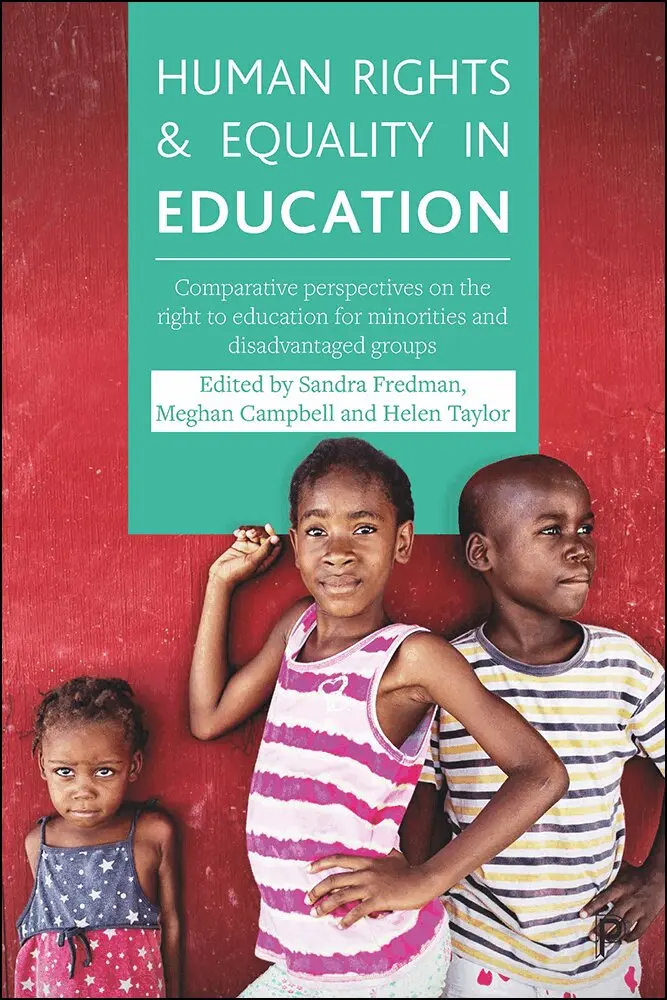
Human Rights and Equality in Education
Comparative Perspectives on the Right to Education for Minorities and Disadvantaged Groups
Inbunden, Engelska, 2018
1 143 kr
Skickas inom 5-8 vardagar
Thousands of children from minority and disadvantaged groups will never cross the threshold of a classroom. What can human rights contribute to the struggle to ensure that every learner is able to access high quality education? This brilliant interdisciplinary collection explores how a human rights perspective offers new insights and tools into the current obstacles to education. It examines the role of private actors, the need to hold states to account for the quality of education, how to strike a balance between religion, culture and education, the innovative responses needed to guarantee girls’ right to education and the role of courts. This unique book draws together contributors who have been deeply involved in this field from both developing and developed countries which enriches the understanding and remedial approaches to tackle current obstacles to universal education.
Del 1 - Constitutional Law series
Social and Economic Rights and Constitutional Law
Inbunden, Engelska, 2016
5 278 kr
Skickas inom 7-10 vardagar
Socio-economic rights raise many complex challenges to the traditional understanding of the nature of human rights, the role of courts in democratic society and the nature of remedies. This collection draws together the sophisticated and constructive solutions developed by the foremost thinkers to fully recognise socio-economic rights, demonstrating how traditional concepts and obstacles can be re-characterised and modified to ensure respect for the indivisibility of human rights.This important collection provides crucial insights into the emerging and perennial challenges to socio-economic rights. Including an original introduction, it is an ideal resource for those new to the study of socio-economic rights, academics, policy makers and all those interested in using human rights to achieve social justice.
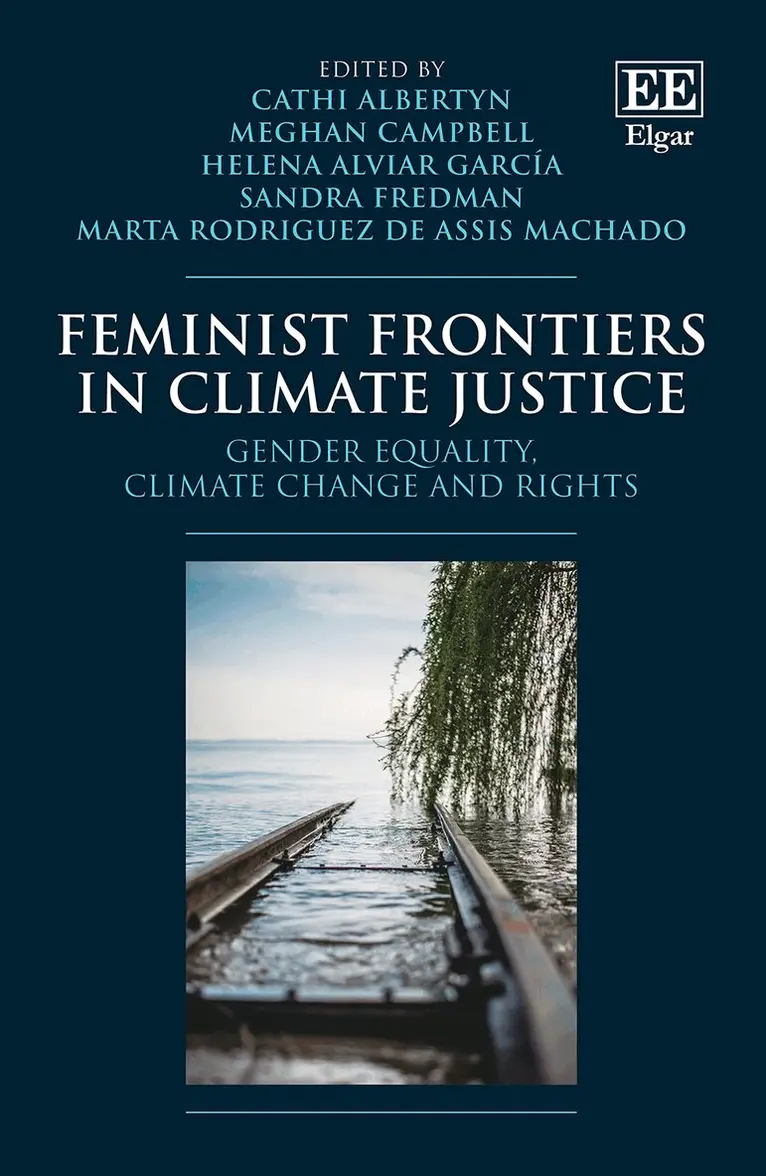
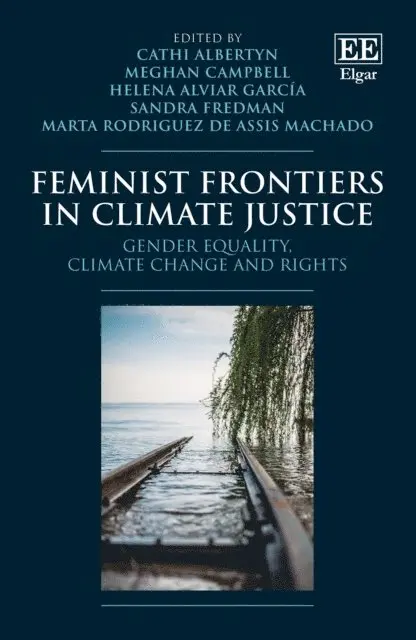
Feminist Frontiers in Climate Justice
Gender Equality, Climate Change and Rights
Inbunden, Engelska, 2023
1 820 kr
Skickas inom 7-10 vardagar
Feminist Frontiers in Climate Justice provides a compelling demonstration of the deeply gendered and unequal effects of the climate emergency, alongside the urgent need for a feminist perspective to expose and address these structural political, social and economic inequalities. Taking a nuanced, multidisciplinary approach, this book explores new ways of thinking about how climate change interacts with gender inequalities and feminist concerns with rights and law, and how the human world is bound up with the non-human, natural world.With contributions from leading scholars in law, feminism, human rights and politics, this book considers how equality is conceptualised experienced and used in policies, law and practice that are integral to climate justice. Chapters reveal how international and national policy and legal frameworks fall short on gender equality and climate justice. Overall, the book demonstrates that the climate crisis demands an ambitious and transformative approach to equality, including developing feminist ideas of care and social reproduction, to reconstruct law and policy towards a more just world for all.This ground-breaking book will be essential reading for scholars across many areas of law including environmental law, human rights, public international law, law and gender, and law and development. Its discussion of the international framework alongside in-depth casestudies and assessments of women’s mobilization strategies will also be highly relevant to social scientists, officials in international organizations, policymakers, lawyers and activists.
1 113 kr
Skickas inom 10-15 vardagar
Until recently, age discrimination attracted little social opprobrium. However, ageism has now been thrust onto the equality agenda by the spectre of an ageing population. This has led to a range of policies on 'active ageing.' Most importantly, legally binding legislation prohibiting age discrimination in employment will need to be in place by 2006. Remarkably little attention has been paid to the key issues. To what extent is age inevitably linked with declining capacity? What are the central aims of a policy on age equality, and how can these be realised in law? How should law and policy address age discrimination in health, education and employment? What lessons can be learned from the US and Europe? And should young people be dealt with in the same way as older people? This book answers these questions in a series of chapters by experts from a wide range of disciplines. It begins by examining the nature of the ageing process and then turns to a detailed analysis of the concept of age equality. In the light of this analysis, the following three chapters critically assess employment, education, and health. A separate chapter is devoted to discrimination against children.The last two chapters consider the experience in the US, and other European countries.