Sandra Kröger - Böcker
Visar alla böcker från författaren Sandra Kröger. Handla med fri frakt och snabb leverans.
9 produkter
9 produkter
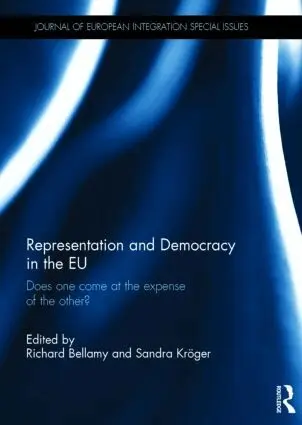
Representation and Democracy in the EU
Does one come at the expense of the other?
Häftad, Engelska, 2020
617 kr
Skickas inom 10-15 vardagar
This book explores the various ways in which citizens are represented in EU policy-making. Most accounts naturally focus on the European Parliament as the prime source of democratic representation. This collection focuses instead on four other channels that are as and often more important: namely, representation via governments, national parliaments, civil society organisations and directly, via referenda. Based on original research, the book combines democratic theory with detailed empirical analysis to provide an innovative, timely and up-to-date evaluation of the nature of representation in the EU.Policy advisors, practitioners and those scholars interested in democracy and the European Union will find this volume to be a valuable resource.This book was published as a special issue of the Journal of European Integration.
Political Representation in the European Union
Still democratic in times of crisis?
Inbunden, Engelska, 2014
2 155 kr
Skickas inom 10-15 vardagar
In recent years the financial and economic crisis of 2008–9 has progressed into an equally important political and democratic crisis of the EU. These troubled times have set the framework to re-assess a number of important questions in regard to representative democracy in the EU, such as the normative foundation of political representation, the institutional relationship between representatives and represented, the link between democracy and representation and new arenas and actors.This book examines the diverse avenues through which different sorts of actors have expressed their voices during the Euro crisis and how their various interests are translated into the decision-making process. It offers a state-of- the-art assessment of what political representation means in this context as well as a contribution to the ‘representative turn’ in democratic theory. The authors address three key themes:• The main actors and channels of political representation in the EU.• Interlocking levels of representation in the EU and the way in which national and supranational representation works.• How the European institutional system represents EU citizens through law and administration.Focusing on the importance of representation in the legitimation of democracy, this book will be of interest to students and scholars of European Union politics, European studies, democratic theory, representation studies, civil society and transnational democracy.
1 294 kr
Skickas inom 10-15 vardagar
After the participative and deliberative turns in both democratic theory and EU studies, we are currently witnessing a ‘representative turn’ to which this volume contributes by addressing the relation between representation and democracy in the EU. Although in the Lisbon Treaty the EU conceives itself as a representative democracy, the meaning of this concept in a supranational polity is far from clear – either in theory or practice. Instead, the historically contingent link between representation and democracy is today severely challenged by various processes of diversification at all levels of political action (national, regional, supranational). These processes challenge our understanding of representative democracy as involving electoral democracy within clearly delineated nation-states, provoking a situation in which ‘new frontiers’ of representation develop. Consequently, it becomes increasingly difficult to provide normative standards as well as accurate assessments of democratic representation in the EU.This volume addresses these core challenges of representative democracy in the EU from normative, theoretical and methodological perspectives.This book was published as a special issue of the Journal of European Public Policy.
576 kr
Skickas inom 10-15 vardagar
After the participative and deliberative turns in both democratic theory and EU studies, we are currently witnessing a ‘representative turn’ to which this volume contributes by addressing the relation between representation and democracy in the EU. Although in the Lisbon Treaty the EU conceives itself as a representative democracy, the meaning of this concept in a supranational polity is far from clear – either in theory or practice. Instead, the historically contingent link between representation and democracy is today severely challenged by various processes of diversification at all levels of political action (national, regional, supranational). These processes challenge our understanding of representative democracy as involving electoral democracy within clearly delineated nation-states, provoking a situation in which ‘new frontiers’ of representation develop. Consequently, it becomes increasingly difficult to provide normative standards as well as accurate assessments of democratic representation in the EU.This volume addresses these core challenges of representative democracy in the EU from normative, theoretical and methodological perspectives.This book was published as a special issue of the Journal of European Public Policy.
Political Representation in the European Union
Still democratic in times of crisis?
Häftad, Engelska, 2016
671 kr
Skickas inom 10-15 vardagar
In recent years the financial and economic crisis of 2008–9 has progressed into an equally important political and democratic crisis of the EU. These troubled times have set the framework to re-assess a number of important questions in regard to representative democracy in the EU, such as the normative foundation of political representation, the institutional relationship between representatives and represented, the link between democracy and representation and new arenas and actors.This book examines the diverse avenues through which different sorts of actors have expressed their voices during the Euro crisis and how their various interests are translated into the decision-making process. It offers a state-of- the-art assessment of what political representation means in this context as well as a contribution to the ‘representative turn’ in democratic theory. The authors address three key themes:• The main actors and channels of political representation in the EU.• Interlocking levels of representation in the EU and the way in which national and supranational representation works.• How the European institutional system represents EU citizens through law and administration.Focusing on the importance of representation in the legitimation of democracy, this book will be of interest to students and scholars of European Union politics, European studies, democratic theory, representation studies, civil society and transnational democracy.
Representation and Democracy in the EU
Does one come at the expense of the other?
Inbunden, Engelska, 2014
2 088 kr
Skickas inom 10-15 vardagar
This book explores the various ways in which citizens are represented in EU policy-making. Most accounts naturally focus on the European Parliament as the prime source of democratic representation. This collection focuses instead on four other channels that are as and often more important: namely, representation via governments, national parliaments, civil society organisations and directly, via referenda. Based on original research, the book combines democratic theory with detailed empirical analysis to provide an innovative, timely and up-to-date evaluation of the nature of representation in the EU.Policy advisors, practitioners and those scholars interested in democracy and the European Union will find this volume to be a valuable resource.This book was published as a special issue of the Journal of European Integration.
638 kr
Skickas inom 7-10 vardagar
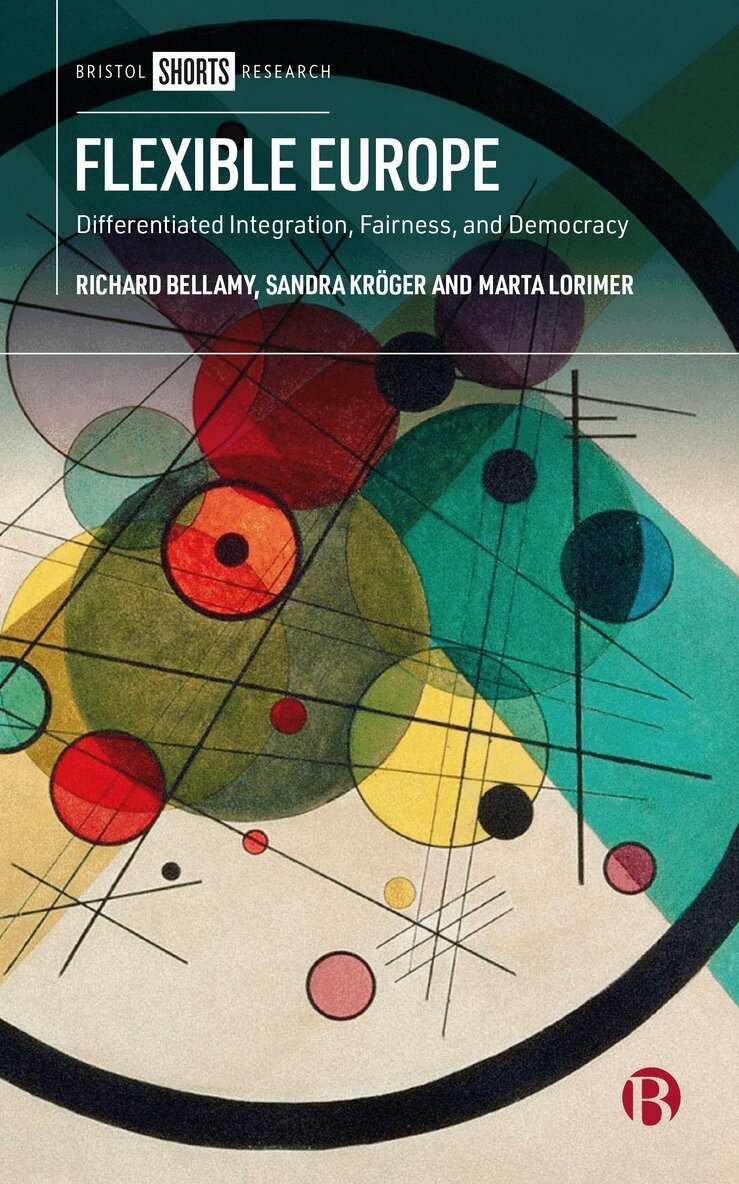
The European Union (EU) is often portrayed as sacrificing national diversity for European unity. This book explores the alternative of a flexible EU based on differentiated rather than uniform integration. The authors combine normative theory with empirical research on political party actors to assess the desirability and political acceptability of differentiated integration as a means of accommodating heterogeneity in the EU. They examine the circumstances and institutional design needed for flexibility to promote rather than undermine fairness and democracy within and between member states.Clear, balanced, and accessible, the book provides fresh thinking on the future of the EU.
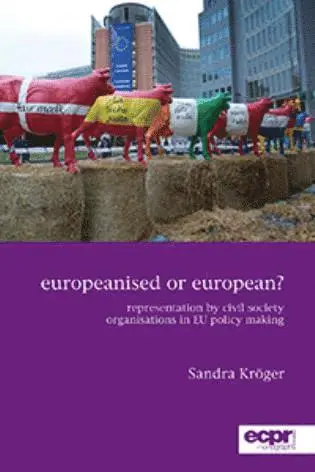
Europeanised or European?
Representation by Civil Society Organisations in EU Policy Making
Inbunden, Engelska, 2016
1 130 kr
Skickas inom 5-8 vardagar
Soft Governance in Hard Politics
European Coordination of Anti-Poverty Policies in France and Germany
Häftad, Engelska, 2008
536 kr
Skickas inom 10-15 vardagar
The present study addresses the governance architecture of the much debated Open Method of Coordination (OMC) in the field of social inclusion and evaluates its implementation in France, Germany and at EU-level. Based on extensive variable-based empirical research, it assesses both the effectiveness and the legitimacy of the OMC and comes to unequivocal conclusions: Due to the resistance of member states and remaining differences in underlying ideas of social justice, anti-poverty policy could not be Europeanised through the OMC which unfolds as a very weak governance architecture. The general framework of negative integration remains unchallenged by this non-binding instrument which, to the contrary of its intention, rather forecloses the possibility of supranational learning. With regard to legitimacy, the OMC supports policy-making in closed, intransparent circles of very weakly or not democratically mandated representatives and therefore does little do decrease the democratic deficit of the EU - however one of its original ambitions.