Sandra Mathison - Böcker
Visar alla böcker från författaren Sandra Mathison. Handla med fri frakt och snabb leverans.
3 produkter
3 produkter
3 443 kr
Skickas inom 3-6 vardagar
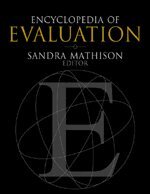
All humans are nascent evaluators. Evaluation has been with us throughout history, and in its modern form has moved from the margins to the centers of organizations, agencies, educational institutions, and corporate boardrooms. No longer a specialized, part-time activity, evaluation has become institutionalized, a common practice, and indeed an important commodity in political and social life.The Encyclopedia of Evaluation is an authoritative, first-of-its-kind who, what, where, why, and how of the field of evaluation. Covering professional practice as well as academia, this volume chronicles the development of the field—its history, key figures, theories, approaches, and goals. From the leading publisher in the field of evaluation, this work is a must-have for all social science libraries, departments that offer courses in evaluation, and students and professional evaluators around the world.The entries in this Encyclopedia capture the essence of evaluation as a practice (methods, techniques, roles, people), as a profession (professional obligations, shared knowledge, ethical imperatives, events, places) and as a discipline (theories and models of evaluation, ontological and epistemological issues).International ScopeDespite the fact that evaluation practice is not institutionalized in the same way around the world, the encyclopedia recognizes the international growth of the profession, due in large part to organizations such as UNICEF, the World Bank, and USAID. Entries cover the following: Afghanistan, Belgium, Cambodia, Ethiopia, Germany, Greece, Guyana, Israel, Netherlands, Niger, Scotland, South Africa, Spain, and Uganda. In addition, the international group of authors includes contributions from more than a dozen nations. There are a number of stories about evaluation practice around the world that are set off as sidebars in the text. These stories provide a glimpse into the nature of evaluation practice in a diverse set of circumstances, delineate the common and uncommon issues for evaluators around the world, and point to the complexities of importing evaluation from one culture to another.Interdisciplinary Methodological CoverageMuch of the practice of evaluation has grown out of the social science research tradition. While psychological methods and psychometrics continue to be useful, evaluation research today draws from a wide range of disciplines, including anthropology, education, political science, literary criticism, systems theory, and others. This Encyclopedia covers all of the relevant methodologies, including both qualitative and quantitative approaches. Evaluators and TheoriesThe Encyclopedia of Evaluation includes significant coverage of the major figures in the field throughout its history. Many of these figures are well known for a particular theory or approach, and whenever applicable, the entries make this connection for the reader as well as provide references for further reading. Good examples include Michael Quinn Patton and Utilization-Focused Evaluation, David Fetterman and Empowerment Evaluation, Daniel Stufflebeam′s CIPP Model of Evaluation, and Huey Chen and Theory-driven Evaluations.Key Themes• Concepts, Evaluation• Concepts, Methodological• Concepts, Philosophical• Concepts, Social Science• Ethics and Standards• Evaluation Approaches and Models• Evaluation around the World, Stories• Evaluation Planning• Evaluation Theory• Laws and Legislation• Organizations• People• Publications• Qualitative Methods• Quantitative Methods• Representation, Reporting, Communicating• Systems• Technology• UtilizationKey Features• More than 100 contributors from around the world• Single, affordable volume with nearly 600 entries arranged alphabetically• Entries written by an international team of experts, including narratives that depict evaluation practice around the world• Reader′s Guide arranges entries into 18 thematic categories to facilitate browsing among core topicsEditorial BoardRoss Connor, University of California, IrvineLois-Ellin Datta, ConsultantMelissa Freeman, University at AlbanyRodney Hopson, Duquesne UniversitySaville Kushner, University of the West of England, U.K.Yvonna S. Lincoln, Texas A&M UniversityCheryl MacNeil, Community Activist and Evaluation ConsultantDonna M. Mertens, Gallaudet University, Washington DCJames Mugaju, UNICEFZenda Ofir, EvalNetMichael Quinn Patton, Union Institute and UniversityHallie Preskill, University of New MexicoDebra Rog, Vanderbilt UniversityPatricia Rogers, Evaluation Practitioner, Researcher, and EducatorThomas A. Schwandt, University of Illinois, Urbana-ChampaignMichael Scriven, Auckland University, New ZealandElizabeth Whitmore, Carleton University, Canada
Nature and Limits of Standards-based Reform and Assessment
Defending Public Schools
Häftad, Engelska, 2008
313 kr
Skickas inom 7-10 vardagar
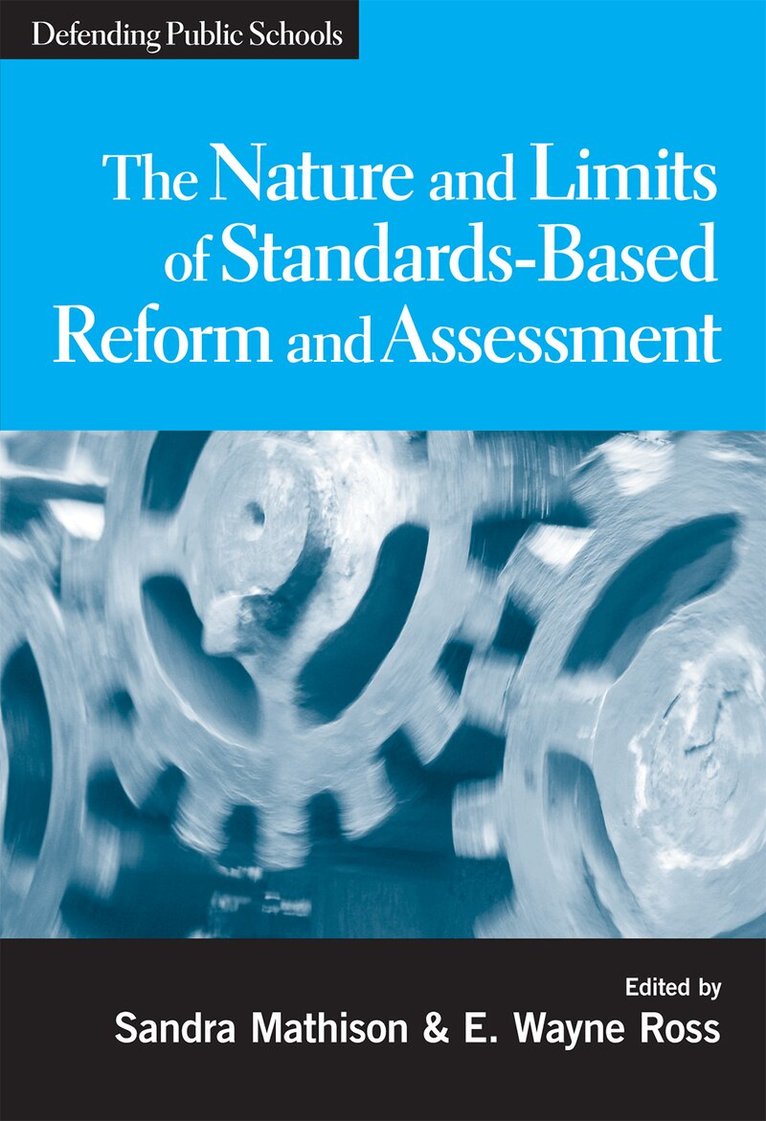
This highly acclaimed volume in the ""Defending Public Schools"" series is now available in paperback from Teachers College Press. It is a practical, necessary addition to the work of administrators, teachers, policymakers, and parents as they negotiate the difficult path of how to best teach and educate today's children and youth. Educational standards and assessment practices are the engine driving the historic changes public schools are experiencing today. This book provides readers with the foundation for a more holistic understanding of the nature and limits of standards-based educational reforms and, in particular, the ways in which current assessment practices influence the experiences of students, teachers, administrators, and parents.This dynamic collection of essays presents an overview of the origins and development of standards-based educational reform and assessment, a description of the standards-based educational reform (SBER) movement's essential elements, and a critical analysis of the means and ends of what is perhaps the most important reform effort U.S. schools have ever experienced.
506 kr
Skickas inom 7-10 vardagar
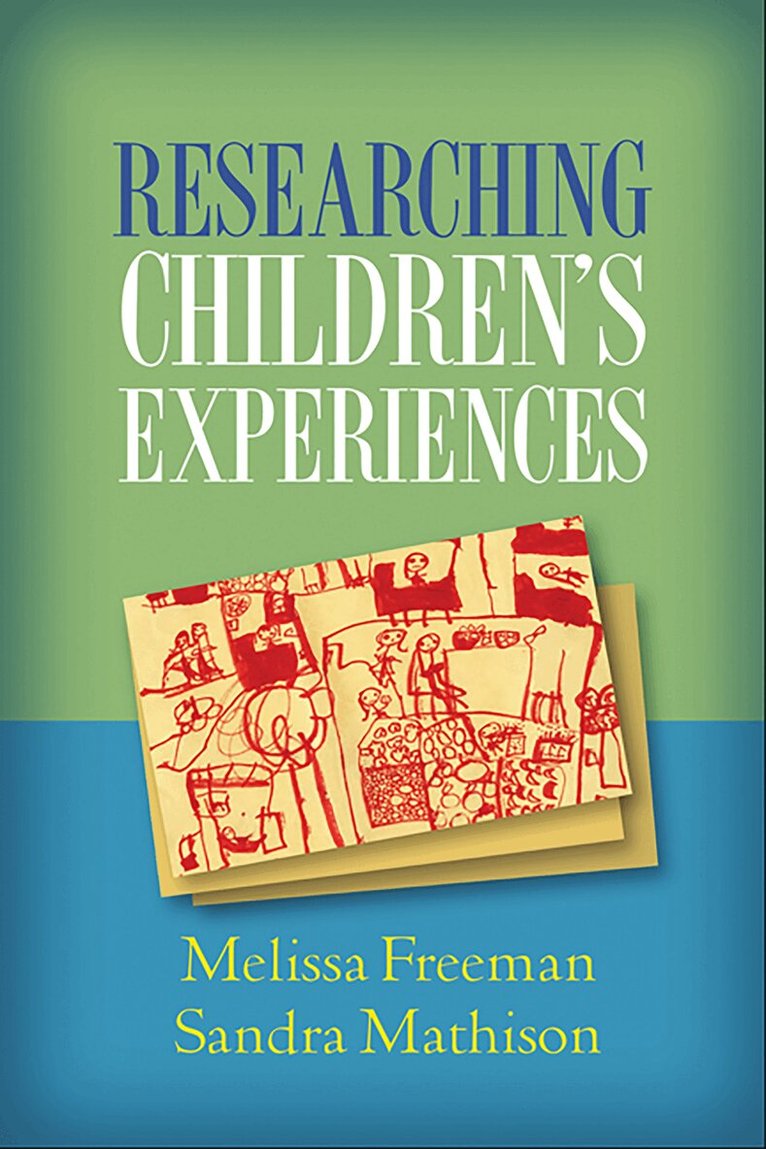
This accessible book presents approaches to planning, carrying out, and analyzing research projects with children and youth from a social constructivist perspective. Rich, contextualized examples illustrate how to elicit and understand the lived experiences of diverse young people. Data-collection methods discussed in depth include drawing, photography, the Internet, games, interviewing, focus groups, journaling, and observation. Also covered are strategies for fostering the active contributions of children in the research process; navigating consent and ethical issues; enlisting the support of parents, school personnel, and other gatekeepers; and interpreting data. Throughout, the authors emphasize the need to attend to the social setting in which research with children is done. End-of-chapter questions and exercises encourage readers to reflect on taken-for-granted conceptions of children and childhood and to try out the book’s ideas in their own research projects.