Sandrine Kott - Böcker
Visar alla böcker från författaren Sandrine Kott. Handla med fri frakt och snabb leverans.
9 produkter
9 produkter
1 152 kr
Skickas inom 7-10 vardagar
The post–World War II period is typically seen as a time of stark division, an epochal global conflict between the United States and the Soviet Union. But beneath the surface, the postwar era witnessed a striking degree of international cooperation. The United Nations and its agencies, as well as regional organizations, international nongovernmental organizations, and private foundations brought together actors from conflicting worlds, fostering international collaboration across the geopolitical and ideological divisions of the Cold War.Diving into the archives of these organizations and associations, Sandrine Kott provides a new account of the Cold War that foregrounds the rise of internationalism as both an ideology and a practice. She examines cooperation across boundaries in international spaces, emphasizing the role of midsized powers, including Eastern European and neutral countries. Kott highlights how the need to address global inequities became a central concern, as officials and experts argued that economic inequality imperiled the creation of a lasting peace. International organizations gave newly decolonized and “Third World” countries a platform to challenge the global distribution of power and wealth, and they encouraged transnational cooperation in causes such as human rights and women’s rights. Assessing the failure to achieve a new international economic order in the 1970s, Kott adds new perspective on the rise of neoliberalism. A truly global study of the Cold War through the lens of international organizations, A World More Equal also shows why the internationalism of this era offers resources for addressing social and global inequalities today.
293 kr
Skickas inom 7-10 vardagar
The post–World War II period is typically seen as a time of stark division, an epochal global conflict between the United States and the Soviet Union. But beneath the surface, the postwar era witnessed a striking degree of international cooperation. The United Nations and its agencies, as well as regional organizations, international nongovernmental organizations, and private foundations brought together actors from conflicting worlds, fostering international collaboration across the geopolitical and ideological divisions of the Cold War.Diving into the archives of these organizations and associations, Sandrine Kott provides a new account of the Cold War that foregrounds the rise of internationalism as both an ideology and a practice. She examines cooperation across boundaries in international spaces, emphasizing the role of midsized powers, including Eastern European and neutral countries. Kott highlights how the need to address global inequities became a central concern, as officials and experts argued that economic inequality imperiled the creation of a lasting peace. International organizations gave newly decolonized and “Third World” countries a platform to challenge the global distribution of power and wealth, and they encouraged transnational cooperation in causes such as human rights and women’s rights. Assessing the failure to achieve a new international economic order in the 1970s, Kott adds new perspective on the rise of neoliberalism. A truly global study of the Cold War through the lens of international organizations, A World More Equal also shows why the internationalism of this era offers resources for addressing social and global inequalities today.
654 kr
Skickas inom 10-15 vardagar
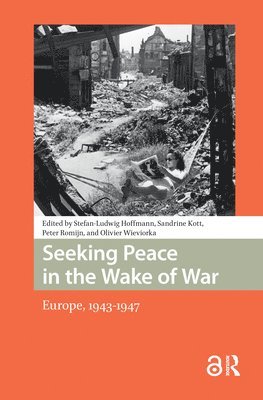
When the Second World War ended, Europe was in ruins. Yet, politically and socially, the years between 1943 and 1947 were a time of dramatic reconfigurations, which proved to be foundational for the making of today's Europe. This volume hones in on the crucial period from the beginning of the end of Nazi rule in Europe to the advent of the Cold War. Through a series of interrelated case studies that span the entire continent, it demonstrates how the everyday experiences of Europeans during these five years shaped the transition of their societies from war to peace. The authors explore these reconfigurations on different scales and levels -the local and regional, the ethnic and national, and the international - with the purpose of enhancing our understanding of how wars end.
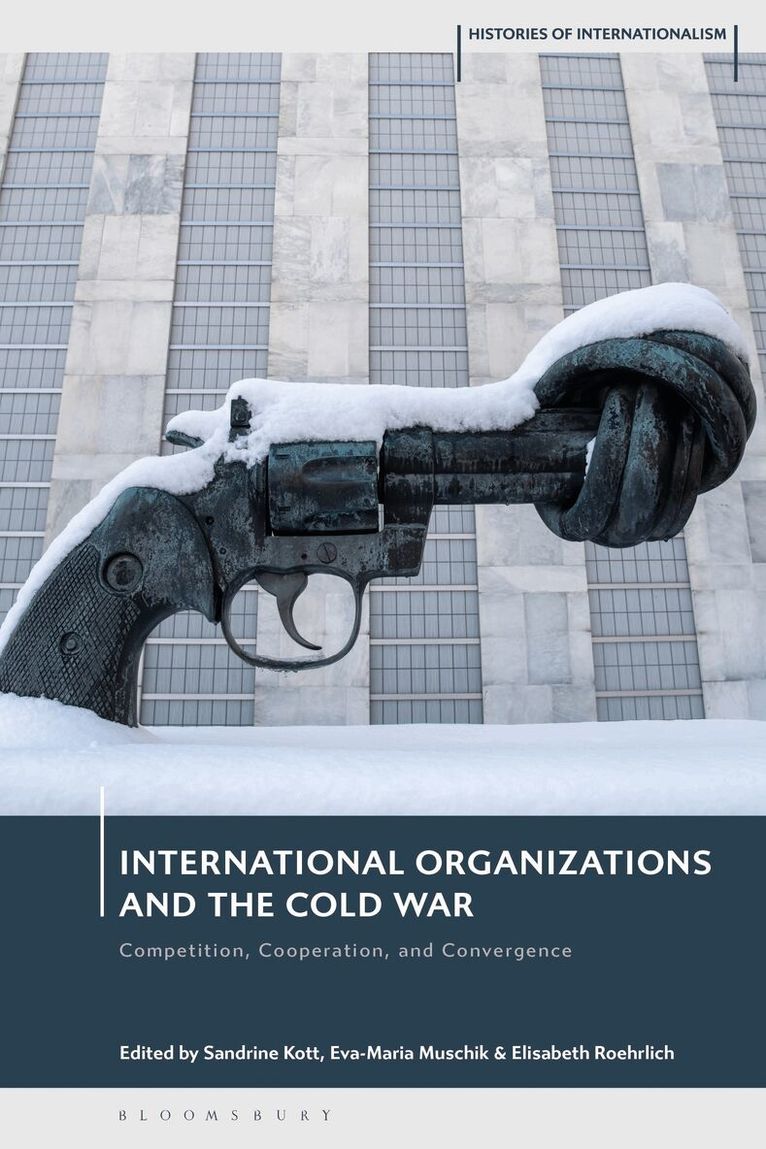
International Organizations and the Cold War
Competition, Cooperation, and Convergence
Inbunden, Engelska, 2025
1 142 kr
Skickas inom 10-15 vardagar
The post-WWII era was a time of superpower confrontation and antagonistic bloc politics, but it was also a period in which organized internationalism reached its peak as both an ideological value and a political practice. This open access volume explores how international organizations affected the evolution and nature of Cold War rivalries, and how they in turn were shaped by them.In seeking to understand the role that international organizations have played as sites of confrontation, this volume also highlights their role as spaces for mediation and negotiation, particularly for middle-size powers and colonized or newly decolonized countries. Through multiple perspectives, based on a diverse array of historical sources, the authors collectively explore how international organizations were able to bridge and move beyond the Cold War divide by promoting common causes and shaping common scientific knowledge, communities and practices.Rather than focusing exclusively on western-dominated institutions within the UN system which have received the most scholarly attention to date, International Organizations and the Cold War highlights the role of lesser-known groups such as the Paris-based International Child Center, the Prague-based International Union of Students and historical actors such as Soviet public health experts and Chinese development specialists. In doing so, it asks new questions about the role of international organizations in securing peace and security across the modern world, and their role as negotiator in times of tension and crisis.The ebook editions of this book are available open access under a CC BY-NC-ND 4.0 licence on bloomsburycollections.com. Open access was funded by the Swiss National Science Foundation.
International Organizations and the Cold War
Competition, Cooperation, and Convergence
Häftad, Engelska, 2026
484 kr
Kommande
The post-WWII era was a time of superpower confrontation and antagonistic bloc politics, but it was also a period in which organized internationalism reached its peak as both an ideological value and a political practice. This open access volume explores how international organizations affected the evolution and nature of Cold War rivalries, and how they in turn were shaped by them.In seeking to understand the role that international organizations have played as sites of confrontation, this volume also highlights their role as spaces for mediation and negotiation, particularly for middle-size powers and colonized or newly decolonized countries. Through multiple perspectives, based on a diverse array of historical sources, the authors collectively explore how international organizations were able to bridge and move beyond the Cold War divide by promoting common causes and shaping common scientific knowledge, communities and practices.Rather than focusing exclusively on western-dominated institutions within the UN system which have received the most scholarly attention to date, International Organizations and the Cold War highlights the role of lesser-known groups such as the Paris-based International Child Center, the Prague-based International Union of Students and historical actors such as Soviet public health experts and Chinese development specialists. In doing so, it asks new questions about the role of international organizations in securing peace and security across the modern world, and their role as negotiator in times of tension and crisis.The ebook editions of this book are available open access under a CC BY-NC-ND 4.0 licence on bloomsburycollections.com. Open access was funded by the Swiss National Science Foundation.
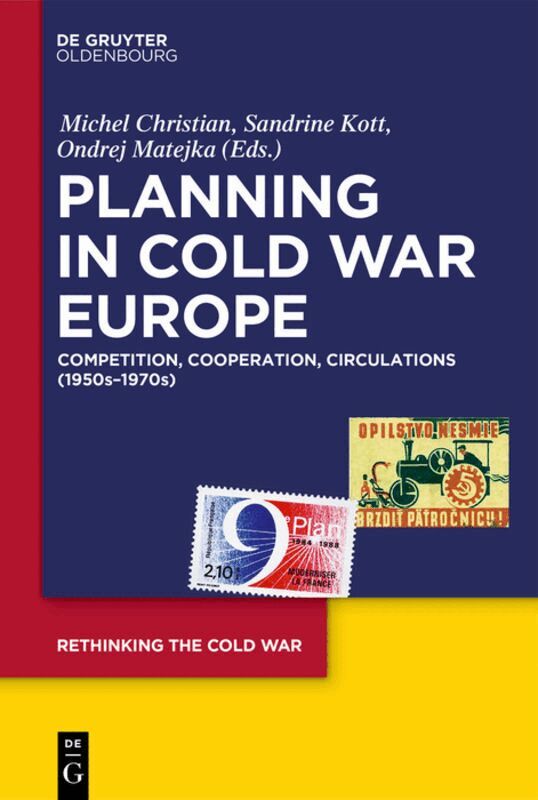
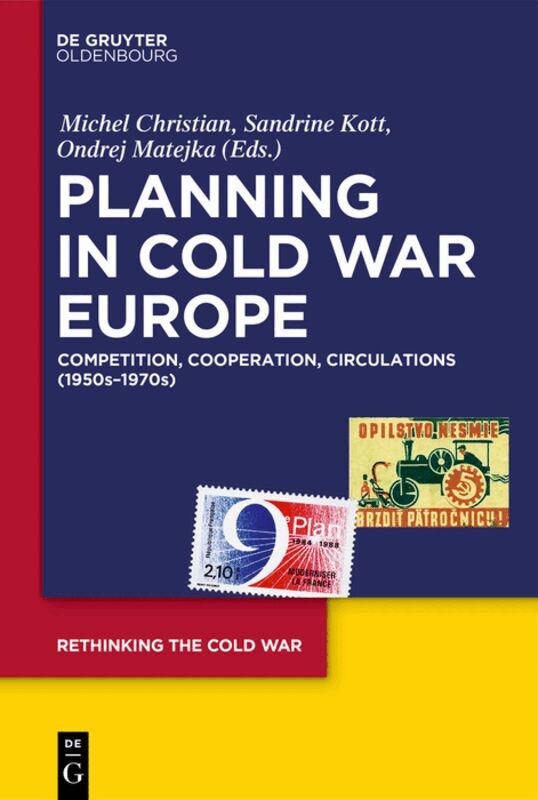
Planning in Cold War Europe
Competition, Cooperation, Circulations (1950s-1970s)
Inbunden, Engelska, 2018
1 928 kr
Skickas inom 3-6 vardagar
The idea of planning economy and engineering social life has often been linked with Communist regimes’ will of control. However, the persuasion that social and economic processes could and should be regulated was by no means limited to them. Intense debates on these issues developed already during the First World War in Europe and became globalized during the World Economic crisis. During the Cold War, such discussions fuelled competition between two models of economic and social organisation but they also revealed the convergences and complementarities between them. This ambiguity, so often overlooked in histories of the Cold War, represents the central issue of the book organized around three axes. First, it highlights how know-how on planning circulated globally and were exchanged by looking at international platforms and organizations. The volume then closely examines specificities of planning ideas and projects in the Communist and Capitalist World. Finally, it explores East-West channels generated by exchanges around issues of planning which functioned irrespective of the Iron Curtain and were exported in developing countries. The volume thus contributes to two fields undergoing a process of profound reassessment: the history of modernisation and of the Cold War.
Del 2 - Rethinking the Cold War
Planning in Cold War Europe
Competition, Cooperation, Circulations (1950s-1970s)
Häftad, Engelska, 2020
438 kr
Skickas inom 5-8 vardagar
The idea of planning economy and engineering social life has often been linked with Communist regimes’ will of control. However, the persuasion that social and economic processes could and should be regulated was by no means limited to them. Intense debates on these issues developed already during the First World War in Europe and became globalized during the World Economic crisis. During the Cold War, such discussions fuelled competition between two models of economic and social organisation but they also revealed the convergences and complementarities between them. This ambiguity, so often overlooked in histories of the Cold War, represents the central issue of the book organized around three axes. First, it highlights how know-how on planning circulated globally and were exchanged by looking at international platforms and organizations. The volume then closely examines specificities of planning ideas and projects in the Communist and Capitalist World. Finally, it explores East-West channels generated by exchanges around issues of planning which functioned irrespective of the Iron Curtain and were exported in developing countries. The volume thus contributes to two fields undergoing a process of profound reassessment: the history of modernisation and of the Cold War.
1 105 kr
Skickas inom 11-20 vardagar
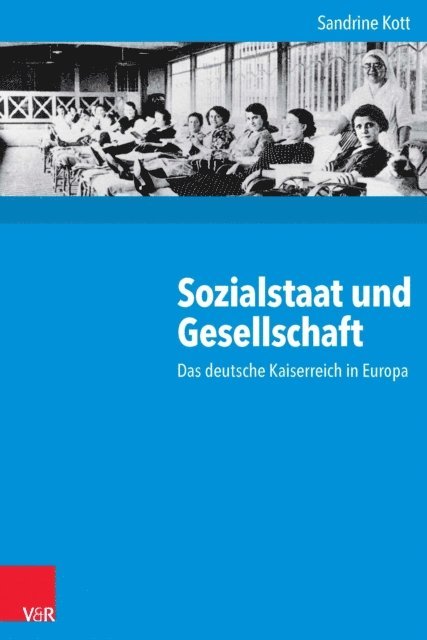
Sandrine Kott untersucht in diesem Buch die Entstehung und Entwicklung des deutschen Sozialstaats bis 1914 im europaeischen Kontext. Im Mittelpunkt stehen u.a. Fragen nach den Bedingungen fuer die Entstehung sozialer Demokratie, der konkreten Verwaltungspraxis sowie den realen Auswirkungen der Sozialgesetzgebung auf die Nationsbildung, die Situationen der Frauen und die Gesundheitspolitik. Die Studie zeigt, dass der deutsche Sozialstaat aus gesellschaftlicher Praxis heraus entstanden ist und seine Entstehung Teil einer europaeischen Entwicklung war.>;In this volume the author studies the rise and development of the German social state up to 1914 in a European context. She asks what the conditions were that led to the development of a social democracy, the actual administrative practices and the fundamental repercussions for the nation of installing social insurance. She also touches on the particular situation of women and the role of healthcare politics. This study show that the German social state was an outgrowth of the existing social practices, and that its rise was part of an overall development throughout Europe.>
Del 2 - War, Conflict and Genocide Studies
Seeking Peace in the Wake of War
Europe, 1943-1947
Inbunden, Engelska, 2015
2 015 kr
Skickas inom 10-15 vardagar
Through a series of interrelated case studies that span the entire continent, this work demonstrates how the everyday experiences of Europeans during these five years shaped the transition of their societies from war to peace.