Sandrine Robert – författare
Visar alla böcker från författaren Sandrine Robert. Handla med fri frakt och snabb leverans.
5 produkter
5 produkter
E-bok
Engelska, 20212 183 kr
Läs direkt efter köp
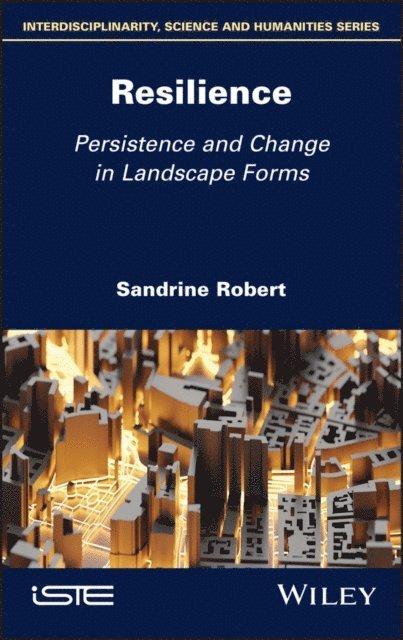
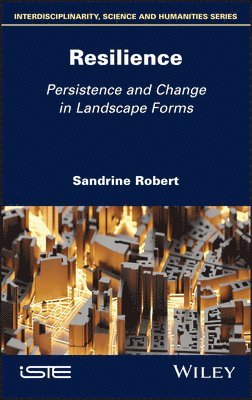
The articulation between persistence and change is relevant to a great number of different disciplines. It is particularly central to the study of urban and rural forms in many different fields of research, in geography, archaeology, architecture and history. Resilience puts forward the idea that we can no longer be truly satisfied with the common approaches used to study the dynamics of landscapes, such as the palimpsest approach, the regressive method and the semiological analysis amongst others, because they are based on the separation between the past and the present, which itself stems from the differentiation between nature and society. This book combines spatio-temporalities, as described in archeogeography, with concepts that have been developed in the field of ecological resilience, such as panarchy and the adaptive cycle. Thus revived, the morphological analysis in this work considers landscapes as complex resilient adaptive systems. The permanence observed in landscapes is no longer presented as the endurance of inherited forms, but as the result of a dynamic that is fed by this constant dialogue between persistence and change. Thus, resilience is here decisively on the side of dynamics rather than that of resistance.
E-bok
PDF, Engelska, 20222 125 kr
Läs direkt efter köp
The articulation between persistence and change is relevant to a great number of different disciplines. It is particularly central to the study of urban and rural forms in many different fields of research, in geography, archaeology, architecture and history. Resilience puts forward the idea that we can no longer be truly satisfied with the common approaches used to study the dynamics of landscapes, such as the palimpsest approach, the regressive method and the semiological analysis amongst others, because they are based on the separation between the past and the present, which itself stems from the differentiation between nature and society. This book combines spatio-temporalities, as described in archeogeography, with concepts that have been developed in the field of ecological resilience, such as panarchy and the adaptive cycle. Thus revived, the morphological analysis in this work considers landscapes as complex resilient adaptive systems. The permanence observed in landscapes is no longer presented as the endurance of inherited forms, but as the result of a dynamic that is fed by this constant dialogue between persistence and change. Thus, resilience is here decisively on the side of dynamics rather than that of resistance.
Del 2541 - BAR International Series
Understanding Landscapes from Land Discovery to their Spatial Organization / Le franchissement des détroits et des bras de mer aux périodes pré- et pr
Häftad, Engelska, 2013
376 kr
Skickas inom 3-6 vardagar
1 800 kr
Skickas inom 5-8 vardagar
Inbunden, Engelska, 2022
1 843 kr
Skickas inom 5-8 vardagar
The articulation between persistence and change is relevant to a great number of different disciplines. It is particularly central to the study of urban and rural forms in many different fields of research, in geography, archaeology, architecture and history. Resilience puts forward the idea that we can no longer be truly satisfied with the common approaches used to study the dynamics of landscapes, such as the palimpsest approach, the regressive method and the semiological analysis amongst others, because they are based on the separation between the past and the present, which itself stems from the differentiation between nature and society. This book combines spatio-temporalities, as described in archeogeography, with concepts that have been developed in the field of ecological resilience, such as panarchy and the adaptive cycle. Thus revived, the morphological analysis in this work considers landscapes as complex resilient adaptive systems. The permanence observed in landscapes is no longer presented as the endurance of inherited forms, but as the result of a dynamic that is fed by this constant dialogue between persistence and change. Thus, resilience is here decisively on the side of dynamics rather than that of resistance.