Santosh Anand – författare
Visar alla böcker från författaren Santosh Anand. Handla med fri frakt och snabb leverans.
5 produkter
5 produkter
Inbunden, Engelska, 2026
3 029 kr
Kommande
Mangrove ecosystems represent one of nature’s most dynamic interfaces between terrestrial and marine environments. Over the past few decades, these resilient plants have drawn increasing scientific attention for their remarkable phytochemical diversity and pharmacological potential.Phytochemical and Pharmacological Implications of Mangroves presents a comprehensive exploration of the chemical and therapeutic attributes of mangroves and their associated microbiota. This volume integrates fundamental and applied research to highlight the significance of mangrove-derived natural products in drug discovery and biomedical innovation.Key Features:· Part I: Introduction- Provides an overview of current trends and future prospects in mangrove research, with emphasis on ecological relevance and emerging biotechnological applications.· Part II: Phytochemical Implications of Mangroves- Examines the occurrence, distribution, and biological significance of diverse secondary metabolites, including flavonoids, terpenoids, steroids, alkaloids, carotenoids, lignan glycosides, anthraquinones, and fatty acids. A dedicated chapter explores mangrove-associated endophytes as potent producers of novel bioactive compounds.· Part III: Pharmacological Implications of Mangroves- Discusses the therapeutic potential of mangrove-derived metabolites in the prevention and management of major diseases such as cancer, neurodegenerative disorders, cardiovascular ailments, inflammatory bowel disease, diabetes, liver dysfunction, ophthalmic diseases, atopic dermatitis, and microbial infections.Written and reviewed by experts in phytochemistry, pharmacology, and marine biotechnology, this book provides a detailed account of how mangrove biodiversity can be harnessed for sustainable healthcare solutions.Phytochemical and Pharmacological Implications of Mangroves serves as an invaluable reference for researchers, academicians, and professionals in the fields of natural product chemistry, pharmacognosy, marine biology, and environmental sciences.
Häftad, Engelska, 2002
165 kr
Skickas inom 5-8 vardagar
Inbunden, Engelska, 2012
1 652 kr
Skickas inom 5-8 vardagar
Inbunden, Engelska, 2026
2 458 kr
Skickas inom 10-15 vardagar
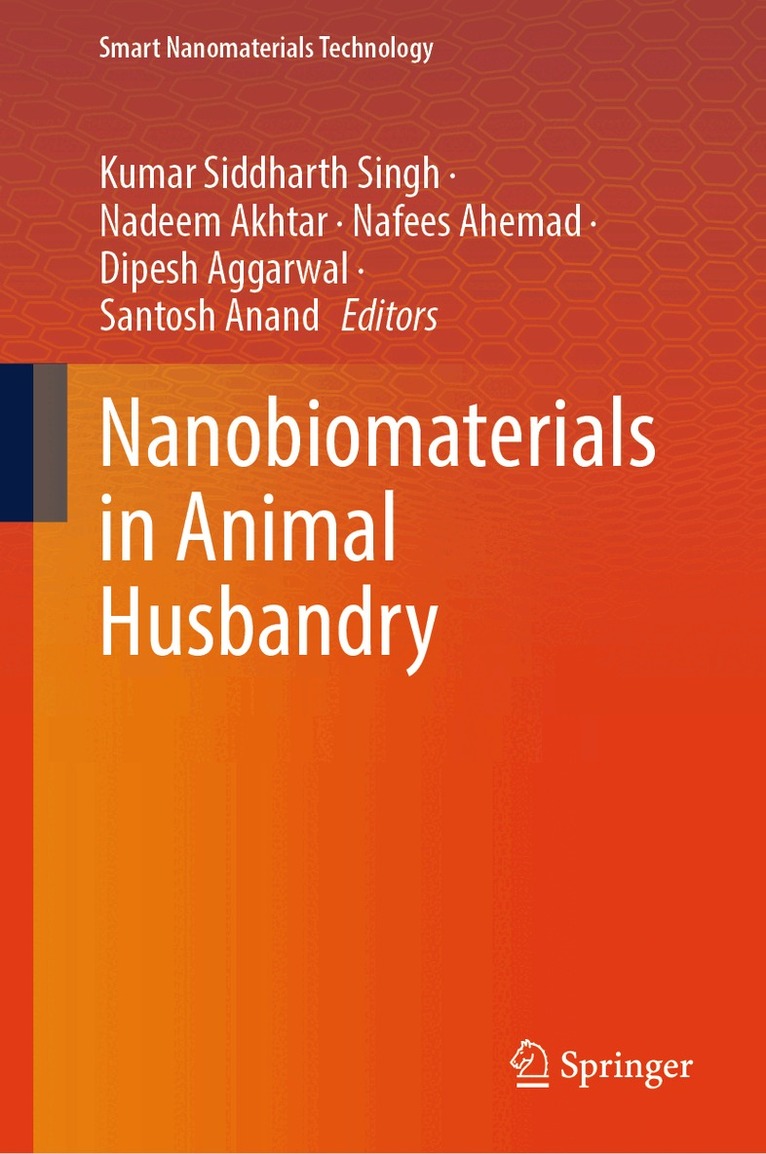
This book provides insights into the use of advanced nanobiomaterials in an age-old domain of animal husbandry. As per a 2020 estimate, approximately 40% of the overall agricultural GDP is attributed to global livestock production, thereby highlighting its importance. Owing to its challenges such as diseases, quality, safety, and care, there is a need for efficient management and use of advanced integrated technologies. Here, nanobiomaterials offer promising avenues for innovation and advancement in the realm of animal husbandry. This dynamic field has garnered attention due to its potential to revolutionize various aspects of animal production and veterinary care, such as diagnosis, drug and nutrient delivery, genome-assisted breeding, gene therapy, and quality enhancement. Owing to the available research and continuous advancements, the future of nanobiomaterials in animal husbandry appears bright, promising a host of innovative solutions to enhance animal well-being, productivity, and overall veterinary care. The significance of the topics covered in this book lies in its potential to revolutionize multiple facets of animal production, veterinary care, and agriculture. Nanotechnology’s capacity to manipulate materials at the nanoscale offers unparalleled opportunities to tackle pressing challenges in animal husbandry. The utilization of nanobiomaterials in animal breeding could yield breakthroughs in diagnosing and treating reproductive disorders, enhancing animal reproductive efficiency and breeding programs, with direct implications for livestock industry productivity and sustainability. We highlight the use of nanomaterials in veterinary medicine, drug delivery disease management, and gene therapy. Additionally, nanoparticles as nutrient delivery systems in animal feed have the potential to substantially enhance nutrient absorption and utilization, contributing to better animal health, growth, and overall production efficiency. The antimicrobial properties of nanoparticles could curtail pathogen dissemination in animal populations, fostering improved animal welfare and food safety. Here, we apprise the reader about the available technologies that are intricately useful in animal husbandry.
E-bok
Engelska, 20263 046 kr
Läs direkt efter köp
This book provides insights into the use of advanced nanobiomaterials in an age-old domain of animal husbandry. As per a 2020 estimate, approximately 40% of the overall agricultural GDP is attributed to global livestock production, thereby highlighting its importance. Owing to its challenges such as diseases, quality, safety, and care, there is a need for efficient management and use of advanced integrated technologies. Here, nanobiomaterials offer promising avenues for innovation and advancement in the realm of animal husbandry. This dynamic field has garnered attention due to its potential to revolutionize various aspects of animal production and veterinary care, such as diagnosis, drug and nutrient delivery, genome-assisted breeding, gene therapy, and quality enhancement. Owing to the available research and continuous advancements, the future of nanobiomaterials in animal husbandry appears bright, promising a host of innovative solutions to enhance animal well-being, productivity, and overall veterinary care. The significance of the topics covered in this book lies in its potential to revolutionize multiple facets of animal production, veterinary care, and agriculture. Nanotechnology’s capacity to manipulate materials at the nanoscale offers unparalleled opportunities to tackle pressing challenges in animal husbandry. The utilization of nanobiomaterials in animal breeding could yield breakthroughs in diagnosing and treating reproductive disorders, enhancing animal reproductive efficiency and breeding programs, with direct implications for livestock industry productivity and sustainability. We highlight the use of nanomaterials in veterinary medicine, drug delivery disease management, and gene therapy. Additionally, nanoparticles as nutrient delivery systems in animal feed have the potential to substantially enhance nutrient absorption and utilization, contributing to better animal health, growth, and overall production efficiency. The antimicrobial properties of nanoparticles could curtail pathogen dissemination in animal populations, fostering improved animal welfare and food safety. Here, we apprise the reader about the available technologies that are intricately useful in animal husbandry.