Sarah Stroud - Böcker
Visar alla böcker från författaren Sarah Stroud. Handla med fri frakt och snabb leverans.
4 produkter
4 produkter
816 kr
Skickas inom 5-8 vardagar
Among the many practical failures that threaten us, weakness of will or akrasia is often considered to be a paradigm of irrationality. The eleven new essays in this collection, written by an excellent international team of philosophers, some well-established, some younger scholars, give a rich overview of the current debate over weakness of will and practical irrationality more generally. Issues covered include classical questions such as the distinction between weakness and compulsion, the connection between evaluative judgement and motivation, the role of emotions in akrasia, rational agency, and the existence of the will. The also include new topics, such as group akrasia, strength of will, the nature of correct choice, the structure of decision theory, the temporality of prudential reasons, and emotional rationality. Because these questions cut across philosophy of mind and ethics, the collection will be essential reading for scholars, postgraduates, and upper-level undergraduates in both these fields.
1 583 kr
Skickas inom 5-8 vardagar
Among the many practical failures that threaten us, weakness of will or akrasia is often considered to be a paradigm of irrationality. The eleven new essays in this collection, written by an excellent international team of philosophers, some well-established, some younger scholars, give a rich overview of the current debate over weakness of will and practical irrationality more generally.Issues covered include classical questions such as the distinction between weakness and compulsion, the connection between evaluative judgement and motivation, the role of emotions in akrasia, rational agency, and the existence of the will. The also include new topics, such as group akrasia, strength of will, the nature of correct choice, the structure of decision theory, the temporality of prudential reasons, and emotional rationality. Because these questions cut across philosophy of mind and ethics, the collection will be essential reading for scholars, postgraduates, and upper-level undergraduates in both these fields.
373 kr
Skickas inom 10-15 vardagar
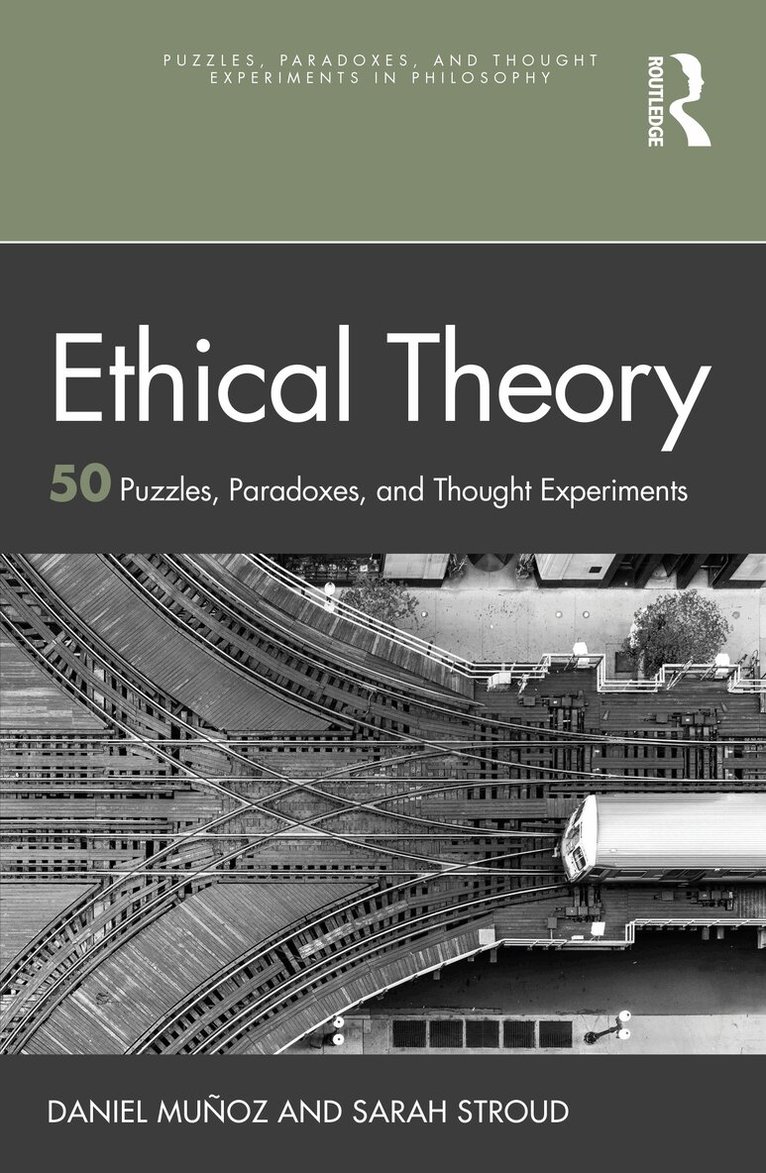
In this new kind of introduction to ethical theory, Daniel Muñoz and Sarah Stroud present 50 of the field’s most exciting puzzles, paradoxes, and thought experiments. Over the course of 11 chapters, the authors cover a huge variety of topics, starting with the classic debate between utilitarians and deontologists and ending on existential questions about the future of humanity.Every chapter begins with a helpful introduction, and each of the 50 entries includes references for further reading and questions for reflection. Among the entries are such classics as the Ring of Gyges, Jim and the Villagers, the Repugnant Conclusion, JoJo, “One Thought Too Many,” the Miners Puzzle, the Gentle Murder Paradox, Nowheresville, the Experience Machine, and the Trolley Problem. The book also explores several more recent topics of interest, such as doxastic wronging and the ethics of AI, so that even advanced students are likely to discover something new. Each entry can be read on its own, and the writing is accessible and conversational throughout, making this an ideal resource for undergraduate teaching. Readers at any level can pick up this book and see for themselves how fascinating—and puzzling—ethical theory can be.Key Features:Offers 50 puzzles, paradoxes, and thought experiments, with every entry including the following elements:Presentation of the caseDiscussion of responses to and implications of the caseA reading list which cites the classic presentation of the case and recommends several other treatments or responsesQuestions for reflectionCoverage of each of the 50 is self-contained, allowing students to quickly understand an issue and giving instructors flexibility in assigning readings to match the themes of the course.Additional pedagogical features include a general volume introduction as well as smaller introductions to each of the 11 larger, topic-oriented chapters.
1 886 kr
Skickas inom 10-15 vardagar
In this new kind of introduction to ethical theory, Daniel Muñoz and Sarah Stroud present 50 of the field’s most exciting puzzles, paradoxes, and thought experiments. Over the course of 11 chapters, the authors cover a huge variety of topics, starting with the classic debate between utilitarians and deontologists and ending on existential questions about the future of humanity.Every chapter begins with a helpful introduction, and each of the 50 entries includes references for further reading and questions for reflection. Among the entries are such classics as the Ring of Gyges, Jim and the Villagers, the Repugnant Conclusion, JoJo, “One Thought Too Many,” the Miners Puzzle, the Gentle Murder Paradox, Nowheresville, the Experience Machine, and the Trolley Problem. The book also explores several more recent topics of interest, such as doxastic wronging and the ethics of AI, so that even advanced students are likely to discover something new. Each entry can be read on its own, and the writing is accessible and conversational throughout, making this an ideal resource for undergraduate teaching. Readers at any level can pick up this book and see for themselves how fascinating—and puzzling—ethical theory can be.Key Features:Offers 50 puzzles, paradoxes, and thought experiments, with every entry including the following elements:Presentation of the caseDiscussion of responses to and implications of the caseA reading list which cites the classic presentation of the case and recommends several other treatments or responsesQuestions for reflectionCoverage of each of the 50 is self-contained, allowing students to quickly understand an issue and giving instructors flexibility in assigning readings to match the themes of the course.Additional pedagogical features include a general volume introduction as well as smaller introductions to each of the 11 larger, topic-oriented chapters.