Sarah Werner - Böcker
Visar alla böcker från författaren Sarah Werner. Handla med fri frakt och snabb leverans.
7 produkter
7 produkter
2 340 kr
Skickas inom 10-15 vardagar
How do performances of Shakespeare change the meanings of the plays?In this controversial new book, Sarah Werner argues that the text of a Shakespeare play is only one of the many factors that give a performance its meaning. By focusing on The Royal Shakespeare Company, Werner demonstrates how actor training, company management and gender politics fundamentally affect both how a production is created and the interpretations it can suggest.Werner concentrates particularly on:The influential training methods of Cicely Berry and Patsy RodenburgThe history of the RSC Women's GroupGale Edwards' production of The Taming of the ShrewShe reveals that no performance of Shakespeare is able to bring the plays to life or to realise the playwright's intentions without shaping them to mirror our own assumptions.By examining the ideological implications of performance practices, this book will help all interested in Shakespeare's plays to explore what it means to study them in performance.
667 kr
Skickas inom 10-15 vardagar
How do performances of Shakespeare change the meanings of the plays?In this controversial new book, Sarah Werner argues that the text of a Shakespeare play is only one of the many factors that give a performance its meaning. By focusing on The Royal Shakespeare Company, Werner demonstrates how actor training, company management and gender politics fundamentally affect both how a production is created and the interpretations it can suggest.Werner concentrates particularly on:The influential training methods of Cicely Berry and Patsy RodenburgThe history of the RSC Women's GroupGale Edwards' production of The Taming of the ShrewShe reveals that no performance of Shakespeare is able to bring the plays to life or to realise the playwright's intentions without shaping them to mirror our own assumptions.By examining the ideological implications of performance practices, this book will help all interested in Shakespeare's plays to explore what it means to study them in performance.
297 kr
Skickas inom 7-10 vardagar
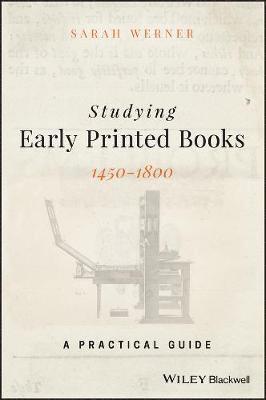
A comprehensive resource to understanding the hand-press printing of early booksStudying Early Printed Books, 1450 - 1800 offers a guide to the fascinating process of how books were printed in the first centuries of the press and shows how the mechanics of making books shapes how we read and understand them. The author offers an insightful overview of how books were made in the hand-press period and then includes an in-depth review of the specific aspects of the printing process. She addresses questions such as: How was paper made? What were different book formats? How did the press work? In addition, the text is filled with illustrative examples that demonstrate how understanding the early processes can be helpful to today’s researchers.Studying Early Printed Books shows the connections between the material form of a book (what it looks like and how it was made), how a book conveys its meaning and how it is used by readers. The author helps readers navigate books by explaining how to tell which parts of a book are the result of early printing practices and which are a result of later changes. The text also offers guidance on: how to approach a book; how to read a catalog record; the difference between using digital facsimiles and books in-hand. This important guide: Reveals how books were made with the advent of the printing press and how they are understood todayOffers information on how to use digital reproductions of early printed books as well as how to work in a rare books libraryContains a useful glossary and a detailed list of recommended readingsIncludes a companion website for further research Written for students of book history, materiality of text and history of information, Studying Early Printed Books explores the many aspects of the early printing process of books and explains how their form is understood today.
1 134 kr
Skickas inom 7-10 vardagar
A comprehensive resource to understanding the hand-press printing of early booksStudying Early Printed Books, 1450 - 1800 offers a guide to the fascinating process of how books were printed in the first centuries of the press and shows how the mechanics of making books shapes how we read and understand them. The author offers an insightful overview of how books were made in the hand-press period and then includes an in-depth review of the specific aspects of the printing process. She addresses questions such as: How was paper made? What were different book formats? How did the press work? In addition, the text is filled with illustrative examples that demonstrate how understanding the early processes can be helpful to today’s researchers.Studying Early Printed Books shows the connections between the material form of a book (what it looks like and how it was made), how a book conveys its meaning and how it is used by readers. The author helps readers navigate books by explaining how to tell which parts of a book are the result of early printing practices and which are a result of later changes. The text also offers guidance on: how to approach a book; how to read a catalog record; the difference between using digital facsimiles and books in-hand. This important guide: Reveals how books were made with the advent of the printing press and how they are understood todayOffers information on how to use digital reproductions of early printed books as well as how to work in a rare books libraryContains a useful glossary and a detailed list of recommended readingsIncludes a companion website for further research Written for students of book history, materiality of text and history of information, Studying Early Printed Books explores the many aspects of the early printing process of books and explains how their form is understood today.
108 kr
Skickas inom 5-8 vardagar
189 kr
Skickas inom 5-8 vardagar
450 kr
Skickas inom 3-6 vardagar