Saurabh Saran - Böcker
Visar alla böcker från författaren Saurabh Saran. Handla med fri frakt och snabb leverans.
3 produkter
3 produkter
2 238 kr
Skickas inom 10-15 vardagar
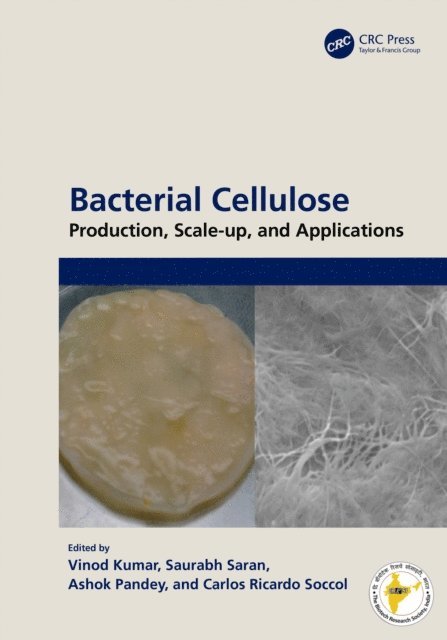
This reference book provides updated information on the production and industrial significance of bacterial cellulose. Bacterial cellulose is a natural fiber produced by certain microbes, mainly bacteria which belong to the Acetobacter genera. The book discusses its applications in different industrial sectors, such as food, pharmaceutical, energy, and wastewater treatment. It covers the production of cellulose from conventional and renewable feedstock and includes topics such as downstream processing, characterization, and chemical modification of bacterial cellulose.FEATURES:Addresses the challenges of the production technologies of bacterial cellulose up to pilot scaleDiscusses cost-effective green processes using agri-processing residues and medium formulationIncludes efficient preparation of nanocomposites using in vitro and in vivo methodsProvides the latest applications of bacterial cellulose in the food and pharmaceuticals fieldsReviews the production of bacterial cellulose from conventional feedstock such as sugars and starchesThis book is designed for industry experts and researchers of applied microbiology, bioprocesses, and industrial microbiology.
2 644 kr
Skickas inom 7-10 vardagar
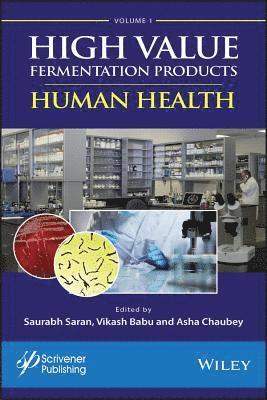
Green technologies are no longer the “future” of science, but the present. With more and more mature industries, such as the process industries, making large strides seemingly every single day, and more consumers demanding products created from green technologies, it is essential for any business in any industry to be familiar with the latest processes and technologies. It is all part of a global effort to “go greener,” and this is nowhere more apparent than in fermentation technology. This book describes relevant aspects of industrial-scale fermentation, an expanding area of activity, which already generates commercial values of over one third of a trillion US dollars annually, and which will most likely radically change the way we produce chemicals in the long-term future. From biofuels and bulk amino acids to monoclonal antibodies and stem cells, they all rely on mass suspension cultivation of cells in stirred bioreactors, which is the most widely used and versatile way to produce. Today, a wide array of cells can be cultivated in this way, and for most of them genetic engineering tools are also available. Examples of products, operating procedures, engineering and design aspects, economic drivers and cost, and regulatory issues are addressed. In addition, there will be a discussion of how we got to where we are today, and of the real world in industrial fermentation. This chapter is exclusively dedicated to large-scale production used in industrial settings.
2 644 kr
Skickas inom 7-10 vardagar
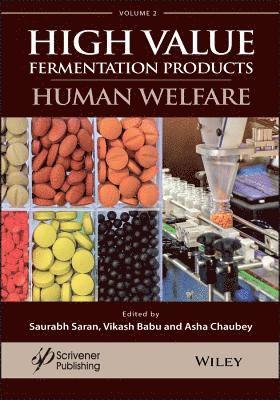
Written by a group of world-renowned experts, the second volume in this groundbreaking set continues where the first volume left off, focusing on fermentation products that contribute to human welfare across a variety of industries.Green technologies are no longer the "future" of science, but the present. With more and more mature industries, such as the process industries, making large strides seemingly every single day, and more consumers demanding products created from green technologies, it is essential for any business in any industry to be familiar with the latest processes and technologies. It is all part of a global effort to "go greener," and this is nowhere more apparent than in fermentation technology.This second volume in the groundbreaking new set, High Value Fermentation Products, focuses on industries that a concerned with human welfare, including the leather industry, textiles, pharmaceutical and medical, food processing, and others. Covering topics such as chitin and chitosan, microbial polyhydroxyalkanoates, propanediol, and many others, the editors and contributors have contributed to an extremely important facet of chemical and process engineering and how to move these industries into a much more sustainable and environmentally conscious direction. From converting waste into apparel to creating healthier foods and more effective medicines, this is truly a monumental work that is a must-have for any chemical engineer, scientist, or chemist.